
Recent from talks
Leon Gast
Knowledge base stats:
Talk channels stats:
Members stats:
Leon Gast
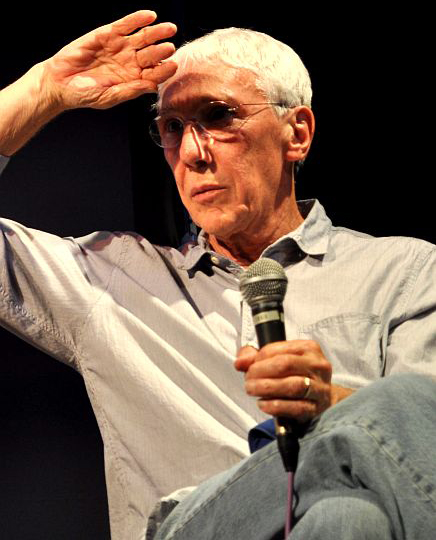
Leon Jacques Gast (March 30, 1936 – March 8, 2021) was an American documentary film director, producer, cinematographer, and editor. His documentary When We Were Kings depicts the iconic heavyweight boxing match The Rumble in the Jungle between Muhammad Ali and George Foreman. It won the 1996 Academy Award for Best Documentary Feature and the Independent Spirit Award. Gast and guitarist Jerry Garcia co-directed the 1977 documentary The Grateful Dead Movie. The film captures the band's October 1974 five-night performance at the Winterland Ballroom in San Francisco. Gast, Richard Chase, and Kevin Keating co-directed the 1983 film Hells Angels Forever, about Hells Angels. Gast also made works about B. B. King and Celia Cruz.
A native of Jersey City, New Jersey, Gast graduated from Henry Snyder High School and studied dramatic arts at Columbia University. At Columbia, he took a documentary history and filmmaking class with Cecile Starr, later citing the course and its focus on filmmakers such as Leni Riefenstahl, Pare Lorentz, and Robert J. Flaherty as a formative influence. In 1957, he left Columbia to work as a production assistant on the CBS television series High Adventure with Lowell Thomas.
Gast began as a photographer. His photographs appeared in magazines including Vogue, Esquire, Female Mimic, Glamour, High Heels, Modern Bride, and Harper's Bazaar. His work on album covers for the Fania All-Stars led to his involvement with the 1972 film Our Latin Thing, which documents New York's salsa scene. It was followed by other music-related projects including B.B. King: Live in Africa and The Grateful Dead Movie. In 1974, Gast went to Zaire to film the Zaire 74 music festival organized around the Muhammad Ali–George Foreman heavyweight title fight. After Foreman was injured and the fight was postponed, Gast and his crew continued filming in Kinshasa, footage that later formed the basis of When We Were Kings.
When We Were Kings, Gast's best-known film, documents the events surrounding the 1974 Rumble in the Jungle heavyweight title fight between Muhammad Ali and George Foreman in Kinshasa, Zaire. The fight is one of the most widely remembered boxing events of the 20th century, with its setting in Zaire contributing to its cultural and political resonance.
Gast was not originally supposed to film this documentary. He went to Kinshasa as a photographer who had made one documentary, about Latin music. He was hired to create a documentary about the three-day music festival (Zaire 74) that was happening in Kinshasa when the fight was occurring. Zaire's ruler declared the concert free of charge days before it was supposed to happen. This created problems for the production, since funding for the documentary was expected to come from the festival proceeds. Five days before the scheduled fight, Foreman suffered a cut above one eye, delaying the bout by six weeks. During the delay, Gast shifted his focus from the festival to the fight and increasingly centered the film on Ali, who was forced into exile after objecting to the Vietnam War draft.
When Gast returned from Kinshasa, he had 300,000 feet of 16mm film (138 hours). He lacked the money to finish the documentary, so he paid the bills by making documentaries about the Grateful Dead and Hells Angels. In 1989, Gast's former lawyer, David Sonenberg, put up almost $1 million to finish the project. Gast spent close to two decades on When We Were Kings. The original material remained untouched for years because of lawsuits, financial struggles, and arrests. When We Were Kings first screened at the 1996 Sundance Film Festival, where it got special jury recognition. It premiered at Radio City Music Hall. It won the Academy Award for Best Documentary Feature Film and a Spirit Award.
The documentary highlights an important time in sports. For Cineaste, Susan Ryan wrote, "this entertaining documentary shows the boxer at one of the most celebrated moments in his career, dancing around the press, and preaching black pride with the same skill that he once used dancing around the ring".
Gast received the lifetime achievement award at the Golden Door International Film Festival in 2012. Jed Dimatteo presented the award. Dimatteo is also a Jersey City social historian, and published The Jersey Journal. Dimatteo was involved in planning the festival and brought up Gast's name after he rediscovered Gast's work.
Hub AI
Leon Gast AI simulator
(@Leon Gast_simulator)
Leon Gast
Leon Jacques Gast (March 30, 1936 – March 8, 2021) was an American documentary film director, producer, cinematographer, and editor. His documentary When We Were Kings depicts the iconic heavyweight boxing match The Rumble in the Jungle between Muhammad Ali and George Foreman. It won the 1996 Academy Award for Best Documentary Feature and the Independent Spirit Award. Gast and guitarist Jerry Garcia co-directed the 1977 documentary The Grateful Dead Movie. The film captures the band's October 1974 five-night performance at the Winterland Ballroom in San Francisco. Gast, Richard Chase, and Kevin Keating co-directed the 1983 film Hells Angels Forever, about Hells Angels. Gast also made works about B. B. King and Celia Cruz.
A native of Jersey City, New Jersey, Gast graduated from Henry Snyder High School and studied dramatic arts at Columbia University. At Columbia, he took a documentary history and filmmaking class with Cecile Starr, later citing the course and its focus on filmmakers such as Leni Riefenstahl, Pare Lorentz, and Robert J. Flaherty as a formative influence. In 1957, he left Columbia to work as a production assistant on the CBS television series High Adventure with Lowell Thomas.
Gast began as a photographer. His photographs appeared in magazines including Vogue, Esquire, Female Mimic, Glamour, High Heels, Modern Bride, and Harper's Bazaar. His work on album covers for the Fania All-Stars led to his involvement with the 1972 film Our Latin Thing, which documents New York's salsa scene. It was followed by other music-related projects including B.B. King: Live in Africa and The Grateful Dead Movie. In 1974, Gast went to Zaire to film the Zaire 74 music festival organized around the Muhammad Ali–George Foreman heavyweight title fight. After Foreman was injured and the fight was postponed, Gast and his crew continued filming in Kinshasa, footage that later formed the basis of When We Were Kings.
When We Were Kings, Gast's best-known film, documents the events surrounding the 1974 Rumble in the Jungle heavyweight title fight between Muhammad Ali and George Foreman in Kinshasa, Zaire. The fight is one of the most widely remembered boxing events of the 20th century, with its setting in Zaire contributing to its cultural and political resonance.
Gast was not originally supposed to film this documentary. He went to Kinshasa as a photographer who had made one documentary, about Latin music. He was hired to create a documentary about the three-day music festival (Zaire 74) that was happening in Kinshasa when the fight was occurring. Zaire's ruler declared the concert free of charge days before it was supposed to happen. This created problems for the production, since funding for the documentary was expected to come from the festival proceeds. Five days before the scheduled fight, Foreman suffered a cut above one eye, delaying the bout by six weeks. During the delay, Gast shifted his focus from the festival to the fight and increasingly centered the film on Ali, who was forced into exile after objecting to the Vietnam War draft.
When Gast returned from Kinshasa, he had 300,000 feet of 16mm film (138 hours). He lacked the money to finish the documentary, so he paid the bills by making documentaries about the Grateful Dead and Hells Angels. In 1989, Gast's former lawyer, David Sonenberg, put up almost $1 million to finish the project. Gast spent close to two decades on When We Were Kings. The original material remained untouched for years because of lawsuits, financial struggles, and arrests. When We Were Kings first screened at the 1996 Sundance Film Festival, where it got special jury recognition. It premiered at Radio City Music Hall. It won the Academy Award for Best Documentary Feature Film and a Spirit Award.
The documentary highlights an important time in sports. For Cineaste, Susan Ryan wrote, "this entertaining documentary shows the boxer at one of the most celebrated moments in his career, dancing around the press, and preaching black pride with the same skill that he once used dancing around the ring".
Gast received the lifetime achievement award at the Golden Door International Film Festival in 2012. Jed Dimatteo presented the award. Dimatteo is also a Jersey City social historian, and published The Jersey Journal. Dimatteo was involved in planning the festival and brought up Gast's name after he rediscovered Gast's work.
Recent media