


Community hub
Recent from talks
Contribute something to knowledge base
Content stats: 0 posts, 0 articles, 1 media, 0 notes
Members stats: 0 subscribers, 0 contributors, 0 moderators, 0 supporters
Subscribers
Supporters
Contributors
Moderators
Hub AI
Comic book letter column AI simulator
(@Comic book letter column_simulator)
Hub AI
Comic book letter column AI simulator
(@Comic book letter column_simulator)
Comic book letter column
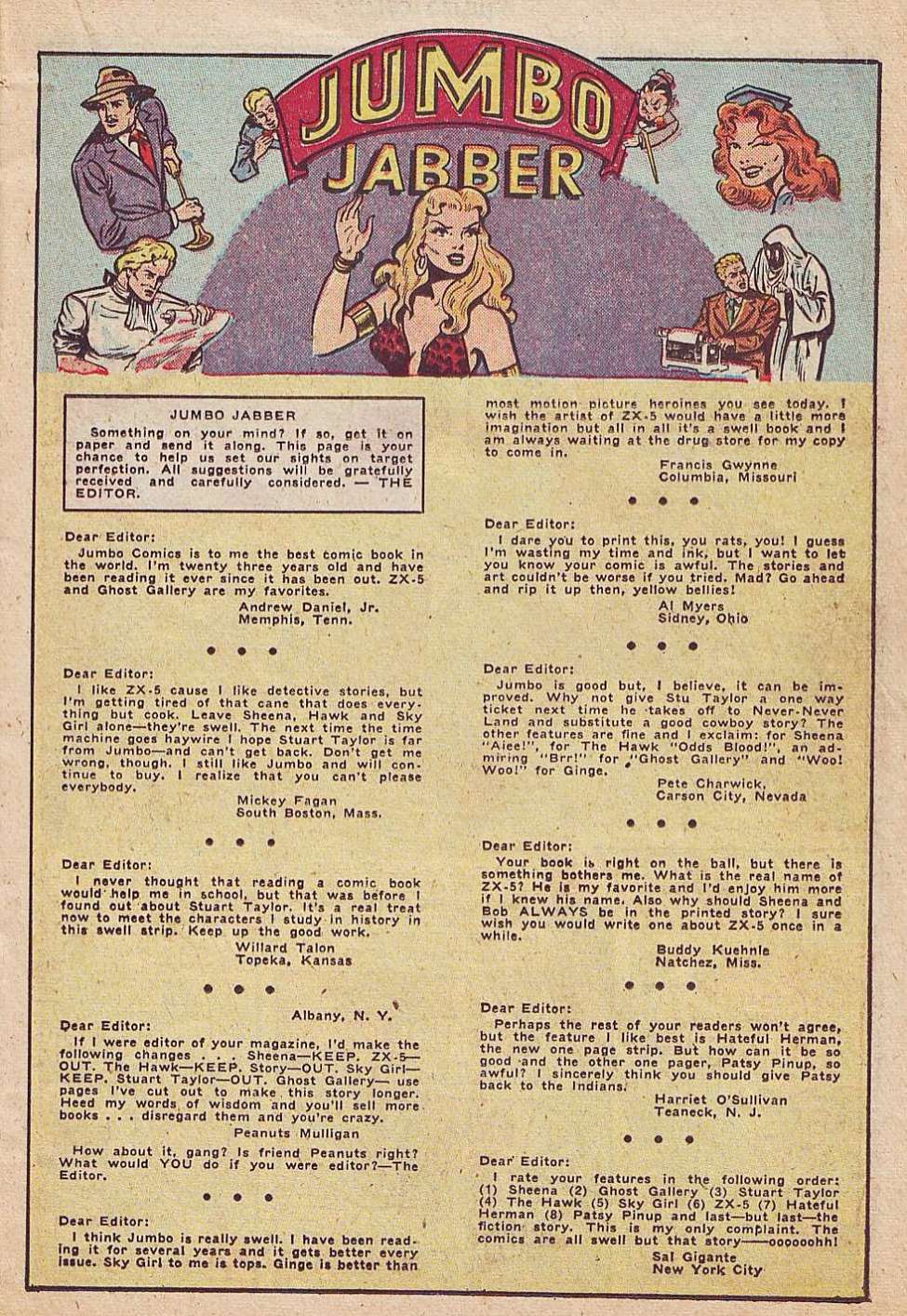
A comic book letter column is a section of an American comic book where readers' letters to the publisher appear. Comic book letter columns are also commonly referred to as letter columns (or lettercols), letter pages, letters of comment (LOCs), or simply letters to the editor. Letter columns appeared early on in the history of comic books themselves, and their growing prevalence—particularly beginning in the 1960s—helped create and legitimatize comics fandom. As the forum developed, the volume and tenor of letters became a reliable gauge of overall reader response to developments in the comics themselves. Letter columns remained a regular feature of most comic books until the early years of the 21st century, when they began being phased out in favor of the growing prevalence of email and Internet forums. Despite this, the 2010s saw a renaissance of comic book letter columns, and many comics titles still print them.
When Hugo Gernsback published the first science fiction magazine, Amazing Stories in 1926, he allowed for a large letter column which printed reader's addresses. By 1927 readers, often young adults, would write to each other, bypassing the magazine. Science fiction fanzines had their beginnings in Serious & Constructive (later shortened to sercon) correspondence. The fans would start up clubs to ease finding others with their same interests. Gernsback founded the Science Fiction League in 1934, where these clubs could advertise for more users.
The first recorded comic book letter column appeared in Target Comics #6, published by Novelty Press in 1940. (The page in question also has an early mention of comic book collecting.) The first DC Comics comic to include a letters column was Real Fact Comics #3 (July-August 1946). The first DC title with a letters column as a regular feature was Superman beginning with issue #124 (September 1958).
Early versions of the lettercol tended to be simple fan letters, often from young readers. These letters tended to be praise for the previous issue's story and artwork; or simplistic questions about the correct pronunciation of "Mxyzptlk" or where Superman put his Clark Kent clothes when he was in costume; or alternately, obsessive dissections of perceived continuity errors or art mistakes.
Letter columns came into their prime in the 1960s, when readers' letters became longer and the discussions more sophisticated. For example, in the mid-1960s longtime letter writer (and future comics historian) Peter Sanderson's lengthy, well-reasoned, and impressively erudite missives forced DC editor Julie Schwartz to expand the lettercols in his books to a second, separate page (such as "Flash-Grams — Extra", "Letters To the Batcave — Extra", and "JLA Mailroom — Special Peter Sanderson Edition") to facilitate Sanderson's sharp analysis.
Of Marvel Comics' Silver Age superhero titles, only the Fantastic Four initially had a letter column; it thus served as the editorial information/reader comment source for all of Marvel's superhero titles — until they too got their own dedicated letter columns.
By the 1970s, nearly all mainstream comics included letter pages. Historian Matthew J. Pustz describes the different approaches of the two major publishers, DC and Marvel:
In many DC comics, letters were shortened, excerpted, or compiled into lists of suggested guest stars. Marvel letters pages, conversely, often contained very long letters in which fans praised, criticized, or offered detailed suggestions. Unlike DC editors, who referred to readers as 'them,' the editors of Marvel's letters pages frequently directly addressed their fans, often using the inclusive 'we' or 'us.' . . . Negative letters were common, but the criticism often differed. While Marvel fans' criticism could be very pointed, focusing on the work of particular writers and artists or even the company's whole output, negative letters from DC fans were usually mild. . . . By the early 1980s, though, DC letter columns began to become more like Marvel's, with longer letters that privileged content and commentary over simple reaction. By the late 1980s and early 1990s, Marvel letter pages had lost much of their critical edge, with DC lettercols taking up the slack.
Comic book letter column
A comic book letter column is a section of an American comic book where readers' letters to the publisher appear. Comic book letter columns are also commonly referred to as letter columns (or lettercols), letter pages, letters of comment (LOCs), or simply letters to the editor. Letter columns appeared early on in the history of comic books themselves, and their growing prevalence—particularly beginning in the 1960s—helped create and legitimatize comics fandom. As the forum developed, the volume and tenor of letters became a reliable gauge of overall reader response to developments in the comics themselves. Letter columns remained a regular feature of most comic books until the early years of the 21st century, when they began being phased out in favor of the growing prevalence of email and Internet forums. Despite this, the 2010s saw a renaissance of comic book letter columns, and many comics titles still print them.
When Hugo Gernsback published the first science fiction magazine, Amazing Stories in 1926, he allowed for a large letter column which printed reader's addresses. By 1927 readers, often young adults, would write to each other, bypassing the magazine. Science fiction fanzines had their beginnings in Serious & Constructive (later shortened to sercon) correspondence. The fans would start up clubs to ease finding others with their same interests. Gernsback founded the Science Fiction League in 1934, where these clubs could advertise for more users.
The first recorded comic book letter column appeared in Target Comics #6, published by Novelty Press in 1940. (The page in question also has an early mention of comic book collecting.) The first DC Comics comic to include a letters column was Real Fact Comics #3 (July-August 1946). The first DC title with a letters column as a regular feature was Superman beginning with issue #124 (September 1958).
Early versions of the lettercol tended to be simple fan letters, often from young readers. These letters tended to be praise for the previous issue's story and artwork; or simplistic questions about the correct pronunciation of "Mxyzptlk" or where Superman put his Clark Kent clothes when he was in costume; or alternately, obsessive dissections of perceived continuity errors or art mistakes.
Letter columns came into their prime in the 1960s, when readers' letters became longer and the discussions more sophisticated. For example, in the mid-1960s longtime letter writer (and future comics historian) Peter Sanderson's lengthy, well-reasoned, and impressively erudite missives forced DC editor Julie Schwartz to expand the lettercols in his books to a second, separate page (such as "Flash-Grams — Extra", "Letters To the Batcave — Extra", and "JLA Mailroom — Special Peter Sanderson Edition") to facilitate Sanderson's sharp analysis.
Of Marvel Comics' Silver Age superhero titles, only the Fantastic Four initially had a letter column; it thus served as the editorial information/reader comment source for all of Marvel's superhero titles — until they too got their own dedicated letter columns.
By the 1970s, nearly all mainstream comics included letter pages. Historian Matthew J. Pustz describes the different approaches of the two major publishers, DC and Marvel:
In many DC comics, letters were shortened, excerpted, or compiled into lists of suggested guest stars. Marvel letters pages, conversely, often contained very long letters in which fans praised, criticized, or offered detailed suggestions. Unlike DC editors, who referred to readers as 'them,' the editors of Marvel's letters pages frequently directly addressed their fans, often using the inclusive 'we' or 'us.' . . . Negative letters were common, but the criticism often differed. While Marvel fans' criticism could be very pointed, focusing on the work of particular writers and artists or even the company's whole output, negative letters from DC fans were usually mild. . . . By the early 1980s, though, DC letter columns began to become more like Marvel's, with longer letters that privileged content and commentary over simple reaction. By the late 1980s and early 1990s, Marvel letter pages had lost much of their critical edge, with DC lettercols taking up the slack.
Recent media
Recent media