Hubbry Logo
LeucoplastLeucoplastMain
Open search
Leucoplast
Community hub
Leucoplast
logo
8 pages, 0 posts
0 subscribers
Be the first to start a discussion here.
Leucoplast
Leucoplast
from Wikipedia
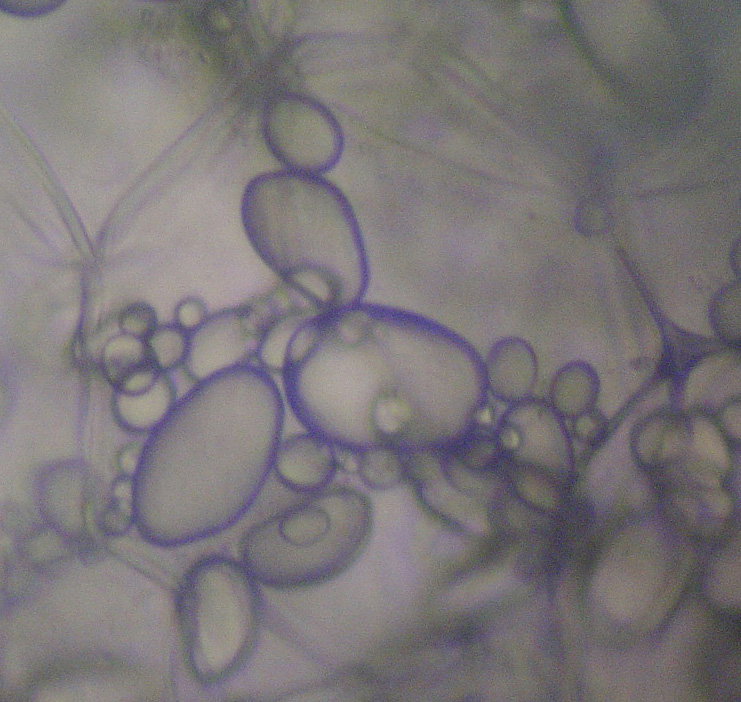
Leucoplasts, specifically, amyloplasts

Leucoplasts ("formed, molded") are a category of plastid and as such are organelles found in plant cells. They are non-pigmented, in contrast to other plastids such as the chloroplast.

Background

[edit]

Lacking photosynthetic pigments, leucoplasts are located in non-photosynthetic tissues of plants, such as roots, bulbs and seeds. They may be specialized for bulk storage of starch, lipid or protein and are then known as amyloplasts, elaioplasts, or proteinoplasts (also called aleuroplasts) respectively. However, in many cell types, leucoplasts do not have a major storage function and are present to provide a wide range of essential biosynthetic functions, including the synthesis of fatty acids such as palmitic acid, many amino acids, and tetrapyrrole compounds such as heme. In general, leucoplasts are much smaller than chloroplasts and have a variable morphology, often described as amoeboid. Extensive networks of stromules interconnecting leucoplasts have been observed in epidermal cells of roots, hypocotyls, and petals, and in callus and suspension culture cells of tobacco. In some cell types at certain stages of development, leucoplasts are clustered around the nucleus with stromules extending to the cell periphery, as observed for proplastids in the root meristem.

Etioplasts

[edit]

Pre-granal etioplasts, which are chloroplasts that have not matured but can be chloroplasts deprived of light, lack the active pigment. They can thereby can be considered leucoplasts. After several minutes exposure to light, etioplasts transform into functioning chloroplasts and cease being leucoplasts. Amyloplasts are of large size and store starch.

Proteinoplasts store proteins and are found in seeds (pulses), while elaioplasts store fats and oils and are found in seeds. They are also called oleosomes.

See also

[edit]
[edit]
Revisions and contributorsEdit on WikipediaRead on Wikipedia
from Grokipedia
Leucoplasts are colorless, non-pigmented plastids found in the non-photosynthetic tissues of , such as roots, tubers, and seeds, where they serve as primary organelles for the storage of essential biomolecules including , , and proteins. Unlike chloroplasts, which contain and perform , leucoplasts lack membranes and photosynthetic machinery, instead acting as dynamic storage and biosynthetic compartments that support and development. They originate from proplastids, the undifferentiated precursors of all s, and can interconvert with other plastid types in response to environmental cues like light exposure. Leucoplasts encompass several specialized subtypes, each adapted for particular storage functions. Amyloplasts, the most common type, accumulate granules and play a critical role in energy reserve formation, as seen in potato tubers and roots, while also contributing to through sedimentable starch-filled structures that sense gravity. Elaioplasts are specialized for and storage, often found in seeds and fruits like , where they facilitate oil and accumulation essential for aroma production and nutritional value. Proteinoplasts, less common, store proteins in crystalline forms and exhibit enzymatic activity, such as oxidases in roots, supporting protein synthesis and cellular metabolism. Structurally, leucoplasts are bounded by a double envelope typical of plastids and contain internal compartments tailored to their storage role, such as starch grains in amyloplasts or bodies in elaioplasts, without the stacked thylakoids or grana of photosynthetic plastids. Their proteome includes enzymes for intermediary metabolism, including the synthesis of fatty acids, , and , underscoring their biosynthetic versatility beyond mere storage. Leucoplasts demonstrate plasticity, differentiating from proplastids (0.5–1 μm in size) into functional forms based on tissue-specific needs and capable of transitioning to chromoplasts or even chloroplasts under altered conditions, highlighting their adaptability in .

Definition and Characteristics

Definition

Leucoplasts are a category of plastids, which are double-membrane-bound organelles found exclusively in the cells of and certain . These organelles are characterized by their lack of pigmentation, distinguishing them from other plastid types. The term "leucoplast" derives from words "leukos," meaning white or colorless, and "plastos," meaning molded or formed, reflecting their colorless appearance and formed structure. Unlike chloroplasts, which contain chlorophyll for photosynthesis, or chromoplasts, which accumulate pigments such as carotenoids to produce colors in flowers and fruits, leucoplasts are devoid of chlorophyll and other pigments, appearing colorless under light microscopy. This absence of pigments limits their role in light-dependent processes, positioning them primarily in non-photosynthetic tissues. Plastids, including leucoplasts, are semi-autonomous organelles possessing their own DNA and ribosomes, enabling partial independent replication and protein synthesis. Leucoplasts primarily function in the storage of essential compounds and the synthesis of various biomolecules within underground or internal parts, such as and , where exposure is minimal.

Physical Structure

Leucoplasts are delimited by a double system, comprising an outer and an inner that originated from the endosymbiotic incorporation of ancient into eukaryotic host cells. This separates the internal contents from the and regulates the transport of molecules. The outer is permeable to small solutes via porins, while the inner contains specific transporters for larger metabolites and ions. Internally, leucoplasts feature a stroma, a dense, aqueous matrix that houses multiple copies of a small circular (approximately 120–160 kb) with reduced numbers of 70S ribosomes compared to chloroplasts, and a suite of enzymes involved in metabolic pathways. In certain types, rudimentary thylakoid-like vesicles or stromal lamellae may form, though these structures are underdeveloped and lack the stacked organization seen in other plastids. Leucoplasts derive from proplastids, undifferentiated precursors that initiate their structural maturation in non-photosynthetic tissues. Leucoplasts generally range from 1 to 5 micrometers in , with dimensions varying by subtype and host tissue; for instance, those in root cells often measure 1.8 to 3 micrometers. They are typically spherical or ovoid in shape and lack the extensive internal networks characteristic of photosynthetic organelles. A defining feature of leucoplasts is the absence of granules, grana stacks, and broad lamellae, which distinguishes them from chloroplasts and imparts their colorless appearance. This simplified architecture supports their role in non-photosynthetic cellular processes without the complexity of light-harvesting systems.

Classification and Types

Amyloplasts

Amyloplasts are a specialized subtype of leucoplasts dedicated to the accumulation and storage of in cells. These organelles develop in non-green tissues, where they serve as the primary site for biosynthesis and long-term reserve formation, contributing to the overall storage function of leucoplasts. Structurally, amyloplasts consist of a double membrane enclosing a stroma filled with prominent grains, which can attain diameters of up to 100 micrometers in storage tissues such as tubers. These grains form through the of glucose into semi-crystalline structures of and , enabling efficient packing and mobilization of energy reserves. The imparted by these grains distinguishes amyloplasts from other types, facilitating their role beyond mere storage. In specialized cells of the , known as cells, amyloplasts function as statoliths essential for . Their sedimentation under generates a positional signal that triggers asymmetric redistribution of , promoting differential cell elongation and oriented root growth toward the gravitational vector. This mechanosensory mechanism underscores the amyloplast's integral contribution to tropic responses. Amyloplasts are notably abundant in storage organs like tubers, where they occupy most of the cell volume to amass for and sprouting; in the of grains, supporting embryonic development through provisioning; and in root tips, where they enable precise geotropic orientation.

Elaioplasts

Elaioplasts are a specialized subtype of leucoplasts dedicated to the synthesis and accumulation of , distinguishing them as non-pigmented plastids primarily involved in storing hydrophobic compounds within cells. These organelles facilitate the of neutral lipids and terpenoids, serving as reservoirs for energy-dense molecules that support reproductive and developmental processes in . Structurally, elaioplasts feature an interior densely packed with plastoglobuli, which are small lipid droplets that occupy much of the plastid volume and represent the primary sites for lipid sequestration. These plastoglobuli, analogous to cytosolic oleosomes, are enveloped by a and associated with proteins that stabilize the droplets and regulate . Additionally, elaioplasts exhibit tubular or vesicular internal membranes that contribute to lipid synthesis pathways, enabling the compartmentalization and modification of precursors within the . Elaioplasts predominantly occur in reproductive tissues where lipid reserves are crucial, such as the tapetum cells of anthers in flowers, where they provide oils for wall formation and protection. They are also prevalent in of oil-rich plants, including sunflower (Helianthus annuus) and castor beans (Ricinus communis), as well as in fruit tissues like those of species. In these locations, elaioplasts integrate with networks to support high-volume production during seed maturation. The primary lipids stored in elaioplasts include triacylglycerols and free fatty acids, which accumulate as energy reserves for post-germinative growth and establishment. In certain contexts, such as fruits, they also sequester terpenoids that contribute to aroma and flavor profiles, underscoring their role beyond mere storage to include specialized biosynthetic functions. These lipid accumulations ensure efficient mobilization during , highlighting elaioplasts' importance in adapting to non-photosynthetic environments.

Proteinoplasts

Proteinoplasts, also known as aleuroplasts, are a subtype of leucoplasts specialized for the accumulation and storage of proteins within plant cells. These organelles are characterized by their colorless appearance and role in sequestering protein reserves, distinguishing them from other leucoplast variants focused on or . They are particularly prominent in storage tissues where protein deposition supports and . Structurally, proteinoplasts feature a double-membrane enclosing a stroma that contains distinctive protein inclusions, such as crystalline bodies or amorphous aggregates often termed grains or crystalloids. These inclusions are typically membrane-bound and composed of densely packed storage proteins, lacking membranes, unlike those in photosynthetic plastids. In seeds, these structures enable efficient packaging of proteins in a compact form, facilitating long-term stability during . Proteinoplasts have been observed in various tissues, including and leaves, but they are most abundant in storage cells. Representative examples include the storage of proteins in seeds of , such as peas (Pisum sativum) and soybeans (Glycine max), where proteinoplasts house these major reserve proteins that constitute a significant portion of the seed's dry weight. These , including vicilins and legumins, form the crystalline inclusions that provide for early growth. During seed germination, enzymes break down the stored proteins in proteinoplasts, mobilizing them as a primary source to fuel development and seedling establishment until begins.

Functions

Storage Roles

Leucoplasts serve as primary storage organelles in non-photosynthetic tissues, where they accumulate macromolecules such as , , and proteins to provide reserves and building blocks essential for growth, development, and stress response. These colorless plastids function by importing precursors and synthesizing storage compounds within their stroma, enabling the sequestration of nutrients in dense, organized forms that can be mobilized when needed. For instance, accumulation occurs through enzymatic pathways involving ADP-glucose pyrophosphorylase, while form droplets connected to cytoskeletal elements, and proteins aggregate into crystalline structures. In plant economy, leucoplasts act as vital "storage sheds," buffering against seasonal fluctuations or developmental demands by stockpiling resources during periods of abundance for use during , , or rapid growth phases. This role is particularly critical in underground storage organs, such as the roots of carrots () and bulbs of onions (Allium cepa), where leucoplasts—often as specialized amyloplasts for —support nutrient retention and plant survival under environmental stress. Such storage ensures the availability of carbohydrates, fats, and , contributing to overall metabolic stability and in diverse plant species.

Biosynthetic Functions

Leucoplasts serve as primary sites for the of , , and within the plant cell, particularly in non-photosynthetic tissues where these processes support growth, storage, and signaling. The stroma of leucoplasts houses the enzymatic machinery for these biosynthetic pathways, utilizing precursors imported from the and other organelles to produce essential metabolites. For instance, in leucoplasts from developing castor bean proceeds via malate- and pyruvate-dependent mechanisms, achieving rates up to 155 nmol equivalents per mg protein per hour when malate is the substrate. biosynthesis occurs through plastid-localized pathways, incorporating into carbon skeletons to form essential like branched-chain variants, which are critical for protein synthesis across the plant. production relies on the methylerythritol (MEP) pathway in the leucoplast stroma, generating isoprenoid precursors such as geranylgeranyl diphosphate (GGDP) for downstream metabolites. Key enzymatic pathways in leucoplasts include lipid biosynthesis driven by (ACC), a nuclear-encoded, plastid-targeted that catalyzes the ATP-dependent of to , the committed step for chain elongation. This process is marked by ACC activity in isolated leucoplasts, confirming their role in providing acyl chains for membrane lipids and storage oils. In isoprenoid production, the MEP pathway enzymes sequentially convert glyceraldehyde-3-phosphate and pyruvate into isopentenyl diphosphate (IPP) and dimethylallyl diphosphate (DMAPP), which condense to form longer prenyl chains like GGDP, essential for diversity. Leucoplasts also host copalyl diphosphate (CPS) and ent-kaurene (KS), which utilize GGDP to synthesize ent-kaurene, a diterpenoid intermediate. Leucoplasts contribute to hormone synthesis by producing precursors for gibberellins and abscisic acid, integrating biosynthetic output into plant developmental signaling. Ent-kaurene, generated in the leucoplast stroma, serves as the initial diterpenoid precursor for gibberellin biosynthesis, with CPS and KS localized specifically to these organelles as demonstrated in seedlings. For abscisic acid, leucoplasts support the MEP pathway's role in carotenoid precursor formation, providing xanthophyll intermediates that are cleaved to yield the hormone, particularly under stress conditions in non-green tissues. These hormone precursors enable leucoplasts to influence growth promotion via gibberellins and stress responses via abscisic acid. Metabolic integration of leucoplast biosynthesis involves coordinated transport and sharing of intermediates with the , mitochondria, and to sustain precursor supply and product export. For example, pyruvate and malate are imported via plastid envelope transporters to fuel production for and isoprenoid pathways, while nuclear-encoded proteins ensure targeting and pathway . This interplay allows leucoplasts to adapt to tissue-specific demands, such as lipid accumulation in , by balancing stromal reactions with organellar .

Development and Differentiation

Origin from Proplastids

Leucoplasts originate from proplastids, which are small, undifferentiated, colorless plastids present in meristematic tissues and embryonic cells of . These proplastids, typically lens-shaped or spherical with diameters of about 0.5 to 1 μm and minimal internal membrane structures, serve as the foundational precursors for all plastid types, including leucoplasts. In embryonic development, proplastids arise from the and divide mitotically without contribution from the sperm cell, establishing the initial plastid population that will later specialize based on cellular context. The differentiation of proplastids into leucoplasts is primarily triggered by the absence of and specific tissue-specific signals in non-photosynthetic environments, such as underground or storage organs. In the absence of photoreceptor activation, which would otherwise promote formation, developmental cues like hormonal gradients and metabolic demands direct proplastids toward leucoplast subtypes, such as amyloplasts for accumulation. This process ensures that leucoplasts develop in regions where rather than is prioritized, with environmental factors like availability further modulating the pathway. Genetically, leucoplast differentiation involves coordinated plastid genome replication to maintain numbers during , alongside stringent nuclear control over differentiation genes. Nuclear-encoded transcription factors regulate the expression of plastid-targeted proteins imported via the TOC-TIC translocon complexes, while plastid-to-nucleus fine-tunes the process to prevent mismatches in function. The genome itself remains largely conserved across types, but nuclear genes dictate subtype-specific modifications, with mutations in these loci often resulting in aberrant colorless . The timeline of proplastid to leucoplast maturation unfolds during cell specialization, typically spanning days to weeks in post-embryonic growth. Initially compact proplastids expand and develop specialized internal structures, such as starch grains in amyloplasts reaching up to 30 μm, as cells commit to storage roles in differentiating tissues. This progression aligns with overall ontogeny, ensuring leucoplasts are fully functional by the time tissues reach maturity.

Interconversion with Other Plastids

Leucoplasts exhibit remarkable plasticity, enabling bidirectional interconversions with other types in response to developmental and environmental cues. This dynamic transformation underscores the adaptability of plastid morphology and function in cells, allowing shifts between non-photosynthetic storage roles and photosynthetic capabilities. Light exposure triggers the conversion of leucoplasts or etioplasts into chloroplasts during de-etiolation in seedlings. In dark-grown s, etioplasts, which are colorless intermediates featuring prolamellar bodies—organized paracrystalline structures of precursors—accumulate protochlorophyllide but lack functional . Upon illumination, these structures disassemble, leading to membrane formation and synthesis via light-dependent NADPH:protochlorophyllide oxidoreductase, resulting in mature chloroplasts capable of . For instance, in seedlings, this process occurs rapidly, with two distinct phases: initial pigment accumulation followed by full photosynthetic assembly. Similar conversions have been observed in leucoplasts from tubers exposed to , where levels increase significantly, enabling greening. Reverse interconversions occur when chloroplasts dedifferentiate into leucoplasts, particularly in senescing or shaded tissues. During leaf senescence, chloroplasts transform into gerontoplasts, characterized by thylakoid degradation and loss of photosynthetic pigments, but in certain contexts, such as flower development, they fully revert to leucoplasts. In Arabidopsis petals, for example, chloroplasts lose chlorophyll and thylakoid integrity during aging, shifting to leucoplasts that support storage functions. This dedifferentiation facilitates nutrient remobilization, with plastid breakdown contributing to cellular recycling under stress or aging. Etioplasts serve as key intermediates in these interconversions, bridging proplastids and chloroplasts in dark conditions. They form transiently in etiolated seedlings and can revert or progress based on availability, highlighting their role in plastid plasticity. Several factors regulate these transformations. signaling, particularly through phytochrome B perceiving red , activates transcription factors like PHYTOCHROME INTERACTING FACTOR 3 (PIF3) to initiate etioplast-to-chloroplast conversion. Hormonal cues, such as cytokinins promoting chloroplast development or and influencing in ripening tissues, further modulate these shifts. Environmental stresses, including oxidative conditions or prolonged shade, can induce chloroplast-to-leucoplast reversion by disrupting stability.

Occurrence and Distribution

In Plant Tissues

Leucoplasts are primarily located in non-photosynthetic tissues of , including , bulbs, tubers, and seed endosperm, where they facilitate storage and biosynthetic processes without the need for light-dependent pigmentation. These organelles are absent or minimal in green tissues like leaves, concentrating instead in underground or internal structures adapted for reserve accumulation. In storage organs, leucoplasts exhibit high density and specialization, such as amyloplasts in (Solanum tuberosum) tubers, where they densely pack granules to support energy reserves during or . In contrast, roots contain sparser leucoplast populations tailored for modest nutrient storage, as seen in pea (Pisum sativum) root tissues, which maintain lower abundances to balance growth and reserve functions without overwhelming cellular space. This tissue-specific adaptation ensures efficient resource allocation, with leucoplasts in bulbs like onion ( cepa) scales featuring numerous small plastoglobuli for and interim storage. Examples of leucoplast distribution span major plant groups, including monocots such as bulbs, where they dominate mesophyll cells of storage scales; dicots like red beet (Beta vulgaris) roots, from which leucoplasts are isolated in high numbers from storage during ; and gymnosperms, where leucoplasts associate with in secretory cells of glandular trichomes, as in (Pinus spp.) tissues. The abundance and density of leucoplasts vary with age and nutritional status; for instance, in developing tubers, leucoplast numbers and content increase during maturation phases influenced by carbon availability, peaking in mature organs before declining under stress. This dynamic regulation aligns leucoplast proliferation with the plant's storage demands across ontogenetic stages.

In Non-Plant Organisms

Leucoplast-like organelles, characterized as colorless plastids, occur in various non-plant organisms, particularly heterotrophic algae that have secondarily lost photosynthetic capabilities while retaining these structures for non-photosynthetic functions. In heterotrophic green algae such as Polytoma uvella, a member of the Chlamydomonadales, the plastid is nonpigmented and serves primarily as a storage organelle, accumulating starch grains as evidenced by staining with Lugol's reagent. This plastid retains a genome of approximately 230 kilobases, encoding genes for housekeeping functions but lacking those for photosynthesis, reflecting its adaptation for metabolic support rather than light harvesting. These colorless plastids in algae exhibit evolutionary retention from photosynthetic green algal ancestors, where independent losses of photosynthesis have occurred multiple times, yet the organelles persist to fulfill essential biosynthetic roles. For instance, in lineages like Polytoma and Polytomella, plastids descended from Chlorophyceae ancestors maintain pathways for , , and synthesis, with nuclear-encoded enzymes targeted to the plastid to sustain these functions. This retention underscores the organelle's versatility beyond , preventing complete loss even in free-living, nonphotosynthetic forms driven by mixotrophic lifestyles or environmental shifts. In euglenoids, analogous colorless plastids appear in nonphotosynthetic species such as Euglena longa, where the , derived via secondary endosymbiosis from a green algal , functions in without photosynthetic pigments. This cryptic plastid synthesizes glycolipids like monogalactosyldiacylglycerol and digalactosyldiacylglycerol, as well as phospholipids such as phosphatidylglycerol, utilizing imported s for storage and membrane maintenance; it also supports and phylloquinone derivative production. Similarly, in related lineages like dinoflagellates, nonphotosynthetic forms such as Oxyrrhis marina retain nuclear genes of plastid origin involved in type II , indicating vestigial roles in lipid synthesis analogous to leucoplast functions, though the itself is often reduced or absent. In apicomplexans, close relatives of dinoflagellates, the serves as a nonphotosynthetic dedicated to and isoprenoid precursor synthesis, exporting to support parasite .

References

Add your contribution
Related Hubs
User Avatar
No comments yet.