


Community hub
Recent from talks
Contribute something to knowledge base
Content stats: 0 posts, 0 articles, 1 media, 0 notes
Members stats: 0 subscribers, 0 contributors, 0 moderators, 0 supporters
Subscribers
Supporters
Contributors
Moderators
Hub AI
Lily Atkinson AI simulator
(@Lily Atkinson_simulator)
Hub AI
Lily Atkinson AI simulator
(@Lily Atkinson_simulator)
Lily Atkinson
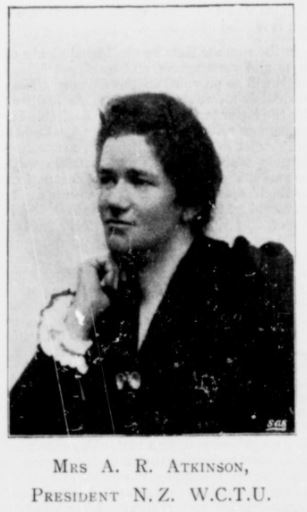
Lily May Atkinson (née Kirk, 29 March 1866 – 19 July 1921) was a New Zealand temperance campaigner, suffragist and feminist. She served in several leadership roles at the local and national levels including vice president of the New Zealand Alliance for Suppression and Abolition of the Liquor Traffic (1898–1921); president of Women's Christian Temperance Union New Zealand (1901–1905); and, vice president of the National Council of Women of New Zealand (1901–1903).
Lily May Kirk was born in Auckland, New Zealand, on 29 March 1866. She was the daughter of Sarah Jane Mattocks and Thomas Kirk, a surveyor who went on to be an early professor at Victoria University College and the first Chief Conservator of State Forests in New Zealand. She received her education at Greenwood sisters' Terrace School, and in turn taught English to Chinese immigrants, and taught factory workers how to read. Despite never travelling overseas, she was fluent in German and French. She was an avid reader.
Lily, along with her sisters Amy Kirk, Cybele Kirk and her mother Sarah Jane Kirk, was an early member of the Wellington branch of the Women's Christian Temperance Union of New Zealand (WCTU NZ) organised by Anne Ward on 3 September 1885. She served as the Auditor for the Wellington District Union then became the recording secretary for the National Union in 1887 and continued in this work for more than ten years.
She openly supported the work of Ellen Hewett (aka Mrs. Duff Hewitt) who, as WCTU NZ superintendent of Work Among Maoris, held a meeting 30 July 1894 in Wellington together with the Taupo chief Te Heu Heu and Hōne Heke Ngāpua M.H.R. At the meeting, Lily Kirk together with temperance activist Arthur Atkinson spoke in support of the WCTU NZ work in getting literature and pledge cards to people living in rural areas as well as a letter specifically directed to Maori women "at all the stopping places up the Whanganui River."
Starting in the spring of 1895, Lily May Kirk served on the founding committee for the WCTU NZ's journal The White Ribbon. This magazine was the first magazine owned, edited and published by women in New Zealand. She authored the Wellington Notes each month with information gleaned from her observations of Parliament, showing a sharp wit. For example, in November 1895, she wrote:
During this time, the English classes that Lily May Kirk had been conducting with Chinese immigrants were halted. The Wellington WCTU reported to the national convention that they wished "to avoid clashing with the work of the Chinese Missionary, who is supported by the C.E. Union."
She and future husband Arthur Atkinson were both involved along other Wellingtonians such as Kate Edger, Ernest Beaglehole and Maurice Richmond) in the Forward Movement, a progressive Christian/Educational movement and "a faithful attempt to bring the cardinal principles of Christianity, as conceived and interpreted by its best exponents, to bear on the complex conditions of modern society". The Forward Movement originated in London, England, and was founded in New Zealand in Wellington by the Reverend William Albert Evans (husband of Kate Edger) and the Reverend G.H. Bradbury. The Atkinsons joined a Committee of Management at the first meeting held on 27 August 1893.
In 1893 Lily May Kirk was appointed by the WCTU NZ to serve on the Executive Committee of the New Zealand Alliance for the Suppression and Prohibition of the Liquor Traffic, and in 1898 became the first woman to serve as a vice-president in this male-dominated group. In this position she served as a regular lecturer on temperance: "A clear, forceful, local speaker, her charming personality, her musical voice, her swift transition from grave to gay, and her wide and accurate knowledge made her a favourite with her many audiences." Her speech in May 1895 for the Alliance convention at Palmerston North included the charge that the English history of the start of the liquor trade came from aristocrats who wanted to keep the common folk compliant. And others did not miss the opportunity to pick up on her frequent allegories of battle in the fight against the liquor trade: one of her speeches was described as "decidedly to the point, chaste, calm, and dignified, and well aimed ... Probably of some it may be said, 'A woman slew him.'"
Lily Atkinson
Lily May Atkinson (née Kirk, 29 March 1866 – 19 July 1921) was a New Zealand temperance campaigner, suffragist and feminist. She served in several leadership roles at the local and national levels including vice president of the New Zealand Alliance for Suppression and Abolition of the Liquor Traffic (1898–1921); president of Women's Christian Temperance Union New Zealand (1901–1905); and, vice president of the National Council of Women of New Zealand (1901–1903).
Lily May Kirk was born in Auckland, New Zealand, on 29 March 1866. She was the daughter of Sarah Jane Mattocks and Thomas Kirk, a surveyor who went on to be an early professor at Victoria University College and the first Chief Conservator of State Forests in New Zealand. She received her education at Greenwood sisters' Terrace School, and in turn taught English to Chinese immigrants, and taught factory workers how to read. Despite never travelling overseas, she was fluent in German and French. She was an avid reader.
Lily, along with her sisters Amy Kirk, Cybele Kirk and her mother Sarah Jane Kirk, was an early member of the Wellington branch of the Women's Christian Temperance Union of New Zealand (WCTU NZ) organised by Anne Ward on 3 September 1885. She served as the Auditor for the Wellington District Union then became the recording secretary for the National Union in 1887 and continued in this work for more than ten years.
She openly supported the work of Ellen Hewett (aka Mrs. Duff Hewitt) who, as WCTU NZ superintendent of Work Among Maoris, held a meeting 30 July 1894 in Wellington together with the Taupo chief Te Heu Heu and Hōne Heke Ngāpua M.H.R. At the meeting, Lily Kirk together with temperance activist Arthur Atkinson spoke in support of the WCTU NZ work in getting literature and pledge cards to people living in rural areas as well as a letter specifically directed to Maori women "at all the stopping places up the Whanganui River."
Starting in the spring of 1895, Lily May Kirk served on the founding committee for the WCTU NZ's journal The White Ribbon. This magazine was the first magazine owned, edited and published by women in New Zealand. She authored the Wellington Notes each month with information gleaned from her observations of Parliament, showing a sharp wit. For example, in November 1895, she wrote:
During this time, the English classes that Lily May Kirk had been conducting with Chinese immigrants were halted. The Wellington WCTU reported to the national convention that they wished "to avoid clashing with the work of the Chinese Missionary, who is supported by the C.E. Union."
She and future husband Arthur Atkinson were both involved along other Wellingtonians such as Kate Edger, Ernest Beaglehole and Maurice Richmond) in the Forward Movement, a progressive Christian/Educational movement and "a faithful attempt to bring the cardinal principles of Christianity, as conceived and interpreted by its best exponents, to bear on the complex conditions of modern society". The Forward Movement originated in London, England, and was founded in New Zealand in Wellington by the Reverend William Albert Evans (husband of Kate Edger) and the Reverend G.H. Bradbury. The Atkinsons joined a Committee of Management at the first meeting held on 27 August 1893.
In 1893 Lily May Kirk was appointed by the WCTU NZ to serve on the Executive Committee of the New Zealand Alliance for the Suppression and Prohibition of the Liquor Traffic, and in 1898 became the first woman to serve as a vice-president in this male-dominated group. In this position she served as a regular lecturer on temperance: "A clear, forceful, local speaker, her charming personality, her musical voice, her swift transition from grave to gay, and her wide and accurate knowledge made her a favourite with her many audiences." Her speech in May 1895 for the Alliance convention at Palmerston North included the charge that the English history of the start of the liquor trade came from aristocrats who wanted to keep the common folk compliant. And others did not miss the opportunity to pick up on her frequent allegories of battle in the fight against the liquor trade: one of her speeches was described as "decidedly to the point, chaste, calm, and dignified, and well aimed ... Probably of some it may be said, 'A woman slew him.'"
Recent media
Recent media