
Recent from talks
Lipoprotein(a)
Knowledge base stats:
Talk channels stats:
Members stats:
Lipoprotein(a)
Lipoprotein(a) is a low-density lipoprotein variant containing a protein called apolipoprotein(a). Genetic and epidemiological studies have identified lipoprotein(a) as a risk factor for atherosclerosis and related diseases, such as coronary heart disease and stroke.
Lipoprotein(a) was discovered in 1963 by Kåre Berg. The human gene encoding apolipoprotein(a) was successfully cloned in 1987.
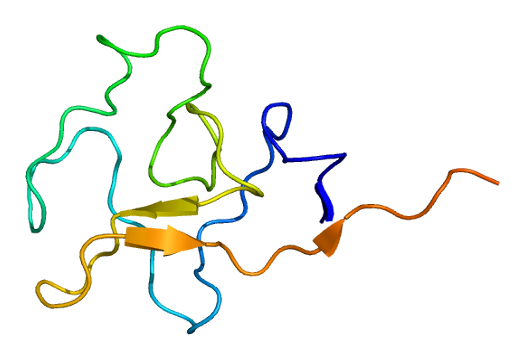
Lipoprotein(a) [Lp(a)] consists of an LDL-like particle and the specific apolipoprotein(a), which is bound covalently to the apoB contained in the outer shell of the particle. Lp(a) plasma concentrations are highly heritable and mainly controlled by the LPA gene located on chromosome 6q25.3–q26. Apo(a) proteins vary in size due to a size polymorphism [KIV-2 VNTR], which is caused by a variable number of kringle IV repeats in the LPA gene. This size variation at the gene level is expressed on the protein level as well, resulting in apo(a) proteins with 10 to more than 50 kringle IV repeats (each of the variable kringle IV consists of 114 amino acids). These variable apo(a) sizes are known as "apo(a) isoforms".
There is a general inverse correlation between the size of the apo(a) isoform and the Lp(a) plasma concentration. One theory explaining this correlation involves different rates of protein synthesis. Specifically, the larger the isoform, the more apo(a) precursor protein accumulates intracellularly in the endoplasmic reticulum. Lp(a) is not fully synthesised until the precursor protein is released from the cell, so the slower production rate for the larger isoforms limits the plasma concentration.
Lp(a) concentrations can vary by more than one thousand between individuals, from <0.2 to >200 mg/dL. Scientists have found that this range of concentrations has been observed in all populations studied. The mean and median concentrations differ among world populations. Most prominently, there is a two to threefold higher mean Lp(a) plasma concentration in populations of African descent compared to Asian, Oceanic, or European populations. The general inverse correlation between apo(a) isoform size and Lp(a) plasma concentration is observed in all populations. However, it was also discovered that mean Lp(a) associated with certain apo(a) isoforms varies between populations.[citation needed]
In addition to size effects, mutations in the LPA promoter may lead to a decreased apo(a) production.
The Atherosclerosis Risk in Communities (ARIC) Study is a community-based cohort from 4 geographically diverse US communities. The ARIC Study found that the proportion of Atherosclerotic Cardiovascular Disease cases potentially attributable to elevated Lp(a) was 10.2% among Black adults compared with 4.7% among white adults. The population-attributable fraction ratio for Black adults compared with white adults was 2.30. Because the hazard ratios for ASCVD associated with higher Lp(a) did not significantly differ between races, the ARIC study concluded that these differences appeared to be driven largely by racial differences in the distribution of Lp(a) levels.
Lp(a) is assembled at the hepatocyte cell membrane surface, which is similar to typical LDL particles. However, there are other possible locations of assembly. The particles mainly exist in plasma.
Hub AI
Lipoprotein(a) AI simulator
(@Lipoprotein(a)_simulator)
Lipoprotein(a)
Lipoprotein(a) is a low-density lipoprotein variant containing a protein called apolipoprotein(a). Genetic and epidemiological studies have identified lipoprotein(a) as a risk factor for atherosclerosis and related diseases, such as coronary heart disease and stroke.
Lipoprotein(a) was discovered in 1963 by Kåre Berg. The human gene encoding apolipoprotein(a) was successfully cloned in 1987.
Lipoprotein(a) [Lp(a)] consists of an LDL-like particle and the specific apolipoprotein(a), which is bound covalently to the apoB contained in the outer shell of the particle. Lp(a) plasma concentrations are highly heritable and mainly controlled by the LPA gene located on chromosome 6q25.3–q26. Apo(a) proteins vary in size due to a size polymorphism [KIV-2 VNTR], which is caused by a variable number of kringle IV repeats in the LPA gene. This size variation at the gene level is expressed on the protein level as well, resulting in apo(a) proteins with 10 to more than 50 kringle IV repeats (each of the variable kringle IV consists of 114 amino acids). These variable apo(a) sizes are known as "apo(a) isoforms".
There is a general inverse correlation between the size of the apo(a) isoform and the Lp(a) plasma concentration. One theory explaining this correlation involves different rates of protein synthesis. Specifically, the larger the isoform, the more apo(a) precursor protein accumulates intracellularly in the endoplasmic reticulum. Lp(a) is not fully synthesised until the precursor protein is released from the cell, so the slower production rate for the larger isoforms limits the plasma concentration.
Lp(a) concentrations can vary by more than one thousand between individuals, from <0.2 to >200 mg/dL. Scientists have found that this range of concentrations has been observed in all populations studied. The mean and median concentrations differ among world populations. Most prominently, there is a two to threefold higher mean Lp(a) plasma concentration in populations of African descent compared to Asian, Oceanic, or European populations. The general inverse correlation between apo(a) isoform size and Lp(a) plasma concentration is observed in all populations. However, it was also discovered that mean Lp(a) associated with certain apo(a) isoforms varies between populations.[citation needed]
In addition to size effects, mutations in the LPA promoter may lead to a decreased apo(a) production.
The Atherosclerosis Risk in Communities (ARIC) Study is a community-based cohort from 4 geographically diverse US communities. The ARIC Study found that the proportion of Atherosclerotic Cardiovascular Disease cases potentially attributable to elevated Lp(a) was 10.2% among Black adults compared with 4.7% among white adults. The population-attributable fraction ratio for Black adults compared with white adults was 2.30. Because the hazard ratios for ASCVD associated with higher Lp(a) did not significantly differ between races, the ARIC study concluded that these differences appeared to be driven largely by racial differences in the distribution of Lp(a) levels.
Lp(a) is assembled at the hepatocyte cell membrane surface, which is similar to typical LDL particles. However, there are other possible locations of assembly. The particles mainly exist in plasma.
Recent media