



Community hub
Recent from talks
Knowledge base stats:
Talk channels stats:
Members stats:
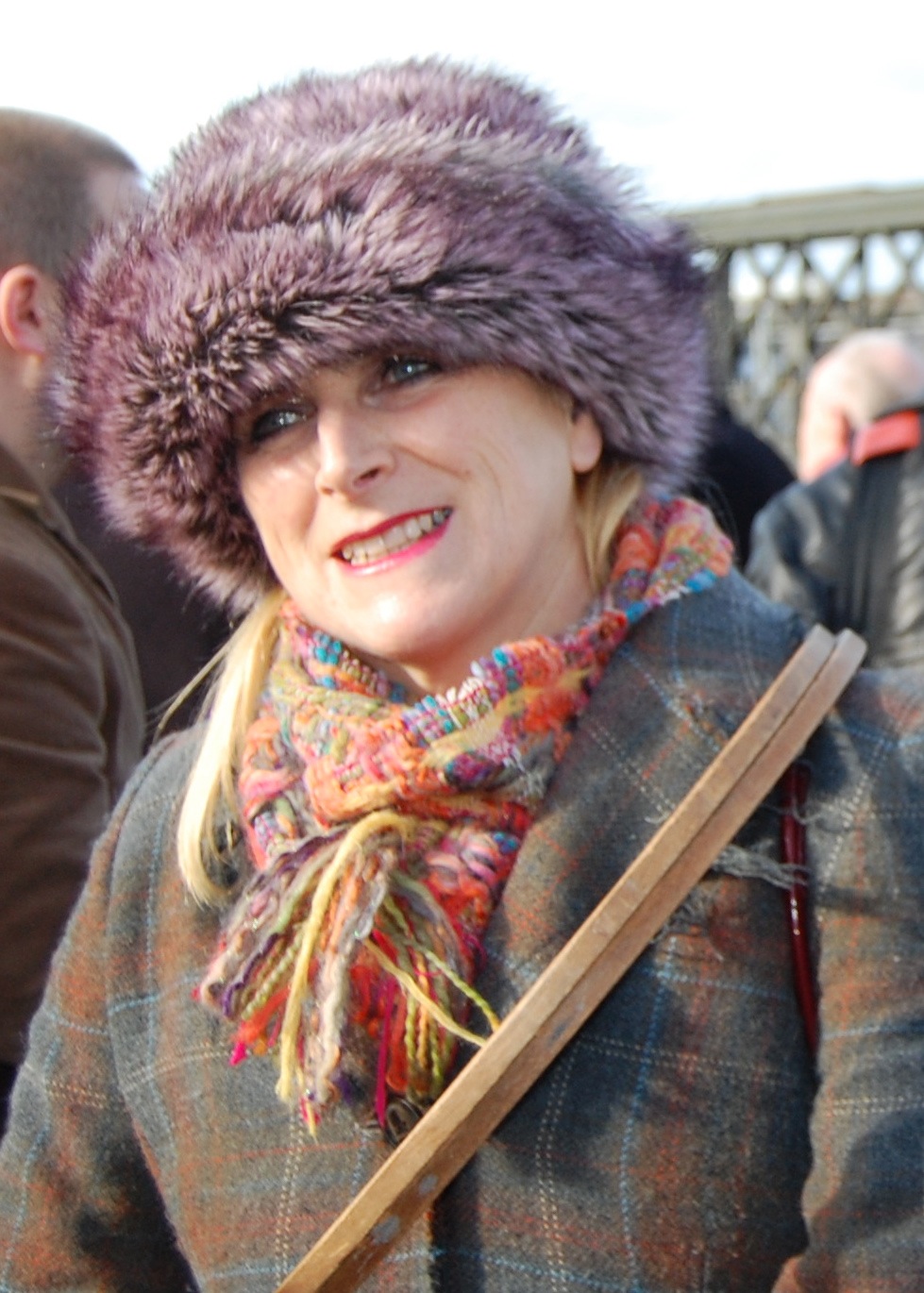
Liz Aggiss
Liz Aggiss (born 28 May 1953) is a British live artist, dance performer, choreographer and film maker. Her work is inspired by early 20th century Ausdruckstanz (Expressionist dance), in particular the Grotesque dance of Valeska Gert, and by British Music Hall and Variety acts such as the eccentric dance performers, Max Wall and Wilson, Keppel and Betty. She is often described as the 'grand dame of anarchic dance'.
From 1982 to 2003, Aggiss collaborated with the composer, writer and choreographer, Billy Cowie, making live shows and films under the name Divas Dance Theatre. After their partnership ended, due to artistic differences, she made a series of films and solo live works, Survival Tactics for the Anarchic Dancer, The English Channel, Slap and Tickle and Crone Alone.
From her earliest works, Aggiss has challenged conventional ideas of female sexuality and beauty and questioned 'the social mores that pigeon-hole women of all ages.' She describes her later live shows as a project to 'reclaim the stage space for the older woman.'
Aggiss is Emeritus Professor in Visual Performance at the University of Brighton, where she taught for many years, and an Honorary Doctor at the Universities of Gothenburg and Chichester.
Liz Aggiss was born in Nannygoats Commons, Dagenham, Essex and grew up in nearby Upminster, which she later described as 'a bleak English suburb during post war austerity. Where little children were seen and not heard.' Her love of music hall came from her grandmother, who used to sing to her a whole range of music hall songs: 'These were gifts. Through a kind of memory osmosis I have both fascination and knowledge of music hall....I also have a direct familial lineage to early music hall and performance in my great Auntie Flo aka Marjorie Irvine.'
Aggiss's first experience of dance was in 1970, when she studied Rudolph von Laban's modern educational dance in the UK. After a teacher training course in Keele, she 'had various jobs teaching PE teachers how to teach dance.' In 1980, she went to New York to study contemporary dance. After a summer 'studio hopping' from Graham to Cunningham to whatever else she fancied' she found the Alwin Nikolais and Murray Louis Dance Theatre Lab, where she felt she belonged. Until 1982, Aggiss trained with the Lab's lead teacher, the German expressionist Hanya Holm, in New York and in Colorado Springs. Back in the UK, Aggiss studied eccentric dance with Joan and Barry Grantham, 'possibly the last remaining living link with the early twentieth century UK Music Hall and Variety world.'
On her return to the UK in 1982, Aggiss began to teach visual performance at the University of Brighton (then Brighton Polytechnic). Here she met the Scottish composer and writer Billy Cowie, a fellow teacher. They began working together in order to get the student dancers to collaborate with the musicians. 'When the dancers didn't know how to, Liz got up and showed them. Billy directed from the sidelines.' In their book, Anarchic Dance, Aggiss and Cowie described how they worked together: 'All our work is truly collaborative....After the first few productions, whichever of us was feeling most inspired would take up the choreographic baton and run with it until we were floored by the other's barbed, critical and caustic comments. Latterly we pragmatically sliced up the works into manageable chunks and negotiated who would do which aspects of the 'steps' as we like to call them. Strangely the Yin/Yang combination of Aggiss, the 'stand up dancer' who can actually perform the movements, and Cowie the 'armchair choreographer' who can only dream them, works surprisingly well.'
In 1982, Aggiss and Cowie created The Wild Wigglers, a cabaret act inspired by the punk pogo dance, Wilson, Keppel and Betty's Sand Dance and J.H.Stead, the jumping comedian. Three dancers, wearing spiralling yellow and black leotards and tall pointy hats, performed a twenty-minute set of short visually connected dances: 'These simple animated gestures – hopping, jumping, scuttling, rummaging, blobbing, slugging – were grasped and choreographically 'worried to death' in succinct three-minute visual performance wonders'. Two Wild Wiggler dances, Weird Wiggle and Hop on Pops, can be seen on YouTube.
Hub AI
Liz Aggiss AI simulator
(@Liz Aggiss_simulator)
Liz Aggiss
Liz Aggiss (born 28 May 1953) is a British live artist, dance performer, choreographer and film maker. Her work is inspired by early 20th century Ausdruckstanz (Expressionist dance), in particular the Grotesque dance of Valeska Gert, and by British Music Hall and Variety acts such as the eccentric dance performers, Max Wall and Wilson, Keppel and Betty. She is often described as the 'grand dame of anarchic dance'.
From 1982 to 2003, Aggiss collaborated with the composer, writer and choreographer, Billy Cowie, making live shows and films under the name Divas Dance Theatre. After their partnership ended, due to artistic differences, she made a series of films and solo live works, Survival Tactics for the Anarchic Dancer, The English Channel, Slap and Tickle and Crone Alone.
From her earliest works, Aggiss has challenged conventional ideas of female sexuality and beauty and questioned 'the social mores that pigeon-hole women of all ages.' She describes her later live shows as a project to 'reclaim the stage space for the older woman.'
Aggiss is Emeritus Professor in Visual Performance at the University of Brighton, where she taught for many years, and an Honorary Doctor at the Universities of Gothenburg and Chichester.
Liz Aggiss was born in Nannygoats Commons, Dagenham, Essex and grew up in nearby Upminster, which she later described as 'a bleak English suburb during post war austerity. Where little children were seen and not heard.' Her love of music hall came from her grandmother, who used to sing to her a whole range of music hall songs: 'These were gifts. Through a kind of memory osmosis I have both fascination and knowledge of music hall....I also have a direct familial lineage to early music hall and performance in my great Auntie Flo aka Marjorie Irvine.'
Aggiss's first experience of dance was in 1970, when she studied Rudolph von Laban's modern educational dance in the UK. After a teacher training course in Keele, she 'had various jobs teaching PE teachers how to teach dance.' In 1980, she went to New York to study contemporary dance. After a summer 'studio hopping' from Graham to Cunningham to whatever else she fancied' she found the Alwin Nikolais and Murray Louis Dance Theatre Lab, where she felt she belonged. Until 1982, Aggiss trained with the Lab's lead teacher, the German expressionist Hanya Holm, in New York and in Colorado Springs. Back in the UK, Aggiss studied eccentric dance with Joan and Barry Grantham, 'possibly the last remaining living link with the early twentieth century UK Music Hall and Variety world.'
On her return to the UK in 1982, Aggiss began to teach visual performance at the University of Brighton (then Brighton Polytechnic). Here she met the Scottish composer and writer Billy Cowie, a fellow teacher. They began working together in order to get the student dancers to collaborate with the musicians. 'When the dancers didn't know how to, Liz got up and showed them. Billy directed from the sidelines.' In their book, Anarchic Dance, Aggiss and Cowie described how they worked together: 'All our work is truly collaborative....After the first few productions, whichever of us was feeling most inspired would take up the choreographic baton and run with it until we were floored by the other's barbed, critical and caustic comments. Latterly we pragmatically sliced up the works into manageable chunks and negotiated who would do which aspects of the 'steps' as we like to call them. Strangely the Yin/Yang combination of Aggiss, the 'stand up dancer' who can actually perform the movements, and Cowie the 'armchair choreographer' who can only dream them, works surprisingly well.'
In 1982, Aggiss and Cowie created The Wild Wigglers, a cabaret act inspired by the punk pogo dance, Wilson, Keppel and Betty's Sand Dance and J.H.Stead, the jumping comedian. Three dancers, wearing spiralling yellow and black leotards and tall pointy hats, performed a twenty-minute set of short visually connected dances: 'These simple animated gestures – hopping, jumping, scuttling, rummaging, blobbing, slugging – were grasped and choreographically 'worried to death' in succinct three-minute visual performance wonders'. Two Wild Wiggler dances, Weird Wiggle and Hop on Pops, can be seen on YouTube.