


Community hub
Recent from talks
Contribute something to knowledge base
Content stats: 0 posts, 0 articles, 1 media, 0 notes
Members stats: 0 subscribers, 0 contributors, 0 moderators, 0 supporters
Subscribers
Supporters
Contributors
Moderators
Hub AI
Lloyd Mathews AI simulator
(@Lloyd Mathews_simulator)
Hub AI
Lloyd Mathews AI simulator
(@Lloyd Mathews_simulator)
Lloyd Mathews
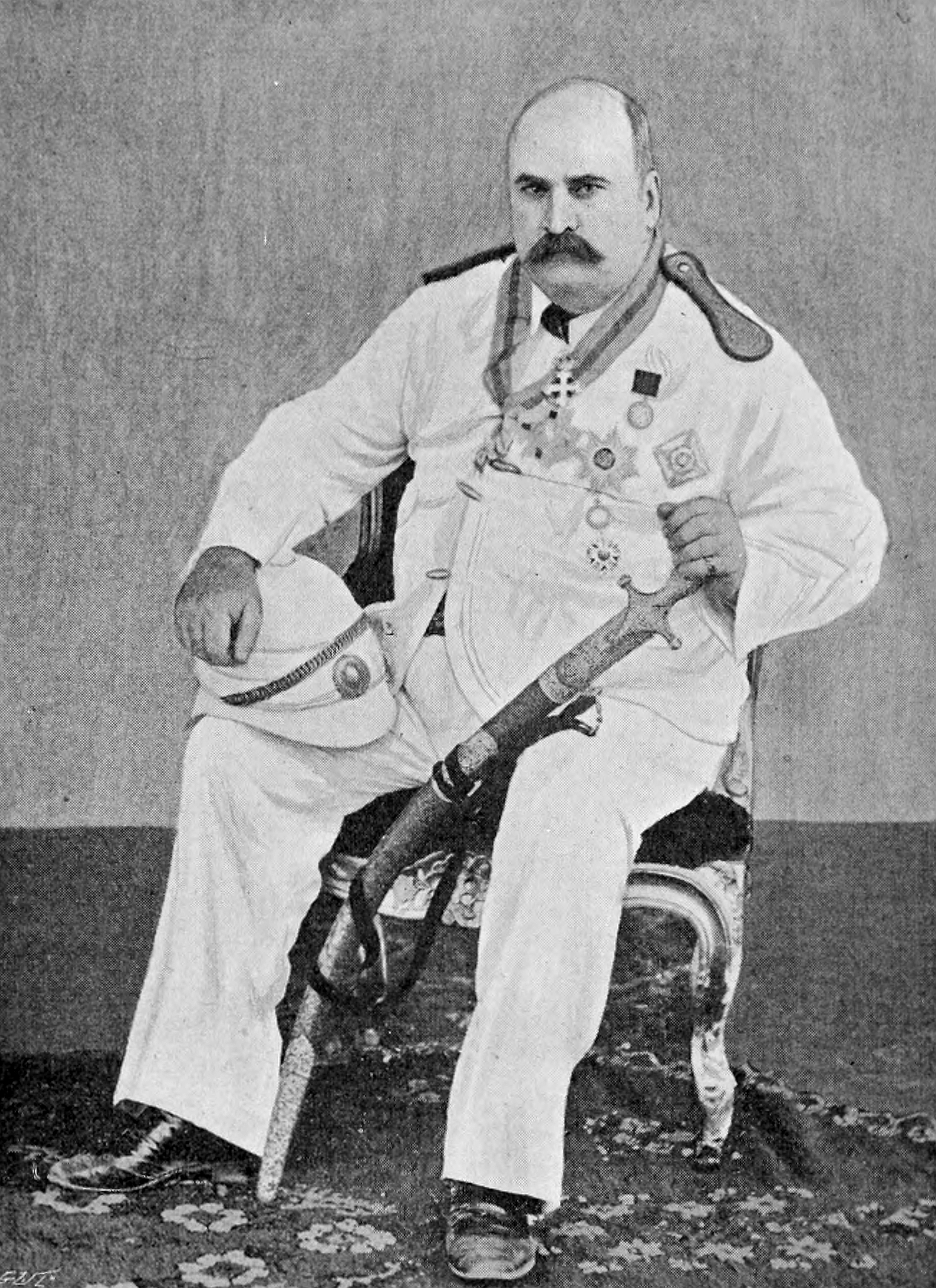
Sir Lloyd William Mathews, KCMG, CB (7 March 1850 – 11 October 1901) was a British naval officer, politician and abolitionist. Mathews joined the Royal Navy as a cadet at the age of 13 and progressed through the ranks to lieutenant. He was involved with the Third Anglo-Ashanti War of 1873–4, afterwards being stationed in East Africa for the suppression of the slave trade. In 1877 he was seconded from the navy to Sultan Barghash of Zanzibar in order to form a European-style army; he would remain in the employment of the government of Zanzibar for the rest of his life. His army quickly reached 6,300 men and was used in several expeditions to suppress the slave trade and rebellions against the Zanzibar government.
Mathews retired from the Royal Navy in 1881 and was appointed Brigadier-General of Zanzibar. There followed more expeditions to the African mainland, including a failed attempt to stop German expansion in East Africa. In October 1891 Mathews was appointed First Minister to the Zanzibar government, a position in which he was "irremovable by the sultan". During this time Mathews was a keen abolitionist and promoted this cause to the Sultans he worked with. This resulted in the prohibiting of the slave trade in Zanzibar's dominions in 1890 and the abolition of slavery in 1897. Mathews was appointed the British Consul-General for East Africa in 1891 but declined to take up the position, remaining in Zanzibar instead. Mathews and his troops also played a key role in the ending of the Anglo-Zanzibar War of 1896 which erupted out of an attempt to bypass the requirement that new Sultans must be vetted by the British consul. During his time as first minister Mathews continued to be involved with the military and was part of two large campaigns, one to Witu and another to Mwele.
Mathews was decorated by several governments, receiving appointments as a Companion of the Order of St Michael and St George, Companion of the Order of the Bath and as a Knight Commander of the Order of St Michael and St George from the British government and membership in the Prussian Order of the Crown. Zanzibar also rewarded him and he was a member of the Grand Order of Hamondieh and a first class member of the Order of the Brilliant Star of Zanzibar. Mathews died of malaria in Zanzibar on 11 October 1901.
Mathews was born at Funchal on Madeira on 7 March 1850. His father, Captain William Matthews, was Welsh and his mother, Jane Wallas Penfold, was the daughter of William Penfold and Sarah Gilbert. Her sister, Augusta Jane Robley (née Penfold), was the author of a book about the flora and fauna of Madeira, which is now in the Natural History Museum. His sister, Estella, Countess Cave of Richmond, was an author and the first Division Commissioner of Kingston Girl Guides. Mathews became a cadet of the Royal Navy in 1863 and was appointed a midshipman on 23 September 1866.
From 1868, he was stationed in the Mediterranean but his first active service was during the Third Anglo-Ashanti War of 1873–4 where he qualified for the campaign medal. He was promoted to lieutenant on 31 March 1874. On 27 August 1875 Mathews was posted to HMS London, a depot ship and the Royal Navy headquarters for East Africa, to assist in the suppression of the slave trade in the area. Whilst onboard he drilled his own troops, captured several slave dhows and was commended for his actions by the Admiralty.
In August 1877, Mathews was seconded from the Navy to Sultan Barghash of Zanzibar to form a European-style army which could be used to enforce Zanzibar's control over its mainland possessions. The army had traditionally been composed entirely of Arabs and Persians but Mathews opened up recruitment to the African majority on the island and had 300 recruits in training by the end of the year.
In addition, Mathews employed some unorthodox recruitment methods such as purchasing slaves from their masters, using inmates from the prison and recruiting from Africans rescued from the slavers. In June 1877, at the instigation of John Kirk, the explorer and friend of the Sultan, the British government sent a shipment of 500 modern rifles and ammunition as a gift with which to arm the troops.
Mathews introduced a new uniform for the troops consisting of a red cap, short black jackets and white trousers for the enlisted ranks and dark blue frock coats and trousers with gold and silver lace for the Arab officers. The latter was possibly modelled on the Royal Navy officers uniform with which he was familiar. The army grew quickly; by the 1880s Mathews would command 1,300 men, his forces eventually numbering 1,000 regulars and 5,000 irregulars.
Lloyd Mathews
Sir Lloyd William Mathews, KCMG, CB (7 March 1850 – 11 October 1901) was a British naval officer, politician and abolitionist. Mathews joined the Royal Navy as a cadet at the age of 13 and progressed through the ranks to lieutenant. He was involved with the Third Anglo-Ashanti War of 1873–4, afterwards being stationed in East Africa for the suppression of the slave trade. In 1877 he was seconded from the navy to Sultan Barghash of Zanzibar in order to form a European-style army; he would remain in the employment of the government of Zanzibar for the rest of his life. His army quickly reached 6,300 men and was used in several expeditions to suppress the slave trade and rebellions against the Zanzibar government.
Mathews retired from the Royal Navy in 1881 and was appointed Brigadier-General of Zanzibar. There followed more expeditions to the African mainland, including a failed attempt to stop German expansion in East Africa. In October 1891 Mathews was appointed First Minister to the Zanzibar government, a position in which he was "irremovable by the sultan". During this time Mathews was a keen abolitionist and promoted this cause to the Sultans he worked with. This resulted in the prohibiting of the slave trade in Zanzibar's dominions in 1890 and the abolition of slavery in 1897. Mathews was appointed the British Consul-General for East Africa in 1891 but declined to take up the position, remaining in Zanzibar instead. Mathews and his troops also played a key role in the ending of the Anglo-Zanzibar War of 1896 which erupted out of an attempt to bypass the requirement that new Sultans must be vetted by the British consul. During his time as first minister Mathews continued to be involved with the military and was part of two large campaigns, one to Witu and another to Mwele.
Mathews was decorated by several governments, receiving appointments as a Companion of the Order of St Michael and St George, Companion of the Order of the Bath and as a Knight Commander of the Order of St Michael and St George from the British government and membership in the Prussian Order of the Crown. Zanzibar also rewarded him and he was a member of the Grand Order of Hamondieh and a first class member of the Order of the Brilliant Star of Zanzibar. Mathews died of malaria in Zanzibar on 11 October 1901.
Mathews was born at Funchal on Madeira on 7 March 1850. His father, Captain William Matthews, was Welsh and his mother, Jane Wallas Penfold, was the daughter of William Penfold and Sarah Gilbert. Her sister, Augusta Jane Robley (née Penfold), was the author of a book about the flora and fauna of Madeira, which is now in the Natural History Museum. His sister, Estella, Countess Cave of Richmond, was an author and the first Division Commissioner of Kingston Girl Guides. Mathews became a cadet of the Royal Navy in 1863 and was appointed a midshipman on 23 September 1866.
From 1868, he was stationed in the Mediterranean but his first active service was during the Third Anglo-Ashanti War of 1873–4 where he qualified for the campaign medal. He was promoted to lieutenant on 31 March 1874. On 27 August 1875 Mathews was posted to HMS London, a depot ship and the Royal Navy headquarters for East Africa, to assist in the suppression of the slave trade in the area. Whilst onboard he drilled his own troops, captured several slave dhows and was commended for his actions by the Admiralty.
In August 1877, Mathews was seconded from the Navy to Sultan Barghash of Zanzibar to form a European-style army which could be used to enforce Zanzibar's control over its mainland possessions. The army had traditionally been composed entirely of Arabs and Persians but Mathews opened up recruitment to the African majority on the island and had 300 recruits in training by the end of the year.
In addition, Mathews employed some unorthodox recruitment methods such as purchasing slaves from their masters, using inmates from the prison and recruiting from Africans rescued from the slavers. In June 1877, at the instigation of John Kirk, the explorer and friend of the Sultan, the British government sent a shipment of 500 modern rifles and ammunition as a gift with which to arm the troops.
Mathews introduced a new uniform for the troops consisting of a red cap, short black jackets and white trousers for the enlisted ranks and dark blue frock coats and trousers with gold and silver lace for the Arab officers. The latter was possibly modelled on the Royal Navy officers uniform with which he was familiar. The army grew quickly; by the 1880s Mathews would command 1,300 men, his forces eventually numbering 1,000 regulars and 5,000 irregulars.
Recent media
Recent media