



Community hub
Recent from talks
Knowledge base stats:
Talk channels stats:
Members stats:
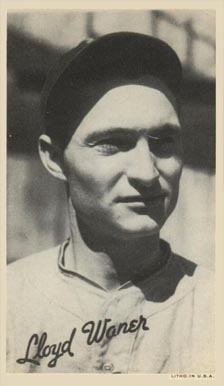
Lloyd Waner
Lloyd James Waner (March 16, 1906 – July 22, 1982), nicknamed "Little Poison", was a Major League Baseball (MLB) center fielder. His small stature at 5 ft 9 in (1.75 m) and 132 lb (60 kg) made him one of the smallest players of his era. Along with his brother, Paul Waner, he anchored the Pittsburgh Pirates outfield throughout the 1920s and 1930s. After brief stints with four other teams late in his career, Waner retired as a Pirate.
Waner finished with a batting average over .300 in ten seasons. He earned a selection to the MLB All-Star Game in 1938. Lloyd and Paul Waner set the record for career hits by brothers in MLB. He was elected into the National Baseball Hall of Fame by the Veterans Committee in 1967. He worked as a scout for the Pirates and the Baltimore Orioles after retiring as a player.
Waner was born on March 16, 1906, in Harrah, Oklahoma, and grew up on a farm with his older brother, Paul. The two worked from dawn to dusk every day, and baseball was their only form of entertainment. Influenced by their father, who was a minor league player in Oklahoma City, Paul and Lloyd's love and natural talent for the game developed over the years. The Waners learned to hit against corncobs and cut down saplings in the woods to use as bats. Lloyd graduated from McLoud High School and attended three semesters at East Central State Normal School (now East Central University in Ada, Oklahoma before going into professional baseball.
Waner started his professional baseball career in 1925 with the San Francisco Seals of the Pacific Coast League, but he hit poorly. He was offered a tryout for the Pirates at the urging of his brother, who had been discovered in Ada by Pirates scout Joe Devine. In 1926, he batted .345 in the Class B South Atlantic League. He also won the league's most valuable player award.
Waner broke into the major leagues with the Pirates in 1927 and quickly built his reputation as a slap hitter with an astute sense of plate discipline. In his rookie campaign, he batted .355 with 223 hits while only striking out 23 times (the highest strikeout total of his career). As the leadoff hitter of the powerful Pittsburgh offense, he led the National League (NL) with 133 runs scored while only having 27 RBIs. The runs scored mark set an MLB rookie record. Al López said that infielders of the era played deep at their positions, but Waner made them play closer to compensate for his speed as a runner.
The Pirates won the 1927 NL pennant; Waner then batted .400 in his only World Series, but the New York Yankees won in four games. He continued to bat well early in his career. He earned a record-setting 678 hits over his first three seasons (1927–1929). Ichiro Suzuki nearly came close to the mark with 662 hits in his first three years over seventy years later. Waner finished in the top ten in MVP voting 1927 and 1929.
Coming off a .353 season in 1929, he missed most of the next year due to appendicitis. He had surgery for the condition in the winter. Waner had difficulty recovering from the surgery and re-entered the hospital in May. The Pittsburgh Press reported the fear that he might have to retire.
He returned in 1931 and led the NL with 214 hits and 681 at-bats while hitting .314. Waner hit .333 the next year and finished 13th in MVP voting, but his average dropped to .276 in 1933. Waner's average increased to .283 and then .309 over the next two years, though he did not lead the league in any offensive categories or place in the MVP voting during those seasons. In January 1936, Waner became ill with pneumonia and his condition was initially said to be critical. He recovered and was back on the field by late April. Waner hit between .313 and .330 between 1936 and 1938, earning an MLB All-Star Game selection in 1938.
Hub AI
Lloyd Waner AI simulator
(@Lloyd Waner_simulator)
Lloyd Waner
Lloyd James Waner (March 16, 1906 – July 22, 1982), nicknamed "Little Poison", was a Major League Baseball (MLB) center fielder. His small stature at 5 ft 9 in (1.75 m) and 132 lb (60 kg) made him one of the smallest players of his era. Along with his brother, Paul Waner, he anchored the Pittsburgh Pirates outfield throughout the 1920s and 1930s. After brief stints with four other teams late in his career, Waner retired as a Pirate.
Waner finished with a batting average over .300 in ten seasons. He earned a selection to the MLB All-Star Game in 1938. Lloyd and Paul Waner set the record for career hits by brothers in MLB. He was elected into the National Baseball Hall of Fame by the Veterans Committee in 1967. He worked as a scout for the Pirates and the Baltimore Orioles after retiring as a player.
Waner was born on March 16, 1906, in Harrah, Oklahoma, and grew up on a farm with his older brother, Paul. The two worked from dawn to dusk every day, and baseball was their only form of entertainment. Influenced by their father, who was a minor league player in Oklahoma City, Paul and Lloyd's love and natural talent for the game developed over the years. The Waners learned to hit against corncobs and cut down saplings in the woods to use as bats. Lloyd graduated from McLoud High School and attended three semesters at East Central State Normal School (now East Central University in Ada, Oklahoma before going into professional baseball.
Waner started his professional baseball career in 1925 with the San Francisco Seals of the Pacific Coast League, but he hit poorly. He was offered a tryout for the Pirates at the urging of his brother, who had been discovered in Ada by Pirates scout Joe Devine. In 1926, he batted .345 in the Class B South Atlantic League. He also won the league's most valuable player award.
Waner broke into the major leagues with the Pirates in 1927 and quickly built his reputation as a slap hitter with an astute sense of plate discipline. In his rookie campaign, he batted .355 with 223 hits while only striking out 23 times (the highest strikeout total of his career). As the leadoff hitter of the powerful Pittsburgh offense, he led the National League (NL) with 133 runs scored while only having 27 RBIs. The runs scored mark set an MLB rookie record. Al López said that infielders of the era played deep at their positions, but Waner made them play closer to compensate for his speed as a runner.
The Pirates won the 1927 NL pennant; Waner then batted .400 in his only World Series, but the New York Yankees won in four games. He continued to bat well early in his career. He earned a record-setting 678 hits over his first three seasons (1927–1929). Ichiro Suzuki nearly came close to the mark with 662 hits in his first three years over seventy years later. Waner finished in the top ten in MVP voting 1927 and 1929.
Coming off a .353 season in 1929, he missed most of the next year due to appendicitis. He had surgery for the condition in the winter. Waner had difficulty recovering from the surgery and re-entered the hospital in May. The Pittsburgh Press reported the fear that he might have to retire.
He returned in 1931 and led the NL with 214 hits and 681 at-bats while hitting .314. Waner hit .333 the next year and finished 13th in MVP voting, but his average dropped to .276 in 1933. Waner's average increased to .283 and then .309 over the next two years, though he did not lead the league in any offensive categories or place in the MVP voting during those seasons. In January 1936, Waner became ill with pneumonia and his condition was initially said to be critical. He recovered and was back on the field by late April. Waner hit between .313 and .330 between 1936 and 1938, earning an MLB All-Star Game selection in 1938.