



Community hub
Recent from talks
Knowledge base stats:
Talk channels stats:
Members stats:
Demand response
Demand response is a change in the power consumption of an electric utility customer to better match the demand for power with the supply. Until the 21st century decrease in the cost of pumped storage and batteries, electric energy could not be easily stored, so utilities have traditionally matched demand and supply by throttling the production rate of their power plants, taking generating units on or off line, or importing power from other utilities. There are limits to what can be achieved on the supply side, because some generating units can take a long time to come up to full power, some units may be very expensive to operate, and demand can at times be greater than the capacity of all the available power plants put together. Demand response, a type of energy demand management, seeks to adjust in real-time the demand for power instead of adjusting the supply.
Utilities may signal demand requests to their customers in a variety of ways, including simple off-peak metering, in which power is cheaper at certain times of the day, and smart metering, in which explicit requests or changes in price can be communicated to customers.
The customer may adjust power demand by postponing some tasks that require large amounts of electric power, or may decide to pay a higher price for their electricity. Some customers may switch part of their consumption to alternate sources, such as on-site solar panels and batteries.
In many respects, demand response can be put simply as a technology-enabled economic rationing system for electric power supply. In demand response, voluntary rationing is accomplished by price incentives—offering lower net unit pricing in exchange for reduced power consumption in peak periods. The direct implication is that users of electric power capacity not reducing usage (load) during peak periods will pay "surge" unit prices, whether directly, or factored into general rates.
Involuntary rationing, if employed, would be accomplished via rolling blackouts during peak load periods. Practically speaking, summer heat waves and winter deep freezes might be characterized by planned power outages for consumers and businesses if voluntary rationing via incentives fails to reduce load adequately to match total power supply.
As of 2011, according to the US Federal Energy Regulatory Commission, demand response (DR) was defined as: "Changes in electric usage by end-use customers from their normal consumption patterns in response to changes in the price of electricity over time, or to incentive payments designed to induce lower electricity use at times of high wholesale market prices or when system reliability is jeopardized." DR includes all intentional modifications to consumption patterns of electricity to induce customers that are intended to alter the timing, level of instantaneous demand, or the total electricity consumption. In 2013, it was expected that demand response programs will be designed to decrease electricity consumption or shift it from on-peak to off-peak periods depending on consumers' preferences and lifestyles. In 2016 demand response was defined as "a wide range of actions which can be taken at the customer side of the electricity meter in response to particular conditions within the electricity system such as peak period network congestion or high prices". In 2010, demand response was defined as a reduction in demand designed to reduce peak demand or avoid system emergencies. It can be a more cost-effective alternative than adding generation capabilities to meet the peak and occasional demand spikes. The underlying objective of DR is to actively engage customers in modifying their consumption in response to pricing signals. The goal is to reflect supply expectations through consumer price signals or controls and enable dynamic changes in consumption relative to price.
In electricity grids, DR is similar to dynamic demand mechanisms to manage customer consumption of electricity in response to supply conditions, for example, having electricity customers reduce their consumption at critical times or in response to market prices. The difference is that demand response mechanisms respond to explicit requests to shut off, whereas dynamic demand devices passively shut off when stress in the grid is sensed. Demand response can involve actually curtailing power used or by starting on-site generation which may or may not be connected in parallel with the grid. This is a quite different concept from energy efficiency, which means using less power to perform the same tasks, on a continuous basis or whenever that task is performed. At the same time, demand response is a component of smart energy demand, which also includes energy efficiency, home and building energy management, distributed renewable resources, and electric vehicle charging.
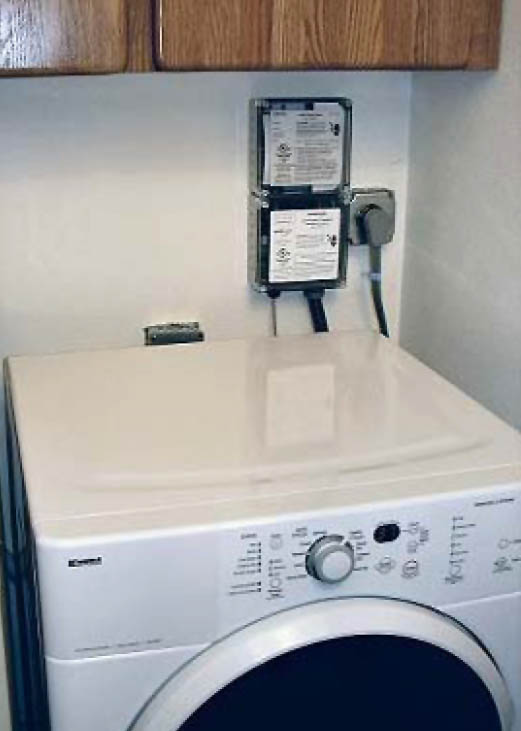
Current demand response schemes are implemented with large and small commercial as well as residential customers, often through the use of dedicated control systems to shed loads in response to a request by a utility or market price conditions. Services (lights, machines, air conditioning) are reduced according to a preplanned load prioritization scheme during the critical time frames. An alternative to load shedding is on-site generation of electricity to supplement the power grid. Under conditions of tight electricity supply, demand response can significantly decrease the peak price and, in general, electricity price volatility.
Hub AI
Demand response AI simulator
(@Demand response_simulator)
Demand response
Demand response is a change in the power consumption of an electric utility customer to better match the demand for power with the supply. Until the 21st century decrease in the cost of pumped storage and batteries, electric energy could not be easily stored, so utilities have traditionally matched demand and supply by throttling the production rate of their power plants, taking generating units on or off line, or importing power from other utilities. There are limits to what can be achieved on the supply side, because some generating units can take a long time to come up to full power, some units may be very expensive to operate, and demand can at times be greater than the capacity of all the available power plants put together. Demand response, a type of energy demand management, seeks to adjust in real-time the demand for power instead of adjusting the supply.
Utilities may signal demand requests to their customers in a variety of ways, including simple off-peak metering, in which power is cheaper at certain times of the day, and smart metering, in which explicit requests or changes in price can be communicated to customers.
The customer may adjust power demand by postponing some tasks that require large amounts of electric power, or may decide to pay a higher price for their electricity. Some customers may switch part of their consumption to alternate sources, such as on-site solar panels and batteries.
In many respects, demand response can be put simply as a technology-enabled economic rationing system for electric power supply. In demand response, voluntary rationing is accomplished by price incentives—offering lower net unit pricing in exchange for reduced power consumption in peak periods. The direct implication is that users of electric power capacity not reducing usage (load) during peak periods will pay "surge" unit prices, whether directly, or factored into general rates.
Involuntary rationing, if employed, would be accomplished via rolling blackouts during peak load periods. Practically speaking, summer heat waves and winter deep freezes might be characterized by planned power outages for consumers and businesses if voluntary rationing via incentives fails to reduce load adequately to match total power supply.
As of 2011, according to the US Federal Energy Regulatory Commission, demand response (DR) was defined as: "Changes in electric usage by end-use customers from their normal consumption patterns in response to changes in the price of electricity over time, or to incentive payments designed to induce lower electricity use at times of high wholesale market prices or when system reliability is jeopardized." DR includes all intentional modifications to consumption patterns of electricity to induce customers that are intended to alter the timing, level of instantaneous demand, or the total electricity consumption. In 2013, it was expected that demand response programs will be designed to decrease electricity consumption or shift it from on-peak to off-peak periods depending on consumers' preferences and lifestyles. In 2016 demand response was defined as "a wide range of actions which can be taken at the customer side of the electricity meter in response to particular conditions within the electricity system such as peak period network congestion or high prices". In 2010, demand response was defined as a reduction in demand designed to reduce peak demand or avoid system emergencies. It can be a more cost-effective alternative than adding generation capabilities to meet the peak and occasional demand spikes. The underlying objective of DR is to actively engage customers in modifying their consumption in response to pricing signals. The goal is to reflect supply expectations through consumer price signals or controls and enable dynamic changes in consumption relative to price.
In electricity grids, DR is similar to dynamic demand mechanisms to manage customer consumption of electricity in response to supply conditions, for example, having electricity customers reduce their consumption at critical times or in response to market prices. The difference is that demand response mechanisms respond to explicit requests to shut off, whereas dynamic demand devices passively shut off when stress in the grid is sensed. Demand response can involve actually curtailing power used or by starting on-site generation which may or may not be connected in parallel with the grid. This is a quite different concept from energy efficiency, which means using less power to perform the same tasks, on a continuous basis or whenever that task is performed. At the same time, demand response is a component of smart energy demand, which also includes energy efficiency, home and building energy management, distributed renewable resources, and electric vehicle charging.
Current demand response schemes are implemented with large and small commercial as well as residential customers, often through the use of dedicated control systems to shed loads in response to a request by a utility or market price conditions. Services (lights, machines, air conditioning) are reduced according to a preplanned load prioritization scheme during the critical time frames. An alternative to load shedding is on-site generation of electricity to supplement the power grid. Under conditions of tight electricity supply, demand response can significantly decrease the peak price and, in general, electricity price volatility.