
Recent from talks
Loitering
Knowledge base stats:
Talk channels stats:
Members stats:
Loitering
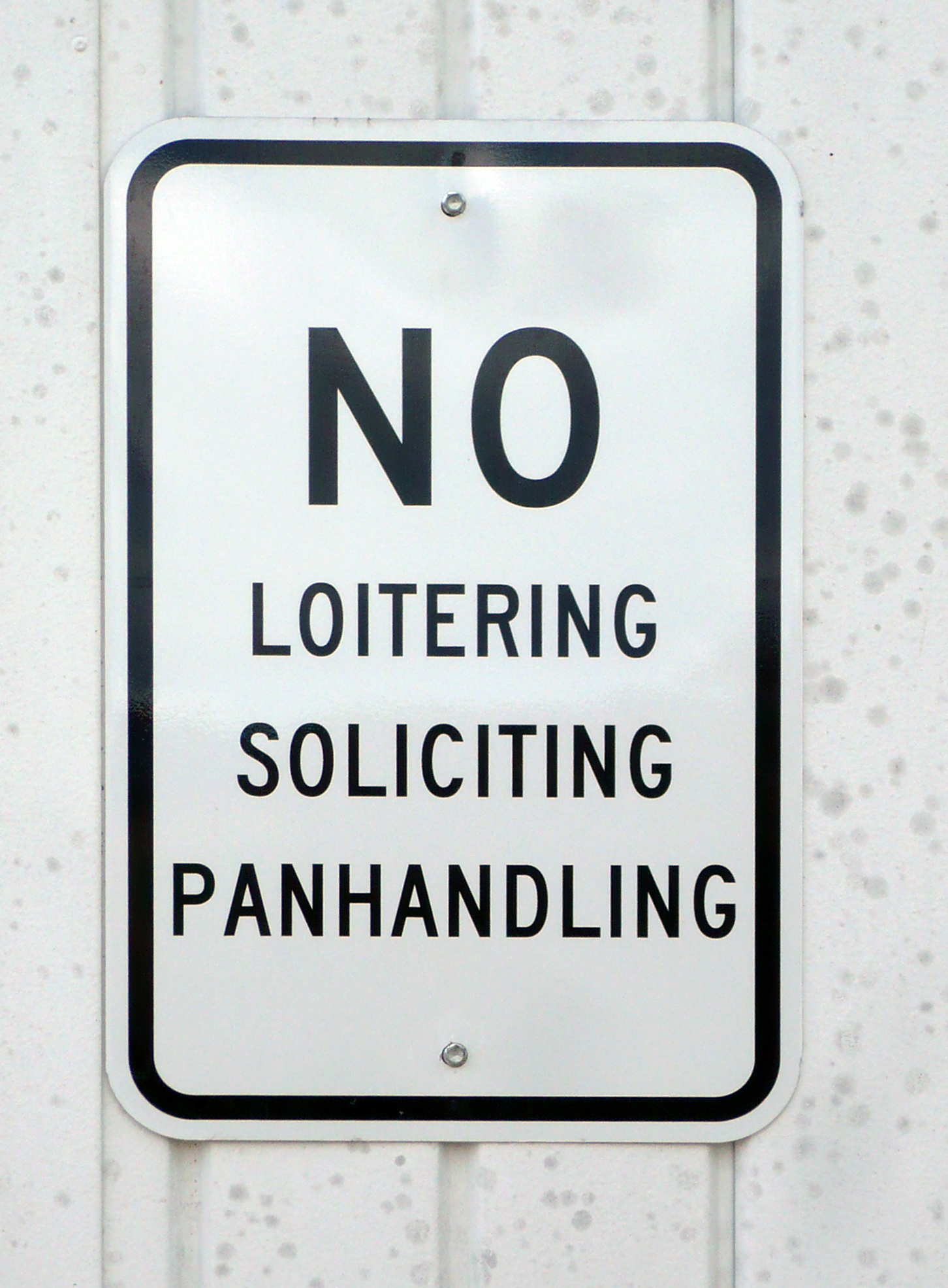
Loitering is the act of standing or waiting around idly without apparent purpose in some public places.
While the laws regarding loitering have been challenged and changed over time, loitering of suspect people can be illegal in some jurisdictions and some specific circumstances.
While not being a crime by itself, loitering has historically been treated as an inherent preceding offense to other forms of public crime and disorder, such as prostitution, begging, public drunkenness, dealing in stolen goods, drug dealing, scams, organized crime, robbery, harassment/mobbing, etc.
Loitering provides a lesser offence that can be used by police to confront and deter suspect individuals from lingering in a high-crime area, especially when criminal intent is suspected but not observed.
Local areas vary on the degree to which police are empowered to arrest or disperse loiterers; limitations on their power are sometimes made over concerns regarding racial profiling and unnecessary use of police force. The offence remains highly subjective.
Police officers in South Australia may ask a person to stop loitering in a public place (in other words, to leave the place) where they believe on reasonable grounds:
The Vagrancy Act 1824 was designed to prevent suspects and infamous thieves from "lingering about" certain places. This was modified slightly by 34 & 35 Vict. c.112, the Prevention of Crimes Act 1871, and 54 & 55 Vict. c.69, the Penal Servitude Act 1891, which introduced the phrase "loitering with intent". The Vagrancy Act 1898 was passed, then both were repealed by the Sexual Offences Act 2003.
The Vagrancy Act 1824 permits in section 6 "any person whatsoever" to apprehend offenders and to bring them directly before a Justice of the Peace. The same section creates a duty on "any Constable or other Peace Officer" to apprehend and bring them before a justice of the peace, or be charged with "Neglect of Duty", punishable in section 11 by a fine of five pounds or three months in jail. The same Act provides disbursements from the general funds of Council for expenses of Prosecutors and Witnesses. Classes of persons that the Act was designed to dissuade, on penalty of three months at hard labor, include:
Hub AI
Loitering AI simulator
(@Loitering_simulator)
Loitering
Loitering is the act of standing or waiting around idly without apparent purpose in some public places.
While the laws regarding loitering have been challenged and changed over time, loitering of suspect people can be illegal in some jurisdictions and some specific circumstances.
While not being a crime by itself, loitering has historically been treated as an inherent preceding offense to other forms of public crime and disorder, such as prostitution, begging, public drunkenness, dealing in stolen goods, drug dealing, scams, organized crime, robbery, harassment/mobbing, etc.
Loitering provides a lesser offence that can be used by police to confront and deter suspect individuals from lingering in a high-crime area, especially when criminal intent is suspected but not observed.
Local areas vary on the degree to which police are empowered to arrest or disperse loiterers; limitations on their power are sometimes made over concerns regarding racial profiling and unnecessary use of police force. The offence remains highly subjective.
Police officers in South Australia may ask a person to stop loitering in a public place (in other words, to leave the place) where they believe on reasonable grounds:
The Vagrancy Act 1824 was designed to prevent suspects and infamous thieves from "lingering about" certain places. This was modified slightly by 34 & 35 Vict. c.112, the Prevention of Crimes Act 1871, and 54 & 55 Vict. c.69, the Penal Servitude Act 1891, which introduced the phrase "loitering with intent". The Vagrancy Act 1898 was passed, then both were repealed by the Sexual Offences Act 2003.
The Vagrancy Act 1824 permits in section 6 "any person whatsoever" to apprehend offenders and to bring them directly before a Justice of the Peace. The same section creates a duty on "any Constable or other Peace Officer" to apprehend and bring them before a justice of the peace, or be charged with "Neglect of Duty", punishable in section 11 by a fine of five pounds or three months in jail. The same Act provides disbursements from the general funds of Council for expenses of Prosecutors and Witnesses. Classes of persons that the Act was designed to dissuade, on penalty of three months at hard labor, include:
Recent media