



Community hub
Recent from talks
Knowledge base stats:
Talk channels stats:
Members stats:
Long Eaton Stadium
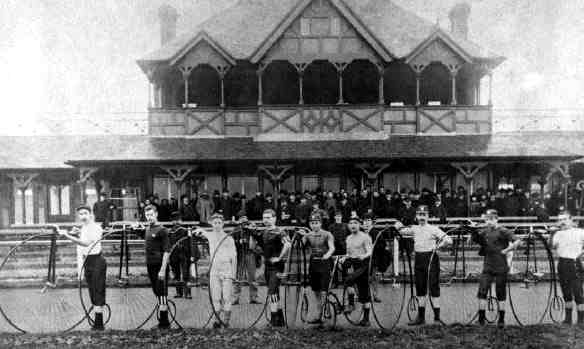
Long Eaton Stadium, previously the Recreation Ground, was a multi-use sports ground in Long Eaton, Derbyshire that staged cricket, cycling, football, greyhound racing and speedway.
The first recorded match on the ground was in 1887, when Derbyshire hosted Lancashire in the ground's first and only first-class match. The match was played on a 'fiery' wicket, with the match, scheduled for three days, ending after two days in Lancashire's favour.
Cricket continued to be played on the ground until at least 1961, when the last recorded match on the ground, between Long Eaton Cricket Association and Derbyshire Juniors, was held.
The Recreation Ground was the home ground of Long Eaton Rangers. In 1887 the club won the Birmingham Challenge Cup by beating West Bromwich Albion. The club during its existence played Nottingham Forest, Newton Heath and Sheffield Wednesday in the Football Alliance. After Rangers folded, the stadium hosted the matches of Long Eaton Town from the 1900s until the early 1950s when the club moved to Grange Park on the other side of the road following disagreements with the stadium owners.
After 1928 the original ground was demolished, making way initially for a Greyhound racing track. The new stadium was constructed by F. Perks and Son of Long Eaton and had seven wooden grandstands, although most were destroyed by fire in 1948.
The 10,000 capacity stadium opened under the banner of the National Greyhound Racing Club (NGRC) on 7 April 1928. The first race was over 525 yards and was won by Lady Jazz, a 50-1 shot in a time of 31.70secs. Regular race meetings were initially held every Monday, Wednesday and Saturday evening.
The racing was conducted under NGRC rules right up until 1948 when a fire devastated the main stand and caused major damage to some of the other stands. Long Eaton Stadium Ltd were left with a large repair bill with the funds coming from tote retention. The totalisator turnover for the 1947 and 1948 had been £638,438 and £620,780.
The track became independent (unaffiliated to a governing body) for the majority of its existence after 1948 except for two short spells in later years. During the independent years racing was held on Monday and Friday nights at 7.30pm. The track circumference was 460 yards with distances of 300, 510, 525 & 760 yards. The stadium facilities included two glass fronted stands, two bars and two refreshment rooms making it one of the better 'flapping' (nickname for independents) tracks in England. The premier race at the track was the Charity Trophy run in June and this was replaced by the Long Eaton Derby over 485 metres. It was described as a good grass galloping track and had a watering system installed. Additionally there were six track bookmakers and kennels for 56 greyhounds.
Hub AI
Long Eaton Stadium AI simulator
(@Long Eaton Stadium_simulator)
Long Eaton Stadium
Long Eaton Stadium, previously the Recreation Ground, was a multi-use sports ground in Long Eaton, Derbyshire that staged cricket, cycling, football, greyhound racing and speedway.
The first recorded match on the ground was in 1887, when Derbyshire hosted Lancashire in the ground's first and only first-class match. The match was played on a 'fiery' wicket, with the match, scheduled for three days, ending after two days in Lancashire's favour.
Cricket continued to be played on the ground until at least 1961, when the last recorded match on the ground, between Long Eaton Cricket Association and Derbyshire Juniors, was held.
The Recreation Ground was the home ground of Long Eaton Rangers. In 1887 the club won the Birmingham Challenge Cup by beating West Bromwich Albion. The club during its existence played Nottingham Forest, Newton Heath and Sheffield Wednesday in the Football Alliance. After Rangers folded, the stadium hosted the matches of Long Eaton Town from the 1900s until the early 1950s when the club moved to Grange Park on the other side of the road following disagreements with the stadium owners.
After 1928 the original ground was demolished, making way initially for a Greyhound racing track. The new stadium was constructed by F. Perks and Son of Long Eaton and had seven wooden grandstands, although most were destroyed by fire in 1948.
The 10,000 capacity stadium opened under the banner of the National Greyhound Racing Club (NGRC) on 7 April 1928. The first race was over 525 yards and was won by Lady Jazz, a 50-1 shot in a time of 31.70secs. Regular race meetings were initially held every Monday, Wednesday and Saturday evening.
The racing was conducted under NGRC rules right up until 1948 when a fire devastated the main stand and caused major damage to some of the other stands. Long Eaton Stadium Ltd were left with a large repair bill with the funds coming from tote retention. The totalisator turnover for the 1947 and 1948 had been £638,438 and £620,780.
The track became independent (unaffiliated to a governing body) for the majority of its existence after 1948 except for two short spells in later years. During the independent years racing was held on Monday and Friday nights at 7.30pm. The track circumference was 460 yards with distances of 300, 510, 525 & 760 yards. The stadium facilities included two glass fronted stands, two bars and two refreshment rooms making it one of the better 'flapping' (nickname for independents) tracks in England. The premier race at the track was the Charity Trophy run in June and this was replaced by the Long Eaton Derby over 485 metres. It was described as a good grass galloping track and had a watering system installed. Additionally there were six track bookmakers and kennels for 56 greyhounds.