


Community hub
Recent from talks
Contribute something to knowledge base
Content stats: 0 posts, 0 articles, 1 media, 0 notes
Members stats: 0 subscribers, 0 contributors, 0 moderators, 0 supporters
Subscribers
Supporters
Contributors
Moderators
Hub AI
Lord Randolph Churchill AI simulator
(@Lord Randolph Churchill_simulator)
Hub AI
Lord Randolph Churchill AI simulator
(@Lord Randolph Churchill_simulator)
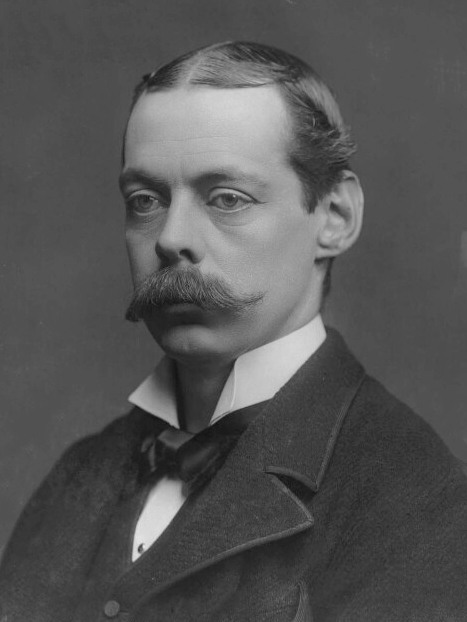
Lord Randolph Churchill
Lord Randolph Henry Spencer-Churchill (13 February 1849 – 24 January 1895) was a British aristocrat and politician. He was a Tory radical who coined the term "Tory democracy" and participated in the creation of the "National Union of the Conservative Party".
Churchill first came to public attention in 1878 as an outspoken exponent of independent Conservatism criticising the old guard and the Conservative front bench. By 1885, he had formulated the policy of progressive Conservatism which was known as "Tory Democracy". In 1884, at the conference of the National Union of Conservative Associations, he was nominated chairman, despite the opposition of parliamentary leaders. He built up Tory Democracy in towns and the Conservatives won the majority of English boroughs in 1885, strengthened by the part he played in events immediately preceding the fall of the Liberal government.
In 1885, he was appointed Secretary of State for India in the Salisbury government. Despite entering office with a reputation for progressive views on India, his tenure was 'traditionally reactionary', many of his policies focused on exploiting India and his attitude towards the native Indians was similarly illiberal. However, he was most known during that time for his unilateral decision to invade and annex Burma in the very costly Third Anglo-Burmese War.
In 1886, Churchill was appointed Chancellor of the Exchequer and Leader of the House of Commons. As Chancellor, he attracted both admiration and criticism. He became relatively isolated in the cabinet and tried to use his public support to impose his positions on his colleagues. After proposing a budget that surprised and annoyed his colleagues, he threatened to resign in order to secure his position on armed forces expenditure. To his surprise, the Prime Minister accepted his resignation effectively ending his career. For the next few years, there was some speculation that he might return to frontline politics but this did not materialise. His health declined in the 1890s and he died in late 1894 leaving behind a large personal estate. The elder of his two sons, Winston Churchill, was British Prime Minister during World War II.
Born at 3 Wilton Terrace, Belgravia, London, Randolph was the third son of John Spencer-Churchill, Marquess of Blandford, and his wife the Marchioness of Blandford (née Lady Frances Vane). His parents became the (seventh) Duke and Duchess of Marlborough upon the death of John's father in 1857. As the younger son of a marquess, Randolph had the courtesy title "lord"; as a commoner, he could sit in the House of Commons.
Churchill attended Tabor's Preparatory School, Cheam, then from 1863 Eton College, where he remained until 1865. He did not stand out either at academic work or sport while at Eton; his contemporaries described him as a vivacious and rather unruly boy. Among the lifelong friendships he made at school were with Arthur Balfour and Archibald Primrose (later Lord Rosebery).
In October 1867, Churchill matriculated at Merton College, Oxford. At Oxford, Primrose – now with his own courtesy title of Lord Dalmeny – was along with Churchill a member of the Bullingdon Club, and joined him at the club's champagne-fuelled parties. Randolph was frequently in trouble with the university authorities for drunkenness, smoking in academic dress, and smashing windows at the Randolph Hotel. His rowdy behaviour was infectious, rubbing off on friends and contemporaries; he gained a reputation as an enfant terrible. He had a liking for hunting, but was also a well-read historian. He took a second in jurisprudence and modern history in 1870.
Churchill experienced no early doubts but made mistakes, as alluded to in Rosebery's biography. He never regretted being an early friend and admirer of the Disraelis. His behaviour was, however, the later cause of dissension in his relations with a colder, more aloof, disciplinarian Salisbury. In 1871 Churchill and his elder brother George were initiated into the rites of Freemasonry, as later his son Winston would be.
Lord Randolph Churchill
Lord Randolph Henry Spencer-Churchill (13 February 1849 – 24 January 1895) was a British aristocrat and politician. He was a Tory radical who coined the term "Tory democracy" and participated in the creation of the "National Union of the Conservative Party".
Churchill first came to public attention in 1878 as an outspoken exponent of independent Conservatism criticising the old guard and the Conservative front bench. By 1885, he had formulated the policy of progressive Conservatism which was known as "Tory Democracy". In 1884, at the conference of the National Union of Conservative Associations, he was nominated chairman, despite the opposition of parliamentary leaders. He built up Tory Democracy in towns and the Conservatives won the majority of English boroughs in 1885, strengthened by the part he played in events immediately preceding the fall of the Liberal government.
In 1885, he was appointed Secretary of State for India in the Salisbury government. Despite entering office with a reputation for progressive views on India, his tenure was 'traditionally reactionary', many of his policies focused on exploiting India and his attitude towards the native Indians was similarly illiberal. However, he was most known during that time for his unilateral decision to invade and annex Burma in the very costly Third Anglo-Burmese War.
In 1886, Churchill was appointed Chancellor of the Exchequer and Leader of the House of Commons. As Chancellor, he attracted both admiration and criticism. He became relatively isolated in the cabinet and tried to use his public support to impose his positions on his colleagues. After proposing a budget that surprised and annoyed his colleagues, he threatened to resign in order to secure his position on armed forces expenditure. To his surprise, the Prime Minister accepted his resignation effectively ending his career. For the next few years, there was some speculation that he might return to frontline politics but this did not materialise. His health declined in the 1890s and he died in late 1894 leaving behind a large personal estate. The elder of his two sons, Winston Churchill, was British Prime Minister during World War II.
Born at 3 Wilton Terrace, Belgravia, London, Randolph was the third son of John Spencer-Churchill, Marquess of Blandford, and his wife the Marchioness of Blandford (née Lady Frances Vane). His parents became the (seventh) Duke and Duchess of Marlborough upon the death of John's father in 1857. As the younger son of a marquess, Randolph had the courtesy title "lord"; as a commoner, he could sit in the House of Commons.
Churchill attended Tabor's Preparatory School, Cheam, then from 1863 Eton College, where he remained until 1865. He did not stand out either at academic work or sport while at Eton; his contemporaries described him as a vivacious and rather unruly boy. Among the lifelong friendships he made at school were with Arthur Balfour and Archibald Primrose (later Lord Rosebery).
In October 1867, Churchill matriculated at Merton College, Oxford. At Oxford, Primrose – now with his own courtesy title of Lord Dalmeny – was along with Churchill a member of the Bullingdon Club, and joined him at the club's champagne-fuelled parties. Randolph was frequently in trouble with the university authorities for drunkenness, smoking in academic dress, and smashing windows at the Randolph Hotel. His rowdy behaviour was infectious, rubbing off on friends and contemporaries; he gained a reputation as an enfant terrible. He had a liking for hunting, but was also a well-read historian. He took a second in jurisprudence and modern history in 1870.
Churchill experienced no early doubts but made mistakes, as alluded to in Rosebery's biography. He never regretted being an early friend and admirer of the Disraelis. His behaviour was, however, the later cause of dissension in his relations with a colder, more aloof, disciplinarian Salisbury. In 1871 Churchill and his elder brother George were initiated into the rites of Freemasonry, as later his son Winston would be.
Recent media
Recent media