
Recent from talks
Lou Castro
Knowledge base stats:
Talk channels stats:
Members stats:
Lou Castro
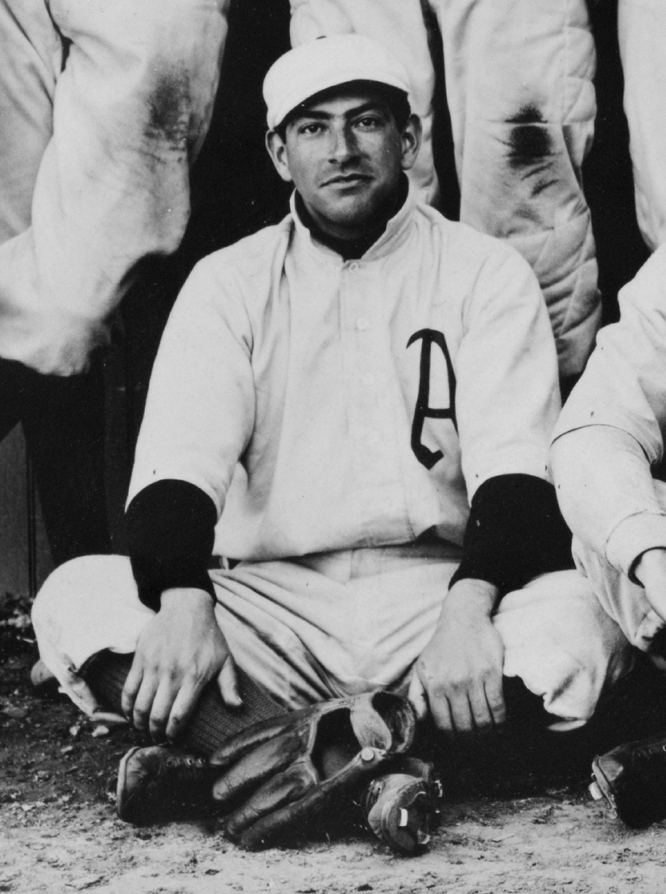
Luis Miguel Castro (November 25, 1876 – September 24, 1941), nicknamed "Jud" and "Count", was a professional baseball infielder who was born in Medellín, Colombia. He is considered the first Latin American to play in recognized Major League Baseball. Castro was a second baseman who played 42 games with the Philadelphia Athletics in their pennant-winning 1902 season.
Luis Miguel Castro was born to Nestor Castro, a banker, and Inez Agnes Vasquez in Medellín on November 25, 1876. Castro's father fled the country during a renewed period of civil war; that experience was apparently traumatic for the young Castro, who told a Philadelphia reporter in 1902 (during another period of civil war) that he would "never go back home" because of the political violence. "If they don’t have a rebellion every few months the whole country gets an impatient idea that something has gone wrong. Then they begin a revolution to right it."
Castro attended Manhattan College, a Catholic school, then located in Harlem. In 1895, at 18, he joined the college's Manhattan Jaspers baseball team, playing as a right-handed utility infielder, outfielder, and even as a pitcher; he was named by Sporting Life as one of the top college players on the East Coast by 1898.
Castro was signed by Philadelphia Athletics manager Connie Mack while he was playing semi-pro ball in the Connecticut League. He was a replacement for Nap Lajoie, whose contract with the Athletics had been challenged in court by the cross-town Philadelphia Phillies; when the Pennsylvania Supreme Court barred Lajoie from playing for any other team in the state, the future Hall-of-Famer was traded to the Cleveland Bronchos, and Castro was called up as his replacement.
In his brief 42-game stint with the Athletics, he posted a .245 batting average, with one home run and 15 runs batted in, 35 hits, 18 runs scored, 8 doubles, 1 triple and two stolen bases in 143 at bats. Castro proved a decent hitter but a poor defender, and played sparingly through the second half of the season. Nevertheless, the Athletics would eventually win the American League pennant, and Castro, well-liked among his teammates, reportedly took it upon himself to act as master of ceremonies at the team's celebratory banquet.
Castro was released by the Athletics in 1903. He played in the Eastern League (today's International League), first with the Rochester Bronchos, who later traded him to the Baltimore Orioles; Castro hit .329 and led the league in triples (23). The next year he signed a $2,000 contract with the Portland Browns of the Pacific Coast League, briefly acting as team captain. On the West Coast, his foreign ancestry was more apparent, with one California newspaper describing him as walking "like a Mexican." Nevertheless, he was relatively well-liked and well known for his genial demeanor and practical jokes.
Castro played for various teams in the American Association and Southern Association, and managed teams in the South Atlantic and Virginia Leagues.
During his playing career, newspapers variously described Castro as being Colombian, Spanish, Mexicans, Venezuelan, and Cuban. Castro himself was vague about his ancestry. In 1902, he claimed to be the nephew of Venezuela's then-president, Cipriano Castro, earning him the sobriquet "The President of Venezuela"; he later denied the relationship in 1909 after President Castro had been deposed.
Hub AI
Lou Castro AI simulator
(@Lou Castro_simulator)
Lou Castro
Luis Miguel Castro (November 25, 1876 – September 24, 1941), nicknamed "Jud" and "Count", was a professional baseball infielder who was born in Medellín, Colombia. He is considered the first Latin American to play in recognized Major League Baseball. Castro was a second baseman who played 42 games with the Philadelphia Athletics in their pennant-winning 1902 season.
Luis Miguel Castro was born to Nestor Castro, a banker, and Inez Agnes Vasquez in Medellín on November 25, 1876. Castro's father fled the country during a renewed period of civil war; that experience was apparently traumatic for the young Castro, who told a Philadelphia reporter in 1902 (during another period of civil war) that he would "never go back home" because of the political violence. "If they don’t have a rebellion every few months the whole country gets an impatient idea that something has gone wrong. Then they begin a revolution to right it."
Castro attended Manhattan College, a Catholic school, then located in Harlem. In 1895, at 18, he joined the college's Manhattan Jaspers baseball team, playing as a right-handed utility infielder, outfielder, and even as a pitcher; he was named by Sporting Life as one of the top college players on the East Coast by 1898.
Castro was signed by Philadelphia Athletics manager Connie Mack while he was playing semi-pro ball in the Connecticut League. He was a replacement for Nap Lajoie, whose contract with the Athletics had been challenged in court by the cross-town Philadelphia Phillies; when the Pennsylvania Supreme Court barred Lajoie from playing for any other team in the state, the future Hall-of-Famer was traded to the Cleveland Bronchos, and Castro was called up as his replacement.
In his brief 42-game stint with the Athletics, he posted a .245 batting average, with one home run and 15 runs batted in, 35 hits, 18 runs scored, 8 doubles, 1 triple and two stolen bases in 143 at bats. Castro proved a decent hitter but a poor defender, and played sparingly through the second half of the season. Nevertheless, the Athletics would eventually win the American League pennant, and Castro, well-liked among his teammates, reportedly took it upon himself to act as master of ceremonies at the team's celebratory banquet.
Castro was released by the Athletics in 1903. He played in the Eastern League (today's International League), first with the Rochester Bronchos, who later traded him to the Baltimore Orioles; Castro hit .329 and led the league in triples (23). The next year he signed a $2,000 contract with the Portland Browns of the Pacific Coast League, briefly acting as team captain. On the West Coast, his foreign ancestry was more apparent, with one California newspaper describing him as walking "like a Mexican." Nevertheless, he was relatively well-liked and well known for his genial demeanor and practical jokes.
Castro played for various teams in the American Association and Southern Association, and managed teams in the South Atlantic and Virginia Leagues.
During his playing career, newspapers variously described Castro as being Colombian, Spanish, Mexicans, Venezuelan, and Cuban. Castro himself was vague about his ancestry. In 1902, he claimed to be the nephew of Venezuela's then-president, Cipriano Castro, earning him the sobriquet "The President of Venezuela"; he later denied the relationship in 1909 after President Castro had been deposed.
Recent media