Hubbry Logo
Louis ChedidLouis ChedidMain
Open search
Louis Chedid
Community hub
Louis Chedid
logo
8 pages, 0 posts
0 subscribers
Be the first to start a discussion here.
Louis Chedid
Louis Chedid
from Wikipedia

Key Information

Louis Chedid (born 1 January 1948, in Ismaïlia) is a French singer-songwriter of Lebanese, Syrian, and Egyptian origin.[1]

Biography

[edit]
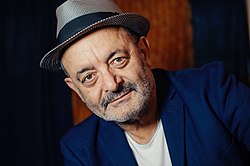
Louis Chedid on stage at Nogent sur Marne 29th of November 2024.

Louis Chedid is the son of the writer Andrée Chedid and the father of Matthieu Chedid (better known as -M-).

As a child he made his first footsteps into the singing world as a member of the "Manécanterie des Petits Chanteurs à la Croix de Bois", a famous French catholic boys choir.

Chedid was a fan of the jazz guitarist Django Reinhardt and decided that he would set forth into a career in the world of music as soon as he left school. After his first album "Balbutiements" (Mumblings – 1973) attracted little attention, his talent was first recognised after the release of titles like "La Belle" and "T'as beau pas être beau" released in 1977.

In 1981, "Ainsi soit-il" (Amen) rose to the top of the charts, followed four years later by "Anne ma sœur Anne" (My sister Anne) which criticised the increasing popularity of the extreme-right in France. His first, autobiographical novel – 40 Berges Blues – was published in 1992.

Chedid is also the composer of Pierre-Dominique Burgaud's "Le Soldat Rose" (The Pink Soldier, 2006), a fairytale musical whose songs have been interpreted by singers including -M-, Vanessa Paradis, Jeanne Cherhal, Francis Cabrel, Alain Souchon and Bénabar.

Louis Chedid on stage at Nogent sur Marne 29th of November 2024.

Discography

[edit]

Albums

[edit]
Louis Chedid on stage at Nogent sur Marne 29th of November 2024.
Year Album Peak positions
FRA
[2]
BEL
(Wa)

[3]
1973 Balbutiements
1974 Nous sommes des clowns
1974 Hold Up!
1975 Le jeu de l'oie
1976 Ver de terre
1980 Egomane
1981 Ainsi Soit-il
1983 Panique Organisée
1985 Anne, ma sœur Anne
1987 Bizar
1989 Zap-Zap
1992 Ces mots sont pour toi
1994 Entre nous
1997 Répondez moi
2001 Boucbelair 58
2003 Botanique et vieilles charrues 71 21
2004 Un ange passe 41 34
2006 Le soldat rose
2010 On ne dit jamais assez aux gens qu'on aime qu'on les aime 7 18
2013 Deux fois l'infini 75 83
2020 Tout ce qu'on veut dans la vie 14 15
2022 En noires et blanches
(with Yvan Cassar)
42 22
2024 Rêveur, rêveur 81

Promotional singles

[edit]
  • "Miss Melissa" (1974)
  • "Je chante dans les transistors" (1977)
  • "La Belle" / "Chapeau de paille" (1977)
  • "T'as beau pas être beau" / "L'Amour S.M.P.M" (1978)
  • "Papillon" / "Dans la rue de Sherbrooke" (1979)

Collaborations

[edit]
  • Fairytale-Musical "Émilie Jolie" (Philippe Chatel, 1979) : chanson du raton-laveur-rêveur (Song of the dreaming racoon)
  • Duo with his son Matthieu Chedid : Tel père tel fils (like father like son) – for Solidays, a French AIDS charity appeal

References

[edit]
[edit]
Revisions and contributorsEdit on WikipediaRead on Wikipedia
from Grokipedia
''Louis Chedid'' is a French singer-songwriter known for his poetic lyrics, eclectic musical style blending folk, jazz, and chanson influences, and a prolific career spanning more than five decades. Born on 1 January 1948 in Ismaïlia, Egypt, to the celebrated poet and novelist Andrée Chedid, he arrived in Paris at six months old and grew up immersed in artistic environments. He began playing guitar at age twelve, initially worked in film production, and released his debut album ''Balbutiements'' in 1973 under Barclay Records. His breakthrough came in the late 1970s with the hit single ''T’as beau pas être beau'' and the album ''T’as beau pas être beau'', followed by signature songs such as ''Ainsi soit-il'' in 1981 and ''Anne, ma sœur Anne'' in 1985, which showcased his introspective and often socially engaged writing. Beyond performing, Chedid has composed for other artists including Alain Souchon and Françoise Hardy, as well as for cinema, notably contributing to the soundtrack of ''Pinot, simple flic''. One of his most acclaimed projects is the musical tale ''Le Soldat Rose'', initiated in 2006 with participation from numerous prominent French artists, which earned a Victoire de la Musique award in 2007. He remains an active creator, releasing albums such as ''Entre Noires et Blanches'' in 2022 and ''Rêveur, Rêveur'' in 2024. Chedid is also recognized as the patriarch of a renowned musical dynasty, being the father of singers Matthieu Chedid (known as -M-), Anna Chedid (Nach), and Joseph Chedid, with whom he has collaborated on family projects including a 2015 joint album and tour. In 2016, he was honored as Commandeur de l’Ordre des Arts et des Lettres for his contributions to French culture.

Early life

Birth and family origins

Louis Chedid was born on January 1, 1948, in Ismailia, Egypt, with official registration confirming this date, though some reports have suggested December 31, 1947. He holds dual Egyptian and French nationality, having been naturalized as French in 1962. He is the son of the acclaimed poet and writer Andrée Chedid (1920–2011) and biologist Louis Selim Chedid (1922–2021), who served as research director at the CNRS and professor at the Institut Pasteur. His family background reflects Lebanese, Syrian, and Egyptian heritage through his parents' roots. The family relocated to Paris when he was six months old.

Childhood, education, and early influences

Louis Chedid attended the Catholic École Bossuet in Paris during his primary years, where he joined the renowned boys choir Les Petits Chanteurs à la Croix de Bois around the age of seven or eight, marking his earliest involvement in singing and choral music. This experience in the choir proved formative, providing his first significant exposure to music and performance. His formal education was turbulent; Chedid has described his schooling as chaotic and expressed a strong dislike for it. He completed his baccalauréat français in 1968. He then pursued cinema studies at the École technique du cinéma (now known as INRACI) in Brussels for approximately one year, gaining hands-on experience that included directing and composing for short films. Returning to Paris, Chedid entered the professional film world at Gaumont-Actualités between 1971 and 1973, initially as a trainee and assistant editor before progressing to chief editor and director of documentaries. These early roles in film editing and production laid groundwork for his multidisciplinary career bridging cinema and music.

Music career

Debut and early years (1973–1980)

Louis Chedid released his debut studio album, Balbutiements, in 1973 on the Barclay label, marking his entry into professional music with a collection of personal and poetic songs that reflected his early style in the French chanson tradition. Following this initial release, he signed with CBS Records and issued Nous sommes des clowns in 1974, continuing to explore introspective lyrics and melodic arrangements. His productivity in the mid-1970s led to two more albums on CBS: Le Jeu de l'oie in 1975 and Ver de terre in 1976, both showcasing his growing confidence as a singer-songwriter and his ability to blend humor, tenderness, and social observation in his work. In 1976, Chedid made his first stage appearance at the Olympia in Paris, performing as the opening act ("vedette anglaise") for Nicole Croisille; a limited promotional vinyl EP featuring live excerpts from the concert, including tracks like "Chacun, Chacune" and "Ver De Terre," was issued the same year to capitalize on the performance. Toward the end of the decade, Chedid achieved his first wider public recognition with the 1977 singles "La Belle" and "T'as beau pas être beau," which connected with audiences through their catchy melodies and relatable themes; "T'as beau pas être beau" in particular sold more than 150,000 copies, establishing him as an emerging figure in the French music scene. These early successes laid the foundation for his later career, though sustained mainstream breakthrough came in subsequent years.

Breakthrough hits and 1980s peak

In 1981, Louis Chedid achieved his commercial breakthrough with the album Ainsi soit-il, driven by the title track "Ainsi soit-il" that became a major hit, peaking at number 5 on the French singles chart and remaining a signature song in his repertoire. The success of the single, playing on the phrase "ainsi soit-il" (French for "amen"), contributed significantly to the album's popularity. He followed this with the album Panique Organisée in 1983, continuing his momentum in the French music scene during the early part of the decade. In 1984, Chedid composed the original soundtrack for the comedy film Pinot simple flic. In 1985, Chedid switched from CBS to Virgin Records and released the album Anne ma sœur Anne, whose title track "Anne ma sœur Anne" stood out as a pointed political statement denouncing the rise of the far-right and extremism in France. The song drew inspiration from Anne Frank's story and served as a warning against the resurgence of Nazi-like ideologies, marking one of his most committed works of the period. This era represented the peak of his solo commercial and critical influence in the 1980s.

Family collaborations and 1990s–2000s albums

In the 1990s and 2000s, Louis Chedid's music increasingly incorporated collaborations with family members, particularly his son Matthieu Chedid (known professionally as -M-), marking a shift toward more personal and varied stylistic explorations. This period saw a move from his earlier rock-oriented work to acoustic and orchestral influences, beginning with the 1992 album Ces mots sont pour toi, which featured his first major collaboration with Matthieu. The 1994 release Entre nous presented an acoustic live approach, emphasizing intimate arrangements and direct engagement with audiences. Following a 1997 album Répondez-moi, Chedid returned in 2001 with Boucbelair, which incorporated lush string arrangements. The decade concluded with Un ange passe in 2004, continuing his productive output in the 2000s. In 2006, Chedid created the musical tale Le Soldat Rose, with lyrics by Pierre-Dominique Burgaud and featuring vocals from numerous prominent French artists including Vanessa Paradis, -M-, Jeanne Cherhal, Francis Cabrel, Alain Souchon, Bénabar, and Sanseverino. The project, aimed at children and adults alike, achieved significant commercial success with the album becoming a bestseller and the live spectacle touring widely; it earned a Victoire de la Musique award in 2007. A notable family collaboration occurred in 2000 when Louis Chedid and Matthieu Chedid performed the duet "Tel père tel fils" for the Solidays AIDS charity compilation album, playfully underscoring their father-son relationship through music. This track exemplified the growing integration of family into Chedid's creative work during this era.

Recent works (2010s–present)

In the 2010s and 2020s, Louis Chedid maintained an active presence in music through solo projects, family collaborations, and innovative live performances. In 2010, he released the duo album On ne dit jamais assez aux gens qu'on aime qu'on les aime with his son Matthieu Chedid, exploring themes of love and family bonds in a shared vocal and compositional effort. In 2013, Chedid embarked on the solo project Deux fois l'infini, which incorporated loop pedal technology and a variety of instruments for intimate live shows, emphasizing his experimentation with sound layering and minimalistic staging. He reunited with family members for the 2015 collaborative album and tour under the name Louis, Matthieu, Joseph et Anna Chedid, marking a multi-generational gathering that highlighted their collective musical heritage through shared songs and performances. In 2020, Chedid returned with the solo album Tout ce qu’on veut dans la vie, reflecting on personal and universal aspirations amid contemporary contexts. Continuing his pattern of partnerships, he released Entre Noires et Blanches in 2022, a collaborative work with pianist and arranger Yvan Cassar that blended classical influences with Chedid's signature songwriting style. Most recently, in 2024, Chedid released Rêveur, rêveur, an introspective album drawing on dreams and imagination as central motifs. These works demonstrate Chedid's ongoing commitment to evolving his artistry while incorporating familial ties and technical innovation.

Film, television, and directing contributions

Cinema training and early editing work

After completing his baccalauréat in 1968, Louis Chedid moved to Brussels to study cinema at the Institut national de radioélectricité et cinématographie (INRACI), aiming to become a film director. During his approximately one-and-a-half-year training there, he directed two short films. He returned to Paris in 1970 and began working at Gaumont-Actualités the following year. Starting as a film editor (monteur), he progressed to the role of chief editor and then documentary director at the company. This period of hands-on experience in editing and documentary production lasted until 1973.

Composing for screen projects

Louis Chedid has composed original scores for a selection of French films, short films, and music videos, showcasing his talents as a musician in visual media alongside his primary career as a singer-songwriter. His feature film composing credits include the soundtrack for the comedy Pinot simple flic (1984), directed by Gérard Jugnot. He followed this with the music for Promotion canapé (1990), Et demain… Hollywood (1992), and À quoi tu penses-tu? (1992). His screen composing work remains a notable aspect of his multifaceted career in music and visual storytelling.

Acting and directing credits

Louis Chedid has occasionally ventured into on-screen acting and directing, primarily in television movies, short films, and music videos. His acting roles are limited but notable, often tied to his musical projects. In 1980, he appeared as Le raton-laveur-rêveur in the TV movie Émilie jolie. In 2006, he played the role of La Panthère noire in the TV movie Le soldat Rose. From 2015 onward, Chedid has made appearances in various music videos, frequently for his own songs or collaborative tracks. These include Louis, Matthieu, Joseph & Anna Chedid - F.O.R.T. (2015), On ne dit jamais assez aux gens qu'on aime qu'on les aime (2015), Tout ce qu'on veut dans la vie (2019), Vive nous (2019), Si j'avais su (2020), Redevenir un être humain (2020), and Je suis là (2024). In terms of directing, Chedid helmed the music video for Michel Berger's Y'a pas de honte in 1985. He also directed the short film Pompe funèbre in 2010. These efforts represent his primary contributions to directing in audiovisual media.

Involvement in Émilie Jolie

Louis Chedid participated in Philippe Chatel's 1979 musical tale Émilie Jolie by voicing the character of the dreaming raccoon (le raton-laveur-rêveur) and performing the song "Chanson du raton-laveur-rêveur." This concept album, a children's narrative composed, written, and conceived by Chatel, featured contributions from several prominent French artists, including Georges Brassens as the hedgehog, Henri Salvador as the narrator and performer on multiple tracks, Françoise Hardy as the witch, and Julien Clerc as the great bird in a duet. Chedid reprised his role as le raton-laveur-rêveur in the 1980 television adaptation of Émilie Jolie directed by Jean-Christophe Averty.

Le Soldat Rose and other productions

Le Soldat Rose is a children's musical tale composed by Louis Chedid with lyrics by Pierre-Dominique Burgaud, released as an album in 2006. The work tells the story of toys coming to life in a department store at night and featured an ensemble cast of prominent French performers, including Matthieu Chedid as the titular Soldat Rose, Vanessa Paradis, Francis Cabrel, Alain Souchon, and Louis Chedid himself in a supporting role. Shortly after the album launch, two sold-out concerts took place at the Grand Rex in Paris in November 2006 with the original cast, and the filmed performances were broadcast on France 2 as a Christmas special that year, drawing a record audience. The project was adapted into a full stage musical in 2008, directed by Shirley et Dino, which premiered at the Casino de Paris and toured France for several years. In 2016, Louis Chedid produced and artistically directed Brassens sur paroles, an album featuring 16 actors performing songs by Georges Brassens.

Personal life

Family and relationships

Louis Chedid was first married to Marianne Chedid (née Bochart) from 1970 until their divorce in 1986, with whom he had four children. In 1987, he married Emma Chedid-Advenier, and the couple remains together. He is the father of Matthieu Chedid, known professionally as -M-, a prominent singer-songwriter and musician; Émilie Chedid, who has pursued a career as a director and photographer; Anna Chedid, who performs under the stage name Nach; and Joseph Chedid, known as Selim, also active in music. The Chedid family has maintained close artistic bonds, frequently collaborating on musical projects across generations. He is the son of poet Andrée Chedid and physician Louis Selim Chedid. but wait, can't cite wiki, so omit parents if not necessary, but since may briefly, and source from search. Wait, adjust for no wiki. Since the parents are mentioned in IMDb bio indirectly through Andrée. But to be accurate, the IMDb lists parents Andrée Chedid. Yes. So, add if needed. But the focus is marriages and children, so perhaps not necessary. Final: Louis Chedid was married to Marianne Chedid from 1970 to 1986, during which time they had four children. Since 1987, he has been married to Emma Chedid-Advenier. His children are Matthieu Chedid (-M-), Émilie Chedid (director/photographer), Anna Chedid (Nach), and Joseph Chedid (Selim), many of whom have pursued careers in music and other creative fields. The family has often worked together on musical endeavors, reflecting their shared artistic heritage. This is concise.

Literary works

Louis Chedid has complemented his musical career with several forays into literature, authoring books that draw on his personal experiences and reflections. His first published work is the autobiographical novel 40 berges blues, released by Flammarion in 1992. This book explores themes of aging and life milestones through a personal lens. In 2014, Chedid co-authored the autobiography Mélodies intérieures with Benoît Merlin, published by Presses de la Renaissance. The work recounts aspects of his long career, family background, and creative journey, offering intimate insights into his life as an artist. He followed this with the collection of short stories Des vies et des poussières, published by Calmann-Lévy in 2016. The book presents a series of narrative pieces touching on human lives and fleeting moments. In 2018, Chedid published Le Dictionnaire de ma vie, an abécédaire structured alphabetically to chronicle elements of his existence, released by Kero. These literary efforts showcase his storytelling abilities beyond songwriting, blending memoir, fiction, and personal dictionary-style reflections.

Awards and honours

References

Add your contribution
Related Hubs
User Avatar
No comments yet.