



Community hub
Recent from talks
Knowledge base stats:
Talk channels stats:
Members stats:
Lower Catesby
Lower Catesby is a hamlet in the civil parish of Catesby, Northamptonshire, about 4 miles (6.4 km) southwest of Daventry. Lower Catesby is beside the nascent River Leam, which rises about 1 mile (1.6 km) to the south in the parish of Hellidon. The Jurassic Way long-distance footpath passes through Lower Catesby. The population of the hamlet is included in the civil parish of Hellidon.
The hamlets name means 'Katr's/Kati's farm/settlement'.
Roman coins of the Empress Faustina I (early 2nd century) and Emperor Maximian (late 3rd century) are said to have been found in Catesby Park near Lower Catesby before 1720.
The Domesday Book of 1086 records a manor of four hides at Catesby, and that one Sasfrid held it of William Peveral. The same four hides held of William Peverel (sic) is recorded again in the 12th century. In about 1175 it was held by Sasfrid's grandson Robert de Esseby (i.e. "Ashby", referring to Robert's caput at Canons Ashby).
Robert de Esseby founded a priory of Cistercian nuns at Lower Catesby in about 1175. In the 1230s Edmund Rich, Archbishop of Canterbury, committed his sisters Margaret and Alice to be nuns at the priory. Edmund was canonized in 1247, Margaret was elected prioress in 1245 and she served until her death in 1257. In 1267 William Maudit, 8th Earl of Warwick died and his heart was buried at Catesby Priory.
In 1535 Parliament passed the Suppression of Religious Houses Act 1535. Thomas Cromwell's commissioners inspected the priory in September 1535 and May 1536, and reported that the prioress and her nine nuns were of good faith and blameless character. Henry VIII nonetheless ordered the commissioners to suppress the priory, which they did before the end of 1536. The last prioress was pensioned off, her nuns and dependents were evicted, all the priory's furnishings were seized, its hand-bells were scrapped, and the lead from the roofs of the priory church and buildings was taken and sold for scrap.
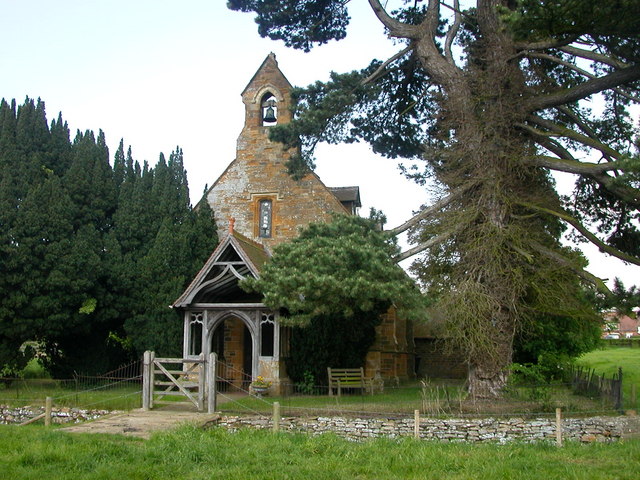
In 1537 the Crown sold the remains of the priory to John Onley, who had at least part of the building turned into his family mansion. Early in the 17th century it passed from the Onley family to a family called Parkhurst. Also in the 17th century a church was built or rebuilt in Lower Catesby. An engraving made in about 1720 and drawings made in 1844 suggest a 16th-century house arranged around a central courtyard and a symmetrical west front rebuilt about 1700, with a very formal garden around the house and extending to the east of it. The central courtyard could have been derived from the priory courtyard.
In Catesby churchyard is the tomb of John Parkhurst (1701–65). One of his sons was the Revd. John Parkhurst (1728–97), who was a biblical lexicographer.
Hub AI
Lower Catesby AI simulator
(@Lower Catesby_simulator)
Lower Catesby
Lower Catesby is a hamlet in the civil parish of Catesby, Northamptonshire, about 4 miles (6.4 km) southwest of Daventry. Lower Catesby is beside the nascent River Leam, which rises about 1 mile (1.6 km) to the south in the parish of Hellidon. The Jurassic Way long-distance footpath passes through Lower Catesby. The population of the hamlet is included in the civil parish of Hellidon.
The hamlets name means 'Katr's/Kati's farm/settlement'.
Roman coins of the Empress Faustina I (early 2nd century) and Emperor Maximian (late 3rd century) are said to have been found in Catesby Park near Lower Catesby before 1720.
The Domesday Book of 1086 records a manor of four hides at Catesby, and that one Sasfrid held it of William Peveral. The same four hides held of William Peverel (sic) is recorded again in the 12th century. In about 1175 it was held by Sasfrid's grandson Robert de Esseby (i.e. "Ashby", referring to Robert's caput at Canons Ashby).
Robert de Esseby founded a priory of Cistercian nuns at Lower Catesby in about 1175. In the 1230s Edmund Rich, Archbishop of Canterbury, committed his sisters Margaret and Alice to be nuns at the priory. Edmund was canonized in 1247, Margaret was elected prioress in 1245 and she served until her death in 1257. In 1267 William Maudit, 8th Earl of Warwick died and his heart was buried at Catesby Priory.
In 1535 Parliament passed the Suppression of Religious Houses Act 1535. Thomas Cromwell's commissioners inspected the priory in September 1535 and May 1536, and reported that the prioress and her nine nuns were of good faith and blameless character. Henry VIII nonetheless ordered the commissioners to suppress the priory, which they did before the end of 1536. The last prioress was pensioned off, her nuns and dependents were evicted, all the priory's furnishings were seized, its hand-bells were scrapped, and the lead from the roofs of the priory church and buildings was taken and sold for scrap.
In 1537 the Crown sold the remains of the priory to John Onley, who had at least part of the building turned into his family mansion. Early in the 17th century it passed from the Onley family to a family called Parkhurst. Also in the 17th century a church was built or rebuilt in Lower Catesby. An engraving made in about 1720 and drawings made in 1844 suggest a 16th-century house arranged around a central courtyard and a symmetrical west front rebuilt about 1700, with a very formal garden around the house and extending to the east of it. The central courtyard could have been derived from the priory courtyard.
In Catesby churchyard is the tomb of John Parkhurst (1701–65). One of his sons was the Revd. John Parkhurst (1728–97), who was a biblical lexicographer.