
Recent from talks
Lowry Air Force Base
Knowledge base stats:
Talk channels stats:
Members stats:
Lowry Air Force Base
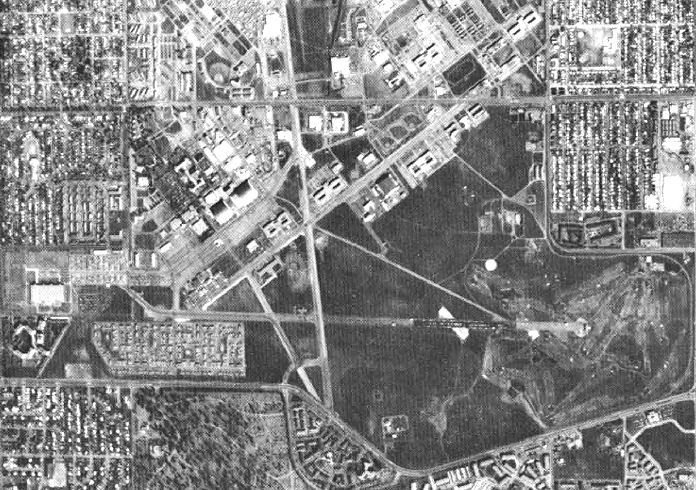
Lowry Air Force Base (Lowry Field from 1938–1948) is a former United States Army Air Forces (USAAF) training base during World War II and a United States Air Force (USAF) training base during the Cold War. From 1955-1958, it served as the initial site of the U.S. Air Force Academy. It is a U.S. Formerly Used Defense Site (B08CO0505).
The City of Denver, Auraria, and Highland was chartered as the 1859 territorial capital after the start of the 1858 Pike's Peak gold rush. In 1887, Fort Logan was established in the modern Denver Metropolitan Area. East of the state capital, military training at Montclair, Colorado, began at the future airfield when the 1887 Jarvis Hall Military School opened. Montclair was incorporated into Denver in 1903 and Jarvis Hall burned down in 1904. At the military school site the Agnes Phipps Memorial Sanatorium was established as a tuberculosis hospital in 1904 at 520 Rampart Way (cf. "East 6th Avenue and Quebec Street") by Lawrence C. Phipps Sr., and in the 1930s the sanatorium included 17 buildings designed by the Gove and Walsh firm.
"After several fires at Chanute Field and deterioration of the buildings" in Illinois, a 1934 Air Corps announcement solicited a replacement training location and Denver submitted a bid. The City of Denver purchased the sanatorium for an airfield after a 1935 municipal bond vote. On 27 August 1937, the Denver Branch, Air Corps Technical School, was formed with Departments of Photography and Armament[citation needed] ("photography training moved from Chanute Field"), and the WPA converted the sanatorium grounds into a Colorado military airfield. In February 1938 the airfield being installed adjacent to Fairmont Cemetery was assigned to the Air Corps Technical School headquartered at Chanute,[citation needed] and "the Denver branch of the Army Air Corps became an Army post of 880 acres."
The name Lowry Field was originally assigned to an airfield consisting of property taken over by the Colorado National Guard, having a southern border along East 38th Avenue between Dahlia & Holly Streets. It was named for Second Lieutenant Francis Lowry, the only Colorado pilot killed in combat in World War I . The airfield was used by the 120th Observation Squadron, 45th Division Aviation. In 1924, the 120th began flying Curtiss JN-4Es (better known as Jennies) at the new airfield.
A 28 October 1926 photo shows the Fokker BA-1 trimotor Josephine Ford of the Byrd Arctic Expedition being refueled at the original Lowry Field. Charles Lindbergh and his Spirit of St. Louis made a scheduled stop at Lowry on 1 September 1927 during his 48 state sponsored tour. Jack Taylor died on the maiden voyage of the Cheyenne-Pueblo-Denver contract airmail route from Lowry to Cheyenne when his aircraft exploded on 10 December 1927. He was flying a large Douglas mail plane for Western Air Express Inc. near Lowry.
During the latter part of 1937 the name "Lowry Field" was transferred from the Colorado National Guard facility to the new Denver Branch, Air Corps Technical School. In early 1938, after about a year of overlapping operations, the 120th Observation Squadron moved to their new quarters at the Denver Municipal Airport; remaining there until mobilization for World War II took place on 6 January 1941. The 19 officers and 116 enlisted members of the squadron then moved to Biggs Army Airfield, Texas.
In 1938, the former Lowry Field was renamed Combs Field when Harry B. Combs began leasing the airfield. He and a partner opened Mountain State Aviation, a fixed-base operation and flight training facility. Mountain State would go on to train over 9,000 pilots for World War II through the Civilian Pilot Training Program at the location. In 1936, Combs had joined the 120th Observation Squadron, flying the 0-19 E variant and gaining enough flying time to earn his instructor’s rating.
Lowry Field was assigned to the new Army Air Field on 11 March 1938. Photographic courses began prior to the field's completion and runway paving. The paved runway opened on 4 April (first used by a B-18 Bolo). The sanatorium's main building became the Army post's headquarters, and the largest single barracks (3,200 men) was completed in mid-1940. The "Northeast-Southwest runway was completed in 1941" and on 1 March 1941, the Air Corps Technical School moved an "A.A.F. Clerical School" for Air Corps Clerks (384 hours) to Fort Logan from Lowry. Beginning 16 July 1940, the 1st class of the AAF bombardier schools was at Lowry and used the nearby bombing and gunnery range through 14 March 1941, graduating three classes of instructors who opened the Barksdale Field bombardier school.
Hub AI
Lowry Air Force Base AI simulator
(@Lowry Air Force Base_simulator)
Lowry Air Force Base
Lowry Air Force Base (Lowry Field from 1938–1948) is a former United States Army Air Forces (USAAF) training base during World War II and a United States Air Force (USAF) training base during the Cold War. From 1955-1958, it served as the initial site of the U.S. Air Force Academy. It is a U.S. Formerly Used Defense Site (B08CO0505).
The City of Denver, Auraria, and Highland was chartered as the 1859 territorial capital after the start of the 1858 Pike's Peak gold rush. In 1887, Fort Logan was established in the modern Denver Metropolitan Area. East of the state capital, military training at Montclair, Colorado, began at the future airfield when the 1887 Jarvis Hall Military School opened. Montclair was incorporated into Denver in 1903 and Jarvis Hall burned down in 1904. At the military school site the Agnes Phipps Memorial Sanatorium was established as a tuberculosis hospital in 1904 at 520 Rampart Way (cf. "East 6th Avenue and Quebec Street") by Lawrence C. Phipps Sr., and in the 1930s the sanatorium included 17 buildings designed by the Gove and Walsh firm.
"After several fires at Chanute Field and deterioration of the buildings" in Illinois, a 1934 Air Corps announcement solicited a replacement training location and Denver submitted a bid. The City of Denver purchased the sanatorium for an airfield after a 1935 municipal bond vote. On 27 August 1937, the Denver Branch, Air Corps Technical School, was formed with Departments of Photography and Armament[citation needed] ("photography training moved from Chanute Field"), and the WPA converted the sanatorium grounds into a Colorado military airfield. In February 1938 the airfield being installed adjacent to Fairmont Cemetery was assigned to the Air Corps Technical School headquartered at Chanute,[citation needed] and "the Denver branch of the Army Air Corps became an Army post of 880 acres."
The name Lowry Field was originally assigned to an airfield consisting of property taken over by the Colorado National Guard, having a southern border along East 38th Avenue between Dahlia & Holly Streets. It was named for Second Lieutenant Francis Lowry, the only Colorado pilot killed in combat in World War I . The airfield was used by the 120th Observation Squadron, 45th Division Aviation. In 1924, the 120th began flying Curtiss JN-4Es (better known as Jennies) at the new airfield.
A 28 October 1926 photo shows the Fokker BA-1 trimotor Josephine Ford of the Byrd Arctic Expedition being refueled at the original Lowry Field. Charles Lindbergh and his Spirit of St. Louis made a scheduled stop at Lowry on 1 September 1927 during his 48 state sponsored tour. Jack Taylor died on the maiden voyage of the Cheyenne-Pueblo-Denver contract airmail route from Lowry to Cheyenne when his aircraft exploded on 10 December 1927. He was flying a large Douglas mail plane for Western Air Express Inc. near Lowry.
During the latter part of 1937 the name "Lowry Field" was transferred from the Colorado National Guard facility to the new Denver Branch, Air Corps Technical School. In early 1938, after about a year of overlapping operations, the 120th Observation Squadron moved to their new quarters at the Denver Municipal Airport; remaining there until mobilization for World War II took place on 6 January 1941. The 19 officers and 116 enlisted members of the squadron then moved to Biggs Army Airfield, Texas.
In 1938, the former Lowry Field was renamed Combs Field when Harry B. Combs began leasing the airfield. He and a partner opened Mountain State Aviation, a fixed-base operation and flight training facility. Mountain State would go on to train over 9,000 pilots for World War II through the Civilian Pilot Training Program at the location. In 1936, Combs had joined the 120th Observation Squadron, flying the 0-19 E variant and gaining enough flying time to earn his instructor’s rating.
Lowry Field was assigned to the new Army Air Field on 11 March 1938. Photographic courses began prior to the field's completion and runway paving. The paved runway opened on 4 April (first used by a B-18 Bolo). The sanatorium's main building became the Army post's headquarters, and the largest single barracks (3,200 men) was completed in mid-1940. The "Northeast-Southwest runway was completed in 1941" and on 1 March 1941, the Air Corps Technical School moved an "A.A.F. Clerical School" for Air Corps Clerks (384 hours) to Fort Logan from Lowry. Beginning 16 July 1940, the 1st class of the AAF bombardier schools was at Lowry and used the nearby bombing and gunnery range through 14 March 1941, graduating three classes of instructors who opened the Barksdale Field bombardier school.
Recent media