
Recent from talks
Lucio Fontana
Knowledge base stats:
Talk channels stats:
Members stats:
Lucio Fontana
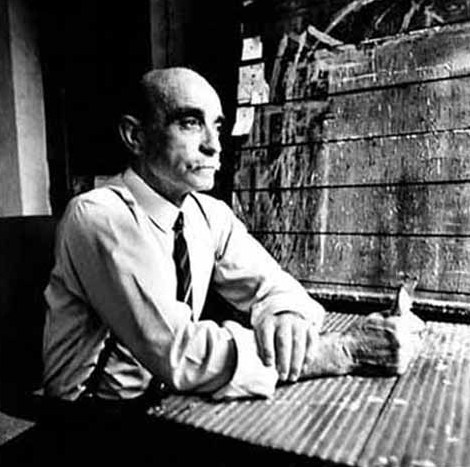
Lucio Fontana (Italian: [ˈluːtʃo fonˈtaːna]; 19 February 1899 – 7 September 1968) was an Argentine-Italian sculptor, painter, and theorist. He is known as the founder of Spatialism and exponent of abstraction. Some of these ideas can be seen in his slashed canvases and his use of neon as a media, like his Milan Triennale piece (now at the Museo del Novecento in Milan).
Born in Rosario, Santa Fe, Argentina, to Italian immigrant parents, he was the son of the sculptor Luigi Fontana (1865–1946). Fontana spent the first years of his life in Argentina and then was sent to Italy in 1905, where he stayed until 1922, working as a sculptor with his father, and then on his own. Already in 1926, he participated in the first exhibition of Nexus, a group of young Argentine artists working in Rosario de Santa Fé.
Fontana joined the Fascist movement at an early stage and is documented as a member of the Fasci di Combattimento as early as 1920.
From 1922 onwards, he again lived for several years in Argentina, where he worked in his father’s sculpture studio and was employed briefly as an engineer and for a longer period as a sculptor. In 1927 Fontana returned to Italy and studied alongside Fausto Melotti under the sculptor Adolfo Wildt, at Accademia di Brera from 1928 to 1930. It was there he presented his first exhibition in 1930, organized by the Milan art gallery Il Milione.
He also participated in the 17. Biennale di Venezia. with the sculpture Vittoria fascista (“Fascist Victory”). Fontana created his first bust of Benito Mussolini in 1930. In 1933, this was followed by the bust Expectation, depicting a nude youthful hero wearing the neckerchief of the Fascist Party’s youth organization, and the statue Victorious Woman for the Air Force, although the latter declined to acquire it in 1934.
In 1936, Fontana’s Victory Group was exhibited in the Hall of Honour at the Milan Triennale, which, on the occasion of the Fascist invasion of Ethiopia, had been renamed the “Hall of Triumph.” A bust by Fontana intended for Addis Ababa and commissioned by the Ministry of Propaganda was ultimately never realized. In 1936, the newly built headquarters of the Federazione dei Fasci Milanesi received Italy’s largest bas-relief. Across the ceiling, five armed winged Victories fly overhead, laden with spoils of war. This so-called “Shrine of the Fascist Martyrs” was converted into a Carabinieri station after the Second World War.
In 1935 he joined the association Abstraction-Création in Paris and from 1936 to 1949 made expressionist sculptures in ceramic and bronze. In 1939, he joined the Corrente, a Milan group of expressionist artists.
In 1940 he returned to Argentina. In Buenos Aires (1946) he founded the Altamira academy together with some of his students, and made public the White Manifesto, which states: "Matter, colour and sound in motion are the phenomena whose simultaneous development makes up the new art". In the text, which Fontana did not sign but to which he actively contributed, he began to formulate the theories that he was to expand as Spazialismo, or Spatialism, in five manifestos from 1947 to 1952. Upon his return from Argentina in 1947, he supported, along with writers and philosophers, the first manifesto of spatialism (Spazialismo)**. Fontana's studio and works were completely destroyed in the Allied bombings of Milan, but he soon resumed his ceramics works in Albisola. In Milan, he collaborated with noted Milanese architects to decorate several new buildings that were part of the effort to reconstruct the city after the war.
Hub AI
Lucio Fontana AI simulator
(@Lucio Fontana_simulator)
Lucio Fontana
Lucio Fontana (Italian: [ˈluːtʃo fonˈtaːna]; 19 February 1899 – 7 September 1968) was an Argentine-Italian sculptor, painter, and theorist. He is known as the founder of Spatialism and exponent of abstraction. Some of these ideas can be seen in his slashed canvases and his use of neon as a media, like his Milan Triennale piece (now at the Museo del Novecento in Milan).
Born in Rosario, Santa Fe, Argentina, to Italian immigrant parents, he was the son of the sculptor Luigi Fontana (1865–1946). Fontana spent the first years of his life in Argentina and then was sent to Italy in 1905, where he stayed until 1922, working as a sculptor with his father, and then on his own. Already in 1926, he participated in the first exhibition of Nexus, a group of young Argentine artists working in Rosario de Santa Fé.
Fontana joined the Fascist movement at an early stage and is documented as a member of the Fasci di Combattimento as early as 1920.
From 1922 onwards, he again lived for several years in Argentina, where he worked in his father’s sculpture studio and was employed briefly as an engineer and for a longer period as a sculptor. In 1927 Fontana returned to Italy and studied alongside Fausto Melotti under the sculptor Adolfo Wildt, at Accademia di Brera from 1928 to 1930. It was there he presented his first exhibition in 1930, organized by the Milan art gallery Il Milione.
He also participated in the 17. Biennale di Venezia. with the sculpture Vittoria fascista (“Fascist Victory”). Fontana created his first bust of Benito Mussolini in 1930. In 1933, this was followed by the bust Expectation, depicting a nude youthful hero wearing the neckerchief of the Fascist Party’s youth organization, and the statue Victorious Woman for the Air Force, although the latter declined to acquire it in 1934.
In 1936, Fontana’s Victory Group was exhibited in the Hall of Honour at the Milan Triennale, which, on the occasion of the Fascist invasion of Ethiopia, had been renamed the “Hall of Triumph.” A bust by Fontana intended for Addis Ababa and commissioned by the Ministry of Propaganda was ultimately never realized. In 1936, the newly built headquarters of the Federazione dei Fasci Milanesi received Italy’s largest bas-relief. Across the ceiling, five armed winged Victories fly overhead, laden with spoils of war. This so-called “Shrine of the Fascist Martyrs” was converted into a Carabinieri station after the Second World War.
In 1935 he joined the association Abstraction-Création in Paris and from 1936 to 1949 made expressionist sculptures in ceramic and bronze. In 1939, he joined the Corrente, a Milan group of expressionist artists.
In 1940 he returned to Argentina. In Buenos Aires (1946) he founded the Altamira academy together with some of his students, and made public the White Manifesto, which states: "Matter, colour and sound in motion are the phenomena whose simultaneous development makes up the new art". In the text, which Fontana did not sign but to which he actively contributed, he began to formulate the theories that he was to expand as Spazialismo, or Spatialism, in five manifestos from 1947 to 1952. Upon his return from Argentina in 1947, he supported, along with writers and philosophers, the first manifesto of spatialism (Spazialismo)**. Fontana's studio and works were completely destroyed in the Allied bombings of Milan, but he soon resumed his ceramics works in Albisola. In Milan, he collaborated with noted Milanese architects to decorate several new buildings that were part of the effort to reconstruct the city after the war.
Recent media