



Community hub
Recent from talks
Knowledge base stats:
Talk channels stats:
Members stats:
Lucy Brocadelli
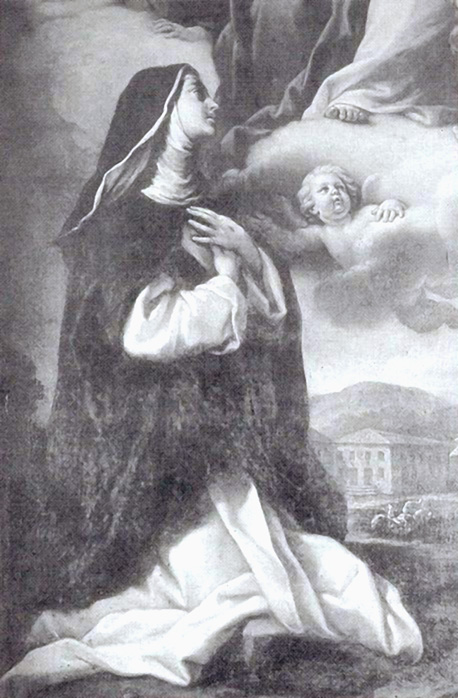
Lucy Brocadelli, also known as Lucy of Narni or Lucy of Narnia (13 December 1476 – 15 November 1544), was a Dominican tertiary who was a mystic and a stigmatic. She has been venerated by the Roman Catholic Church since 1710. She is known for being the counselor of the Duke of Ferrara, for founding convents in two different and distant city-states and for her remains being returned to her home city of Narni on 26 May 1935, 391 years after her death.
Lucy Brocadelly was born on 13 December 1476 on the feast day of Lucy of Syracuse, the eldest of eleven children of Bartolomeo Brocadelli and Gentilina Cassio, in the town of Narni (then called Narnia) and in the region of Umbria. A pious child, she is said to have received visions from an early age. When she was twelve years old, Lucy made a private vow of chastity, and she determined to become a Dominican nun.
Circumstances, however, changed to make doing so impossible as her father died the following year, leaving her in the care of an uncle. This uncle, following the wish of her father while he was still alive, decided that the best course of action he could take would be to get Lucy married as quickly as possible. He made several attempts to do so. One of these included holding a large family party. He had invited the man he had chosen to become Lucy's husband to the party, with the intention of having the couple publicly betrothed. He however had not informed Lucy of his intentions. The suitor made an attempt to put a ring on Lucy's finger, only to be slapped repeatedly by her for his efforts.
A later attempt involved Count Pietro di Alessio of Milan, an acquaintance of the family. Lucy was actually quite fond of him but felt that her earlier vow of perpetual virginity made the marriage impossible. The strain Lucy felt as a result of the conflicting feelings made her seriously ill. During this time, the Virgin Mary and Saint Dominic reportedly appeared to her, this time accompanied by Saint Catherine of Siena. They reportedly advised Lucy to contract a legal marriage to Pietro, but to explain that her vow of virginity would have to be respected and not violated. Pietro agreed to the terms, and the marriage was formalized.
In 1491, Lucy became Pietro's legal wife and the mistress of his household, which included a number of servants and a busy social calendar. Despite her busy social schedule as a Countess, Lucy made great efforts to instruct the servants in the Catholic faith and soon became well known locally for her charity to the poor. Pietro observed Lucy's behavior, and occasional quirks, quite indulgently. He never objected when she gave away clothing and food. Nor when she performed austere penances, which included regularly wearing a hair shirt under her garments and spending most of the night in prayer and helping the poor. He also seemed to have taken in stride the story he was told by the servants that Lucy was often visited in the evenings by Ss. Catherine, Agnes of Rome, and Agnes of Montepulciano, who helped her make bread for the poor.
However, when one of the servants came up to him one day and told him that Lucy was privately entertaining a handsome young man she appeared to be quite familiar with, he did react. He took up his sword and went to see who this person was. When he arrived, he found Lucy contemplating a large crucifix. The servant told him that the man he had seen Lucy with looked like the figure on the crucifix.
Later, Lucy left one night for a local Franciscan friary, only to find it closed. She returned home the following morning, stating that she had been led back by two saints. That was enough for Pietro. He had her locked away for the bulk of one Lenten season. She was visited only by servants who brought her food. When Easter arrived, however, she managed to escape from Pietro back to her mother's house and, on 8 May 1494, became a Dominican tertiary. Pietro expressed his disapproval of this in a rather dramatic form—by burning down the monastery of the prior who had given her the habit of the Order.
In 1495, Lucy went to Rome and joined a group of Dominican tertiaries who were living in community. The next year she was sent to Viterbo to establish a new convent and there she found she was frequently the object of unwanted attention. It was there, on 25 February 1496, that she is reported to have received the stigmata. Lucy did her best to hide these marks, and was frequently in spiritual ecstasy. The house had a steady stream of visitors who came to speak to Lucy, and, often, just to stare at her. Even the other sisters were concerned about her, and at one point called in the local bishop who watched Lucy go through the drama of the Passion for twelve hours straight.
Hub AI
Lucy Brocadelli AI simulator
(@Lucy Brocadelli_simulator)
Lucy Brocadelli
Lucy Brocadelli, also known as Lucy of Narni or Lucy of Narnia (13 December 1476 – 15 November 1544), was a Dominican tertiary who was a mystic and a stigmatic. She has been venerated by the Roman Catholic Church since 1710. She is known for being the counselor of the Duke of Ferrara, for founding convents in two different and distant city-states and for her remains being returned to her home city of Narni on 26 May 1935, 391 years after her death.
Lucy Brocadelly was born on 13 December 1476 on the feast day of Lucy of Syracuse, the eldest of eleven children of Bartolomeo Brocadelli and Gentilina Cassio, in the town of Narni (then called Narnia) and in the region of Umbria. A pious child, she is said to have received visions from an early age. When she was twelve years old, Lucy made a private vow of chastity, and she determined to become a Dominican nun.
Circumstances, however, changed to make doing so impossible as her father died the following year, leaving her in the care of an uncle. This uncle, following the wish of her father while he was still alive, decided that the best course of action he could take would be to get Lucy married as quickly as possible. He made several attempts to do so. One of these included holding a large family party. He had invited the man he had chosen to become Lucy's husband to the party, with the intention of having the couple publicly betrothed. He however had not informed Lucy of his intentions. The suitor made an attempt to put a ring on Lucy's finger, only to be slapped repeatedly by her for his efforts.
A later attempt involved Count Pietro di Alessio of Milan, an acquaintance of the family. Lucy was actually quite fond of him but felt that her earlier vow of perpetual virginity made the marriage impossible. The strain Lucy felt as a result of the conflicting feelings made her seriously ill. During this time, the Virgin Mary and Saint Dominic reportedly appeared to her, this time accompanied by Saint Catherine of Siena. They reportedly advised Lucy to contract a legal marriage to Pietro, but to explain that her vow of virginity would have to be respected and not violated. Pietro agreed to the terms, and the marriage was formalized.
In 1491, Lucy became Pietro's legal wife and the mistress of his household, which included a number of servants and a busy social calendar. Despite her busy social schedule as a Countess, Lucy made great efforts to instruct the servants in the Catholic faith and soon became well known locally for her charity to the poor. Pietro observed Lucy's behavior, and occasional quirks, quite indulgently. He never objected when she gave away clothing and food. Nor when she performed austere penances, which included regularly wearing a hair shirt under her garments and spending most of the night in prayer and helping the poor. He also seemed to have taken in stride the story he was told by the servants that Lucy was often visited in the evenings by Ss. Catherine, Agnes of Rome, and Agnes of Montepulciano, who helped her make bread for the poor.
However, when one of the servants came up to him one day and told him that Lucy was privately entertaining a handsome young man she appeared to be quite familiar with, he did react. He took up his sword and went to see who this person was. When he arrived, he found Lucy contemplating a large crucifix. The servant told him that the man he had seen Lucy with looked like the figure on the crucifix.
Later, Lucy left one night for a local Franciscan friary, only to find it closed. She returned home the following morning, stating that she had been led back by two saints. That was enough for Pietro. He had her locked away for the bulk of one Lenten season. She was visited only by servants who brought her food. When Easter arrived, however, she managed to escape from Pietro back to her mother's house and, on 8 May 1494, became a Dominican tertiary. Pietro expressed his disapproval of this in a rather dramatic form—by burning down the monastery of the prior who had given her the habit of the Order.
In 1495, Lucy went to Rome and joined a group of Dominican tertiaries who were living in community. The next year she was sent to Viterbo to establish a new convent and there she found she was frequently the object of unwanted attention. It was there, on 25 February 1496, that she is reported to have received the stigmata. Lucy did her best to hide these marks, and was frequently in spiritual ecstasy. The house had a steady stream of visitors who came to speak to Lucy, and, often, just to stare at her. Even the other sisters were concerned about her, and at one point called in the local bishop who watched Lucy go through the drama of the Passion for twelve hours straight.