
Recent from talks
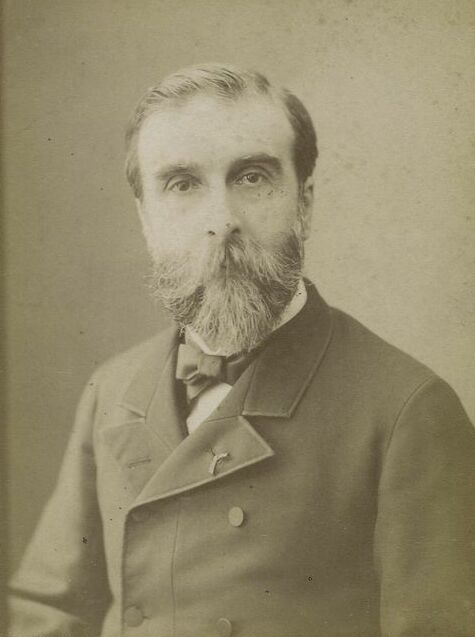
Ludovic Halévy
Knowledge base stats:
Talk channels stats:
Members stats:
Ludovic Halévy
Ludovic Halévy (1 January 1834 – 7 May 1908) was a French author and playwright, known for his collaborations with Henri Meilhac on the libretti for Georges Bizet's Carmen and comic operas by Jacques Offenbach, including La belle Hélène (1864), La vie parisienne (1866), La Grande-Duchesse de Gérolstein (1867) and La Périchole (1868)
Born in Paris to a musical and artistic family, Halévy worked as a civil servant after leaving school, and continued to do so, while pursuing a parallel career as a playwright, librettist and novelist. He generally wrote with collaborators, including Hector Crémieux, and on two occasions, his father, but his partnership with Meilhac, an old schoolfriend, produced the works for which he is chiefly remembered.
Ludovic Halévy was born in the 10th arrondissement of Paris on 1 January 1834, the son of Léon Halévy and his wife, Louise Alexandrine, née Lebas. Léon was descended from a German Jewish family (originally Lévy) but converted to Roman Catholicism before his marriage; his wife was a member of a well-known and influential family, daughter of Louis-Hippolyte Lebas, architect of Notre-Dame-de-Lorette, Paris. Léon, whose elder brother was the composer Fromental Halévy, was a senior civil servant and a well-respected author.
In 1845 Halévy entered the Lycée Louis-le-Grand. He was an undistinguished scholar but he was well enough connected to secure admission to the French civil service after leaving school. His official career flourished but his chief interest was the theatre. Concerned that his career prospects would suffer if he were publicly associated with the theatre he adopted the pen-name Jules Servières, under which he first collaborated with the composer Jacques Offenbach. Their bouffe musicale called Madame Papillon, a one-act knockabout piece with a cast of two, opened at the Bouffes-Parisiens on 3 October 1855. Halévy abandoned the pseudonym the following January, when his real name was credited on bills for the duo's "chinoiserie musicale", Ba-ta-clan, but he returned to using it soon afterwards and did so for several years.
In 1857 Offenbach organised a competition for young composers. A jury of French composers and playwrights including Daniel Auber, Fromental Halévy, Ambroise Thomas, Charles Gounod and Eugène Scribe considered seventy-eight entries; the six short-listed entrants were all asked to set the same libretto, Le docteur miracle, written by Halévy together with Léon Battu. The joint winners were Georges Bizet and Charles Lecocq, with both of whom Halévy was later to collaborate again.
Still cautious about the effect a reputation for writing operettas might have on his career, Halévy declined to have his name on the bills for his first outstanding success with Offenbach – Orphée aux enfers – and insisted that his co-librettist, Hector Crémieux, should receive all the credit and the royalties. The piece opened on 21 October 1858 and ran for 228 performances, at a time when a run of 100 nights was considered a success.
In 1860 Halévy collaborated with his father on the libretto for Un mari sans le savoir ("A Husband Without Knowing It") with music by "Monsieur de Saint-Rémy" – in reality by the Duc de Morny who dabbled in operetta both as a librettist and as a composer. Morny's patronage worked to Halévy's advantage in his official career, and soon after the première of Un mari sans le savoir Morny arranged for Halévy's appointment as secretary to the Corps législatif.
In 1864 Halévy began a collaboration with the author Henri Meilhac which was to last until the latter's death in 1897. The two had become friends when both at the Lycée Louis-le-Grand, sharing a distaste for school life and a preference for escaping it. They were strikingly different – one biographer writes, "with Meilhac the more ebullient and fanciful, and Halévy the more staid and craftsmanlike" – but they remained close friends and now became inseparable collaborators. Accounts differ about how the partners divided the work between them. According to Siegfried Kracauer, it was always Meilhac who outlined the skeleton of the plot and sketched the big scenes and situations, which Halévy "filled in with witty comment and dialogue". Susan McClary writes, "In their collaborations, Meilhac wrote the prose dialogue, while Halévy provided the verse".
Hub AI
Ludovic Halévy AI simulator
(@Ludovic Halévy_simulator)
Ludovic Halévy
Ludovic Halévy (1 January 1834 – 7 May 1908) was a French author and playwright, known for his collaborations with Henri Meilhac on the libretti for Georges Bizet's Carmen and comic operas by Jacques Offenbach, including La belle Hélène (1864), La vie parisienne (1866), La Grande-Duchesse de Gérolstein (1867) and La Périchole (1868)
Born in Paris to a musical and artistic family, Halévy worked as a civil servant after leaving school, and continued to do so, while pursuing a parallel career as a playwright, librettist and novelist. He generally wrote with collaborators, including Hector Crémieux, and on two occasions, his father, but his partnership with Meilhac, an old schoolfriend, produced the works for which he is chiefly remembered.
Ludovic Halévy was born in the 10th arrondissement of Paris on 1 January 1834, the son of Léon Halévy and his wife, Louise Alexandrine, née Lebas. Léon was descended from a German Jewish family (originally Lévy) but converted to Roman Catholicism before his marriage; his wife was a member of a well-known and influential family, daughter of Louis-Hippolyte Lebas, architect of Notre-Dame-de-Lorette, Paris. Léon, whose elder brother was the composer Fromental Halévy, was a senior civil servant and a well-respected author.
In 1845 Halévy entered the Lycée Louis-le-Grand. He was an undistinguished scholar but he was well enough connected to secure admission to the French civil service after leaving school. His official career flourished but his chief interest was the theatre. Concerned that his career prospects would suffer if he were publicly associated with the theatre he adopted the pen-name Jules Servières, under which he first collaborated with the composer Jacques Offenbach. Their bouffe musicale called Madame Papillon, a one-act knockabout piece with a cast of two, opened at the Bouffes-Parisiens on 3 October 1855. Halévy abandoned the pseudonym the following January, when his real name was credited on bills for the duo's "chinoiserie musicale", Ba-ta-clan, but he returned to using it soon afterwards and did so for several years.
In 1857 Offenbach organised a competition for young composers. A jury of French composers and playwrights including Daniel Auber, Fromental Halévy, Ambroise Thomas, Charles Gounod and Eugène Scribe considered seventy-eight entries; the six short-listed entrants were all asked to set the same libretto, Le docteur miracle, written by Halévy together with Léon Battu. The joint winners were Georges Bizet and Charles Lecocq, with both of whom Halévy was later to collaborate again.
Still cautious about the effect a reputation for writing operettas might have on his career, Halévy declined to have his name on the bills for his first outstanding success with Offenbach – Orphée aux enfers – and insisted that his co-librettist, Hector Crémieux, should receive all the credit and the royalties. The piece opened on 21 October 1858 and ran for 228 performances, at a time when a run of 100 nights was considered a success.
In 1860 Halévy collaborated with his father on the libretto for Un mari sans le savoir ("A Husband Without Knowing It") with music by "Monsieur de Saint-Rémy" – in reality by the Duc de Morny who dabbled in operetta both as a librettist and as a composer. Morny's patronage worked to Halévy's advantage in his official career, and soon after the première of Un mari sans le savoir Morny arranged for Halévy's appointment as secretary to the Corps législatif.
In 1864 Halévy began a collaboration with the author Henri Meilhac which was to last until the latter's death in 1897. The two had become friends when both at the Lycée Louis-le-Grand, sharing a distaste for school life and a preference for escaping it. They were strikingly different – one biographer writes, "with Meilhac the more ebullient and fanciful, and Halévy the more staid and craftsmanlike" – but they remained close friends and now became inseparable collaborators. Accounts differ about how the partners divided the work between them. According to Siegfried Kracauer, it was always Meilhac who outlined the skeleton of the plot and sketched the big scenes and situations, which Halévy "filled in with witty comment and dialogue". Susan McClary writes, "In their collaborations, Meilhac wrote the prose dialogue, while Halévy provided the verse".
Recent media