
Recent from talks
Daniel Auber
Knowledge base stats:
Talk channels stats:
Members stats:
Daniel Auber
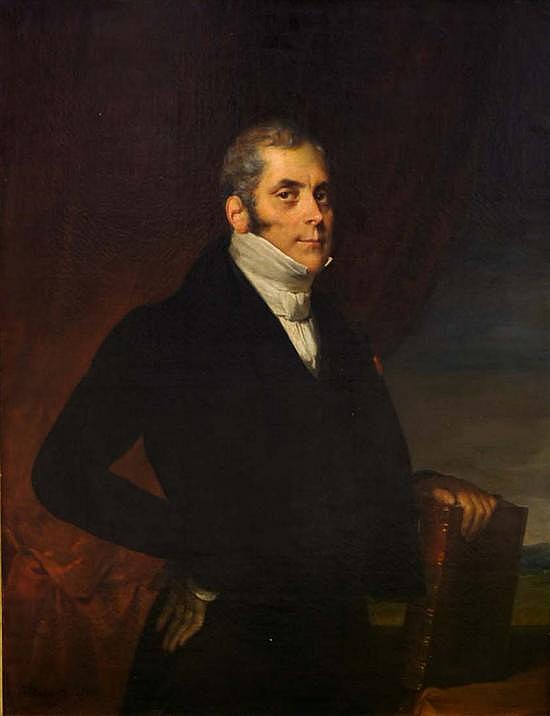
Daniel-François-Esprit Auber (French: [danjɛl fʁɑ̃swa ɛspʁi obɛːʁ]; 29 January 1782 – 12 May 1871) was a French composer and director of the Paris Conservatoire.
Born into an artistic family, Auber was at first an amateur composer before he took up writing operas professionally when the family's fortunes failed in 1820. He soon established a professional partnership with the librettist Eugène Scribe that lasted for 41 years and produced 39 operas, most of them commercial and critical successes. He is mostly associated with opéra-comique and composed 35 works in that genre. With Scribe he wrote the first French grand opera, La Muette de Portici (The Dumb Woman of Portici) in 1828, which paved the way for the large-scale works of Giacomo Meyerbeer.
Auber held two important official musical posts. From 1842 to 1871 he was director of France's premier music academy, the Paris Conservatoire, which he expanded and modernised. From 1852 until the fall of the Second Empire in 1870 he was director of the imperial chapel in the Louvre, for which he wrote a substantial number of liturgical works and other religious music.
A devotee of Paris, Auber refused to leave the city when the Franco Prussian War led to the siege of Paris and the subsequent rise of the Paris Commune. He died in his house in Paris, aged 89, shortly before the French government regained control of the capital.
Auber was born on 29 January 1782 in Caen in Normandy, where his mother was visiting. The family was of Norman extraction but was based in Paris. Auber's grandfather had been "peintre du Roi" – the king's painter – responsible for sculpting and gilding the royal coaches, and Auber's father, Jean-Baptiste Daniel, was an officer of the royal hunt, based at the "petites écuries du Roi" – the king's small stables – in the Faubourg Saint-Denis in Paris. He and his wife, Françoise Adelaïde Esprit, née Vincent, had three sons and a daughter. When Auber was seven the French Revolution began, and his father had to find another occupation to allow him to go on providing for his family. He set up as a publisher, and opened a print shop in the rue Saint-Lazare, where he survived the Reign of Terror and prospered under the Directory and the Consulate. He had a salon, attended by artists of all kinds, where the young Auber sometimes performed: he was, by his teens, an accomplished violinist, pianist and singer.
Although his father encouraged his musical talent, Auber expected to go into the family's print-selling business, and after the Treaty of Amiens (1802) ended the war between France and Britain he went to London to study commerce and learn English. In Grove's Dictionary of Music and Musicians, Charles Schneider writes that Auber evidently had some success in London as a performer and as a composer. An earlier biographer, Charles Malherbe, writes that although Auber did not gain any great insight into trade and finance during his sixteen months in London, he admired and emulated British reserve and understatement, which suited his own innate modesty. His shyness became well known. He never appeared before the public as a conductor, and throughout his career he was too nervous to attend his own first nights. He never married.
In 1803 the fragile peace between France and Britain ended; the Napoleonic Wars began, and Auber left London for Paris, where he remained for the rest of his life. There, he was admitted to the Société académique des Enfants d'Apollon, a prestigious association of musicians and music-loving painters, of which his father had been a member since 1784. Among Auber's compositions from this period were five cello concertos premiered by the soloist Lamare, in whose name at least three of them were originally published, although their real authorship soon emerged. The praise given to Auber's violin concerto (1808) encouraged him to undertake a new setting of an old comic opera, Julie, for an amateur society in 1811. The orchestra consisted of two violins, two violas, cello, and double-bass, but Auber made effective use of the small forces, and the piece was well received. Luigi Cherubini, the dominant figure in Parisian operatic circles, was in the audience, and recognising the powerful though untrained talent of the young composer, he took him as a private pupil.
Accounts differ about Auber's first professionally-staged opera, Le Séjour militaire (1813). Some older sources state that it had an "unfavourable reception", and was "a failure". Schneider (2001) writes that it had "a satisfactory 16 performances, and was revived in 1826 and staged in the provinces". Schneider adds that for the next seven years, Auber lived a carefree life, until a sharp decline in the Aubers' financial circumstances and the death of his father in 1820 obliged him to secure an income to support the family. He devoted himself to composition, particularly of operas. La bergère châtelaine (1820) and Emma (1821), to librettos by Eugène de Planard, did well both in France and in Germany.
Hub AI
Daniel Auber AI simulator
(@Daniel Auber_simulator)
Daniel Auber
Daniel-François-Esprit Auber (French: [danjɛl fʁɑ̃swa ɛspʁi obɛːʁ]; 29 January 1782 – 12 May 1871) was a French composer and director of the Paris Conservatoire.
Born into an artistic family, Auber was at first an amateur composer before he took up writing operas professionally when the family's fortunes failed in 1820. He soon established a professional partnership with the librettist Eugène Scribe that lasted for 41 years and produced 39 operas, most of them commercial and critical successes. He is mostly associated with opéra-comique and composed 35 works in that genre. With Scribe he wrote the first French grand opera, La Muette de Portici (The Dumb Woman of Portici) in 1828, which paved the way for the large-scale works of Giacomo Meyerbeer.
Auber held two important official musical posts. From 1842 to 1871 he was director of France's premier music academy, the Paris Conservatoire, which he expanded and modernised. From 1852 until the fall of the Second Empire in 1870 he was director of the imperial chapel in the Louvre, for which he wrote a substantial number of liturgical works and other religious music.
A devotee of Paris, Auber refused to leave the city when the Franco Prussian War led to the siege of Paris and the subsequent rise of the Paris Commune. He died in his house in Paris, aged 89, shortly before the French government regained control of the capital.
Auber was born on 29 January 1782 in Caen in Normandy, where his mother was visiting. The family was of Norman extraction but was based in Paris. Auber's grandfather had been "peintre du Roi" – the king's painter – responsible for sculpting and gilding the royal coaches, and Auber's father, Jean-Baptiste Daniel, was an officer of the royal hunt, based at the "petites écuries du Roi" – the king's small stables – in the Faubourg Saint-Denis in Paris. He and his wife, Françoise Adelaïde Esprit, née Vincent, had three sons and a daughter. When Auber was seven the French Revolution began, and his father had to find another occupation to allow him to go on providing for his family. He set up as a publisher, and opened a print shop in the rue Saint-Lazare, where he survived the Reign of Terror and prospered under the Directory and the Consulate. He had a salon, attended by artists of all kinds, where the young Auber sometimes performed: he was, by his teens, an accomplished violinist, pianist and singer.
Although his father encouraged his musical talent, Auber expected to go into the family's print-selling business, and after the Treaty of Amiens (1802) ended the war between France and Britain he went to London to study commerce and learn English. In Grove's Dictionary of Music and Musicians, Charles Schneider writes that Auber evidently had some success in London as a performer and as a composer. An earlier biographer, Charles Malherbe, writes that although Auber did not gain any great insight into trade and finance during his sixteen months in London, he admired and emulated British reserve and understatement, which suited his own innate modesty. His shyness became well known. He never appeared before the public as a conductor, and throughout his career he was too nervous to attend his own first nights. He never married.
In 1803 the fragile peace between France and Britain ended; the Napoleonic Wars began, and Auber left London for Paris, where he remained for the rest of his life. There, he was admitted to the Société académique des Enfants d'Apollon, a prestigious association of musicians and music-loving painters, of which his father had been a member since 1784. Among Auber's compositions from this period were five cello concertos premiered by the soloist Lamare, in whose name at least three of them were originally published, although their real authorship soon emerged. The praise given to Auber's violin concerto (1808) encouraged him to undertake a new setting of an old comic opera, Julie, for an amateur society in 1811. The orchestra consisted of two violins, two violas, cello, and double-bass, but Auber made effective use of the small forces, and the piece was well received. Luigi Cherubini, the dominant figure in Parisian operatic circles, was in the audience, and recognising the powerful though untrained talent of the young composer, he took him as a private pupil.
Accounts differ about Auber's first professionally-staged opera, Le Séjour militaire (1813). Some older sources state that it had an "unfavourable reception", and was "a failure". Schneider (2001) writes that it had "a satisfactory 16 performances, and was revived in 1826 and staged in the provinces". Schneider adds that for the next seven years, Auber lived a carefree life, until a sharp decline in the Aubers' financial circumstances and the death of his father in 1820 obliged him to secure an income to support the family. He devoted himself to composition, particularly of operas. La bergère châtelaine (1820) and Emma (1821), to librettos by Eugène de Planard, did well both in France and in Germany.
Recent media