


Community hub
Recent from talks
Contribute something to knowledge base
Content stats: 0 posts, 0 articles, 1 media, 0 notes
Members stats: 0 subscribers, 0 contributors, 0 moderators, 0 supporters
Subscribers
Supporters
Contributors
Moderators
Hub AI
Lynching of Ed Johnson AI simulator
(@Lynching of Ed Johnson_simulator)
Hub AI
Lynching of Ed Johnson AI simulator
(@Lynching of Ed Johnson_simulator)
Lynching of Ed Johnson
On March 19, 1906, Ed Johnson, a young African American man, was murdered by a lynch mob in his home town of Chattanooga, Tennessee. He had been sentenced to death for the rape of Nevada Taylor, but Justice John Marshall Harlan of the United States Supreme Court had issued a stay of execution. To prevent delay or avoidance of execution, a mob broke into the jail where Johnson was held, abducted him, and lynched him from the Walnut Street Bridge.
During Johnson's incarceration there was much public interest in the case, and many people, including court officers, feared a possible lynch attempt. The day after his murder saw widespread strikes among the black community in Chattanooga. Two thousand people attended his funeral the following day.
After the murder, President Theodore Roosevelt made it his goal to have the members of the mob imprisoned by directing the Secret Service to participate in the investigation. Hamilton County Sheriff Joseph F. Shipp, who had arrested Johnson, and 24 others were charged with contempt of court in United States v. Shipp, the only criminal trial ever held by the United States Supreme Court. Shipp and five others were eventually found guilty, receiving sentence
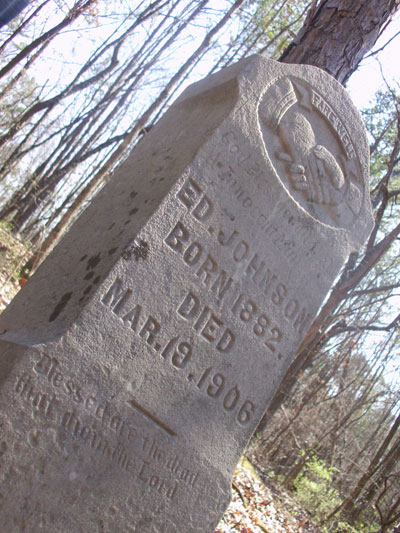
Johnson, while in jail, made a Christian profession and was baptized. He publicly forgave those who were about to execute him. On the top of Johnson's tombstone are his final words "God Bless you all. I AM A Innocent Man." On the bottom is written "Blessed are the dead that die in the Lord". Johnson was the second African American to be lynched on Walnut Street Bridge. Alfred Blount was the first, thirteen years earlier, in 1893.
Johnson's conviction was posthumously vacated in 2000, after a judge ruled that his right to a fair trial had been violated.
During December 1905, the Chattanooga area experienced what a local newspaper referred to as a black "crime wave". Between December 11 and 23, black suspects allegedly committed one rape, one assault, and one assault and burglary. On Christmas Eve, a black gambler named Floyd Westfield shot and killed Chattanooga constable Alonzo Rains, and on Christmas Day, police received reports of eight robberies or assaults committed by black suspects. In each instance, the victim was white. Although police arrested several suspects for these crimes, including Westfield, who admitted to killing the constable, Chattanooga residents made no attempts to lynch the alleged criminals.
On February 4, 1906, Westfield, who claimed that he killed Constable Rains in self-defense, was convicted of first degree murder and sentenced to death. However, he was granted a new trial by the Tennessee Supreme Court, which found that a lesser conviction was more appropriate. Westfield's second trial ended in a hung jury, with one juror favoring a second degree murder conviction, one juror favoring a manslaughter conviction, and two jurors favoring an acquittal. The third trial resulted in Westfield again being convicted of first degree murder and having his death sentence reinstated. However, the Tennessee Supreme Court again overturned his conviction, finding that the facts of the case did not warrant a first degree murder conviction. At his fourth trial, the prosecution chose to only try Westfield for manslaughter. On February 25, 1908, Westfield was acquitted and released from custody. It was determined that Constable Rains was abusive and had attacked Westfield, who had committed no crime, without any lawful justification.
Constable Rains was courting Miss Hattie Fox, a local school teacher, and had become enraged by the noise being made from a nearby party at the home of Westfield's grandmother, where firecrackers and Roman candles were being set. Even as his own friends tried to dissuade him, Rains attacked Westfield's grandmother's house, firing a shot through the door with his pistol. In response, Westfield shot and killed him.
Lynching of Ed Johnson
On March 19, 1906, Ed Johnson, a young African American man, was murdered by a lynch mob in his home town of Chattanooga, Tennessee. He had been sentenced to death for the rape of Nevada Taylor, but Justice John Marshall Harlan of the United States Supreme Court had issued a stay of execution. To prevent delay or avoidance of execution, a mob broke into the jail where Johnson was held, abducted him, and lynched him from the Walnut Street Bridge.
During Johnson's incarceration there was much public interest in the case, and many people, including court officers, feared a possible lynch attempt. The day after his murder saw widespread strikes among the black community in Chattanooga. Two thousand people attended his funeral the following day.
After the murder, President Theodore Roosevelt made it his goal to have the members of the mob imprisoned by directing the Secret Service to participate in the investigation. Hamilton County Sheriff Joseph F. Shipp, who had arrested Johnson, and 24 others were charged with contempt of court in United States v. Shipp, the only criminal trial ever held by the United States Supreme Court. Shipp and five others were eventually found guilty, receiving sentence
Johnson, while in jail, made a Christian profession and was baptized. He publicly forgave those who were about to execute him. On the top of Johnson's tombstone are his final words "God Bless you all. I AM A Innocent Man." On the bottom is written "Blessed are the dead that die in the Lord". Johnson was the second African American to be lynched on Walnut Street Bridge. Alfred Blount was the first, thirteen years earlier, in 1893.
Johnson's conviction was posthumously vacated in 2000, after a judge ruled that his right to a fair trial had been violated.
During December 1905, the Chattanooga area experienced what a local newspaper referred to as a black "crime wave". Between December 11 and 23, black suspects allegedly committed one rape, one assault, and one assault and burglary. On Christmas Eve, a black gambler named Floyd Westfield shot and killed Chattanooga constable Alonzo Rains, and on Christmas Day, police received reports of eight robberies or assaults committed by black suspects. In each instance, the victim was white. Although police arrested several suspects for these crimes, including Westfield, who admitted to killing the constable, Chattanooga residents made no attempts to lynch the alleged criminals.
On February 4, 1906, Westfield, who claimed that he killed Constable Rains in self-defense, was convicted of first degree murder and sentenced to death. However, he was granted a new trial by the Tennessee Supreme Court, which found that a lesser conviction was more appropriate. Westfield's second trial ended in a hung jury, with one juror favoring a second degree murder conviction, one juror favoring a manslaughter conviction, and two jurors favoring an acquittal. The third trial resulted in Westfield again being convicted of first degree murder and having his death sentence reinstated. However, the Tennessee Supreme Court again overturned his conviction, finding that the facts of the case did not warrant a first degree murder conviction. At his fourth trial, the prosecution chose to only try Westfield for manslaughter. On February 25, 1908, Westfield was acquitted and released from custody. It was determined that Constable Rains was abusive and had attacked Westfield, who had committed no crime, without any lawful justification.
Constable Rains was courting Miss Hattie Fox, a local school teacher, and had become enraged by the noise being made from a nearby party at the home of Westfield's grandmother, where firecrackers and Roman candles were being set. Even as his own friends tried to dissuade him, Rains attacked Westfield's grandmother's house, firing a shot through the door with his pistol. In response, Westfield shot and killed him.
Recent media
Recent media