



Community hub
Lynn Merrick
View on Wikipedia
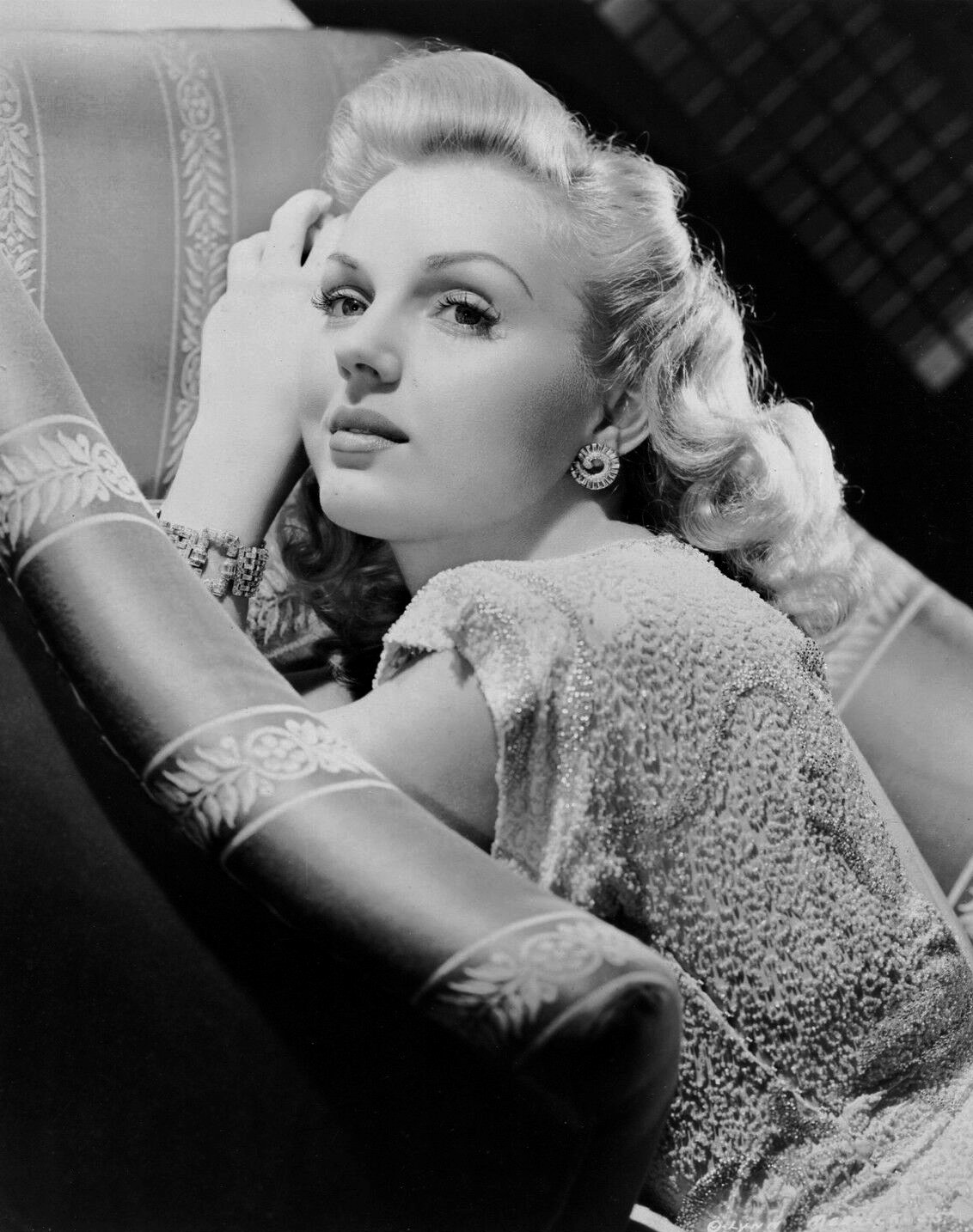
Lynn Merrick (born Marilyn Llewelling;[1] November 19, 1919 – March 25, 2007) was an American actress who appeared in over 40 films during the 1940s, mainly for Columbia and Republic Studios.
Key Information


Life and career
[edit]Merrick was born Marilyn Llewelling on November 19, 1919, in Fort Worth, Texas.[1]
In the 1930s, Merrick studied acting and worked as a model after moving to California.[2]
In 1940, Merrick was one of thirteen women selected by the Motion Picture Publicists Association as a "Baby Star", a selection process which was meant to highlight the most promising new film stars.[3] She made the bulk of her films during the 1940s, starring in 22 feature films for Republic Pictures; 16 of these were Don Barry westerns.
Merrick's first Barry film was Two Gun Sheriff and her last was Fugitive from Sonora. She later worked for Columbia Pictures, where she starred in films alongside Richard Dix, Chester Morris, and Warner Baxter. Merrick retired from films after Escape from Terror (1955),[2] starring and directed by Jackie Coogan.
In 1948, Merrick and her husband at the time, Conrad Nagel, appeared in summer stock theater in Pennsylvania, New York, and Connecticut.[4] After retiring from acting, Merrick was an executive with the Barbizon School of Modeling.[2]
Personal life and death
[edit]Merrick was married and divorced twice. Her first marriage was to Nagel. They received an interlocutory decree on March 26, 1947,[5] and the divorce became final on August 26, 1948.[6]
On October 26, 1949, Merrick married producer Robert Goelet Jr. in Europe.[4] Both unions were childless. In 1950, Merrick received emergency treatment at Santa Monical Hospital after taking an overdose of sleeping pills. A news story distributed by International News Service described the overdose as "the climax to a spat with her husband, wealthy Robert Goelet."[7]
Merrick died on March 25, 2007, at age 87, at her home in West Palm Beach, Florida.[8] Her remains were cremated and her ashes scattered.[9]
Filmography
[edit]| Year | Title | Role | Notes |
|---|---|---|---|
| 1940 | 'Til We Meet Again | Fussy Woman's Daughter | Uncredited |
| Dr. Christian Meets the Women | Kity Browning | (as Marilyn Merrick) | |
| Flight Angels | Marilyn | (as Marilyn Merrick) | |
| Ragtime Cowboy Joe | Mary Curtiss | (as Marilyn Merrick) | |
| 1941 | A Missouri Outlaw | Virginia Randall | |
| Death Valley Outlaws | Carolyn Johnson | ||
| The Apache Kid | Barbara Taylor | ||
| Kansas Cyclone | Martha Ming | ||
| Desert Bandit | Sue Martin | ||
| The Gay Vagabond | Betty Dixon | ||
| Two Gun Sheriff | Ruth Norton | ||
| Sis Hopkins | Phyllis | ||
| 1942 | Outlaws of Pine Ridge | Ann Hollister | |
| The Sombrero Kid | Dorothy Russell | ||
| The Cyclone Kid | Mary Phillips | ||
| Jesse James, Jr. | Joan Perry | ||
| Stageeoach Express | Ellen Bristol | ||
| Arizona Terrors | Lila Adams | ||
| Youth on Parade | Emmy Lou Piper | ||
| 1943 | Doughboys in Ireland | Gloria Gold | |
| Days of Old Cheyenne | Nancy Carlyle | ||
| Dangerous Blondes | Mary Ralston | ||
| Is Everybody Happy? | Ann | ||
| Fugitive from Sonora | Dixie Martin | ||
| Carson City Cyclone | Linda Wade | ||
| Dead Man's Gulch | Mary Logan | ||
| Mountain Rhythm | Linda Weaver | ||
| The Crime Doctor's Strangest Case | Ellen Trotter | ||
| 1944 | Meet Miss Bobby Socks | Helen Taylor | |
| Nine Girls | Eve Sharon | ||
| Stars on Parade | Dorothy Dean | ||
| Swing Out the Blues | Penelope Carstairs | ||
| 1945 | A Guy, a Gal and a Pal | Helen Carter | |
| Boston Blackie Booked on Suspicion | Constance Gloria Mannard | ||
| Voice of the Whistler | Joan Martin Sinclair | ||
| Blonde from Brooklyn | Susan Parker aka Susanna Bellwither | ||
| 1946 | Dangerous Business | Lizbeth Ellsworth | |
| A Close Call for Boston Blackie | Geraldine 'Gerry' Peyton | ||
| 1947 | Down to Earth | Muse | |
| 1948 | I Love Trouble | Mrs. Johnson | |
| 1954 | Escape from Terror | Lee Brooks | (final film role) |
References
[edit]- ^ a b Wilson, Scott (2016). Resting Places: The Burial Sites of More Than 14,000 Famous Persons, 3d ed. McFarland. p. 511. ISBN 9781476625997. Retrieved July 18, 2017.
- ^ a b c Lentz, Harris M. III (2008). Obituaries in the Performing Arts, 2007: Film, Television, Radio, Theatre, Dance, Music, Cartoons and Pop Culture. McFarland. ISBN 9780786434817. Retrieved July 18, 2017.
- ^ "Wampus Baby Star Surprised By Her Selection". Ames Daily Tribune. Iowa, Ames. April 17, 1941. p. 15. Retrieved June 6, 2016 – via Newspapers.com.

- ^ a b "Lynn Merrick Weds Robert Goelet Jr". Joplin Globe. Missouri, Joplin. Associated Press. October 30, 1949. p. 7. Retrieved July 17, 2017 – via Newspapers.com.
- ^ "Divorces". Billboard. May 17, 1947. p. 47. Retrieved July 18, 2017.
- ^ "Actress Lynn Merrick Severs Marriage Tie". The Ottawa Journal. Canada, Ottawa, Ontario. Associated Press. August 27, 1948. p. 21. Retrieved July 17, 2017 – via Newspapers.com.
- ^ "Lynn Merrick Recovering From Sleeping Tablets". Long Beach Independent. California, Long Beach. International News Service. March 26, 1950. p. 38. Retrieved July 17, 2017 – via Newspapers.com.
- ^ McLellan, Dennis (April 2, 2007). "Lynn Merrick, 85; B-western actress appeared in over 40 movies in the 1940s". LA Times.
- ^ Wilson, Scott (September 16, 2016). Resting Places: The Burial Sites of More Than 14,000 Famous Persons, 3d ed. McFarland. ISBN 9781476625997 – via Google Books.

External links
[edit]
- Lynn Merrick at IMDb
- The Private Life and Times of Lynn Merrick
- Vallance, Tom (April 3, 2007). "Lynn Merrick – 'B'-movie femme fatale". The Independent. Archived from the original on October 27, 2010.
| International | |
|---|---|
| National | |

Lynn Merrick
View on GrokipediaEarly life
Birth and family background
Lynn Merrick was born Mary Lewelling on November 19, 1921, at St. Joseph's Infirmary in Fort Worth, Texas.[3] She was the only child of Truman E. Lewelling, a laborer born in 1903, and Alverda Jane McClure, born in 1905, both from Texas.[3] Her parents married young and provided a modest, working-class upbringing in Fort Worth, where the family resided during her early years. Her mother had two sisters who became actresses: Grace McClure (known as Linda March, died 1933) and Ruth McClure (known as Adrienne Ames, 1903–1947). Specific details about her childhood experiences are sparse, but she grew up in a close-knit household amid the economic challenges of the era in rural Texas.[3] Merrick initially used the professional name Marilyn Merrick when entering modeling and acting in the late 1930s.[4] In January 1941, upon signing a contract with Republic Pictures, she adopted the stage name Lynn Merrick to better suit her screen persona, as announced in industry publications.[3] This change reflected the common practice in Hollywood of selecting monikers that were memorable and marketable.[3]Move to California and initial pursuits
In her mid-teens, in the mid-1930s, Lynn Merrick relocated to California with her mother and grandmother to seek opportunities in the entertainment industry.[3] [1] This move positioned her in the heart of Hollywood, where she immersed herself in the burgeoning film scene.[2] Upon arriving, Merrick enrolled in acting classes to hone her skills and supported herself through modeling work, which showcased her striking blonde looks and helped build her visibility in the local industry.[1] She also gained stage experience by appearing in theatrical productions, further developing her performance abilities.[2] These early pursuits laid the groundwork for her transition into professional acting. In 1940, Merrick received notable early recognition when she was chosen as one of thirteen "Baby Stars" by the Motion Picture Publicists Association, an honor intended to spotlight promising newcomers akin to the earlier WAMPAS program.[3] This accolade highlighted her potential and opened doors in the competitive Hollywood landscape. Building on this momentum, Merrick made her initial forays into film with an uncredited appearance in 'Til We Meet Again (1940), providing essential on-set experience.[5]Acting career
Debut and early roles
Lynn Merrick made her screen debut in an uncredited role as a fussy woman's daughter in the Warner Bros. drama 'Til We Meet Again (1940), directed by Edmund Goulding and starring Merle Oberon and George Brent.[3] This brief appearance marked her entry into Hollywood following a brief modeling career in Texas that opened doors to casting opportunities.[4] Transitioning to credited parts under her original stage name, Marilyn Merrick, she appeared as Kitty Browning, a young patient, in the RKO family drama Dr. Christian Meets the Women (1940), part of the popular Dr. Christian series.[6] That same year, she played Mary Curtiss, one of the leading ladies opposite Johnny Mack Brown, in the Universal western Ragtime Cowboy Joe (1940), showcasing her in a supporting romantic role amid action sequences.[6] These early assignments reflected her initial work with mid-tier studios like RKO and Universal, where newcomers often filled supporting positions in B-movies and programmers.[3] In 1941, after signing a long-term contract with Republic Pictures on March 3—where she adopted the professional name Lynn Merrick—she secured her first leading role as Ruth Norton, the heroine in a tale of mistaken identity, in the studio's western Two Gun Sheriff (1941), opposite Don "Red" Barry.[4] This film initiated a series of supporting and leading parts in low-budget westerns and dramas at Republic, a studio known for efficient production of genre fare during the early 1940s.[3] As a newcomer navigating Hollywood's competitive landscape, Merrick's progression from uncredited bits to contracted roles highlighted the era's demands on aspiring actresses to prove versatility in quick-turnaround projects.[1]Peak at Republic and Columbia
In 1941, Lynn Merrick signed a contract with Republic Pictures, where she became a prominent figure in the studio's B-western output, appearing in 22 feature films over the next several years.[3] Of these, 16 were westerns co-starring Don "Red" Barry as his frequent leading lady, establishing her as a reliable heroine in the genre's fast-paced, low-budget productions.[7] Notable examples include Two Gun Sheriff (1941), where she debuted opposite Barry, Days of Old Cheyenne (1943), and Dead Man's Gulch (1943), films that highlighted her portrayal of the resilient, blue-eyed blonde love interest amid action-oriented plots involving outlaws and frontier justice.[1] This prolific phase at Republic, with releases averaging several per year from 1941 to 1943, marked the height of her visibility in Hollywood's Poverty Row ecosystem, contributing to her image as an archetypal B-western damsel.[8] By 1943, Merrick transitioned to Columbia Pictures, signing another contract that led to 17 films over the subsequent five years, shifting her focus from westerns to mysteries, comedies, and occasional dramas.[7] At Columbia, she often played sultry blonde heroines or second leads, as seen in Meet Miss Bobby Socks (1944), a musical comedy co-starring Bob Crosby, and Voice of the Whistler (1945), a suspenseful entry in the studio's popular anthology series based on the radio drama.[2] Other collaborations included roles alongside Warner Baxter, emphasizing her versatility in B-movie narratives that blended intrigue and light romance.[7] Her work at Columbia maintained the high release frequency of her Republic era, with multiple titles annually through 1948, culminating in I Love Trouble, her final film there.[1] Overall, Merrick's peak at Republic and Columbia encompassed over 40 films in the 1940s, solidifying her contributions to the B-movie genre through consistent starring and supporting roles that capitalized on her photogenic appeal and screen presence.[1] This period represented her most active and impactful years, with her blue-eyed blonde persona becoming synonymous with the era's economical yet entertaining programmers, fostering notable partnerships like her extended run with Barry and her genre explorations at Columbia.[2]Later films and retirement
Following her peak years at Republic Pictures and Columbia in the mid-1940s, where she frequently starred in B-westerns and musical comedies, Lynn Merrick's film roles became increasingly scarce after 1948.[1] Her final appearance for Columbia was in the mystery film I Love Trouble (1948), playing a supporting role as Mrs. Johnston alongside Franchot Tone and Janet Blair. This marked a shift from her earlier leading lady parts in westerns to more occasional supporting roles in mysteries and thrillers, often at smaller or independent productions as the studio system waned.[3] Throughout the early 1950s, Merrick's output dwindled, with only sporadic work including uncredited or minor appearances in European productions and U.S. summer stock theater.[1] She took on a guest role in the TV series Secret File, U.S.A. (1955) and appeared in an episode of Paris Precinct (1955), reflecting the era's transition toward television as film opportunities for B-movie actors diminished. Her last film role came in the low-budget thriller Escape from Terror (1955), directed by and starring Jackie Coogan, where she portrayed Lee Brooks in a story about escaped convicts; the picture was filmed in Denmark and released in the U.S. as a double feature.[9] This independent venture underscored the decline of major studio assignments for actresses like Merrick, as the rise of television and changing audience tastes eroded the market for quickie genre films.[3] Merrick retired from acting around the mid-1950s, influenced by the industry's contraction—particularly the fading of B-westerns and programmers amid postwar economic shifts and competition from TV—and personal life transitions that prompted her to leave Hollywood.[1] By 1955, after Escape from Terror, she had effectively exited the screen, storing away her career memorabilia and seeking stability outside the volatile entertainment world.[3]Personal life
Marriages and relationships
Lynn Merrick's first marriage was to fellow actor Conrad Nagel, whom she met through their shared work in Hollywood during the mid-1940s. They wed on December 21, 1945, in Fort Lee, New Jersey, at the height of her acting career with Republic and Columbia Pictures.[10] The union ended with their divorce finalized on August 26, 1948, following an interlocutory decree in March 1947; Merrick cited that Nagel made her feel like a "kept woman" and a "guest in the house," while also restricting her independence, such as forbidding her from shopping.[2][11] Following her divorce from Nagel, Merrick married Robert Goelet Jr., a film producer and heir to a prominent New York real estate and banking family, on October 26, 1949, in an elopement in Europe. They met earlier that year in Rome, where Merrick was working on a film and Goelet served as an assistant director for a production company.[12] The marriage drew family opposition; Goelet's mother disinherited him upon learning of the union due to Merrick's acting background.[3] Described as stormy, the relationship ended in divorce in 1956 after Merrick filed on grounds of mental cruelty.[2][13] Merrick had no children from either marriage. Throughout her peak acting years in the 1940s, her romantic partnerships often intersected with professional circles, highlighting the demands of maintaining personal relationships amid a rigorous Hollywood schedule.[3][1]Health challenges and post-retirement activities
In March 1950, Merrick was hospitalized after taking an overdose of sleeping pills amid a quarrel with her second husband, producer Robert Goelet Jr., which was attributed to marital tensions.[14] She received emergency treatment at a Los Angeles hospital and recovered without long-term public repercussions, though the incident preceded her eventual divorce from Goelet in 1956.[3] Following her retirement from acting after the 1955 film Escape from Terror, Merrick shifted to the New York fashion industry, leveraging her early modeling background.[1] She served as executive field director for the Barbizon School of Modeling from 1967 to 1974, overseeing operations and training programs for aspiring models.[1] Later, she took sales positions at department stores in California and Florida, maintaining a professional focus on fashion without returning to entertainment.[1] Merrick adopted a low-profile existence as a private citizen, relocating to West Palm Beach, Florida, where she resided for many years in a seniors' apartment complex.[1] She stored her Hollywood memorabilia privately and occasionally shared signed photographs with visiting B-movie enthusiasts, but otherwise avoided public involvement in the industry.[2]Death
Final years
After retiring from acting in the mid-1950s, Lynn Merrick transitioned to the fashion industry, serving as an executive field director for the Barbizon School of Modeling from 1967 to 1974, which provided financial stability during her early retirement years.[5] She later worked in department store sales, initially in California before relocating to Florida in her later decades.[1] Merrick settled in West Palm Beach, Florida, where she lived in a seniors' apartment complex, embracing a quiet retirement lifestyle focused on personal reflection and modest daily routines.[1] She maintained a low profile, storing Hollywood memorabilia such as signed photographs under her bed and occasionally sharing stories from her acting past with neighbors and visiting fans, fostering informal connections within her community.[2] While she engaged in these nostalgic exchanges, Merrick made limited public statements about her career, preferring privacy over extensive interviews or memoirs.[1] In her advanced age, Merrick experienced a gradual health decline marked by a long illness that confined her to her home, though she remained in familiar surroundings until the end.[1]Cremation and legacy
Lynn Merrick died on March 25, 2007, at her home in West Palm Beach, Florida, at the age of 85, following a long illness.[1] Merrick is remembered as a prominent B-western icon of the 1940s, having appeared in over 40 low-budget films that contributed significantly to the era's popular cinema, often portraying the blonde, blue-eyed heroine alongside leading men in Republic and Columbia productions.[2][1][7] Her legacy endures through obituaries in major publications such as the Los Angeles Times and The Guardian, which highlighted her enduring appeal in classic westerns, alongside ongoing fan interest in her work via retrospectives on B-movie history and streaming availability of her films.[1][2]Filmography
1940s films
Lynn Merrick's most active decade was the 1940s, during which she appeared in over 40 films, primarily B-movies in genres such as westerns, mysteries, comedies, and dramas.[1] Her work was concentrated at Republic Pictures from 1941 to 1943 and Columbia Pictures from 1943 to 1948.[3] At Republic, she featured in 22 productions, with 16 serving as the leading lady in Don "Red" Barry westerns, where she often portrayed the romantic interest in fast-paced tales of frontier justice.[1][2] Transitioning to Columbia, she took on supporting and leading roles in 17 films, frequently in detective series like Boston Blackie, Whistler, and Crime Doctor, emphasizing intrigue and light suspense.[1] The following table lists her verified 1940s film appearances chronologically, focusing on key examples with role details, genres, and notable co-stars where available. This represents a selection from her extensive output, prioritizing significant credits.| Year | Title | Role | Genre | Notes/Co-Stars |
|---|---|---|---|---|
| 1940 | 'Til We Meet Again | Fussy Woman's Daughter (uncredited) | Drama | Early uncredited bit part.[15] |
| 1940 | Flight Angels | Marilyn | Drama | Supporting role as a flight attendant trainee; co-stars Virginia Bruce, Dennis Morgan.[16] |
| 1940 | Dr. Christian Meets the Women | Kitty Browning | Drama | Credited supporting role in the Dr. Christian series.[15] |
| 1940 | Ragtime Cowboy Joe | Mary Curtiss (as Marilyn Merrick) | Western | Leading role opposite Johnny Mack Brown in a musical western.[15] |
| 1941 | Two Gun Sheriff | Ruth Morton (leading lady) | Western | First collaboration with Don "Red" Barry, playing his romantic interest in a dual-role story of outlaws and sheriffs; co-stars Barry, Fred Kohler.[3][1] |
| 1942 | The Sombrero Kid | Leading lady | Western | Romantic lead to Don "Red" Barry in a tale of mistaken identity and ranch feuds.[3] |
| 1942 | Stagecoach Express | Ellen Bristol | Western | Key female role supporting Don "Red" Barry in a stagecoach robbery adventure; co-stars Barry, Al St. John.[17] |
| 1943 | Dead Man's Gulch | Leading lady | Western | Played Barry's sweetheart in a revenge-driven frontier story; co-stars Don "Red" Barry, Clancy Cooper.[3][7] |
| 1943 | Days of Old Cheyenne | Leading lady | Western | Romantic interest in Barry's fight against corruption in Cheyenne; co-stars Don "Red" Barry, Jack Kirk.[3][7] |
| 1943 | Fugitive from Sonora | Leading lady | Western | Final Barry western for Merrick, involving a fugitive's quest for justice; co-stars Don "Red" Barry, Wally Vernon.[3][18][7] |
| 1945 | Voice of the Whistler | Joan Sinclair | Mystery/Drama | Supporting role as a woman entangled in a scheme of murder and impersonation; co-stars Richard Dix, Rhys Williams.[17][15] |
| 1945 | The Crime Doctor's Courage | Mildred Waterman | Mystery | Role in the Crime Doctor series, aiding an amnesiac in solving crimes; co-stars Warner Baxter.[19] |
| 1946 | Dangerous Business | Lizbeth Ellsworth | Comedy/Drama | Central role as a secretary in a corporate intrigue comedy; co-stars Gus Schilling, Forrest Tucker.[17] |
| 1946 | A Close Call for Boston Blackie | Geraldine "Gerry" Peyton | Mystery | Supporting role in the Boston Blackie detective series, involving poison and false accusations; co-stars Chester Morris, Richard Lane.[20] |
| 1948 | I Love Trouble | Jane Johnson | Comedy/Mystery | Key role as a secretary caught in blackmail and murder; co-stars Janet Blair, Franchot Tone.[17][20] |
1950s films
Following a period of prominence in the 1940s, Lynn Merrick's film career entered a phase of decline in the 1950s, with only one credited feature appearance before her retirement from acting. This limited output reflected the shifting landscape of Hollywood B-movies and her personal decisions to step away from the industry.[21] Merrick's sole 1950s film role came in Escape from Terror (1955), a low-budget thriller directed by and starring Jackie Coogan. In the story, adapted from a Danish film titled Flugten til Danmark, Merrick played the supporting character Lee Brooks, a figure entangled in a plot involving escaped prisoners and international intrigue set against a post-World War II backdrop. The production, released by Lippert Pictures, featured Merrick in a minor but pivotal part alongside Coogan, Mona Knox, and Mike Stokey, emphasizing tension and pursuit rather than action spectacle.[9][21] No other theatrical films or uncredited appearances for Merrick are documented in the decade, underscoring her transition out of cinema by mid-decade. This final role effectively closed her on-screen legacy, after which she did not return to feature films.[17]| Year | Title | Role | Notes |
|---|---|---|---|
| 1955 | Escape from Terror | Lee Brooks | Supporting role; final film |