Hubbry Logo
Mado RobinMado RobinMain
Open search
Mado Robin
Community hub
Mado Robin
logo
8 pages, 0 posts
0 subscribers
Be the first to start a discussion here.
Mado Robin
Mado Robin
from Wikipedia

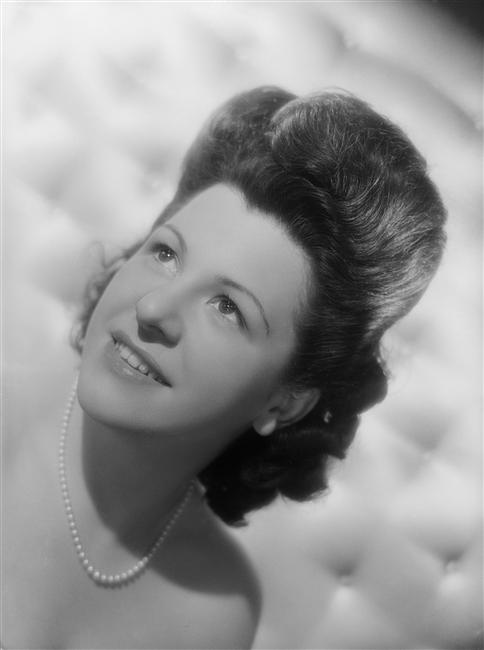
Madeleine Marie "Mado" Robin (French pronunciation: [madlɛn maʁi mado ʁɔbɛ̃]; 29 December 1918 – 10 December 1960) was a French coloratura soprano. A soprano acuto sfogato,[1] she was noted for her extremely high register.

Key Information

Early life

[edit]

Robin was born in Yzeures-sur-Creuse, where she owned the Château des Vallées. Mado took her first singing lessons when she was only 13 years old but not with the intention to make a career out of it. Mario Podesta studied with Mado and he, who had been a student of Fernando De Lucia, noticed the extraordinary high register of her voice.[2]

Career

[edit]

A star of television and radio in the 1950s, she was well known in France. Among her roles were Lakmé, which she recorded for Decca Records in 1952 (with Georges Sébastian conducting), Lucia di Lammermoor, Olympia in The Tales of Hoffmann, Gilda in Rigoletto, Rosina in The Barber of Seville, and Leïla in Les pêcheurs de perles. In 1954, she went to San Francisco to sing Lucia and Gilda, and had a successful tour of the Soviet Union with sixteen concerts over a few weeks.

Death and honors

[edit]

Robin died in Paris in 1960 from cancer (some sources state liver cancer, others leukaemia) a few days before the 1500th performance of Lakmé at the Opéra-Comique, which had organized the event for her birthday.

A museum to her life, the Musée Mado Robin, opened in her home town in 2009.

Videography

[edit]

In 1994, the Bel Canto Society released a video-cassette of her performances, entitled Mado Robin Live!; included are excerpts from Lakmé, Mireille, Rigoletto, Hamlet, Il barbiere di Siviglia and Lucia di Lammermoor.

References

[edit]
[edit]
Revisions and contributorsEdit on WikipediaRead on Wikipedia
from Grokipedia
''Mado Robin'' is a French coloratura soprano known for her extraordinary upper vocal range, including notes up to B♭ above high C, and her acclaimed interpretations of demanding roles such as Lakmé in Delibes' ''Lakmé''. Born Madeleine Marie Robin on December 29, 1918, in Yzeures-sur-Creuse, France, she rose to prominence in the post-war era as a specialist in French operatic repertoire, earning recognition for her vocal agility, clarity, and ability to execute stratospheric high notes with apparent ease. Her performances at major venues including La Scala, the Paris Opéra, and the San Francisco Opera showcased her in works like ''Lucia di Lammermoor'', ''Rigoletto'', and particularly ''Lakmé'', where she was renowned as a leading interpreter of the title role. A star of television and radio broadcasts in the 1950s, Robin's short career left a lasting legacy through her recordings and live appearances that highlighted her as one of the most remarkable high sopranos of the twentieth century. She died on December 10, 1960, at the age of 41.

Early life

Childhood and education

Mado Robin, born Madeleine Marie Robin on December 29, 1918, in Yzeures-sur-Creuse in the Indre-et-Loire department of France, grew up in a supportive family environment alongside her two sisters. The family resided at the Château des Vallées in nearby Tournon-Saint-Pierre, where her musical interests and those of her sisters were actively encouraged from an early age. Her vocal talent became apparent in childhood, and at the age of thirteen she began formal singing lessons. At the age of sixteen, her voice impressed the Italian baritone Titta Ruffo, who recognized her extraordinary range. Although married at the age of seventeen to an Englishman, Alan Smith, by whom she had a child, Robin entered the Paris Conservatoire, where she studied voice with Mme Fourestier and Mario Podestà, developing a solid command of bel canto technique during two years of instruction. This period emphasized her coloratura agility and the cultivation of her remarkable upper register. In 1937, she won first prize in the Concours des soprani organized by the Paris Opera, marking her as a promising talent ready for professional opportunities despite her youth. Her early promise and rigorous training positioned her for a career launch, though it was delayed by the outbreak of World War II.

Opera career

Debut and early roles

Mado Robin made her operatic debut in 1945 at the Opéra de Paris as Gilda in Verdi's Rigoletto, where she achieved immediate success. She quickly became a regular performer at both the Paris Opera and the Opéra-Comique during the post-war years, establishing herself in the French opera scene. Her early repertory centered on light coloratura roles that highlighted her extraordinary high register and vocal agility, earning her critical recognition for these qualities soon after her debut. Among her initial engagements were leading parts such as Gilda in Rigoletto, the title role in Lakmé, and other bel canto and French works including Rosina in Il barbiere di Siviglia and Olympia in Les Contes d'Hoffmann. By the mid-1940s she had transitioned to prominent leading roles across these major French houses, solidifying her reputation as a leading coloratura soprano of her generation. Her training at the Paris Conservatoire laid the groundwork for this rapid professional ascent following the disruptions of World War II.

Peak years and major roles

Mado Robin reached the height of her career during the 1950s, when she established herself as one of France's leading coloratura sopranos and achieved notable international success. Her extraordinary upper register and agility in high-lying passages defined her artistry, earning her acclaim as a soprano acuto sfogato capable of exceptional vocal feats. Her signature role was Lakmé in Léo Delibes' Lakmé, for which she was particularly renowned for her captivating rendition of the "Bell Song" ("Où va la jeune Indoue"), an aria that showcased her extended high notes and became emblematic of her technique. She also excelled in other major bel canto and French repertoire roles during this period, including Lucia in Gaetano Donizetti's Lucia di Lammermoor, reprised performances as Gilda in Giuseppe Verdi's Rigoletto, and Olympia in Jacques Offenbach's Les contes d'Hoffmann. Robin's peak fame in the early to mid-1950s brought her to prominent international stages beyond France, including guest appearances at the San Francisco Opera. In 1954 she sang Lucia di Lammermoor and Gilda there, contributing to her reputation abroad with performances that highlighted her distinctive French style and vocal brilliance. Her work at major houses such as the Opéra de Paris and others drew critical praise for her range and interpretive charm during these years of sold-out houses and widespread recognition.

Recordings

Studio recordings and discography

Mado Robin's studio discography consists primarily of recordings made for Decca Records in the early 1950s, which captured her exceptional coloratura technique and stratospheric high notes in controlled studio settings. Her most prominent release is the 1952 complete recording of Léo Delibes' Lakmé (released 1956), where she performed the title role alongside Libero de Luca as Gérald, Jean Borthayre as Nilakantha, Agnès Disney as Mallika, with the Chorus and Orchestra of the Opéra-Comique conducted by Georges Sébastian. This recording is celebrated for preserving her rendition of the "Air des Clochettes" (Bell Song), noted for its brilliant execution of high notes with a clarity and ease that evoked live performance intensity. Robin also recorded excerpts from Gaetano Donizetti's Lucia di Lammermoor (often titled Lucie de Lammermoor in French adaptation), including segments of the Mad Scene, as well as coloratura arias drawn from works by Vincenzo Bellini, Gaetano Donizetti, Léo Delibes, and Giuseppe Verdi in various recital collections. These studio efforts highlighted her agility, precision, and vocal extension in repertoire suited to her range. Posthumous reissues and compilations have kept her discography accessible, including CD editions such as "Mado Robin Sings Lakme: 1952 Decca Recordings" and remastered selections of her opera arias, ensuring her vocal artistry remains available to listeners.

Film and television work

Film appearances

Mado Robin's film appearances were few and primarily served to showcase her renowned coloratura voice in popular musical settings rather than establishing her as an actress. Her verified contribution to cinema is limited, with an uncredited singer role in the 1952 film Son dernier Noël. Her other media contributions in this area were primarily on television rather than feature films, capitalizing on her fame as one of the era's leading sopranos.

Television and radio broadcasts

Mado Robin achieved widespread fame in France as a major star of radio and television during the 1950s, where her appearances brought her coloratura soprano artistry to large audiences beyond the opera house. On radio, she frequently performed operatic arias and complete acts in live broadcasts, showcasing her signature high register and technical precision. Her television work in the same decade included live opera excerpts and variety show appearances, with surviving footage from French television preserving sixteen complete musical selections from these programs. One notable example is a dedicated broadcast known as the "Robin Special," presented in its entirety on a documentary compilation, highlighting her performances during this period. These media appearances often featured her signature pieces, including renditions of the Bell Song ("Air des clochettes") from Lakmé, which emphasized her extraordinary extended high notes and contributed to her reputation for vocal feats. The broadcasts played a significant role in popularizing her unique high-voice technique among the general public, complementing her stage career and commercial recordings of similar repertoire. Additional television credits include appearances on Bouquet de joie (1956) as herself and Une étoile m'a dit (1960, posthumous broadcast).

Personal life

Marriage and family

Mado Robin married Alan Smith, an Englishman, at the age of 17. They had one daughter. Smith died in a car crash shortly after World War II. Her private life remained low-profile, overshadowed by the demands of her international opera career. Her family provided support during her professional endeavors and later health challenges.

Illness, death, and legacy

Illness and death

Mado Robin's career was tragically curtailed by cancer, which she battled in her final months. In February 1960, she underwent an operation but recovered quickly enough to resume performances at the Salle Favart and the Opéra. Early in August 1960, she suffered a severe collapse, yet she regained sufficient strength to record excerpts from La Traviata, a role she had long hoped to perform onstage. She had been scheduled to appear in the 1,500th performance of Lakmé at the Opéra-Comique in late December 1960, an event intended to celebrate her forthcoming 42nd birthday. However, her condition worsened, and she died on December 10, 1960, at her home in Paris at the age of 41 after a long and painful illness. Contemporary accounts and later biographical sources describe the cause of death as cancer, with some specifying leukemia. Witnesses close to her, including colleagues, noted that she had known the gravity of her condition for some time.

Legacy and influence

Mado Robin is remembered as one of the most extraordinary coloratura sopranos of the 20th century, renowned above all for her unprecedented extension into the extreme high register, with recordings capturing notes such as B♭₆ (1915 Hz) in the Mad Scene from Donizetti's Lucia di Lammermoor. Academic analyses of vocal tract interaction position her performances at these altitudes as representative of the upper limits of classical soprano technique, where the fundamental dominates without significant harmonic reinforcement from the first formant, illustrating a megaphone-like tract configuration unique among studied operatic singers. Her recordings continue to attract attention for their astonishing virtuosity and technical audacity, with commentators describing her as a "sadly short-lived French coloratura famous for recording some of the highest notes ever committed to disc" and inviting listeners to experience the "astound[ing]" effect of her dead-center B♭ above high C. Reissues and compilations preserve these feats, ensuring her work "springs out … to astound, intrigue and delight" even decades after her death. Posthumously, her florid execution in high-speed passages has been celebrated for its "flurry of exquisite notes," securing her place as an enduring reference point for the stratospheric possibilities of coloratura singing. While direct pedagogical influence on subsequent French sopranos remains unchronicled, her documented extremes have contributed to ongoing discussions of vocal range and agility in operatic performance.

References

Add your contribution
Related Hubs
User Avatar
No comments yet.