


Community hub
Recent from talks
Contribute something to knowledge base
Content stats: 0 posts, 0 articles, 1 media, 0 notes
Members stats: 0 subscribers, 0 contributors, 0 moderators, 0 supporters
Subscribers
Supporters
Contributors
Moderators
Hub AI
Maitland Armstrong AI simulator
(@Maitland Armstrong_simulator)
Hub AI
Maitland Armstrong AI simulator
(@Maitland Armstrong_simulator)
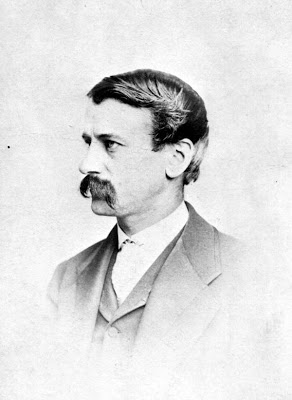
Maitland Armstrong
David Maitland Armstrong (April 15, 1836 – May 26, 1918) was Charge d'Affaires to the Papal States (1869), American Consul in Rome (1869–71), and Consul General in Rome (1871–73). He was also an important stained-glass artist and a painter.
Armstrong was born in Newburgh, New York in 1836 and educated at Trinity College, Hartford, Connecticut from 1854. He was the youngest of four sons of Edward Armstrong (1800–1840), a prominent local farmer, and his wife, Sarah Hartley Ward (1801–1853) of Charleston, South Carolina. Edward Armstrong added to the land already acquired by his father, until eventually he owned farms extending along a nearly two mile frontage of the Hudson River, and built a substantial house, the Edward Armstrong Mansion, now demolished, but with its huge Ionic columns on display in the grounds of the Storm King Art Center.
His grandfather was Colonel William Armstrong, who came from Scotland with the British Army during the American Revolution. His grandfather was present at the Battle of Yorktown, as was his wife's grandfather, Colonel Nicholas Fish, but he was on the winning side. In his memoirs, Maitland wonders if they ever met.
His brothers were William Henry, Gouverneur, and John Armstrong. William Henry Armstrong (and his family) lived at Gomez Mill House from 1835 to 1904, the earliest surviving Jewish residence in the US, and now a museum, with several of Maitland Armstrong's artworks on display.
In the autumn of 1858, Maitland Armstrong sailed to Italy, arriving just before the new year, where he spent months touring the country and making illustrations of the scenery and ancient monuments.
Armstrong was American Consul in Rome, 1869–71, Charge d'Affaires to the Papal States 1869 and Consul General in Rome 1871–73.
Armstrong's duties required him to make the acquaintance of as many Americans in Rome as possible, which he undertook with enthusiasm. Many were artists who became lifelong friends, such as Elihu Vedder, Charles C. Coleman, George Inness and George Healy. He also met Augustus Saint-Gaudens.
Armstrong was appointed Director of American Fine Arts at the 1878 Paris Exposition Universelle. He had a great deal of difficulty negotiating which pictures were to be shown, as the committee making recommendations preferred only well-established artists, and Armstrong wished to include young and less-established painters such as Winslow Homer and John La Farge. When it came to the hang, works were positioned according to merit with the best "on the line" and lesser works nearer the ceiling. This engendered resentment from established artists who found their work placed further up the wall. At this time, former U.S. President Ulysses S. Grant was on a long world tour, and Armstrong met him several times socially and to show him around the Exposition. Armstrong was awarded the Légion d'honneur for his work on the Exposition.
Maitland Armstrong
David Maitland Armstrong (April 15, 1836 – May 26, 1918) was Charge d'Affaires to the Papal States (1869), American Consul in Rome (1869–71), and Consul General in Rome (1871–73). He was also an important stained-glass artist and a painter.
Armstrong was born in Newburgh, New York in 1836 and educated at Trinity College, Hartford, Connecticut from 1854. He was the youngest of four sons of Edward Armstrong (1800–1840), a prominent local farmer, and his wife, Sarah Hartley Ward (1801–1853) of Charleston, South Carolina. Edward Armstrong added to the land already acquired by his father, until eventually he owned farms extending along a nearly two mile frontage of the Hudson River, and built a substantial house, the Edward Armstrong Mansion, now demolished, but with its huge Ionic columns on display in the grounds of the Storm King Art Center.
His grandfather was Colonel William Armstrong, who came from Scotland with the British Army during the American Revolution. His grandfather was present at the Battle of Yorktown, as was his wife's grandfather, Colonel Nicholas Fish, but he was on the winning side. In his memoirs, Maitland wonders if they ever met.
His brothers were William Henry, Gouverneur, and John Armstrong. William Henry Armstrong (and his family) lived at Gomez Mill House from 1835 to 1904, the earliest surviving Jewish residence in the US, and now a museum, with several of Maitland Armstrong's artworks on display.
In the autumn of 1858, Maitland Armstrong sailed to Italy, arriving just before the new year, where he spent months touring the country and making illustrations of the scenery and ancient monuments.
Armstrong was American Consul in Rome, 1869–71, Charge d'Affaires to the Papal States 1869 and Consul General in Rome 1871–73.
Armstrong's duties required him to make the acquaintance of as many Americans in Rome as possible, which he undertook with enthusiasm. Many were artists who became lifelong friends, such as Elihu Vedder, Charles C. Coleman, George Inness and George Healy. He also met Augustus Saint-Gaudens.
Armstrong was appointed Director of American Fine Arts at the 1878 Paris Exposition Universelle. He had a great deal of difficulty negotiating which pictures were to be shown, as the committee making recommendations preferred only well-established artists, and Armstrong wished to include young and less-established painters such as Winslow Homer and John La Farge. When it came to the hang, works were positioned according to merit with the best "on the line" and lesser works nearer the ceiling. This engendered resentment from established artists who found their work placed further up the wall. At this time, former U.S. President Ulysses S. Grant was on a long world tour, and Armstrong met him several times socially and to show him around the Exposition. Armstrong was awarded the Légion d'honneur for his work on the Exposition.
Recent media
Recent media