
Recent from talks
Manned Orbiting Laboratory
Knowledge base stats:
Talk channels stats:
Members stats:
Manned Orbiting Laboratory
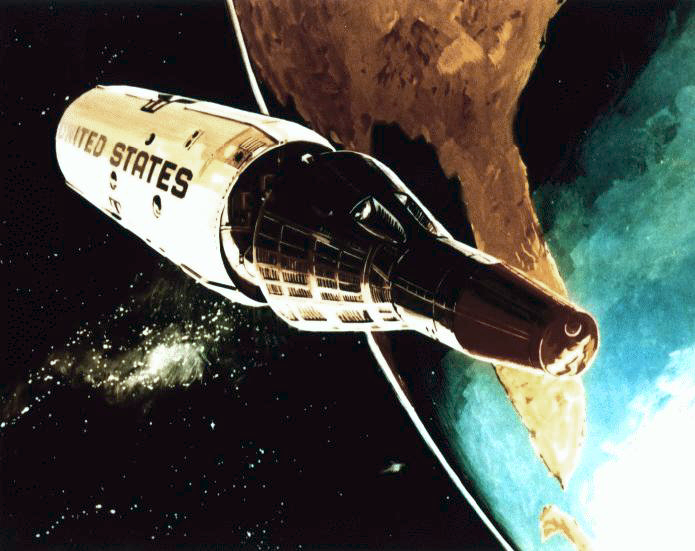
The Manned Orbiting Laboratory (MOL) was part of the United States Air Force (USAF) human spaceflight program in the 1960s. The project was developed from early USAF concepts of crewed space stations as reconnaissance satellites, and was a successor to the canceled Boeing X-20 Dyna-Soar military reconnaissance space plane. Plans for the MOL evolved into a single-use laboratory, for which crews would be launched on 30-day missions, and return to Earth using a Gemini B spacecraft derived from NASA's Gemini spacecraft and launched with the laboratory.
The MOL program was announced to the public on 10 December 1963 as an inhabited platform to demonstrate the utility of putting people in space for military missions; its reconnaissance satellite mission was a secret black project. Seventeen astronauts were selected for the program, including Major Robert H. Lawrence Jr., the first African-American astronaut. The prime contractor for the spacecraft was McDonnell Aircraft Corporation; the laboratory was built by the Douglas Aircraft Company. The Gemini B was externally similar to NASA's Gemini spacecraft, although it underwent several modifications, including the addition of a circular hatch through the heat shield, which allowed passage between the spacecraft and the laboratory. Vandenberg Space Launch Complex 6 (SLC-6) was developed to permit launches into polar orbit.
As the 1960s progressed, the Vietnam War competed with the MOL for funds, and resultant budget cuts repeatedly postponed its first operational flight. At the same time, automated systems rapidly improved, narrowing the benefits of a crewed space platform over an automated one. A single uncrewed test flight of the Gemini B spacecraft was conducted on 3 November 1966, but the MOL was canceled in June 1969 without any crewed missions being flown.
Seven of the astronauts transferred to NASA in August 1969 as NASA Astronaut Group 7, all of whom eventually flew in space on the Space Shuttle between 1981 and 1985. The Titan IIIM rocket developed for the MOL never flew, but its UA1207 solid rocket boosters were used on the Titan IV, and the Space Shuttle Solid Rocket Booster was based on materials, processes and designs developed for them. NASA spacesuits were derived from the MOL ones, MOL's waste management system flew in space on Skylab, and NASA Earth Science used other MOL equipment. SLC-6 was refurbished, but plans to have military Space Shuttle launches from there were abandoned in the wake of the January 1986 Space Shuttle Challenger disaster.
At the height of the Cold War in the mid-1950s, the United States Air Force (USAF) was particularly interested in the Soviet Union's military and industrial capabilities. Starting in 1956, the United States conducted covert U-2 spy plane overflights of the Soviet Union. Twenty-four U-2 missions produced images of about 15 percent of the country with a maximum resolution of 0.61 meters (2 ft) before the downing of a U-2 in 1960 abruptly ended the program. This left a gap in American espionage capabilities that it was hoped spy satellites would fill. In July 1957 – before anyone had flown in space – the USAF Wright Air Development Center published a paper that considered the development of a space station equipped with telescopes and other observation devices. The USAF had already started a satellite program in 1956 called WS-117L. This had three components: SAMOS, a spy satellite; Corona, an experimental program to develop the technology; and MIDAS, an early warning system.
The launch of Sputnik 1, the first satellite, by the Soviet Union on 4 October 1957, came as a profound shock to the American public, which had assumed American technical superiority. One benefit of the Sputnik crisis was that no government protested Sputnik's overflying their territory, thereby tacitly acknowledging the legality of satellites. While there was a big difference between Sputnik and a spy satellite, it made it much harder for the Soviets to object to overflights by satellites from another country. In February 1958, President Dwight D. Eisenhower ordered the USAF to proceed as quickly as possible with Corona as a joint interim project with the Central Intelligence Agency (CIA).
In August 1958, Eisenhower decided to give responsibility for most forms of human space flight to the National Aeronautics and Space Administration (NASA). Deputy Secretary of Defense Donald A. Quarles transferred US$53.8 million (equivalent to $447 million in 2024) that had been set aside for USAF space projects to NASA. This left the USAF with a few programs with direct military impact. One was a delta-wing, rocket-propelled glider that came to be called the Boeing X-20 Dyna-Soar. The USAF remained interested in space, and in March 1959, the Chief of Staff of the Air Force, General Thomas D. White asked the USAF Director of Development Planning to prepare a long-range plan for a USAF space program. One project identified in the plan was a "manned orbital laboratory".
The USAF Air Research and Development Command (ARDC) issued a request to the Aeronautical Systems Division (ASD) at Wright-Patterson Air Force Base on 1 September 1959 for a formal study to be conducted of a military test space station (MTSS). The ASD asked components of the ARDC for suggestions as to what sort of experiments would be suitable for an MTSS, and 125 proposals were received. A request for proposal (RFP) was then issued on 19 February 1960, and twelve firms responded. On 15 August 1960, General Electric, Lockheed Aircraft, Glenn L. Martin Company, McDonnell Aircraft Corporation, and General Dynamics shared US$574,999 (equivalent to $4.61 million in 2024) for a study of the MTSS. Their preliminary reports were submitted in January 1961, and final reports were received by July 1961. With these in hand, on 16 August 1961, the USAF submitted a request for US$5 million (equivalent to $40 million in 2024) in funding for space station studies in fiscal year 1963, but no funding was forthcoming.
Hub AI
Manned Orbiting Laboratory AI simulator
(@Manned Orbiting Laboratory_simulator)
Manned Orbiting Laboratory
The Manned Orbiting Laboratory (MOL) was part of the United States Air Force (USAF) human spaceflight program in the 1960s. The project was developed from early USAF concepts of crewed space stations as reconnaissance satellites, and was a successor to the canceled Boeing X-20 Dyna-Soar military reconnaissance space plane. Plans for the MOL evolved into a single-use laboratory, for which crews would be launched on 30-day missions, and return to Earth using a Gemini B spacecraft derived from NASA's Gemini spacecraft and launched with the laboratory.
The MOL program was announced to the public on 10 December 1963 as an inhabited platform to demonstrate the utility of putting people in space for military missions; its reconnaissance satellite mission was a secret black project. Seventeen astronauts were selected for the program, including Major Robert H. Lawrence Jr., the first African-American astronaut. The prime contractor for the spacecraft was McDonnell Aircraft Corporation; the laboratory was built by the Douglas Aircraft Company. The Gemini B was externally similar to NASA's Gemini spacecraft, although it underwent several modifications, including the addition of a circular hatch through the heat shield, which allowed passage between the spacecraft and the laboratory. Vandenberg Space Launch Complex 6 (SLC-6) was developed to permit launches into polar orbit.
As the 1960s progressed, the Vietnam War competed with the MOL for funds, and resultant budget cuts repeatedly postponed its first operational flight. At the same time, automated systems rapidly improved, narrowing the benefits of a crewed space platform over an automated one. A single uncrewed test flight of the Gemini B spacecraft was conducted on 3 November 1966, but the MOL was canceled in June 1969 without any crewed missions being flown.
Seven of the astronauts transferred to NASA in August 1969 as NASA Astronaut Group 7, all of whom eventually flew in space on the Space Shuttle between 1981 and 1985. The Titan IIIM rocket developed for the MOL never flew, but its UA1207 solid rocket boosters were used on the Titan IV, and the Space Shuttle Solid Rocket Booster was based on materials, processes and designs developed for them. NASA spacesuits were derived from the MOL ones, MOL's waste management system flew in space on Skylab, and NASA Earth Science used other MOL equipment. SLC-6 was refurbished, but plans to have military Space Shuttle launches from there were abandoned in the wake of the January 1986 Space Shuttle Challenger disaster.
At the height of the Cold War in the mid-1950s, the United States Air Force (USAF) was particularly interested in the Soviet Union's military and industrial capabilities. Starting in 1956, the United States conducted covert U-2 spy plane overflights of the Soviet Union. Twenty-four U-2 missions produced images of about 15 percent of the country with a maximum resolution of 0.61 meters (2 ft) before the downing of a U-2 in 1960 abruptly ended the program. This left a gap in American espionage capabilities that it was hoped spy satellites would fill. In July 1957 – before anyone had flown in space – the USAF Wright Air Development Center published a paper that considered the development of a space station equipped with telescopes and other observation devices. The USAF had already started a satellite program in 1956 called WS-117L. This had three components: SAMOS, a spy satellite; Corona, an experimental program to develop the technology; and MIDAS, an early warning system.
The launch of Sputnik 1, the first satellite, by the Soviet Union on 4 October 1957, came as a profound shock to the American public, which had assumed American technical superiority. One benefit of the Sputnik crisis was that no government protested Sputnik's overflying their territory, thereby tacitly acknowledging the legality of satellites. While there was a big difference between Sputnik and a spy satellite, it made it much harder for the Soviets to object to overflights by satellites from another country. In February 1958, President Dwight D. Eisenhower ordered the USAF to proceed as quickly as possible with Corona as a joint interim project with the Central Intelligence Agency (CIA).
In August 1958, Eisenhower decided to give responsibility for most forms of human space flight to the National Aeronautics and Space Administration (NASA). Deputy Secretary of Defense Donald A. Quarles transferred US$53.8 million (equivalent to $447 million in 2024) that had been set aside for USAF space projects to NASA. This left the USAF with a few programs with direct military impact. One was a delta-wing, rocket-propelled glider that came to be called the Boeing X-20 Dyna-Soar. The USAF remained interested in space, and in March 1959, the Chief of Staff of the Air Force, General Thomas D. White asked the USAF Director of Development Planning to prepare a long-range plan for a USAF space program. One project identified in the plan was a "manned orbital laboratory".
The USAF Air Research and Development Command (ARDC) issued a request to the Aeronautical Systems Division (ASD) at Wright-Patterson Air Force Base on 1 September 1959 for a formal study to be conducted of a military test space station (MTSS). The ASD asked components of the ARDC for suggestions as to what sort of experiments would be suitable for an MTSS, and 125 proposals were received. A request for proposal (RFP) was then issued on 19 February 1960, and twelve firms responded. On 15 August 1960, General Electric, Lockheed Aircraft, Glenn L. Martin Company, McDonnell Aircraft Corporation, and General Dynamics shared US$574,999 (equivalent to $4.61 million in 2024) for a study of the MTSS. Their preliminary reports were submitted in January 1961, and final reports were received by July 1961. With these in hand, on 16 August 1961, the USAF submitted a request for US$5 million (equivalent to $40 million in 2024) in funding for space station studies in fiscal year 1963, but no funding was forthcoming.
Recent media