Hubbry Logo
Domestic workerDomestic workerMain
Open search
Domestic worker
Community hub
Domestic worker
logo
8 pages, 0 posts
0 subscribers
Be the first to start a discussion here.
Domestic worker
Domestic worker
from Wikipedia
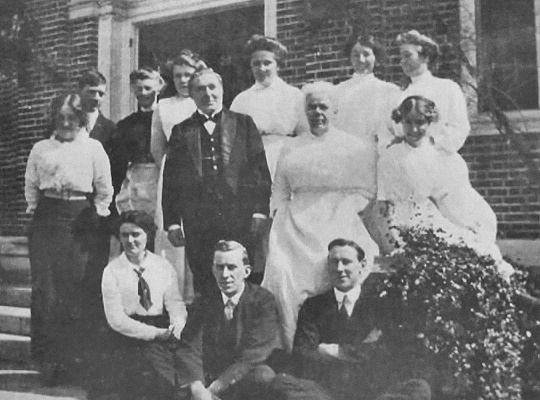
Domestic workers in the United States in 1914

A domestic worker is a person who works within a residence and performs a variety of household services for an individual, from providing cleaning and household maintenance, or cooking, laundry and ironing, or care for children and elderly dependents, and other household errands. The term "domestic service" applies to the equivalent occupational category. In traditional English contexts, such a person was said to be "in service".[1]

Some domestic workers live within their employer's household. In some cases, the contribution and skill of servants whose work encompassed complex management tasks in large households have been highly valued. However, for the most part, domestic work tends to be demanding and is commonly considered to be undervalued, despite often being necessary. Although legislation protecting domestic workers is in place in many countries, it is often not extensively enforced. In many jurisdictions, domestic work is poorly regulated and domestic workers are subject to serious abuses, including slavery.[2]

Servant is an older English word for "domestic worker", though not all servants worked inside the home. Domestic service, or the employment of people for wages in their employer's residence, was sometimes simply called "service" and has often been part of a hierarchical system. In Britain, a highly developed system of domestic service peaked towards the close of the Victorian era (a period known in the United States as the Gilded Age and in France as the Belle Époque), perhaps reaching its most complicated and rigidly structured state during the Edwardian period which reflected the limited social mobility before World War I.

History

[edit]

In 2015, the International Labour Organization (ILO), based on national surveys or censuses of 232 countries and territories, estimated the number of domestic workers at 67.1 million,[3] but the ILO itself states that "experts say that due to the fact that this kind of work is often hidden and unregistered, the total number of domestic workers could be as high as 100 million".[4] The ILO also states that 83% of domestic workers are women and many are migrant workers.

In Guatemala, it is estimated that 11.8% percent of all women working in 2020 were employed as domestic workers.[5] They hardly have any legal protection. According to Guatemalan labor law, domestic work is "not subject to schedules or limitations of working day." However, by law, domestic workers are still entitled to ten hours of free time in 24 hours, and an additional six hours off on Sundays.[6] But very often, these minimal employment laws are disregarded, and so are basic civil liberties.[7]

In Brazil, domestic workers must be hired under a registered contract and have many of the rights enjoyed by other workers, which include a minimum wage, remunerated vacations (paid leave) and a remunerated weekly day off.[citation needed] It is not uncommon, however, for employers to hire servants illegally and fail to offer a work contract. Since domestic staff predominantly come from disadvantaged groups with less access to education, they are often vulnerable and uninformed of their rights, especially in rural areas. Nevertheless, domestics employed without a proper contract can successfully sue their employers and be compensated for abuse committed. It is common in Brazil for domestic staff, including childcare staff, to be required to wear uniforms,[citation needed] while this requirement has fallen out of use in other countries.

In the United States, domestic workers are generally excluded from many of the legal protections afforded to other classes of worker, including the provisions of the National Labor Relations Act.[8] However, in recent years, advocacy groups like the National Domestic Workers' Alliance have succeeded in passing a Domestic Worker's Bill of Rights in New York, Hawaii, California, and Illinois.[9][10]

Traditionally domestic workers have mostly been women and are likely to be immigrants.[11] Currently, there are 1.8 million domestic workers, and tens of thousands of people are believed to be in forced labor in the United States.[12] America's domestic home help workers, most of them female members of minority groups, earn low wages and often receive no retirement or health benefits because of the lack of basic labor protections.

Domestic workers are also excluded from time off, paid sick leave, and paid overtime, with only thirteen percent of domestic workers having health insurance provided by their employers.[citation needed] A report from the National Domestic Workers Alliance and affiliated groups found that nearly a quarter of nannies, caregivers, and home health workers make less than the minimum wage in the states in which they work, and nearly half – 48 percent – are paid less than needed to adequately support a family.[13][14] Many of these workers are subjected to abuse, sexual harassment, and social inequality. However, because domestic workers work in the home, their struggles are hidden in the home and out of the public spotlight. Nowadays with an increase of power, the domestic workers' community has formed many organizations, such as the National Domestic Workers Alliance, Domestic Workers United, and The South African Domestic Service and Allied Workers Union.[15]

Memorial valuing the work of Maria Home, the servant in Warwick Castle (1834)
A Han dynasty (202 BC – 220 AD) Chinese ceramic figurine of a lady's maid in a standard formal pose with hands covered by long sleeve cuffs in the traditional fashion

The domestic work industry is dominated throughout the world by women.[16] While the domestic work industry is advantageous for women in that it provides them a sector that they have substantial access to, it can also prove to be disadvantageous by reinforcing gender inequality through the idea that domestic work is an industry that should be dominated by women. Within the domestic work industry, the much smaller proportion of jobs that is occupied by men are not the same jobs that are typically occupied by women. Within the childcare industry, men make up only about 3–6% of all workers.[17] Additionally, in the child care industry men are more likely to fill roles that are not domestic in nature but administrative such as a managerial role in a daycare center.[18]

While the domestic work industry was once believed to be an industry that belonged to a past type of society and did not belong in a modern world, trends are showing that although elements of the domestic work industry have been changing the industry itself has shown no signs of fading away, but only signs of transformation.[17] There are several specific causes that are credited to continuing the cycle of the demand for domestic work. One of these causes is that with more women taking up full-time jobs, a dually employed household with children places a heavy burden on parents. It is argued however that this burden would not result in the demand for outside domestic work if men and women were providing equal levels of effort in domestic work and child-rearing within their own home.[19]

The demand for domestic workers has also become primarily fulfilled by migrant domestic workers from other countries who flock to wealthier nations to fulfill the demand for help at home.[16][20] This trend of domestic workers flowing from poorer nations to richer nations creates a relationship that on some levels encourages the liberation of one group of people at the expense of the exploitation of another.[16] Although domestic work has far from begun to fade from society, the demand for it and the people who fill that demand has changed drastically over time.

The so-called "servant problem" in such countries as the United Kingdom, the United States and Canada was the problem that middle-class families had with cleaning, cooking, and especially entertaining at the level that was socially expected. It was too much work for any one person to do herself, but middle-class families, unlike wealthy families, could not afford to pay the wages necessary to attract and retain skilled household employees.[21]

[edit]
Cook (1855)

The United Kingdom's Master and Servant Act 1823 was the first of its kind; the terms referred generally to employers and employees. The Act influenced the creation of domestic service laws in other nations, although legislation tended to favour employers. However, before the passing of such Acts servants, and workers in general, had no protection in law. The only real advantage that domestic service provided was the provision of meals, accommodation, and sometimes clothes, in addition to a modest wage. Service was normally an apprentice system with room for advancement through the ranks.

The conditions faced by domestic workers have varied considerably throughout history and in the contemporary world. In the course of twentieth-century movements for labour rights, women's rights and immigrant rights, the conditions faced by domestic workers and the problems specific to their class of employment have come to the fore.

In 2011, the International Labour Organization adopted the Convention Concerning Decent Work for Domestic Workers. Previously, at its 301st Session (March 2008), the International Labour Organization (ILO) Governing Body agreed to place an item on decent work for domestic workers on the agenda of the 99th Session of the International Labour Conference (2010) with a view to the setting of labour standards.[22] In July 2011, at the annual International Labour Conference, held by the ILO, conference delegates adopted the Convention on Domestic Workers by a vote of 396 to 16, with 63 abstentions. The Convention recognized domestic workers as workers with the same rights as other workers. On 26 April 2012, Uruguay was the first country to ratify the convention.[23][24]

Accommodation

[edit]
Parisian maid (1906) (Image by Constant Puyo)
A domestic servant ironing a lace doily with GE electric iron, ca. 1908

Many domestic workers are live-in domestics. Though they often have their own quarters, their accommodations are not usually as comfortable as those reserved for the family members. In some cases, they sleep in the kitchen or small rooms, such as a box room, sometimes located in the basement or attic. Domestic workers may live in their own home, though more often they are "live-in" domestics, meaning that they receive their room and board as part of their salaries. In some countries, because of the large gap between urban and rural incomes, and the lack of employment opportunities in the countryside, even an ordinary middle class urban family can afford to employ a full-time live-in servant. The majority of domestic workers in China, Mexico, India, and other populous developing countries, are people from the rural areas who are employed by urban families.[citation needed]

Employers may require their domestic workers to wear a uniform, livery or other "domestic workers' clothes" when in their employers' residence. The uniform is usually simple, though aristocratic employers sometimes provided elaborate decorative liveries, especially for use on formal occasions. Female servants wore long, plain, dark-coloured dresses or black skirts with white belts and white blouses, and black shoes, and male servants and butlers would wear something from a simple suit, or a white dress shirt, often with tie, and knickers. In traditional portrayals, the attire of domestic workers especially was typically more formal and conservative than that of those whom they serve. For example, in films of the early 20th century, a butler might appear in a tailcoat, while male family members and guests appeared in lounge suits or sports jackets and trousers depending on the occasion. In later portrayals, the employer and guests might wear casual slacks or even jeans, while a male domestic worker wore a jacket and tie or a white dress shirt with black trousers, necktie or bowtie, maybe even a waistcoat, or a female domestic worker either a blouse and skirt (or trousers) or a uniform.[citation needed]

On 30 March 2009, Peru adopted a law banning employers from requiring domestic workers to wear a uniform at public places. However, it has not explained which punishments will be given to employers violating the law.[25] Chile adopted a similar law in 2014, also banning employers to require domestic workers to wear uniform at public places.[26][27]

Child workers

[edit]
Child maid servant in India. Child domestic workers are common in India, with the children often being sent by their parents to earn extra money, although it is banned by the government.

More girls under 16 work as domestic workers than any other category of child labor.[28] Usually, in a practice often called "confiage" or entrusting, such as for restaveks in Haiti, parents in the rural poverty make an agreement with someone in the cities who would house and send their child to school in return for domestic work.[29]

Such children are very vulnerable to exploitation: often they are not allowed to take breaks or are required to work long hours; many suffer from a lack of access to education, which can contribute to social isolation and a lack of future opportunity. UNICEF considers domestic work to be among the lowest status, and reports that most child domestic workers are live-in workers and are under the round-the-clock control of their employers.[30] Child domestic work is common in countries such as Bangladesh and Pakistan.[31][32] In Pakistan, since January 2010 to December 2013, 52 cases of tortures on child domestic workers are reported including 24 deaths.[33] It has been estimated that globally, at least 10 million children work in domestic labor jobs.[32]

Children face a number of risks that are common in domestic work service. The International Programme on the Elimination of Child Labour identified that these risks include: long and tiring working days; use of toxic chemicals; carrying heavy loads; handling dangerous items such as knives, axes and hot pans; insufficient or inadequate food and accommodation, and humiliating or degrading treatment including physical and verbal violence, and sexual abuse.[34]

Migrant domestic workers

[edit]

Migrant domestic workers are, according to the International Labour Organization's Convention No. 189 and the International Organization for Migration, any persons “moving to another country or region to better their material or social conditions and improve the prospect for themselves or their family,”[35] engaged in a work relationship performing “in or for a household or households.”[36] Domestic work itself can cover a "wide range of tasks and services that vary from country to country and that can be different depending on the age, gender, ethnic background and migration status of the workers concerned."[37] These particular workers have been identified by some academics as situated within "the rapid growth of paid domestic labor, the feminization of transnational migration, and the development of new public spheres.”[38]

Social effects

[edit]
Male servants carrying a palanquin and female maid with a traditional fan (Korea c. 1904)

As women currently dominate the domestic labor market throughout the world, they have learned to navigate the system of domestic work both in their own countries and abroad in order to maximize the benefits of entering the domestic labor market.

Among the disadvantages of working as a domestic worker is the fact that women working in this sector are working in an area often regarded as a private sphere.[19] Feminist critics of women working in the domestic sphere argue that this woman-dominated market is reinforcing gender inequalities by potentially creating mistress-servant relationships between domestic workers and their employers and continuing to put women in a position of lesser power.[19] Other critics point out that working in a privatized sphere robs domestic workers of the advantages of more socialized work in the public sphere.[39]

Additionally, domestic laborers face other disadvantages. Their isolation is increased by their invisibility in the public sphere and the repetitive, intangible nature of their work decreases its value, making the workers themselves more dispensable.[40] The level of isolation women face also depends on the type of domestic work they are involved with. Live-in nannies for example may sacrifice much of their own independence and sometimes become increasingly isolated when they live with a family of which they are not part and away from their own.[41]

While working in a dominantly female privatized world can prove disadvantageous for domestic workers, many women have learned how to help one another move upward economically. Women find that informal networks of friends and families are among the most successful and commonly used means of finding and securing jobs.[42]

Without the security of legal protection, many women who work without the requisite identity or citizenship papers are vulnerable to abuse. Some have to perform tasks considered degrading showing a manifestation of employer power over worker powerlessness. Employing domestic work from foreign countries can perpetuate the idea that domestic or service work is reserved for other social or racial groups and plays into the stereotype that it is work for inferior groups of people.[43]

Gaining employment in the domestic labor market can prove to be difficult for immigrant women. Many subcontract their services to more established women workers, creating an important apprenticeship type of learning experience that can produce better, more independent opportunities in the future.[39] Women who work as domestic workers also gain some employment mobility. Once established they have the option of accepting jobs from multiple employers increasing their income and their experience and most importantly their ability to negotiate prices with their employers.[40]

England

[edit]

In 19th- and early 20th-century England the close supervision exercised by mistresses over their servants (including the rule "no followers", "followers" being any men whom the servant might wish to meet when she was not working) was a great disadvantage. This policy was justified by the low esteem in which servants were held; therefore men they associated with were likely to include some with criminal tendencies. The servant and writer Margaret Powell expressed the view that "follower" was a degrading term; the only way the two could meet was by the servant getting out to the road with an excuse such as needing to post a letter.[44]

France

[edit]

In his Tableau de Paris, Louis-Sébastien Mercier describes the characteristics of the manservants (lackeys) of pre-revolutionary Paris. "An army of useless servants is kept entirely for show"; he observes that the presence of these servants in the capital has left the countryside rather empty. A tax-farmer's household consists of 24 servants in livery, besides scullions, kitchen maids and six lady's maids. Some lackeys would adopt the manners of their masters and affect a similar mode of dress.[45]

Situation by country

[edit]

Africa

[edit]

Kenya

[edit]
Kenyan domestic worker Lucy Nyangosi working in a Nairobi household, 2016

In Kenya, domestic workers – nearly all female – are known as 'housegirls'. Often from poor villages in neighbouring Uganda, girls are open to exploitation, and there are calls for stronger legal protection.[46]

South Africa

[edit]

The domestic work sector occupies around 6 per cent of the total work force in South Africa,[47] with domestic workers being largely Black African women.[48] As in other countries, working conditions in the sector are generally characterised by informality and exploitation. In 2013, South Africa ratified ILO C189 Convention on Domestic Workers, recognising domestic work as work and formalising it through labour contracts, wages, social protection, health and safety in the workplace, and rights to organising as well as social dialogue. However, significant challenges remain with implementation. Furthermore, the minimum wage of domestic workers is set to 75 per cent of the national minimum wage.[49][50]

Tanzania

[edit]

In Tanzania, like in its neighbours, most domestic workers are female and popularly known as house girls or "BekiTatu", a popular snobbish word that is aimed at the poor house girls used by members of the upper middle class or the wealthy. Most house girls are exploited, severely underpaid with an average of 50,000 Tanzanian shillings which is equal to almost $20, subjected to sexual harassment by men and physical assault (mostly by women in the house who spend most time with them). They do not have any union or a collective domestic workers' association to defend their rights in an already poorest country in the world. Most are also underage or just slightly young adults mostly collected from rural areas and brought to the urban areas like Dar Es Salaam, Arusha or Mwanza. Most end up running away after finding another work or elope with a man after getting pregnant or getting a promise of marriage.

Asia

[edit]

Hong Kong

[edit]

Domestic helpers (DHs, foreign domestic workers, FDWs) from certain other countries, especially the Philippines and Indonesia, work in Hong Kong on specific visas that exempt employers from many obligations received by other workers, and receive a lower minimum salary. Approximately five percent of Hong Kong's population are FDWs, about 98.5% of them are women, performing household tasks such as cooking, serving, cleaning, dishwashing and child care.[51]

During the COVID-19 epidemic, all foreign domestic workers in Hong Kong have to be vaccinated before their contracts can be renewed, the government announced as it ordered them to undergo mandatory COVID-19 testing on 9 May 2021.[52]

India

[edit]

Domestic workers in India are susceptible to an unsafe working environment. These workers put their lives at stake to work in the household in metropolitan cities of the country. Residents of high-rise buildings can be quite cruel to the workers in terms of leaving them without food and water and keeping them captive. Most of the time, such captive workers are as young as a 14-year-old girl.[53] Many such girls come from tribal lands in India such as Jharkhand, Chhattisgarh and some parts of West Bengal, Odisha and Assam due to fewer or no work opportunities available locally.[54] Even though domestic work is the fastest-growing sector of women and girls’ employment in urban India, the country lacks a separate law for domestic workers' safety and social security.[55] NGOs in India, focused on the rights of domestic workers, have been reiterating the demand for the issuance of identity cards on the lines of construction workers, weekly leave, ESI and PF facilities and social security.[56][57] On the legal front, these workers have a long battle ahead. In 2024, the Supreme Court of India disposed of one of the petitions filed by the Common Cause, an NGO that works in the probity of public life, giving the liberty of filing a fresh petition on the matter incorporating all the developments since the petition was filed.[58]

Philippines

[edit]
Alipin (Slaves/Indentured Servants) in Pre-colonial Philippines: Visayan uripon, as depicted in the Boxer Codex (c. 1590)

In the Philippines, domestic household workers/helpers such as maidservants (katulong/kasambahay), caretakers (yaya), family drivers (drayber/tsuper), laundrywomen (labandera/tagalaba), gardeners (hardinero), security guards (guwardiya/bantay), pool cleaners have been a norm in upper class Philippine society for an uncertain amount of time already, perhaps even connected to or influenced from the household slaves/servants in precolonial times of the Philippines that were divided into aliping namamahay and aliping saguiguilid, as indentured household servants. In modern times, it has been a norm among upper and upper-middle-class families in the Philippines to hire at least one maidservant-caretaker (katulong/kasambahay/yaya) to care for the household and children. Most, particularly maidservant-caretakers (katulong/kasambahay/yaya), live together in the house of their master's family with usually only a day off per month. This practice has eventually influenced the architecture of some houses or apartment condos where it has become a norm to section a room where domestic maidservants sleep as their personal room, usually near the kitchen or laundry area. Some wealthy families also section off an area or house where all the maidservants sleep or a part of the kitchen where they eat separate from the master's table. There are also employment agencies and special government laws regarding the regulation of domestic worker employment, such as the "Domestic Workers Act" or "Batas Kasambahay" in Republic Act No 10361 Archived 2019-12-07 at the Wayback Machine. Many live underpaid since many are informally hired or salaries are not declared truthfully to government offices or have an agreement instead to pay through other means, such as paying for their education, pension, or to send money back to their families. This practice was eventually exported to neighboring countries and all other countries that overseas Filipino workers (OFWs) have worked in, such as the United States, Canada, Hong Kong, Singapore, China, Saudi Arabia, and other countries in the Middle East, etc., hence some maidservants continue living with the same mindset of how domestic worker culture was practiced in the Philippines. This has also, at times, been used as a cause to look down upon overseas Filipino workers (OFWs) in the countries where they can be found. It has sometimes created controversies in other countries such as abuse charges in several countries in the Middle East or like the case of Flor Contemplacion, who was executed in Singapore for murder allegations. There have also been documentaries or rom-com movies made in the Philippines about the plight or life of domestic workers, particularly maidservant-caretakers (katulong/kasambahay/yaya).

The Central Luzon Regional Tripartite Wages and Productivity Board approved Wage Order RBH-DW-O4 on March 4, 2024, "increasing the monthly wage rate of kasambahay by P1,000 in chartered cities and first class municipalities, and P1,500 in other municipalities, effectively bring the monthly minimum wage in the region to P6,000." The National Wages and Productivity Commission affirmed the Order on March 12, 2024, and will take effect on April 1, 2024.[59]

Saudi Arabia

[edit]

According to a 2008 report by Human Rights Watch (HRW), the Saudi Ministry of Labor provided official figures of 1.2 million household workers in Saudi Arabia including domestic workers, drivers, and gardeners. The report stated that the Gulf country employed nearly 1.5 million women domestic workers from Indonesia, Sri Lanka and Philippines. Domestic workers estimated approximately 600,000 from Indonesia, 275,000 from Sri Lanka and 200,000 from Philippines. However, HRW reported that a number of domestic workers in Saudi Arabia face a range of abuses. Besides, the organization also interviewed Saudi labor and social affairs official, who acknowledged the issue of domestic worker abuse. The report stated that no accurate figure exists to highlight the total violations of labor rights and other human rights that women migrant domestic workers confront in the Arab nation.[60] Offense is building in East African countries over the number of deaths and abuses of their domestic workers in the Kingdom with Kenya reporting 274 deaths in the last five years and 55 deaths last year.[61]

Singapore

[edit]
Domestic worker agencies at a shopping centre in Bukit Timah, Singapore

Data from Singapore's Ministry of Manpower (MOM), showed that in June 2019 there were some 255,800 Foreign Domestic Workers (FDW) in Singapore.[62] The demand for Foreign Domestic Workers came about from the desire of the Singapore government to employ local women in the workforce. Starting with the Foreign Maid Scheme in 1978, Malaysia (with whom there were special immigration arrangements), Bangladesh, Burma, India, Indonesia, the Philippines, Sri Lanka and Thailand were recruiting grounds for domestic workers.[63] Nearly 20% of Singapore household has a domestic worker which has been attributed to rising wealth, parents who both work as well as the ageing population. As of 2019, MOM require that employers of FDWs must purchase them medical insurance with a minimum coverage of S$15,000 per year.[64]

Domestic worker in Singapore are susceptible to trafficking when traveling to Singapore for employment within the entertainment industry. Over the years there have also been an abundance of instances of employer abuse of domestic workers, an industry that is dominated by migrant workers[65][66][67] so much so that in September 2014, the Burmese government prohibited the legal migration of Burmese citizens to Singapore to do domestic work due to concerns over working conditions.

Vietnam

[edit]

On December 14, the Government of Vietnam issued Decree No. 145/2020 / ND-CP [68] about the Labor Code regarding working conditions and labor relations. Including detailed provisions and guidance for the implementation of Clause 2, Article 161 [69] of the Labor Code regarding domestic worker labor. This Decree details and guides the implementation of a number of contents on labor conditions and labor relations in accordance with the following articles and clauses of the Labor Code: Labor management; Labor contract; Labor outsourcing; Organize dialogue and implement grassroots democracy at work; Salary; Working time, rest time;[70] Labor discipline, material responsibility; Insurance for the domestic worker;[71] Female labor and gender equality; Labor is the housekeeper; Settlement of labor disputes.

Europe

[edit]

United Kingdom

[edit]

The United Kingdom English country houses and great houses employed many live-in domestic workers with distinctive roles and chain of command. The lord of the manor would hire a butler to oversee the servants. Manorialism dates back to the Middle Ages and slowly died out. The British historical drama television series Downton Abbey portrayed these roles. The wealthy in the city would also have domestic workers, but fewer and with less distinctive roles. Domestic workers were mostly considered part of the lower class and some middle class.[72][73]

In modern times, migrant domestic workers have been brought in to the UK to fill the demand for low-cost workers. Human rights groups have added that they are often subject to abuse.[74][75]

North America

[edit]

Canada

[edit]

Domestic helpers in Canada, mainly from the Philippines, work in Canada, including under the Live-In Caregiver program.

Guatemala

[edit]

United States

[edit]
Black Americans post-Civil War to World War I
[edit]

In the United States, slavery legally ended in 1865, however, the Freedmen's Bureau informed the former slaves now classified as freedmen and women that they could either sign labor contracts with white planters or be evicted from the land that they had lived on.[76] Most freedmen in the South signed labor contracts with their former white slave owners because that was the only work experience they had. With limited skills and illiteracy, many men turned to become sharecroppers, whereas the majority of women participated in domestic work. Not only were they not qualified for other jobs, but they were denied other jobs and segregated from American society purely based on the color of their skin. The South wanted to keep segregation alive and hence passed legislation such as the Jim Crow Laws post-Civil war which denied African Americans of legal equality and political rights. These laws kept many African Americans as a second-class status up until new laws ended segregation in the 1960s.[77]

Up until the mid-twentieth century, domestic work was a prominent source of income for many women of different ethnic backgrounds. Many of these women were either African American or immigrants. More specifically, the post-civil war South had a high concentration of African Americans working as domestic workers. At the turn of the nineteenth century, there was also a high concentration of African Americans working as domestic workers in the North. Many African American women migrated to the North for better work opportunities and higher wages compared to their employment options in the South. The African American women who worked as domestic workers were generally treated as poor, childlike beings that were seen as victims of their own ignorance of living in communities of crime and other societal infringements.[76] However, despite the stereotypes labeled upon domestic workers, these women still settled for these positions because the only occupations that were open to African American women before World War I were domestic services. It was necessary they worked along with their husbands in order to keep their families financially supported.[78]

Frequently underpaid, African American servants commonly took food scraps and discarded clothing from their employers in a practice known as “pan toting” or the “service pan”.[79] The service pan augmented wages in almost two-thirds of the employers' households in Athens, Georgia, in 1913.[80] The pan system was used by employers to justify paying a lower wage,[81] and used by domestic workers to counter their employers' dishonesty.[79] Whites also pointed to the practice of pan toting as proof that “a Negro could not help but steal”, thereby reinforcing stereotypes of “black inferiority and dependency” and rationalizing racist paternalism.[81]

Black Americans in the Great Depression
[edit]

Due to the Great Depression, many domestic workers lost their jobs. This is because many white families lost their source of income and were not able to pay domestic workers to work in their home. At this time, many domestic workers relied on asking strangers on the street for housework such as cleaning. They house jumped, looking for any job that they could get. The domestic workforce was significantly impacted by the Great Depression which caused a decrease in their wages and an intolerable 18 hour workday. Also, agricultural workers and the African American women working as domestic workers at this time were explicitly excluded from Social Security and the Fair Labor Standards Act in the New Deal legislation; domestic workers of all races were excluded from Social Security until 1950.[82][78] (Household employees working at least two days a week for the same person were added to Social Security coverage in 1950, along with nonprofit workers and the self-employed. Hotel workers, laundry workers, all agricultural workers, and state and local government employees were added in 1954.[83]) This is because the New Dealer politicians were more worried about losing support from the Southern Democrats in Congress who supported segregation rather than refusing coverage for many African Americans.[78] Unlike their white counterparts, African Americans did not form labor unions because they lacked the resources, consciousness, and the access to networks used for union recruiting. On top of that, the domestic workers would not typically have earned enough money to be able to afford being a part of a union. Even if the African American domestic workers wanted to advance in society, it was nearly impossible because the racial structures in the United States rarely allowed them class mobility.[78] However, domestic workers that were white such as the Irish and the Germans utilized working in middle-class homes to their advantage. Working in the middle-class homes served to Americanize, allowing the workers to identify more with their employers than women of their own class and instilled an aspiration to become middle-class status.[78]

Black Americans in 1960s United States
[edit]

Nearly ninety percent of African American women worked as domestic workers during the Civil Rights Movement era.[76] Their participation in the Civil Rights Movement went fairly undocumented. Despite their low-status career in the United States, they were beneficial for the betterment of society and the status of the African American race. It has been noted that the southern African American women were the backbone of the Civil Rights Movement.

Since many white households relied on the African American domestic workers for housework, the workers were able to have a direct impact on the white race when rebelling for their civil rights. The African American domestic workers boycotted buses and tried to register to vote, and many were denied and imprisoned. However, the domestic workers utilized imprisonment to educate other African American women on the Civil Rights Movement and what to do to contribute. Additionally, the domestic workers frequently rebelled in an informal manner, such as resisting to live in the same home in which they worked. By doing this, the African American domestic workers transformed the domestic services, and collective organizations came about promoting a better work environment for African American domestic workers. Their act of rebellion gave way for a change of how they were treated, how they were paid, and how they were respected.

South America

[edit]

Brazil

[edit]

Varieties of domestic workers

[edit]
A valet in India, c. 1870
A terracotta statue of a washerwoman (18th century)
A French wet nurse

The following is a list of known domestic workers:[84][85]

  • Au pair – A foreign-national domestic assistant working for and living as part of, a host family.
  • Amanuensis – A person employed to write or type what another dictates or to copy what has been written by another.
  • Ayah – A job that is similar to a nanny's. Mostly found in South and Southeast Asia.
  • Babysitter – A worker who minds the children of someone else.
  • Bedder / bedmaker – A worker who rearranges and organizes bedding to prepare it for later use.
  • Between maid – An in-between maid whose duties are half in the reception rooms and half in the kitchen.
  • Boot boy – A young male servant, employed mostly to perform footwear maintenance and minor auxiliary tasks.
  • Butler – A senior employee usually found in larger households, traditionally a man, whose duties customarily include overseeing the wine cellar, the silverware and some oversight of the other, usually male, servants.
  • Casual staff - Part-time extra external worker.
  • Chambermaid – A maid whose chief focus is on cleaning and maintaining bedrooms, ensuring fires are lit in fireplaces when needed, and supplying hot water.
  • Charwoman (Char or Saturday's woman) – A female house or office cleaner, usually part-time.
  • Chauffeur – A personal driver (for motor vehicles).
  • Cleaner – A worker who cleans homes, institutions or commercial premises.
  • Cook – This is either a cook who works alone or the head of a team of cooks who work for their employer.
  • Coachman - Drives horse carriage and in charge of the stables.
  • Dairymaid - Hand milks the animals, makes butter and other dairy products.
  • Dog walker – A worker who walks dogs.
  • Footman – A lower-ranking manservant.
  • Game keeper - Care and maintaining the bird and deer population on a large estate.
  • Gardener – A worker who tends to the garden.
  • Gatekeeper - Job of guarding the main entrance to the estate.
  • Groundskeeper – A worker who tends to the person's large property.
  • Hall boy – The lowest ranking male servant who is usually found only in large households.
  • Handyman – A worker who handles household repairs.
  • Head Gardener in charge of all gardening.
  • Horse trainer – A worker who trains the horses for those who own them.
  • Houseboy – A worker who does personal chores.
  • Housekeeper – A housekeeper usually denotes a female senior employee.
  • Kitchen maid – A worker who works for the cook.
  • Lackey – A runner who may be overworked and underpaid.
  • Lady's maid – A woman's personal attendant, helping her with her clothes, shoes, accessories, hair, and cosmetics.
  • Lady-in-waiting - Royal Lady's maid
  • Laundress – A laundry servant.
  • Maid (Housemaid) – Female servants who perform typical domestic tasks.
  • Majordomo – The senior-most staff member of a very large household or stately home. See also Seneschal.
  • Masseur/Masseuse – A servant who performs massages.
  • Nanny (children's Nurse) – A woman who takes care of infants and children.
  • Nursemaid (Nursery maid) – A maid who oversees the nursery.
  • Page or Tea boy - An Apprentice footman, 10 to 16 years old.
  • Parlour maid - Cleaning the sitting rooms, drawing rooms, library and alike.
  • Personal shopper – A person who does the shopping.
  • Personal trainer – A worker who trains their employer in fitness, swimming, and sports.
  • Porter - Like a hall boy, but older with added building security duties.
  • Pool person – A worker who works by the swimming pool.
  • Postilion - Rode the left horse if there was no coachman.
  • Retainer (Retinue and Affinity) – A servant, especially one who has been with one family for a long time (chiefly British English).[86]
  • Scullery maid – The lowest-ranking of the domestic workers who act as assistants to the kitchen maid.
  • Stable boy or Groom – A worker who handles the management of the horses and the stables.
  • Stable Master - Responsible for running the stables.
  • Steward - A domestic worker who oversees the supervisions of servants, the collection of the rents, and keeps the accounts of anything.
    • Kitchen steward - A type of steward that keeps an eye on the kitchen by having it cleaned and maintained.
  • Storeroom maid - Maintaining the stores of linens, foodstuffs, pantry and household supplies.
  • Valet – Known as the "gentleman's gentleman", a valet is responsible for the master's wardrobe and assisting him in dressing, shaving, etc. In the armed forces, some officers have a soldier (in the British army called a batman) for such duties.
  • Wet nurse – A nurse who provides suckling for infants if mothers cannot or do not wish to do so themselves.

There are other professions that work and may live in the household, but are not considered domestic workers, as they would not be housed with the domestic staff. Professions like: Tutor or Governess, secretary, librarian, private chaplains, physician, personal trainer, and Lady's companion.

Notable workers

[edit]
Alonzo Fields, butler at the White House

Some domestic workers have become notable, including: Abdul Karim (the Munshi), servant of Queen Victoria of the United Kingdom; Paul Burrell, butler to Diana, Princess of Wales; Moa Martinson, author of proletarian literature, kitchen maid; and Charles Spence, Scottish poet, stonemason and footman.

Cultural depictions

[edit]

In religion

[edit]

In fiction

[edit]

In visual art

[edit]

See also

[edit]

References

[edit]

Further reading

[edit]
[edit]
Revisions and contributorsEdit on WikipediaRead on Wikipedia
from Grokipedia
A domestic worker is any person engaged in domestic work within an employment relationship, encompassing tasks performed in or for a , such as , cooking, , , and caregiving for children, the elderly, or the infirm. Worldwide, approximately 75.6 million individuals work as domestic employees, representing about 4.1% of wage employment, with women accounting for 83% of the total and migrants comprising a substantial share, particularly in high-income regions where demand for such labor supports dual-income households and aging populations. These workers enable broader economic participation by handling unpaid care and maintenance otherwise borne by families, yet they routinely encounter systemic undervaluation, earning on average 56.4% of the wages received by other employees, alongside high rates of informal arrangements (81% globally) that evade standard labor regulations. The private nature of households fosters inherent power asymmetries between employers and workers, complicating enforcement of rights and contributing to prevalent issues like excessive hours, isolation, physical and , and restricted access to social protections, with child domestic labor persisting in many low-income settings despite international prohibitions. Historically tied to , , and feudal obligations—where labor was coerced rather than contracted—domestic work transitioned to waged employment amid industrialization, becoming until the mid-20th century the dominant form of paid female labor in many societies, though persistent exclusion from and overtime laws underscores ongoing causal vulnerabilities rooted in the intimacy and invisibility of home-based tasks. Efforts to address these disparities include the 2011 ILO Convention No. 189, ratified by over 30 countries as of 2023, which mandates standards but faces gaps in major migrant-receiving states, highlighting tensions between economic utility and the enforcement challenges of regulating interpersonal household dynamics.

Definition and Types

Core Roles and Classifications

Domestic workers primarily perform tasks essential to the maintenance and functioning of private households, including , cooking, , , and , as well as providing care for children, the elderly, or individuals with disabilities. These roles encompass both direct care, such as feeding and bathing household members, and indirect support, like meal preparation and household organization, often requiring a combination of physical labor and interpersonal skills. In many contexts, workers may also handle errands, pet care, or basic duties, though these vary by employer needs and cultural norms. Classifications of domestic workers typically distinguish by employment arrangement, task specialization, and . A primary distinction is between live-in workers, who reside on the employer's premises and often provide round-the-clock availability, and live-out workers, who commute daily and maintain separate residences. Live-in arrangements, common in regions with high demand for continuous care, can blur work-life boundaries, as workers remain accessible outside formal hours, whereas live-out roles emphasize defined shifts. By task focus, workers are categorized as generalists handling multiple duties or specialists, such as nannies dedicated to childcare, cooks focused on , or housekeepers limited to and . Legal classifications separate formal employees, who operate under written contracts with entitlements like minimum wages and social protections as outlined in the ILO Domestic Workers Convention No. 189 (adopted June 16, ), from informal workers lacking such agreements and often facing unregulated conditions. Additional subtypes include migrant workers, who cross borders for and may be tied to specific employers via visas, versus resident non-migrants. These categories reflect economic, migratory, and regulatory factors influencing the occupation's structure globally. Domestic workers are primarily distinguished from related occupations by the site of their labor and the personal, non-commercial character of the tasks performed, which occur within or for private households rather than institutional, commercial, or public settings. According to the International Labour Organization (ILO) Convention No. 189, adopted in 2011, domestic work entails "work performed in or for a household or households," encompassing activities such as cleaning, cooking, laundry, and care for household members, executed under an employment relationship specific to the employer's private domain. This contrasts with janitors or building maintenance workers, who operate in office buildings, schools, or other non-residential spaces, often involving broader responsibilities like repairs, waste management, and compliance with public health regulations, rather than intimate household upkeep. In contrast to employees of commercial cleaning firms, domestic workers serve individual families or households directly, without intermediary businesses, leading to distinct employment dynamics such as potentially live-in arrangements and customized schedules tied to family routines. , dispatched by agencies to businesses or multiple sites, typically adhere to standardized protocols for high-traffic environments, using industrial-grade equipment and focusing on efficiency across impersonal spaces, whereas domestic tasks emphasize personalized care and adaptability to needs. Legally, this household-specific employment often subjects domestic workers to unique protections under frameworks like the U.S. Fair Labor Standards Act, which defines domestic service as "services of a household nature in or about a private home," excluding work in profit-oriented establishments. Specialized roles like nannies or caregivers overlap with domestic work but are differentiated by focus: nannies prioritize supervision and development in the home, qualifying as domestic workers when not in institutional settings like daycare centers, where staff manage groups of children under regulated, non-personalized programs. Similarly, while housekeepers share cleaning duties, the broader domestic worker category integrates multiple functions—such as alongside —absent in standalone commercial laundry or cooking services, which operate externally and serve clients transactionally rather than integrally to daily household life. These boundaries underscore the ILO's emphasis on the "private character" of the work environment as the core delineator, influencing , structures, and vulnerability to exploitation distinct from standardized occupational norms in non-household services.

Historical Development

Pre-Industrial Eras

In ancient civilizations, domestic labor was primarily performed by enslaved persons integral to household economies. In , female slaves commonly served as domestic workers handling tasks such as childcare and cleaning within elite households, while male slaves focused on or crafts. Similarly, in , slaves contributed to domestic service in elite homes alongside roles in temples and state projects, with evidence from tomb depictions and texts indicating their presence from the Old Kingdom onward (c. 2686–2181 BCE). In , enslaved individuals filled diverse household positions including cooks, cleaners, and personal attendants, comprising a significant portion of urban domestic work; estimates suggest that by the CE, slaves made up 30-40% of Italy's population, many employed in private homes. The transition to medieval saw a partial shift from widespread to bound and free wage labor for domestic roles, though coercive elements persisted. Early medieval sources indicate continued use of slaves in households until the 10th-11th centuries, after which Christian doctrines and economic changes favored serfs or indentured servants who provided labor in exchange for protection or wages. In , notarial records from Manosque spanning 1262–1348 document over 200 domestic servants, predominantly young women aged 12-25 performing cooking, cleaning, and laundry, often under annual contracts with provisions for food and lodging but limited autonomy. Feudal households of and prosperous peasants relied on such servants or labor, with tasks divided by —men handling heavier outdoor duties and women indoor chores—reflecting agrarian self-sufficiency where domestic work supported broader estate operations. By the preceding industrialization (c. 1500–1750), domestic service expanded as a primary occupation for unmarried women in , driven by and practices favoring male heirs. In and , census data from the show servants comprising 10-15% of urban populations, live-in roles emphasizing loyalty and hierarchy within households of merchants and . These workers managed cooking, childcare, and textiles, often migrating from rural areas under verbal or short-term agreements, with remuneration in kind rather than cash to bind them to employers. This system underscored causal dependencies on social status, where domestic service provided training and marriage prospects for the lower classes but exposed workers to exploitation without legal protections.

Industrialization and 20th Century Shifts

The Industrial Revolution, spanning the late 18th to 19th centuries, initially expanded domestic service as urbanization and factory production generated wealth among the emerging middle and upper classes, increasing demand for household labor. In Britain, the 1881 census recorded approximately 1.25 million women employed in domestic service, the largest category of female employment. Similarly, in the United States, domestic service was the leading occupation for women in 1870, with nearly 914,000 engaged in it, reflecting the sector's role in absorbing rural migrants into urban households. This growth stemmed from causal factors including limited alternative employment for women and the need for live-in help in expanding bourgeois homes, though conditions often involved long hours and social isolation. By the early , domestic service remained dominant but began facing pressures from technological and social changes. In the , it accounted for 35% of the working in 1901, dropping to 20% by 1931 amid rising access and jobs. accelerated the shift, as women entered munitions and other industries, reducing the supply of servants; post-war, many did not return due to better wages elsewhere. In the , domestic work constituted the largest paid labor category until 1940, after which mechanical appliances like vacuum cleaners and washing machines diminished the need for manual tasks. The and further eroded traditional domestic service through economic depression, state welfare expansions, and wartime labor mobilization, though temporary surges occurred as women were pushed back into service amid unemployment. Post-1945, household innovations from 1900 to 1960 explained much of the decline, creating fewer tasks while enabling women's broader workforce participation; non-employed housewives' time fell only modestly by about six hours weekly from 1900 to 1965, underscoring technology's role over time reallocation. By mid-century, the sector had contracted sharply in developed nations, transitioning from live-in roles to part-time or outsourced arrangements, with empirical data from censuses confirming the trend's link to rising female opportunities and labor-saving devices rather than mere cultural shifts.

Post-1945 Globalization

Following World War II, the expansion of women's participation in formal wage labor in developed economies, driven by economic growth and social changes such as increased female education and workforce entry, generated sustained demand for substitute domestic services. In the United States, for instance, the proportion of women in the labor force rose from 33% in 1950 to 43% by 1970, prompting households to outsource tasks like cleaning, childcare, and eldercare to external workers, often immigrants replacing native-born women who shifted to higher-status occupations. This trend accelerated globally in the 1970s amid neoliberal economic policies, decolonization, and widening income disparities between Global North and South countries, fostering large-scale migration chains where women from poorer regions filled roles in wealthier ones. By the late 20th century, domestic work had transitioned from a primarily local or national occupation to a cornerstone of global labor flows, with remittances from these workers supporting origin economies—estimated at billions annually in countries like the Philippines and Sri Lanka. International migration for domestic labor surged particularly in and the during the , as Gulf states imported workers under sponsorship systems like Saudi Arabia's kafala, drawing hundreds of thousands from and . By the mid-1990s, approximately 800,000 Asian women migrated annually to the Middle East for domestic roles, comprising a significant share of female labor outflows from nations such as , the , and . In , destinations like and formalized migrant domestic worker programs in the 1980s, with live-in arrangements enabling middle-class households to sustain dual-income models; by 2020, Singapore hosted over 250,000 such workers, mostly from the Philippines and Indonesia, representing about 7% of its population. saw parallel inflows from , , and starting in the 1990s, as aging populations and female employment rates exceeding 60% in countries like and relied on undocumented or semi-regular migrants for , often outnumbering native domestics. These patterns reflected causal drivers of global wage gradients and facilitation of temporary migration, rather than , prioritizing employer access to low-cost labor. The estimates that migrant domestic workers numbered 11.5 million globally as of recent assessments, constituting 17.2% of the total 67.1 million domestic workers worldwide, though updated figures indicate the overall sector employs 75.6 million, predominantly women and migrants vulnerable to informality. This underscored domestic work's integration into transnational economies, with workers contributing to in host countries while facing barriers like limited legal protections—81% operate informally due to coverage gaps. The 2011 ILO Convention No. 189 marked an international acknowledgment of these dynamics, aiming to extend labor standards to migrants and recognize their role in global economic chains, ratified by 39 countries as of 2025. Despite such efforts, persistent North-South disparities sustain the flows, with empirical data showing remittances from domestic migrants exceeding those from other low-skilled sectors in origin countries.

Economic Role

Global Scale and Statistics

Approximately 75.6 million people aged 15 years and older are employed as domestic workers globally, based on estimates derived from labor force surveys in 190 countries. This sector accounts for 4.5 percent of total worldwide and 8.8 percent of , with women comprising 76 percent of domestic workers (about 57.6 million individuals). The figure underscores the occupation's concentration among women, often in informal arrangements that evade formal statistical capture, though undercounting may occur due to the sector's private nature and lack of registration in many jurisdictions. Domestic work is disproportionately prevalent in developing regions, where it represents up to 5 percent or more of total employment in numerous countries, compared to less than 1 percent in most developed economies. Asia and the Pacific host the largest absolute number, with domestic workers forming a key segment of female labor markets in countries like India, Indonesia, and the Philippines; Latin America and the Caribbean follow, with high shares in nations such as Bolivia and Uruguay. Africa and the Middle East also exhibit elevated proportions relative to population, driven by demand for live-in care in urban households, while Europe and North America maintain smaller shares but significant migrant inflows. Around 17 percent of domestic workers are international migrants, equating to roughly 12.9 million individuals when scaled to current totals, predominantly women from South and , , and moving to Gulf states, , and . Age distribution skews young in developing areas, where approximately half of female domestic workers are 15-24 years old, reflecting entry as a first job amid limited alternatives, versus older profiles in developed regions. These patterns persist despite data challenges, as national surveys often classify domestic tasks inconsistently and overlook live-in or unpaid family aides.

Contributions to Households and Productivity

Domestic workers perform a range of unpaid or low-value household tasks—including , cooking, , childcare, and eldercare—enabling employing to reallocate labor toward higher- activities such as market work, , or . This aligns with economic principles of specialization and , where routine domestic chores frees time that would otherwise be spent on non-market production, often valued at approximately 15% of GDP in unpaid form across countries. In contexts like , around 7% of employed domestic workers as of 2000, with urban formal areas reaching 11%, facilitating greater household efficiency. Access to domestic workers, particularly through migrant labor that reduces service costs by 9-11% in markets like the , has empirically boosted female labor force participation (LFP) among higher-skilled women. A study of U.S. immigration found that low-skilled inflows increased the probability of college-educated women working over 50 hours per week by 1.8 s and over 60 hours by 0.5 points, without reducing time invested in children or rates. In , such explained one-third of LFP gains for college-educated women bearing childcare or eldercare responsibilities. Comparable effects include a 10-14 percentage point LFP rise for mothers of preschoolers in and increased work hours for high-skilled women in Italy. These shifts narrow gender earnings gaps in high-return occupations, as women's wages align more closely with male distributions. By enabling women to enter or extend market employment, domestic workers enhance overall economic productivity, as the freed-up time often generates earnings exceeding the wages paid to the workers themselves. analyses emphasize this dynamic, noting that domestic employment reduces unpaid care burdens, promoting gender-balanced labor markets and contributing to national spending power through wages cycled back into the economy. Broader estimates suggest that facilitating female LFP via such mechanisms could yield up to a 20% increase in GDP by closing gender gaps, underscoring domestic workers' indirect role in amplifying household and aggregate output. This productivity gain stems from reallocating from subsistence tasks to specialized, remunerative roles, though benefits accrue disproportionately to employing households with access to affordable labor.

Supply and Demand Dynamics

The global market for domestic workers features pronounced dynamics shaped by economic disparities, demographic shifts, and labor mobility. Demand is primarily driven by increasing female participation in the formal , which reduces time for unpaid care and cleaning tasks, alongside rising incomes among affluent households and aging populations necessitating services. In high-income countries, these factors elevate demand, often met through migrant labor, as evidenced by studies showing that access to domestic help boosts native women's labor supply by enabling them to pursue market work. Supply originates largely from low-income regions, where , limited , and high local push women—comprising over 80% of domestic workers—into this sector for remittances and survival. Globally, an estimated 75.6 million individuals aged 15 and above work as domestics, accounting for 4.5% of total and disproportionately women (about 4% of jobs versus 1% of ). Rural-to-urban migration and international flows from developing to developed economies sustain supply, with origin-country gaps incentivizing movement despite risks. These gaps are illustrated by regional salary variations: domestic workers in China earn approximately $500-600 USD monthly, lower than in the United States (averaging $1,950 monthly), Europe, Australia, and New Zealand (about 1/10 to 1/5 of U.S. costs), but higher than in Southeast Asia (e.g., Thailand and the Philippines at $100-150 monthly), due to differences in living costs and demand. These dynamics often result in market imbalances: oversupply in origin countries depresses wages and fosters informality, while shortages in destination areas arise without liberal migration policies, leading to reliance on undocumented labor. Economic theory posits that higher employer-side wages correlate with greater for domestic services, substituting for members' time, yet regulatory hurdles like minimum wages or work permits can constrict formal supply, pushing transactions underground and exacerbating vulnerabilities. In regions like the and , where domestic work constitutes up to 47% of female in some developed economies there, sustained from oil wealth and lifestyles amplifies these pressures.

International Standards

The International Labour Organization (ILO) Convention No. 189, known as the Domestic Workers Convention, was adopted on June 16, 2011, during the ILO's 100th International Labour Conference and entered into force on September 5, 2013, after ratification by two countries. This convention establishes the first international standards specifically for domestic workers, requiring ratifying states to ensure decent work conditions, including fair terms of employment via written contracts specifying hours, wages, and duties; reasonable working hours with daily and weekly rest periods; minimum wage protections where applicable; and safe, healthy work environments comparable to other workers. It mandates protections against all forms of abuse, harassment, and violence, including measures to regulate private employment agencies that place domestic workers and to facilitate emergency assistance for those in distress. Social security provisions require extension of benefits—such as maternity protection, occupational injury coverage, and old-age benefits—to domestic workers on par with other employees, adjusted for their sector's informal nature. Accompanying the convention is ILO Recommendation No. 201, which provides non-binding guidance on , emphasizing skills for domestic workers, assistance in understanding employment terms, and cooperation between employers' and workers' organizations to promote . The convention applies general ILO principles to domestic work, such as freedom from forced labor under Convention No. 29 (1930) and elimination of child labor under Convention No. 182 (1999), explicitly prohibiting hazardous work by children under 18 in domestic settings. As of October 2024, only 38 countries had ratified Convention No. 189, covering a fraction of the global 75.6 million domestic workers, with Angola's ratification on June 11, 2025, marking a recent but highlighting slow uptake, particularly in high-demand regions like the and where migrant domestic labor predominates. has prompted legislative reforms in adopting states, such as extending labor laws to private households, but enforcement gaps persist due to the isolated nature of domestic work, which complicates inspection and . The Committee on the Elimination of Discrimination against Women has reinforced these standards through General Recommendation No. 26 (), urging states to address vulnerabilities of female migrant domestic workers under the Convention on the Elimination of All Forms of Discrimination against Women, though it lacks the binding specificity of ILO instruments. Despite these frameworks, non-ratifying countries often rely on bilateral agreements or national laws, which vary widely and frequently exclude domestic workers from core labor protections, underscoring the convention's limited global reach.

National Variations and Enforcement

National legal frameworks for domestic workers diverge significantly, with coverage ranging from partial integration into general labor laws to outright exclusions or specialized statutes. The International Labour Organization's Convention No. 189 (C189), adopted in 2011 to establish minimum standards including reasonable working hours, , and social security, has been ratified by 38 countries as of 2023, including the , , and several European nations such as and , but not by major economies like the , , or . Non-ratifying countries often provide fragmented protections, while ratifiers vary in implementation depth. In the United States, the Fair Labor Standards Act (FLSA) extended and protections to most domestic service employees in 1974, but exemptions persist for "companionship services" like live-in caregivers, affecting an estimated 2.2 million workers. A 2013 Department of Labor rule narrowed these exemptions, but a 2025 proposed rollback could reinstate broader exclusions, exacerbating vulnerabilities amid ongoing state-level efforts like Domestic Workers' Bills of Rights in New York and . In contrast, member states generally incorporate domestic workers under broader labor directives, with and employing and service voucher systems to formalize employment, though undeclared work remains prevalent, comprising up to 60% of the sector in some areas. Asian frameworks highlight stark disparities; the ' 2013 Batas Kasambahay law mandates written contracts, rest days, and social security for domestic workers, bolstered by early C189 ratification in 2012, yet enforcement falters in rural areas due to limited inspections. lacks a national , relying on state minimum wage notifications that cover domestic work unevenly, with enforcement undermined by the sector's informality—no mandatory registration or home inspections—leaving workers without social security or recourse against abuse in over 90% of cases. In Gulf states, the kafala sponsorship historically bound migrant domestic workers to employers, restricting job changes and enabling passport confiscation; abolished core kafala elements in 2025 under Vision 2030, permitting freer mobility for 13 million migrants, but persistent gaps in oversight for live-in domestics yield low prosecution rates for exploitation. Enforcement universally suffers from the private household setting, which evades routine labor inspections, compounded by power asymmetries, undocumented status, and employer resistance. In regions with high migrant flows, such as and the Gulf, irregular migration exacerbates non-compliance, with only 10-20% of domestic workers formally registered in countries like or the UAE despite legal mandates. Empirical assessments indicate that even in ratifying nations like , where C189 prompted comprehensive reforms, violations persist due to inadequate penalties and judicial backlogs, underscoring that ratification alone insufficiently deters abuse without robust monitoring mechanisms.

Impacts of Regulatory Approaches

Regulatory approaches to domestic work, encompassing minimum wage requirements, limits on working hours, mandatory contracts, and inclusion in social security systems, primarily aim to mitigate exploitation but generate varied labor market effects. Ratification of the International Labour Organization's Convention 189 (2011), which promotes standards for domestic workers, has correlated with enhanced protections in adopting nations; for example, Italy's post-ratification expansions in 2013 improved social security coverage and employment terms, while Germany's implementation clarified regulatory frameworks and reduced ambiguities in worker rights. Similarly, of labor standards in inspected sectors has elevated compliance with wage and hour rules, though outcomes depend on implementation rigor. Empirical evidence indicates that extending minimum wage coverage to domestic or homecare roles—often analogous due to shared low-skill, household-based nature—typically raises earnings without substantial overall losses but alters work patterns. A 2024 analysis of U.S. federal expansions to homecare workers documented a 7–9% rise in part-time positions, a 2–4% decline in average hours per worker, and neutral net impacts, suggesting substitution toward more affordable labor configurations rather than broad job elimination. Broader meta-analyses of hikes across low-wage , including domestic-adjacent sectors, reveal modest disemployment effects, with job reductions concentrated among teens and entry-level roles, averaging 1–2% per 10% wage increase, as higher costs prompt employers to automate, outsource, or hire fewer full-time staff. Stricter regulations can inadvertently foster informality, where workers evade oversight to maintain affordability for employers and access for low-income households. Globally, 81% of domestic work operates informally, often bypassing mandated protections due to enforcement gaps or cost burdens that discourage formal hiring; in Europe, despite comprehensive labor codes, non-compliance with minimum wages and health insurance remains prevalent among domestic workers, pushing arrangements underground. Laxer frameworks, as in parts of Southeast Asia, sustain higher formal employment volumes—boosting migrant inflows—but at the expense of vulnerabilities like unpaid overtime and withheld wages, highlighting a trade-off between quantity of jobs and quality of conditions. In the U.S., historical exclusions from acts like the Fair Labor Standards Act have perpetuated underpayment, with 2.2 million domestic workers below minimum wage thresholds as of 2022, underscoring how regulatory voids exacerbate poverty risks absent compensatory mechanisms. Cross-national variations reveal that outcomes hinge on enforcement capacity and economic context: high-regulation environments with weak monitoring, such as in some Latin American ratifiers of Convention 189, yield partial compliance gains but persistent evasion, while market-oriented approaches in less regulated settings correlate with expanded supply—evident in remittances from informal migrant networks—but heightened risks. Economic reasoning supports that mandated cost elevations reduce labor demand elasticity in discretionary services, potentially displacing marginal workers toward unregulated alternatives, though direct causal studies on domestic sectors remain limited compared to broader service data.

Vulnerabilities and Protections

Forms of Exploitation and Abuse

Domestic workers face heightened risks of exploitation due to the isolated, unregulated environment of private households, where employers hold significant power imbalances over often low-skilled, migrant, or economically vulnerable individuals. Common forms include economic exploitation such as withholding or below-minimum payments, with reports indicating that up to 50% of domestic workers in some regions receive no formal contracts or social protections, exacerbating from recruitment fees. Excessive working hours—frequently exceeding 12-18 hours daily without rest days—constitute another prevalent , linked to the absence of enforceable labor standards in many countries. Physical and are widespread, with employers using violence to enforce compliance, including beatings, burns from hot objects, or food deprivation as punishment; surveys in Gulf states document such incidents affecting over 30% of migrant domestic workers interviewed. and further compound vulnerabilities, particularly for female workers, who comprise 80% of the global 67 million domestic workforce, often facing coerced intimacy or without due to dependency on employers for visas and . Trafficking and forced labor manifest through passport confiscation, confinement to residences, and threats of , trapping workers in cycles of servitude; for instance, irregular migrant status heightens exposure, with irregular workers reporting near-total for abusers. Psychological exploitation, including isolation from family and communities, reinforces control, while lack of oversight in live-in arrangements perpetuates these dynamics, as evidenced by peer-reviewed analyses of labor control mechanisms in domestic settings. Enforcement gaps, rather than inherent worker traits, causally drive these abuses, as formal correlates with reduced incidence in compliant jurisdictions.

Child Domestic Labor

Child domestic labor involves children under the age of 18 performing household chores such as , cooking, childcare, and in private homes, typically for wages, , or , often under conditions that interfere with and development. Globally, an estimated 17.2 million engage in domestic work, with the vast majority being girls aged 5 to 17 who frequently live with employers, isolating them from family support. This form of labor is concentrated in developing regions, including , , and , where drives families to send children to urban households for economic survival. These children often endure excessive working hours exceeding 15 hours per day, performing hazardous tasks without protective equipment or rest, leading to physical exhaustion and chronic health issues like musculoskeletal disorders. Emotional abuse is prevalent, reported by a majority in studies from and , alongside physical violence and sexual exploitation, exacerbated by their dependent status and lack of oversight. Denial of schooling affects over 80% of child domestic workers in some contexts, perpetuating cycles of illiteracy and , as employers prioritize labor over . Under Convention No. 182, adopted in 1999, domestic labor qualifies as one of the worst forms of labor when it involves slavery-like practices, forced labor, or hazardous conditions, obligating ratifying states—now nearly universal—to prohibit and eliminate it for those under 18. Convention No. 138 sets a minimum age for work, generally 15, with work permitted from 13, but domestic tasks rarely meet "light" criteria due to their intensity. Despite these standards, remains weak in high-prevalence areas, where informal arrangements evade and cultural norms tolerate contributions to economies.

Mitigation Through Markets vs. Mandates

Market-oriented approaches to mitigating exploitation in domestic work emphasize voluntary contracts, among employers, and worker mobility, which enable self-selection into better arrangements and incentivize employers to offer competitive terms to retain reliable labor. Empirical analyses indicate that such flexibility can elevate effective wages and conditions through reputational mechanisms and repeat hiring, as workers gain leverage from low switching costs in fluid labor pools. For instance, in less regulated household service markets, has been observed to drive wages toward marginal values, reducing the incidence of severe underpayment compared to rigid systems where entry barriers limit opportunities. In contrast, government mandates, such as floors and mandatory provisions, aim to enforce baseline protections but often yield unintended contractions in , particularly for low-skilled workers whose falls below mandated rates. A 2015 constitutional amendment in extending and rights to domestic workers resulted in real wage gains of approximately 7-10% for incumbents but a statistically significant decline in formal probabilities by 1-2 percentage points, as higher costs prompted households to reduce hiring or shift to informal arrangements. Regulatory mandates face inherent enforcement challenges in the private, non-industrial setting of domestic work, where oversight is sporadic and transaction-specific disputes evade third-party verification, potentially exacerbating vulnerabilities by shrinking the overall market size and pushing activity underground. Post-reform data from showed a rise in informal domestic employment, where workers forfeited entirely, correlating with heightened undervaluation and abuse risks absent market-disciplined alternatives. Economic models grounded in labor supply- dynamics predict that mandates above equilibrium wages generate surpluses of labor relative to demand, leading to involuntary or acceptance of sub-market terms in unregulated segments; this disemployment effect is amplified for domestic roles, which are intermittent and personalized, with studies estimating elasticities of -0.1 to -0.3 for low-wage household labor. Proponents of mandates, including labor advocacy groups, contend they formalize rights and deter abuse through deterrence, yet cross-national comparisons reveal persistent exploitation in heavily regulated environments like parts of , where undeclared domestic work comprises 20-50% of the sector due to compliance costs, undermining purported gains. Market mechanisms, by contrast, foster mitigation via endogenous incentives: employers investing in fair treatment to build networks of referrals and avoid turnover costs, while workers exercise exit options to signal dissatisfaction, pressuring subpar employers. Evidence from deregulated labor contexts demonstrates expanded employment in service sectors, with productivity gains from better worker-employer matches offsetting initial adjustments; for example, broader labor market flexibilization has been linked to 0.05-0.17 percentage point unemployment reductions per markup-lowering deregulation episode, applicable to household services where informality allows rapid adaptation. In domestic contexts, reputation-based hiring—prevalent in community or platform-mediated arrangements—correlates with lower abuse reports, as verifiable track records enable workers to command premiums and employers to screen reliably, a dynamic less feasible under mandates that standardize terms and reduce differentiation. While critics highlight power asymmetries in isolated work settings, first-principles analysis underscores that mutual consent in voluntary exchanges aligns interests more effectively than top-down impositions, which ignore heterogeneous household needs and worker valuations; empirical residuals from mandate implementations, such as persistent wage theft in regulated U.S. states despite expanded laws, affirm that markets better harness localized information for sustainable protections.

Migrant Domestic Workers

Migration Patterns and Motivations

Migrant domestic workers number approximately 11.5 million globally, comprising 17 percent of the world's 67.1 million domestic workers. These workers predominantly migrate from lower-income countries in Asia, Africa, and Latin America to higher-income destinations in the Gulf Cooperation Council states, Europe, North America, and wealthier Asian economies such as Singapore and Hong Kong. Key migration corridors include Indonesia to Malaysia, Nepal to Lebanon, Zimbabwe to South Africa, and Ukraine to Poland, reflecting both South-South and South-North flows facilitated by labor demand in households unable to afford local workers or facing shortages due to aging populations and female workforce participation. The migration is overwhelmingly female-led, with women accounting for the majority of flows as they seek in live-in roles involving , childcare, and eldercare. In regions like the Arab states, , and , these destinations host over half of migrant domestic workers, driven by affluent households' reliance on imported labor for unpaid or low-wage reproductive work. Empirical data indicate that such patterns intensified in the , with independent migration rising as recruitment agencies formalized temporary contracts tied to employer sponsorship. Economic incentives form the core motivation, rooted in stark wage differentials and limited local opportunities; for example, Indonesian migrant workers report pursuing overseas domestic roles for salaries several times higher than domestic equivalents, enabling family welfare improvements and savings accumulation. High unemployment and poverty in origin countries exacerbate this pull, as evidenced by studies showing unemployed women and agricultural male workers in sending areas disproportionately entering migration streams for stable income absent at home. Remittance potential further incentivizes movement, with migrants prioritizing financial remittances over personal consumption to fund education, housing, or religious obligations like the Hajj in Muslim-majority sending nations. While risks of exploitation exist, the voluntary nature stems from rational calculation of net gains, as local alternatives often yield insufficient earnings to escape poverty traps.

Effects of Immigration Policies

Immigration policies that tie migrant domestic workers to specific employers, such as the kafala sponsorship system prevalent in countries, significantly heighten vulnerability to exploitation by limiting job mobility and legal recourse. Under kafala, employers act as sponsors who control workers' visas, residency, and ability to exit the country, often resulting in passport confiscation, wage withholding, and forced labor; a 2022 analysis documented how this framework has trapped tens of thousands of migrant domestic workers in abusive conditions across , , and Gulf states, with reports of physical violence, , and indefinite contract extensions without consent. In the , where migrants comprise nearly 90% of the population as of 2024, the system's persistence despite partial reforms has correlated with elevated rates of domestic worker complaints, including over 1,000 annual labor dispute filings related to non-payment and overwork, underscoring how sponsorship dependency undermines . Guest worker programs in other regions, modeled similarly on temporary visas with employer-specific binding, amplify risks of and poor working conditions due to fees and threats. In the United States, H-2 visa extensions for low-skilled labor have been linked to widespread s among female participants, including illegal fees averaging $2,000–$10,000 per worker and sub-minimum wages, as detailed in a 2022 assessment of over 200 cases; such policies, by design, restrict workers' ability to switch employers, fostering dependency that critics argue grants firms monopsonistic control. Empirical studies of programs like Singapore's and Hong Kong's mandatory live-in requirements for migrant domestic workers reveal heightened , with 2023 research showing that policies correlate with 24-hour availability demands, spatial confinement, and elevated incidents—over 20% of surveyed workers reported physical or verbal mistreatment tied to immobility clauses. More permissive immigration frameworks, including lax enforcement of undocumented entry, can depress wages for migrant domestic workers while exposing them to unregulated markets lacking oversight. In contexts of high unauthorized inflows, such as certain U.S. states, low-skilled domestic roles see wage stagnation or slight declines—estimated at 1–3% for comparable native workers per National Academies analyses—driven by surplus labor supply, though effects on migrants themselves include heightened informality and fear of reporting violations. Conversely, restrictive temporary caps, as implemented in post-2010, have demonstrated potential to bolster enforcement of minimum standards but often reduce migrant inflows, limiting access to employment for source-country women while leaving residual workers in competitive, low-wage niches; a 2025 study found that such limits improved hourly earnings by up to 5% for competing domestic labor pools without proportionally enhancing migrant protections. Reforms decoupling visas from employers, as piloted in some Gulf states since 2020, show preliminary reductions in reported absconding cases but persistent gaps in implementation, highlighting causal links between policy design and exploitation outcomes.

Remittances and Economic Empowerment

Migrant domestic workers, who comprise a substantial share of female labor migrants, generate remittances that bolster economic stability in their countries of origin. In 2017, migrant workers from the Asia-Pacific region—where many domestic workers originate—sent home US$256 billion, exceeding official development assistance by more than tenfold and supporting poverty reduction, education, and healthcare investments. These flows often represent the primary income source for recipient households, enabling asset accumulation such as housing and business startups, which foster long-term economic resilience. In the Philippines, a leading source of migrant domestic workers, remittances from overseas Filipino workers reached approximately US$34 billion in 2022, accounting for about 8.5% of GDP and driving household consumption and development. Similarly, in , remittances from international migrant workers, including many in domestic roles, contributed to earnings estimated at significant shares of household budgets in poorer regions, with surveys indicating nearly two-thirds of such workers hail from low-income areas where these funds mitigate uncertainty. Female migrants, predominant in domestic work, channel remittances toward family welfare, with recipients—often women—prioritizing children's and , thereby enhancing intergenerational . Economic empowerment extends beyond immediate financial transfers, as remittances from women migrant workers promote gender equity in origin communities by increasing female control over resources and . A UN Women analysis highlights that such inflows, part of the global US$580 billion remitted by migrant workers in 2015, amplify human development outcomes, though barriers like high transfer fees can erode net benefits. In contexts like , these funds have supported micro-entrepreneurship and reduced reliance on informal economies, underscoring remittances' role in structural empowerment despite vulnerabilities in migration processes.

Modern Evolutions

Gig Economy and Digital Platforms

The advent of digital platforms has reshaped domestic work by enabling on-demand hiring for tasks including housecleaning, childcare, and personal care, treating workers as independent contractors rather than employees. Platforms such as Handy, , and match clients with vetted providers through algorithms that prioritize ratings, availability, and pricing, expanding access to sporadic or part-time opportunities beyond traditional agencies. This shift, accelerating since the mid-2010s, has incorporated domestic labor into broader trends, where workers use apps to accept gigs, often in private residences, bypassing fixed schedules or long-term contracts. Workers frequently cite flexibility as a primary advantage, allowing them to balance domestic responsibilities, , or multiple streams; 63% of gig participants in a 2023 survey ranked control above increases. Platforms facilitate rapid job matching and transparent reviews, potentially boosting earnings for high-rated providers—average monthly gig reached $5,120 across sectors in 2024 data, though domestic tasks vary by location and demand. In regions with high , such as major U.S. cities, this model has enabled migrant or low-barrier-entry workers to enter the market without formal credentials, with some reporting supplementation during economic disruptions like the 2020-2021 . Notwithstanding these benefits, platform-mediated domestic work amplifies due to worker classification as contractors, exempting platforms from obligations like guarantees or . A 2025 Human Rights Watch analysis of U.S. platform labor revealed systemic algorithmic controls that suppress pay through and task allocation, trapping full-time workers in sub-living-wage cycles despite company revenues exceeding billions. Earnings disparities are stark: 55% of gig workers earn under $50,000 annually, with domestic roles often lower due to inconsistent demand and client haggling. Safety concerns are acute in domestic gigs, as workers enter unregulated private spaces without institutional oversight, heightening risks of assault, theft, or hazardous conditions—issues compounded by platforms' and data-driven deactivation for complaints. Misclassification lawsuits, including those against cleaning platforms, highlight denied and expense reimbursements, with a 2022 Economic Policy Institute survey of gig workers documenting inferior conditions relative to traditional service jobs, including absent . Efforts by organizations like the National Domestic Workers Alliance to negotiate portable benefits with platforms such as Handy since 2021 have yielded partial gains, like savings portability, but coverage remains fragmented. Overall, while platforms democratize access, empirical evidence underscores persistent exploitation absent regulatory reclassification or mandated safeguards.

Recent Policy Reforms (2020s)

In Saudi Arabia, reforms to the kafala sponsorship system for migrant domestic workers, who comprise a significant portion of the country's 13 million foreign laborers, began in March 2020 with provisions allowing workers to change employers or exit the country without prior permission after notifying authorities and meeting contract terms, aiming to enhance job mobility and reduce employer control. Further amendments in 2021 extended these rights to domestic workers specifically, permitting job transfers after one year of service with 30 days' notice, though critics argue implementation gaps persist due to enforcement challenges and recruitment agency practices. By October 2025, the government announced the full abolition of the kafala system, granting migrant workers—including domestics—freedom to switch jobs and travel without sponsor consent, as part of broader Vision 2030 economic diversification efforts to attract skilled labor while addressing exploitation reports. In the United States, federal efforts to codify protections advanced with the reintroduction of the Domestic Workers Bill of Rights Act on June 12, 2025, by Representative , seeking to amend the Fair Labor Standards Act to guarantee pay, , and anti-discrimination safeguards for approximately 2.2 million nannies, housecleaners, and caregivers historically excluded from core labor laws. However, a countervailing U.S. Department of Labor proposal issued July 2, 2025, aimed to reinstate exemptions under the FLSA for companionship and live-in domestic services from and requirements, reversing Obama-era expansions to align with pre-2015 interpretations and potentially affecting millions by prioritizing employer flexibility amid rising care costs. At the state level, extended Cal/OSHA regulations to domestic workers employed by companies—such as housecleaners and caregivers—effective July 1, 2025, mandating hazard protections previously unavailable in private homes, while enacted new baseline rights including paid and rest periods in 2024. In , where an estimated 4.75 million domestic workers operate largely informally, the in January 2025 urged the central government to enact dedicated legislation following a highlighting vulnerabilities, directing consideration of a comprehensive Domestic Workers (Regulation of Employment, Conditions of Service, and Social Security) Act to mandate written contracts, registration, eight-hour workdays, weekly offs, and social security benefits. As of October 2025, no national law has passed, though advocacy groups push for formal recognition under the 2020 labor codes, which indirectly influence unorganized sectors but exclude household-specific safeguards like minimum wages tailored to live-in arrangements. Across the , socioeconomic reforms in the early 2020s, including Qatar's 2020 labor law updates post-World Cup scrutiny, introduced and end-of-service benefits for domestic migrants, though empirical data on compliance remains limited, with reforms often driven by international pressure rather than domestic wage growth. These changes reflect a tension between enhancing worker agency through mobility—potentially leveraging market competition for better terms—and persistent mandates that may inadvertently sustain dependency on informal networks, as evidenced by unchanged high outflows indicating sustained demand over protection gains.

Technological and Demographic Influences

Automation technologies, including robotic vacuum cleaners and AI-driven smart home devices, have begun displacing routine domestic tasks such as and , potentially reducing in those areas. A 2023 projected that robots could automate up to 39% of time spent on household chores by 2033, primarily affecting repetitive physical labor traditionally performed by domestic workers. This mirrors broader industrial trends, where each additional robot per 1,000 workers correlates with a 0.42% decline in wages and reduced employment-to-population ratios in affected sectors. However, caregiving roles involving , such as elderly assistance or child supervision, remain resistant to full automation due to their relational demands, limiting overall job displacement in domestic work. Demographic shifts, particularly population aging, have counteracted some technological displacement by elevating demand for domestic caregivers. In , where fertility rates have fallen below replacement levels (e.g., 1.3 in as of 2023), combined with rising female labor force participation, aging populations have driven increased reliance on domestic workers for home-based elder care since the . Globally, by 2024, countries with shrinking working-age cohorts—such as those in and —faced labor shortages in care services, prompting greater importation of migrant domestic workers to fill gaps, as local populations prioritize higher-skilled occupations. Declining fertility rates, averaging 1.6 births per woman in high-income nations by 2023, have reduced household childcare needs but amplified long-term eldercare pressures, sustaining or growing the overall domestic labor market. Urbanization has further intensified these dynamics by concentrating dual-income households in cities, where time constraints foster of domestic tasks despite technological aids. In developing regions, urban migration since the has expanded informal domestic labor pools, though it often entrenches without formal protections. Net effects remain regionally varied: curbs low-skill chore work in affluent areas, while demographic imperatives—aging and —bolster demand for personalized services, yielding mixed employment outcomes empirically observed in labor statistics from 2020-2024.

Regional and National Contexts

Africa

Domestic work in Africa employs approximately 9.6 million workers, primarily in sub-Saharan countries, representing a significant share of female paid employment. In 2010 estimates, this figure stood at 5.24 million, or 1.4% of the total workforce and 4.9% of employed women, with women comprising the vast majority of domestic workers across the continent. The sector remains largely informal, with over 80% of workers lacking formal contracts or social protections, exacerbating vulnerabilities to low pay and excessive hours. Migration drives much of the domestic labor supply, often from rural areas to urban centers or across borders within regions like the (SADC). For instance, Zimbabwean and other SADC women migrate to for domestic roles, seeking better earnings despite informal conditions. Intra-African female labor mobility includes Togolese women working in Central and , motivated by limited local opportunities and family economic needs. While remittances provide economic benefits, workers frequently face isolation, wage withholding, and physical demands without . Child domestic labor persists as a major issue, particularly in West and , where children as young as 10 enter service roles, averaging 55 hours weekly in hazardous conditions. In , child domestic workers enter at around 10.1 years old, with an average age of 14.6, often enduring servitude-like arrangements including withheld wages. reports similar patterns in , where lack of contracts correlates with exploitation. These practices stem from and cultural norms viewing child fostering as benign, though shows high risks of abuse and educational deprivation. Regulation lags, with few African nations ratifying ILO Convention No. 189 (2011), which sets standards for domestic workers' rights. exemplifies partial progress, extending some labor protections but excluding many migrants from compensation schemes until recent advocacy wins. Enforcement remains weak due to the sector's invisibility in private homes, leading to undervaluation despite its role in enabling urban economies and female workforce participation.

Asia

In Asia and the Pacific, domestic workers exceed 21 million, with the sector expanding due to , aging populations, and rising female labor force participation among natives. The workforce is overwhelmingly , often involving internal or cross-border migration, and remains largely informal, evading standard labor protections. Of 's estimated 21.5 million domestic workers, a substantial share consists of migrant women categorized as household service workers, driven by demand in urban households for cleaning, childcare, and eldercare. In China, domestic workers total around 20 million, predominantly rural-to-urban female migrants lacking formal contracts, social insurance, or overtime pay, with many working 12-16 hour days. A 2025 estimate indicates a shortage surpassing 20 million amid growing middle-class needs, fueling reliance on informal arrangements despite partial regulatory efforts like the 2017 labor contract guidelines. In India, official figures report 4.75 million domestic workers as of recent surveys, though nongovernmental estimates reach 50 million, reflecting the sector's invisibility in private homes and predominance of female and child labor in unregulated part-time or live-in roles. Southeast Asian destinations such as Singapore, Malaysia, and Thailand host large migrant inflows, primarily from Indonesia, the Philippines, and Vietnam, where domestic work constitutes a key female migration channel. Singapore recorded 268,500 domestic workers in 2022, about one-third Filipino, under policies mandating live-in status, minimum wages (S$660 monthly as of 2023), and employer-provided housing. In Hong Kong, migrant domestic workers, mostly Filipina and Indonesian, comprise nearly 10% of the employed population, numbering over 370,000 in recent counts, with required live-in rules and a minimum wage of HK$4,870 (about US$625) effective 2023. These arrangements enable remittances—critical for origin economies—but correlate with vulnerabilities like debt bondage from recruitment fees and isolation. Empirical surveys reveal structural challenges: in ASEAN countries, roughly half of domestic workers exceed 10 hours daily, over a quarter face , and forced labor indicators appear in 1-2% of cases per ILO assessments in , , and . Few Asian states have fully ratified ILO Convention 189 on domestic workers' rights, limiting enforcement, though bilateral agreements between source and destination countries address recruitment abuses. Migration persists due to wage gaps—e.g., Philippine domestic workers earn 5-10 times locally—yielding economic gains despite risks, as evidenced by sustained outflows from (over 1 million deployed annually pre-2020 pauses).

Europe

In Europe, domestic work encompasses cleaning, childcare, and performed in private households, with an estimated 1.86 million domestic workers in the -27 as of 2021, representing 0.94% of total . This figure excludes broader residential care roles, which add over 4 million workers, highlighting the sector's scale amid aging populations and female labor force participation. Southern European countries dominate: employs approximately 655,000 domestic workers (35.2% of the EU total), 554,000 (29.8%), 269,000 (14.5%), and 162,000 (8.7%), driven by demand for live-in care ("badanti" in Italy) for the elderly. Migrant workers, often women from (e.g., , ), , and the , comprise 60-75% of the workforce in Italy and Spain, motivated by wage differentials that exceed home-country earnings by factors of 5-10 times, despite informal arrangements. Legal protections derive from national labor codes rather than a unified EU directive tailored to domestic work, though general EU principles on equal treatment and posted workers apply. In Italy and Spain, specific collective agreements regulate hours, minimum wages (e.g., €5-7/hour in Italy for part-time), paid leave, and social security contributions, with ratification of ILO Convention 189 enhancing rights since 2017 and 2021, respectively. France mandates written contracts and overtime pay under the collective bargaining agreement for household employees, while Germany applies the general Minimum Wage Act (€12.41/hour as of 2024) but lacks sector-specific rules, leading to reliance on civil codes for disputes. Enforcement varies, with undeclared work prevalent: up to 60% of Italian domestic workers unregistered for social security, and 30% in Spain and France, facilitating flexibility but exposing workers to non-payment and injury risks without recourse. EU-wide, household services see undeclared labor at 20-50% of activity, higher than the 9.7% private-sector average, often due to employers' tax burdens and workers' preference for cash payments. While reports document isolated abuses like excessive hours or wage theft—particularly for live-in migrants tied to employers—empirical data on prevalence is limited and often derived from advocacy surveys rather than randomized studies, with official labor inspectorate findings in (2022) citing violations in under 10% of audited cases. Migration to domestic roles yields net economic gains for workers, enabling remittances that support families in origin countries, though isolation and dependency on employers elevate vulnerability compared to formal sectors. Post-2020 policy shifts, including Germany's 2023 skilled easing visas for care workers, reflect rising demand from demographic pressures (e.g., 20% of EU over 65 by 2025), potentially formalizing more positions but straining integration amid cultural mismatches. Union efforts, such as EFFAT's campaigns, advocate extensions of , yet structural informality persists due to the private nature of households, where monitoring is infeasible without employer incentives like credits.

North America

In the United States, domestic workers, encompassing roles such as housekeepers, nannies, and caregivers, total approximately 2.2 million individuals, the majority of whom are women and immigrants often employed informally in private s. These workers earn median annual wages significantly below national averages, with typical earnings in southern states at $18,252 in 2023, reflecting regional disparities and limited access to benefits like pay or in many cases. The Fair Labor Standards Act mandates and for those employed directly by households, excluding small employers with fewer than eight workers per from certain rules, though compliance varies due to the sector's fragmented structure and underreporting. State-level initiatives, such as Domestic Workers Bills of Rights in places like New York and enacted since 2019, extend protections including paid and notice periods, but federal gaps persist, contributing to higher joblessness rates of 15-20% among surveyed workers in 2024 surveys by advocacy groups. In Canada, domestic work is regulated provincially and includes live-in caregivers and home support roles, with an estimated 25,000 migrant caregivers alone as of 2021, many entering via temporary foreign worker programs that tie employment to specific households. Average annual salaries hover around $37,000, with median hourly wages for related home support occupations at $20 as of recent labor market data, though live-in arrangements may offset cash pay with room and board valued under provincial minimums. Employment standards require minimum wages—such as $17.60 per hour in Ontario—and mandate rest periods of 36 consecutive hours weekly for live-in workers, alongside protections against deductions for lodging exceeding fair market value; employers in British Columbia must register domestic hires within 30 days. Informal arrangements remain common, particularly among non-migrant workers, but federal oversight for temporary programs enforces contracts, health insurance, and pathways to permanent residency after specified hours, reducing some vulnerabilities observed in less regulated U.S. contexts. Mexico hosts about 2.5 million domestic workers, 90% of whom are women engaged in , childcare, and elder care, with the sector characterized by high informality where 90% lack formal protections despite comprising 10% of female . Average monthly earnings for female workers stand at 4,480 Mexican pesos (approximately $225 USD) as of recent occupational data, underscoring in a market with limited . Federal reforms effective January 2022 mandate written contracts, compliance, social security enrollment via the Mexican Social Security Institute (IMSS), maternity leave, and nine hours of daily rest for live-ins, yet only 60,073 workers—less than 3% of the total—were registered under the ordinary regime by June 2025, highlighting enforcement shortfalls in a decentralized system. These changes align with USMCA labor provisions promoting , but empirical uptake remains low, with most workers relying on informal networks rather than institutionalized safeguards.

Latin America and Caribbean

Domestic work represents a substantial share of in , accounting for about 8.4% of total employees in the region as of recent estimates. In specifically, 11% of employed women worked as domestic servants in 2019, with the figure reaching higher proportions in countries like (18%) and (15%). The workforce is predominantly female, with women comprising 91-95% of paid domestic workers, often drawn from indigenous, Afro-descendant, or rural migrant populations facing limited formal job opportunities. Legal frameworks have advanced through ratification of ILO Convention No. 189 by a majority of countries—55% of global signatories originate from the region—aiming to extend core like minimum wages, rest periods, and social security to domestic workers. National reforms, such as Argentina's 2013 law granting parity with other workers and Brazil's expansions in the 2010s, have formalized aspects like overtime pay and maternity leave, with similar measures in nations like emphasizing guidelines. However, the sector's informality persists at high levels—often exceeding 70% in coverage gaps—due to the work's location in private homes, which complicates inspection and enforcement, resulting in uneven compliance across urban and rural areas. Labor conditions reflect structural challenges, including wages averaging 41% of urban employed earnings and frequent exposure to extended hours without benefits, though data indicate variability by country and formality status. The crisis from 2020 onward intensified vulnerabilities, with domestic workers experiencing average salary reductions of 50% from hour cuts or dismissals, alongside heightened health risks in live-in arrangements; recovery has been slow, with informality shielding some from total exclusion but limiting access to unemployment aid. Empirical analyses underscore that while exploitation risks exist—such as control mechanisms akin to other low-skill sectors—the role provides causal economic entry for women with low , correlating with broader female labor participation when paired with household of care tasks. Economically, domestic services underpin about 30% of households as either employers or workers, facilitating middle-class women's market entry by substituting unpaid care labor and contributing to GDP through informal multipliers, though undervalued in official metrics due to underreporting. In the , where tourism-driven economies amplify demand, domestic roles often intersect with migration from rural islands, sustaining remittances but exposing workers to seasonal instability; efforts, including social security mandates in 15 analyzed countries, aim to formalize contributions yet face hurdles from employer resistance and administrative costs. Data from peer-reviewed studies affirm that without such , poverty rates among low-skilled women would rise, as alternatives remain scarce in high-informality contexts.

Middle East

In the Middle East, domestic work is largely carried out by female migrants from (such as , the , , , and ) and (notably and ), who fill demand in households across the region, particularly in the oil-rich (GCC) states including , the (), , , , and . As of 2023, approximately 6.6 million domestic workers aged over 15 are employed in the Arab States, constituting about 8.7% of the total employed population in that age group, with women migrants forming the vast majority despite comprising only 17% of overall migrant workers in the region. These workers perform tasks including , cooking, childcare, and elder care, often in isolated private homes, driven by economic disparities that make Gulf salaries—typically ranging from $300 to $600 monthly—far higher than alternatives in origin countries, supporting remittances that bolster sending economies. The kafala sponsorship system, prevalent in GCC countries, ties migrant domestic workers' immigration status, work permits, and residency to individual employers or sponsors, who hold authority over visa renewals, job changes, and exit permissions, a structure originating from post-oil boom labor demands in the 1970s. This arrangement enables efficient recruitment through private agencies but fosters power imbalances, as workers risk deportation for "absconding" if they leave without permission, even amid contract disputes. Domestic workers are frequently excluded from standard labor laws applying to other sectors, lacking collective bargaining rights and facing recruitment fees up to $2,000 paid to intermediaries, which can indenture workers to sponsors for repayment. Reforms since 2020 have sought to mitigate these issues, with eliminating the exit visa requirement for domestic workers in 2020 and allowing job changes after notifying employers, though subsequent 2024 proposals risked reversing gains by tightening departure rules. enacted a 2021 domestic workers statute capping daily hours at 12 with overtime pay and , followed by kafala abolition in 2025, freeing over 13 million migrants—including domestics—from sponsor exit controls and enabling contract transfers without approval after a . The UAE extended partial labor law coverage to domestics in 2017, with further 2020s updates standardizing contracts and dispute mechanisms, though enforcement varies. These changes, aligned with diversification efforts like , reflect pragmatic responses to labor shortages and international scrutiny, yet implementation gaps persist, as evidenced by ongoing complaints to ministries. Empirical accounts of exploitation highlight vulnerabilities, with studies documenting , , and passport confiscation in up to 20-30% of surveyed cases in and , often linked to isolation and weak oversight, though underreporting and reliance on advocacy groups like —which emphasize negative anecdotes—may inflate prevalence estimates without population-level data. A 2021 IOM survey of 486 returnee women from found unfavorable conditions like excessive hours (over 16 daily) drove for many, but voluntary migration persists due to net economic gains, with Gulf states hosting 27.4% of global migrant domestic workers amid remittances exceeding $50 billion annually region-wide. Balanced assessments note that while kafala enables abuses, its absence in non-GCC Arab states correlates with irregular migration risks, underscoring trade-offs in causal labor regulation.

Controversies and Debates

Exploitation Narratives vs. Empirical Evidence

Narratives portraying domestic workers as systematically exploited, often emphasizing abuse, substandard wages, and coercive conditions, predominate in advocacy reports and academic discourse influenced by institutional biases toward highlighting vulnerabilities. Organizations such as have documented severe cases, including racism and exclusion from labor protections among Kenyan migrant workers in as of May 2025, where workers reported withheld wages and physical confinement. Similarly, peer-reviewed studies identify patterns of hyper-exploitation in private households, such as absent contracts and inadequate protections, particularly for migrants in . These accounts, while grounded in real incidents, frequently amplify outlier abuses, reflecting a in that prioritizes victim testimonies over broader samples, as noted in critiques of NGO-driven reporting. Empirical surveys reveal a more nuanced reality, where many domestic workers exercise voluntary choice driven by economic incentives absent better local alternatives. A 2024 study of 100 female domestic workers in , , found 60% earned below the of PKR 15,000 monthly, with 56% working 1-3 hours of daily overtime unpaid, yet participants persisted in the role as their primary source, reporting mixed —19% slightly agreed they were fairly paid, while 21% moderately disagreed their work was meaningless. Migration for domestic work often yields net benefits; wage disparities between origin and destination countries motivate flows, with migrants earning substantially more overseas despite hardships, as evidenced by Sri Lankan domestic workers' remittances totaling LKR 438 billion from the in 2012, funding family education and assets. Quantitative reviews indicate migration reduces household in select cases, though evidence remains inconclusive due to exploitation risks and limited longitudinal data. For instance, Philippine and Indonesian migrants remit funds that elevate origin-country living standards, with studies showing improved economic status for sender households via diversified income, countering dependency narratives. In the U.S., data from 2022 highlight wage gaps—domestic workers earn 37.9% less than non-domestic men—but absolute earnings provide entry-level employment for immigrants, with 77% of domestic workers classified as low-wage yet sustaining participation amid scarce formal jobs. These patterns underscore causal drivers: at home (e.g., high local joblessness) renders domestic work a rational, agency-exercising option, even if imperfect, rather than inherent victimhood. Credibility assessments reveal systemic skews; mainstream sources like prioritize abuse documentation for policy advocacy, potentially underrepresenting voluntary persistence or satisfaction, as surveys link low alternative opportunities to continued engagement. Peer-reviewed analyses, such as those on Pakistani workers, correlate exploitation with dissatisfaction but affirm economic necessity as the binding factor, challenging uniform frames. Globally, ILO estimates of 73.7 million domestic workers (2015 data, refined 2016) include vast voluntary migrant cohorts whose remittances bolster origin economies, suggesting narratives overlook aggregate welfare gains from market-facilitated mobility.

Regulation's Unintended Consequences

Regulations intended to safeguard domestic workers, such as mandates for , pay, and recordkeeping, have frequently elevated employer costs, resulting in diminished formal hiring and hours, particularly for low-skilled and part-time roles. , the 2013 U.S. Department of Labor rule under the Fair Labor Standards Act (FLSA), which extended and protections to most workers previously exempt as "companions," substantially increased compliance burdens for agencies and households. This led to operational adjustments, including reduced worker hours to circumvent thresholds and challenges in recruiting sufficient staff to meet care demands, as documented by the Government Accountability Office (GAO). Consequently, some self-directed care programs curtailed participant hours or eligibility to manage escalated expenses, effectively limiting total work availability for affected employees. Such cost escalations disproportionately impact low-income households reliant on affordable domestic services, prompting substitutions like caregiving or technological alternatives over formal hires. Economic analyses indicate that hikes, applicable to domestic roles in many jurisdictions, correlate with reductions among low-skill workers by raising labor expenses beyond marginal for entry-level tasks. For instance, post-regulation shifts in states like New York and , where Domestic Workers' Bills of Rights enacted and rest-day provisions in 2010 and 2013 respectively, have been linked to hesitancy in formal live-in arrangements, with employers opting for short-term or agency-based services to evade liabilities. This dynamic often channels work into informal channels, where cash payments bypass taxes and benefits but expose workers to greater vulnerability without legal recourse. Furthermore, formalization mandates, including payroll taxes and stipulations, amplify administrative hurdles for small-scale employers—typically households—fostering non-compliance or outright avoidance of domestic hires. In contexts like 's proposed 2022 Domestic Worker Rights Act, stakeholders highlighted risks of unintended formalization effects, such as curtailed job creation in a sector already prone to casual arrangements. Empirical patterns from broader labor studies reinforce that rigid regulations in flexible, home-based industries like domestic service reduce overall labor demand, as employers weigh compliance costs against benefits, ultimately shrinking opportunities for the very workers targeted for protection.

Cultural and Ideological Biases in Discourse

Discourse surrounding domestic workers frequently reflects ideological predispositions that prioritize narratives of systemic exploitation and power imbalances, often drawing from intersectional frameworks emphasizing , race, and class oppressions. In academic and media contexts, particularly those aligned with progressive ideologies, domestic work is routinely depicted as a site of inherent and , with workers portrayed as passive victims lacking agency. This framing, prevalent in literature and institutional reports, tends to amplify anecdotal accounts of while downplaying the voluntary nature of much domestic labor migration, where individuals actively seek opportunities for higher earnings unavailable in origin countries. Such portrayals align with broader left-leaning institutional biases in labor studies, which systematically highlight structural inequities over individual economic calculus, as evidenced by the selective emphasis on negative outcomes in outlets influenced by activist agendas. Empirical , however, reveals a more nuanced reality, with approximately 90% of labor migrants, including domestic workers, relocating voluntarily for economic advancement, generating substantial remittances that bolster household welfare and national development in sending countries—estimated at $580 billion globally in 2015 from migrant workers, many in domestic roles. Studies on female migrant domestic workers indicate high levels of , correlated with improved emotional and , alongside good overall and perceptions, particularly among those with prior work experience. For instance, econometric analyses of domestic workers show that voluntary participation in the labor market increases the propensity to send remittances home, underscoring agency and familial benefits rather than coerced victimhood. These findings challenge the dominant discourse by demonstrating that many workers view their roles as empowering trade-offs, with linked to migratory patterns and tangible gains like skill acquisition and . Critiques of the victimhood narrative argue that it oversimplifies complex motivations, fostering policies that stigmatize domestic work and inadvertently limit opportunities by imposing rigid regulations without accounting for workers' preferences for flexible, live-in arrangements that facilitate remittances. Activist-driven activism, often critiqued for debunking absolute victim portrayals, reveals how Filipina migrant caregivers in programs like Canada's temporary schemes exercise strategic agency, negotiating terms and remitting funds that exceed exploitation costs. This ideological skew in discourse, rooted in a reluctance to acknowledge market-driven choices, risks pathologizing a labor form that empirically enhances migrant well-being, as peer-reviewed longitudinal data on migration trajectories affirm higher among mobile workers compared to stayers. Sources advancing unnuanced exploitation claims warrant scrutiny for their alignment with ideological priors over balanced empirical assessment, contrasting with data-driven studies that affirm voluntary benefits.

Cultural Representations

In Religious Texts

In the Hebrew Bible, or , domestic servants formed an integral part of patriarchal households, often comprising slaves acquired through purchase, war captives, or debt repayment, who performed tasks such as cooking, cleaning, and child-rearing. These servants were sometimes treated as members, with laws regulating their after six years of service for Hebrew bondsmen, though foreign slaves remained in perpetual bondage. Maid-servants, frequently mentioned, assisted in household management and were subject to similar protections against abuse, reflecting a system where servitude supported economic and familial stability in ancient Israelite society. The builds on this framework by emphasizing ethical treatment of household servants, portraying them as "brothers" under divine authority rather than mere property. In Ephesians 6:9, masters are instructed to forgo threats and recognize equal accountability before , underscoring a shift toward reciprocal duties in Christian households. ' act of washing disciples' feet exemplifies voluntary servanthood, inverting traditional hierarchies to model , though the texts do not abolish domestic servitude but regulate it within communities. In the , household slaves—referred to as part of "what your right hands possess"—are integrated into family structures alongside wives and children, performing domestic roles while subject to rules promoting and as pious acts. Verses such as Surah An-Nur 24:33 urge owners to facilitate servants' without , and freeing slaves is repeatedly commended as expiation for sins or charity, indicating an acknowledged but mitigated through ethical incentives rather than outright prohibition. This reflects pre-Islamic Arabian norms adapted to emphasize humane treatment, with slaves viewed as morally accountable beings capable of spiritual equality. Eastern religious texts, such as Hindu scriptures, mention servants aiding higher-caste households in domestic capacities, symbolizing but without the detailed regulatory focus seen in Abrahamic traditions; for instance, maid-servants appear in narratives denoting royal or status. Buddhist Pali texts similarly reference dasa (slaves or servants) primarily as household laborers, generally not harshly treated, with accepting such individuals into monastic communities without mandating their release, prioritizing personal liberation over systemic abolition. Across these texts, domestic servitude appears as a socioeconomic reality embedded in ancient contexts, with prescriptions for fairness rather than eradication.

In Literature and Media

Domestic workers have been recurrent figures in since the , frequently serving as background elements that underscore class hierarchies and social norms rather than as fully developed protagonists. In Samuel Richardson's (1740), the eponymous maid narrates her resistance to her employer's advances, elevating domestic service as a site of moral virtue and , though critics note its idealized portrayal of servitude amid real economic . Similarly, Jane Austen's novels, such as (1813), relegate servants to peripheral roles—maids and footmen facilitate plot without voice—mirroring Regency-era expectations where their labor enabled elite leisure but remained invisible in narrative focus. Victorian and Edwardian literature expanded servant characterizations, often infusing them with loyalty or wry insight to humanize class divides. Charlotte Brontë's (1847) features servants like the pragmatic Hannah, whose grounded perspectives contrast the protagonists' turmoil, drawing from Brontë family retainers who influenced household dynamics. P.G. Wodehouse's Jeeves stories (starting 1914) invert hierarchies with the valet Jeeves as an omniscient problem-solver outwitting his bumbling employer , a comedic trope that persisted in interwar fiction amid declining servant numbers post-World War I. Postwar English novels, as analyzed in evolving portrayals, shifted toward servants' agency and resentment, reflecting labor shortages and unionization; Agatha Christie's tales (e.g., , 1950) depict them as gossipy informants or suspects, embedding class tensions in detective plots. In 20th-century American literature, depictions increasingly highlighted racial and economic exploitation, though often through white-authored lenses critiqued for simplification. Kathryn Stockett's (2009), set in 1960s , centers Black maids' stories of abuse and quiet rebellion, sold over 10 million copies but faulted for presuming to voice marginalized experiences without direct empirical grounding in interviewees' lives. Nonfiction-influenced works like Stephanie Land's Maid: Hard Work, Low Pay, and a Mother's Will to Survive (2019), drawn from her cleaning jobs, portray domestic labor's instability—erratic hours and poverty wages—based on U.S. data showing median earnings of $12.98/hour in 2018 for maids. Television and film have amplified these tropes, blending upstairs-downstairs drama with stereotypes that prioritize entertainment over nuance. British series Upstairs, Downstairs (1971–1975) chronicled Edwardian servants' lives amid aristocracy, reaching 300 million viewers globally and influencing perceptions of pre-WWI service as both oppressive and familial, though empirical histories note voluntary contracts for many. Downton Abbey (2010–2015) echoed this, with servants like Carson the butler embodying duty, grossing $250 million in film adaptations while soft-pedaling interwar wage stagnation documented in census data. American media often casts domestic workers in comedic or sacrificial roles, underrepresenting their demographic reality—predominantly immigrant women of color per U.S. data. Sitcoms like (1961–1966), featuring as a meddlesome , portrayed service as quirky domesticity, airing 154 episodes and reinforcing mid-century ideals of white, middle-class households. The 2011 film adaptation of grossed $216 million, depicting maids' risks in sharing stories, yet a National Domestic Workers Alliance analysis of 1910–2020 media found such portrayals grant white characters more dialogue and agency than people of color, skewing toward victim narratives over economic choice in global migration flows. Recent streaming like Netflix's (2021), based on Land's , follows a single mother's eviction-driven cleaning gigs, highlighting welfare cliffs where earnings exceed aid thresholds, viewed by 67 million households but critiqued for amplifying hardship without addressing voluntary entry into higher-wage informal sectors. These representations, while culturally resonant, frequently prioritize dramatic exploitation over data-driven views of domestic work as a rational economic ladder for 2.2 million U.S. workers in 2023. In European , domestic servants frequently appeared in genre paintings of the , often engaged in everyday tasks that symbolized moral virtues like diligence and modesty. Johannes Vermeer's The Milkmaid (c. 1657–1658) depicts a solitary kitchen maid pouring milk, emphasizing quiet concentration and the simplicity of domestic labor amid a sparsely furnished interior. Similarly, Jean-Baptiste-Siméon Chardin's works, such as his portrayal of a weary , offered sympathetic glimpses into the physical toll of service, diverging from elite portraiture to humanize lower-class figures. These representations, while sometimes marginalizing servants to the background to elevate their employers' status, reflected the ubiquity of household labor in pre-industrial societies. Nineteenth-century American painting continued this tradition, with servants portrayed in roles that underscored social hierarchies and the era's domestic ideals. Elizabeth O'Leary's analysis in At Beck and Call documents how artists depicted maids and butlers in subservient poses, reinforcing class distinctions while occasionally critiquing the isolation of service work. In contrast, some Dutch maidservant tropes in paintings by artists like propagated stereotypes of idleness or moral laxity, as seen in The Eavesdropper, where servants are shown indulging in gossip or leisure at the expense of duty. In popular culture, domestic workers have been staple characters in film and television, often as comic relief or loyal aides, mirroring historical power dynamics but amplifying them for narrative effect. Hattie McDaniel's Academy Award-winning performance as Mammy in Gone with the Wind (1939) exemplified the "mammy" archetype—a devoted, headstrong enslaved —rooted in antebellum Southern imagery, though criticized for perpetuating racial subservience. Television series like (1961–1966), starring as a wisecracking housekeeper who frequently outsmarts her employers, shifted focus to agency and humor, portraying domestic work as a site of mild rebellion against bourgeois pretensions. More recent analyses, such as those from the National Domestic Workers Alliance, argue that such depictions rarely capture contemporary realities like immigrant labor or economic precarity, instead favoring nostalgic or stereotypical lenses that obscure policy-relevant struggles.

Notable Figures

Pioneers and Advocates

Dorothy Lee Bolden (1924–2005), a civil rights activist and former domestic worker, founded the National Domestic Workers Union of America (NDWUA) in , Georgia, on July 13, 1968, to address exploitative wages and conditions faced predominantly by Black women in the profession. Under her leadership for 28 years, the NDWUA organized over 10,000 members across multiple states, providing skills training, negotiating contracts for minimum wages and benefits, and establishing cooperatives for job placement and advocacy. Bolden collaborated with U.S. presidents and on policy initiatives, while enduring threats from the , yet persisted in pushing for federal recognition of domestic labor rights excluded under the Fair Labor Standards Act of 1938. Myrtle Witbooi (1947–2023), a South African domestic worker during apartheid, established the South African Domestic Service and Industrial Workers Union (SADSAWU) in 1990 to combat and lack of protections in household employment. As general secretary of SADSAWU and later the first president of the International Domestic Workers Federation (IDWF) from its formal founding in 2013—building on a 2006 network—Witbooi led global campaigns, including chaining herself to the South African president's gates in 2000 to demand minimum wages and chaining herself to ILO offices in in 2006 for convention negotiations. Her efforts contributed to the adoption of ILO Convention No. 189 on Decent Work for Domestic Workers in 2011, ratified by 37 countries as of 2023, establishing standards for hours, rest periods, and freedom from abuse. These worker-led initiatives emphasized self-organization over external intervention, yielding tangible gains like state-level bills of rights in the U.S. and , where empirical data post-reform showed improved wage compliance and reduced informality, though enforcement challenges persist due to the sector's privatized nature.

High-Profile Cases

One prominent case involved Louise Woodward, a 19-year-old British employed by the Eappen family in , to care for their eight-month-old son, Matthew. On February 4, 1997, Woodward discovered Matthew unresponsive with severe and called emergency services; he died five days later from blunt head trauma and retinal hemorrhages, injuries prosecutors attributed to violent shaking and impact. Woodward was charged with first-degree murder, and her televised trial in drew international attention, highlighting debates over "shaken baby syndrome" as evidence of non-accidental trauma. The jury convicted Woodward of second-degree murder on October 30, 1997, after 26 hours of deliberation, leading to a mandatory life sentence without parole. However, the trial judge reduced the verdict to involuntary manslaughter on December 18, 1997, citing insufficient evidence for intent to kill and crediting Woodward's lack of prior record, resulting in time served of 279 days; she was released and deported to the in 1998. Appeals upheld the reduction, though the case continues to fuel skepticism about shaken baby diagnoses in , with some experts arguing alternative causes like pre-existing conditions were underexplored. In another widely publicized incident, Yoselyn Ortega, a 50-year-old from the , was employed by the Krim family in to care for their children. On October 25, 2012, Ortega fatally stabbed six-year-old Lucia Krim and two-year-old Leo Krim in the family's apartment bathroom using kitchen knives, then attempted ; the mother returned home to discover the scene. Ortega's defense claimed and dissociation rendered her incapable of knowing the wrongfulness of her actions, but psychiatric evaluations and witness testimony, including her prior threats and self-inflicted wounds, supported premeditation. After a two-month trial in Supreme Court, a convicted Ortega on April 18, 2018, of two counts of first-degree and two counts of second-degree , rejecting the insanity plea based on evidence she planned the act amid employment disputes and mental health decline. She was sentenced to without on May 14, 2018, with the judge emphasizing the deliberate nature of the stabbings—over 20 wounds to each child—and Ortega's failure to seek help despite awareness of consequences. The case underscored vulnerabilities in informal hiring of domestic workers, including inadequate background checks for migrants on work visas. A notable diplomatic dispute arose in the case of , an Indian consular officer in New York, accused of exploiting her domestic worker, Sangeeta Richard, a mother from hired in 2009. Federal prosecutors alleged Khobragade falsified a application in 2013, claiming Richard would earn $4,500 monthly while actually paying her approximately $573 monthly, confining her to 100-hour workweeks, and denying proper living conditions in their apartment. Khobragade was arrested on December 12, 2013, on charges of and false statements, sparking outrage in over her strip-search and cuffing, which prompted retaliatory measures like revoking U.S. diplomats' import privileges. Khobragade maintained the arrangement reflected standard Indian practices with family help offsetting wages, and Richard's husband corroborated lower effective pay; however, Richard fled the residence in June 2013, sought asylum, and filed a civil alleging , though the criminal case ended when Khobragade received full in January 2014 and departed the U.S. without pleading. The incident exposed systemic issues in diplomatic employment of domestic workers, with U.S. authorities citing over 20 similar lawsuits against foreign officials since the for trafficking and underpayment, often resolved via immunity waivers or departures.

References

Add your contribution
Related Hubs
User Avatar
No comments yet.