


Community hub
Recent from talks
Contribute something to knowledge base
Content stats: 0 posts, 0 articles, 1 media, 0 notes
Members stats: 0 subscribers, 0 contributors, 0 moderators, 0 supporters
Subscribers
Supporters
Contributors
Moderators
Hub AI
Maria Leopoldina of Austria AI simulator
(@Maria Leopoldina of Austria_simulator)
Hub AI
Maria Leopoldina of Austria AI simulator
(@Maria Leopoldina of Austria_simulator)
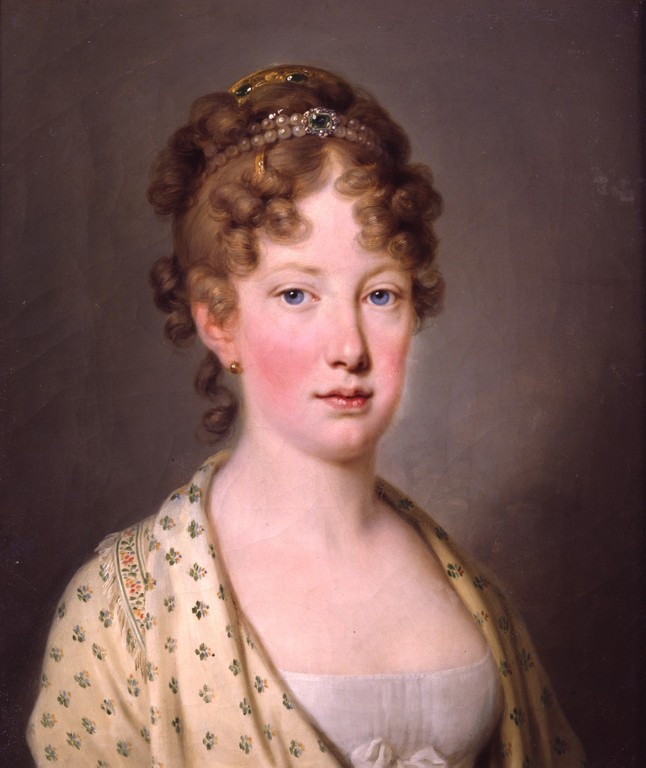
Maria Leopoldina of Austria
Dona Maria Leopoldina of Austria (22 January 1797 – 11 December 1826) was the first Empress of Brazil as the wife of Emperor Dom Pedro I from 12 October 1822 until her death. She was also Queen of Portugal during her husband's brief reign as King Dom Pedro IV from 10 March to 2 May 1826.
She was born in Vienna, Austria, the daughter of Holy Roman Emperor Francis II, and his second wife, Maria Theresa of Naples and Sicily. Among her many siblings were Emperor Ferdinand I of Austria and Marie Louise, Duchess of Parma, the wife of Napoleon Bonaparte.
The education Maria Leopoldina had received in childhood and adolescence was broad and eclectic, with a higher cultural level and more consistent political training. Such education of the little princes and princesses of the Habsburg family was based on the educational belief initiated by their grandfather Holy Roman Emperor Leopold II, who believed "that children should be inspired from an early age to have high qualities, such as humanity, compassion and the desire to make people happy". With a deep Christian faith and a solid scientific and cultural background (which included international politics and notions of government) the Archduchess had been prepared from an early age to being a proper royal consort.
In the 21st century, it has been proposed by some historians that she was one of the main articulators of the process of Independence of Brazil that took place in 1822. Her biographer, historian Paulo Rezzutti, maintains that it was largely thanks to her that Brazil became a nation. According to him, the wife of Dom Pedro "embraced Brazil as her country, Brazilians as her people and Independence as her cause". She was also adviser to Dom Pedro on important political decisions that reflected the future of the nation, such as the Dia do Fico and the subsequent opposition and disobedience to the Portuguese courts regarding the couple's return to Portugal. Consequently, for governing the country on Dom Pedro's trips through the Brazilian provinces, she is considered the first woman to become head of state in an independent American country.
Maria Leopoldina was born on 22 January 1797 at the Hofburg Palace in Vienna, Archduchy of Austria. She was the sixth (but third surviving) child of Francis II, Holy Roman Emperor (who from 1804, became Emperor of Austria with the title of Francis I, because Napoleon Bonaparte demanded that he renounce the title of Holy Roman Emperor when he was crowned Emperor of the French) but the fifth (third surviving) child and fourth (second surviving) daughter born from his second marriage with Maria Theresa of Naples and Sicily. Her paternal grandparents were Leopold II, Holy Roman Emperor and Maria Luisa of Bourbon, Infanta of Spain and her maternal grandparents were King Ferdinand IV & III of Naples and Sicily (later King Ferdinand I of the Two Sicilies) and Archduchess Maria Carolina of Austria. Through both parents (who are double first-cousins), Maria Leopoldina was descended from the House of Habsburg-Lorraine (one of the oldest and most powerful dynasties in Europe, which reigned over Austria from 1282 to 1918, among other territories that reigned and was the oldest reigning house in Europe at the time of Maria Leopoldina's birth) and from the House of Bourbon (a royal dynasty who at the time of her birth reigned over Spain, Naples, Sicily and Parma; the main branch of the family, who reigned in France since 1589, was dethroned after the French Revolution in 1792 but briefly restored during 1814–1830). She was given the name Caroline Josepha Leopoldine Franziska Ferdinanda, according to her main biographer Carlos H. Oberacker Júnior in his work "A Imperatriz Leopoldina: Sua Vida e Sua Época", and confirmed by Bettina Kann in her work "Cartas de uma Imperatriz" and other authors. In one of the essays presented in his work, Oberacker Júnior showed an excerpt of the publication made by the Austrian newspaper Wiener Zeitung on 25 January 1797, who gave the news of the birth of the Archduchess three days before with her full name; he also mentioned that the name "Maria" wasn't present in the preserved baptismal record of the Archduchess, which is in fact true. According to Oberacker Júnior, the Archduchess started using it already on his trip to Brazil, when dealing with some private businesses. In Brazil, she started to sign only Leopoldina, or using the first name Maria, as can be seen in her oath to the Constitution of Brazil in 1822. According to another theory presented by Oberacker Júnior, the Archduchess probably began to use the name "Maria" due to her great devotion to the Virgin Mary and to invoke her protection, and also because all her sisters-in-law used this name.
Maria Leopoldina was born during a turbulent period in European history. In 1799, Napoleon Bonaparte became First Consul of France, and later became Emperor. He then began a series of conflicts and established systems of alliances known as "Coalitions" over Europe that frequently redefined the continent's borders. Austria was an active participant in all of the Napoleonic Wars, against France, her historical enemy. Napoleon shook the old European royal institutions, and fierce battles began through the Holy Roman Empire. Her older sister, Archduchess Maria Ludovika, married Napoleon in 1810, seeking to strengthen the ties between France and Austria. This union was undoubtedly one of the most serious defeats of the House of Habsburg; their maternal grandmother, Queen Maria Carolina of Naples and Sicily (who deeply hated everything about France after execution of her beloved sister Queen Marie Antoinette in 1793), grunted with her son-in-law's attitude: "It was precisely what I lacked, to now become the devil's grandmother".
On 13 April 1807, the 10-year-old Archduchess lost her mother after she suffered complications due to childbirth. A year later (6 January 1808), her father remarried to the woman Maria Leopoldina would later describe as the most important person in her life, Maria Ludovika of Austria-Este.
First-cousin of her husband and granddaughter of Empress Maria Theresa, the new Empress was well-educated and surpassed her predecessor in culture and intellectual brilliance. Muse and personal friend of the poet Johann Wolfgang von Goethe, she was responsible for the intellectual formation of her stepdaughter, developing in Maria Leopoldina a taste for literature, nature and music by Joseph Haydn and Ludwig van Beethoven. Because she had no children of her own, she willingly adopted those of her predecessor; Maria Leopoldina always considered her stepmother to be her mother and she grew up with Empress Maria Ludovika as her "spiritual mother". Thanks to her, the Archduchess had the chance of meeting Goethe in 1810 and 1812, when she went to Carlsbad with her stepmother.
Maria Leopoldina of Austria
Dona Maria Leopoldina of Austria (22 January 1797 – 11 December 1826) was the first Empress of Brazil as the wife of Emperor Dom Pedro I from 12 October 1822 until her death. She was also Queen of Portugal during her husband's brief reign as King Dom Pedro IV from 10 March to 2 May 1826.
She was born in Vienna, Austria, the daughter of Holy Roman Emperor Francis II, and his second wife, Maria Theresa of Naples and Sicily. Among her many siblings were Emperor Ferdinand I of Austria and Marie Louise, Duchess of Parma, the wife of Napoleon Bonaparte.
The education Maria Leopoldina had received in childhood and adolescence was broad and eclectic, with a higher cultural level and more consistent political training. Such education of the little princes and princesses of the Habsburg family was based on the educational belief initiated by their grandfather Holy Roman Emperor Leopold II, who believed "that children should be inspired from an early age to have high qualities, such as humanity, compassion and the desire to make people happy". With a deep Christian faith and a solid scientific and cultural background (which included international politics and notions of government) the Archduchess had been prepared from an early age to being a proper royal consort.
In the 21st century, it has been proposed by some historians that she was one of the main articulators of the process of Independence of Brazil that took place in 1822. Her biographer, historian Paulo Rezzutti, maintains that it was largely thanks to her that Brazil became a nation. According to him, the wife of Dom Pedro "embraced Brazil as her country, Brazilians as her people and Independence as her cause". She was also adviser to Dom Pedro on important political decisions that reflected the future of the nation, such as the Dia do Fico and the subsequent opposition and disobedience to the Portuguese courts regarding the couple's return to Portugal. Consequently, for governing the country on Dom Pedro's trips through the Brazilian provinces, she is considered the first woman to become head of state in an independent American country.
Maria Leopoldina was born on 22 January 1797 at the Hofburg Palace in Vienna, Archduchy of Austria. She was the sixth (but third surviving) child of Francis II, Holy Roman Emperor (who from 1804, became Emperor of Austria with the title of Francis I, because Napoleon Bonaparte demanded that he renounce the title of Holy Roman Emperor when he was crowned Emperor of the French) but the fifth (third surviving) child and fourth (second surviving) daughter born from his second marriage with Maria Theresa of Naples and Sicily. Her paternal grandparents were Leopold II, Holy Roman Emperor and Maria Luisa of Bourbon, Infanta of Spain and her maternal grandparents were King Ferdinand IV & III of Naples and Sicily (later King Ferdinand I of the Two Sicilies) and Archduchess Maria Carolina of Austria. Through both parents (who are double first-cousins), Maria Leopoldina was descended from the House of Habsburg-Lorraine (one of the oldest and most powerful dynasties in Europe, which reigned over Austria from 1282 to 1918, among other territories that reigned and was the oldest reigning house in Europe at the time of Maria Leopoldina's birth) and from the House of Bourbon (a royal dynasty who at the time of her birth reigned over Spain, Naples, Sicily and Parma; the main branch of the family, who reigned in France since 1589, was dethroned after the French Revolution in 1792 but briefly restored during 1814–1830). She was given the name Caroline Josepha Leopoldine Franziska Ferdinanda, according to her main biographer Carlos H. Oberacker Júnior in his work "A Imperatriz Leopoldina: Sua Vida e Sua Época", and confirmed by Bettina Kann in her work "Cartas de uma Imperatriz" and other authors. In one of the essays presented in his work, Oberacker Júnior showed an excerpt of the publication made by the Austrian newspaper Wiener Zeitung on 25 January 1797, who gave the news of the birth of the Archduchess three days before with her full name; he also mentioned that the name "Maria" wasn't present in the preserved baptismal record of the Archduchess, which is in fact true. According to Oberacker Júnior, the Archduchess started using it already on his trip to Brazil, when dealing with some private businesses. In Brazil, she started to sign only Leopoldina, or using the first name Maria, as can be seen in her oath to the Constitution of Brazil in 1822. According to another theory presented by Oberacker Júnior, the Archduchess probably began to use the name "Maria" due to her great devotion to the Virgin Mary and to invoke her protection, and also because all her sisters-in-law used this name.
Maria Leopoldina was born during a turbulent period in European history. In 1799, Napoleon Bonaparte became First Consul of France, and later became Emperor. He then began a series of conflicts and established systems of alliances known as "Coalitions" over Europe that frequently redefined the continent's borders. Austria was an active participant in all of the Napoleonic Wars, against France, her historical enemy. Napoleon shook the old European royal institutions, and fierce battles began through the Holy Roman Empire. Her older sister, Archduchess Maria Ludovika, married Napoleon in 1810, seeking to strengthen the ties between France and Austria. This union was undoubtedly one of the most serious defeats of the House of Habsburg; their maternal grandmother, Queen Maria Carolina of Naples and Sicily (who deeply hated everything about France after execution of her beloved sister Queen Marie Antoinette in 1793), grunted with her son-in-law's attitude: "It was precisely what I lacked, to now become the devil's grandmother".
On 13 April 1807, the 10-year-old Archduchess lost her mother after she suffered complications due to childbirth. A year later (6 January 1808), her father remarried to the woman Maria Leopoldina would later describe as the most important person in her life, Maria Ludovika of Austria-Este.
First-cousin of her husband and granddaughter of Empress Maria Theresa, the new Empress was well-educated and surpassed her predecessor in culture and intellectual brilliance. Muse and personal friend of the poet Johann Wolfgang von Goethe, she was responsible for the intellectual formation of her stepdaughter, developing in Maria Leopoldina a taste for literature, nature and music by Joseph Haydn and Ludwig van Beethoven. Because she had no children of her own, she willingly adopted those of her predecessor; Maria Leopoldina always considered her stepmother to be her mother and she grew up with Empress Maria Ludovika as her "spiritual mother". Thanks to her, the Archduchess had the chance of meeting Goethe in 1810 and 1812, when she went to Carlsbad with her stepmother.
Recent media
Recent media