Hubbry Logo
Mark AndesMark AndesMain
Open search
Mark Andes
Community hub
Mark Andes
logo
8 pages, 0 posts
0 subscribers
Be the first to start a discussion here.
Mark Andes
Mark Andes
from Wikipedia

Key Information

Mark Andes (born February 19, 1948) is an American musician, known for his work as a bassist with Canned Heat, Spirit, Jo Jo Gunne, Firefall, Heart, and Robert Mirabal.[1]

Early life

[edit]

Andes was born in Philadelphia, but grew up in Los Angeles, one of two sons of actor Keith Andes (1920–2005).

Career

[edit]

As a teenager, he was an early member of Canned Heat, but left before the band was signed to a recording contract. Andes was a founding member of the band Spirit. He played bass on their first four albums and on some subsequent reunion albums. During a bout with the flu, Mark co-wrote one of Spirit's first singles, "Mechanical World," with fellow Spirit member Jay Ferguson who was a friend from high school.[2]

Spirit was noted for its hybrid sound of rock and jazz styles.[citation needed] The group released groundbreaking works such as Twelve Dreams of Dr. Sardonicus (1970), that critically were lauded later, but commercial success largely eluded them at the time.[3]

When the original line-up of Spirit broke up, Andes and Jay Ferguson formed the band Jo Jo Gunne.[4] He recruited his brother, Matt Andes, to play guitar. Andes only recorded one album with Jo Jo Gunne before semi-retiring from music around 1972. During his stay, the band had a Top 40 hit with the song "Run Run Run". When Jo Jo Gunne reformed for a new album and gigs in 2004, Andes was included in the line-up.

Andes moved to Boulder, Colorado, where he lived in the basement of local musician Jeff Reaves. In 1975, he was recruited by former Flying Burrito Brothers vocalist Rick Roberts and former Byrds and Flying Burrito Brothers drummer Michael Clarke to form the country-rock band Firefall. For six years, Mark would be in a band that had a string of hit singles, including the Top 10 hit, "You Are the Woman." During the early 1980s, Andes also collaborated briefly with future Yes guitarist Trevor Rabin and future Quiet Riot drummer Frank Banali.

Following a move back to California, and some session work, Andes joined Heart. He appeared on their final album for Epic Records, Passionworks (1983), and remained with the band until 1993. During this time, Heart found mainstream success, with several number one singles, and a number one album, Heart (1985). After a decade with Heart, Andes returned to session work.

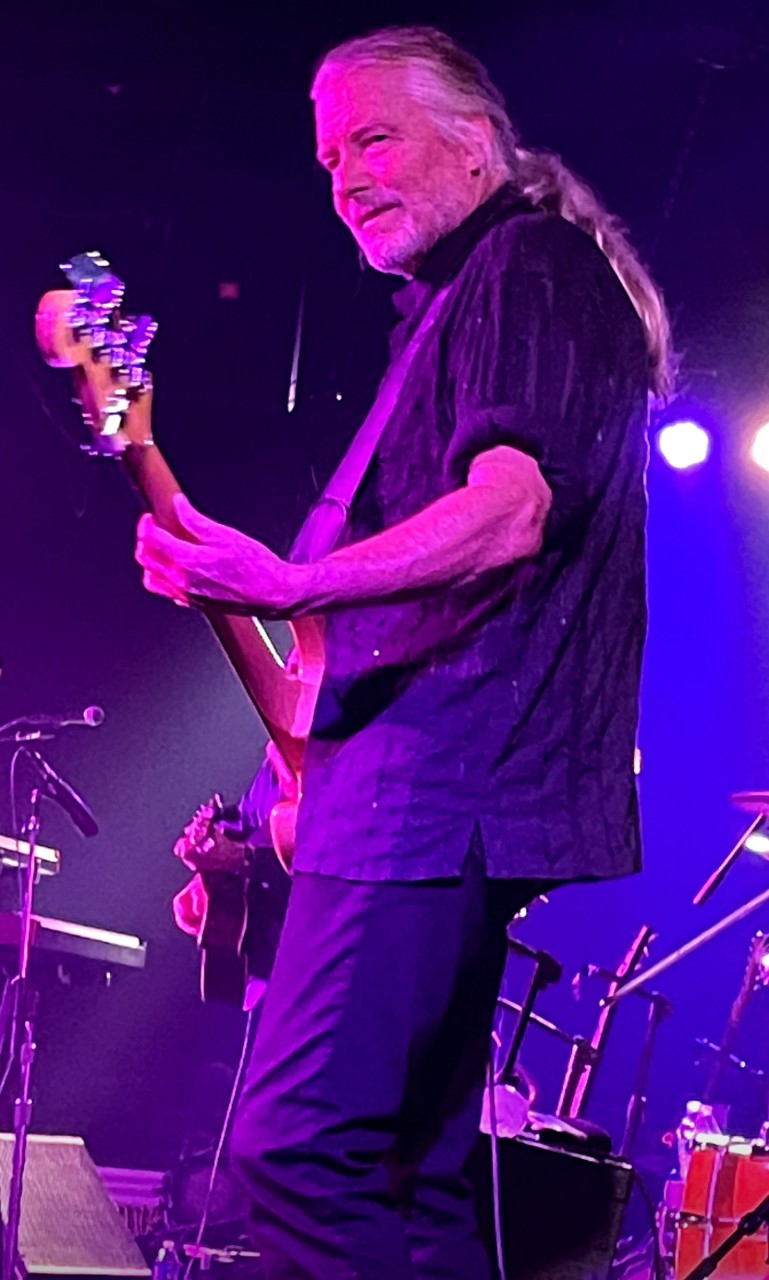
Andes at ACL Festival 2006

In 1995, he joined up with Native American musician Robert Mirabal to collaborate on his album entitled Mirabal.

In 1998, he played bass in the backing band for Iain Matthews (The Swinelakers) on their European tour. He plays on Iain Matthews' album A Tiniest Wham released in 2000.

Andes played in Austin, Texas, with Ian McLagan and the Bump Band, Alejandro Escovedo, Jo Carol Pierce, and Three Balls of Fire. He very briefly played in a band called MPTU with drummer Pat Mastelotto (King Crimson, Mr. Mister), singer Malford Milligan and Phil Brown (Little Feat). Andes now lives near Houston in Magnolia, Texas, with his wife Valerie. He released his first solo album, Real World Magic, in February 2009.[5]

In 2012, Andes played with Kenny Cordray & Love Street on the album titled It Takes Everything.

Andes began playing with Firefall again in 2014, becoming the third original member in the band's current lineup, along with Jock Bartley and David Muse.[6]

He played with French artist Chardeau on his albums Fauves & Pastels (2015) and Sanguines (2017), with Robert Lamm and Jason Scheff (Chicago), John McFee (Doobie Brothers), Brian Auger (Oblivion Express) and Jerry Goodman (Mahavishnu Orchestra).

Discography

[edit]

Spirit

[edit]

Jo Jo Gunne

[edit]
  • Jo Jo Gunne – 1972
  • Jumpin' the Gunne – 1973
  • Big Chain – 2005

Firefall

[edit]

Heart

[edit]

Other appearances

[edit]

References

[edit]
[edit]
Revisions and contributorsEdit on WikipediaRead on Wikipedia
from Grokipedia
Mark Andes (born February 19, 1948) is an American rock and jazz-fusion bassist renowned for his foundational roles in several influential bands during the 1960s through 1980s. Born in , , to actor —who appeared in films alongside and episodes of —Andes grew up in the after his family relocated to . His early musical influences stemmed from the vibrant scene, leading him to switch from guitar to bass while in high school bands. Andes began his professional career at age 18, briefly joining the blues-rock group before co-founding the psychedelic rock band Spirit in 1967 alongside guitarist . With Spirit, he contributed to landmark albums like (1968) and (1970), featuring hits such as "I Got a Line on You" and "Nature's Way," and the band became known for opening shows for icons like , , and Led Zeppelin. After departing Spirit in 1970 amid internal tensions, Andes formed with ex-Spirit singer Jay Ferguson, releasing the self-titled debut album in 1972, which included the hit "Run Run Run." In 1976, Andes co-founded the soft rock supergroup Firefall with former Flying Burrito Brothers member Rick Roberts and Stephen Stills' backing band, achieving commercial success with albums like Firefall (1976) and Luna Sea (1977), the latter featuring the Top 10 hit "Just Remember I Love You." He left Firefall in 1980 but rejoined in 2014, contributing to their 2020 album Comet, which included a re-recorded version of Spirit's "Nature's Way" with Eagles' Timothy B. Schmit and Doobie Brothers' John McFee. During the 1980s, Andes expanded his resume by joining Heart, playing bass on their multi-platinum albums Heart (1985) and Bad Animals (1987), and later touring with Stevie Nicks in 1992. Relocating to Austin, Texas, in the late 1990s, he has since collaborated with artists like Alejandro Escovedo, Iain Matthews, and Ian McLagan's Bump Band, while maintaining involvement in Spirit and Firefall reunions. As of 2025, Andes continues to tour with Firefall, and a documentary about his life, Run Run Run, is scheduled for release in 2026.

Early years

Family background

Mark Andes was born on February 19, 1948, in , . He was the son of actor (1920–2005) and his first wife, Jean Alice Cotton, a nurse. The family relocated to in the early 1950s, following Keith Andes' rising opportunities in film and television after his Broadway success. This move immersed the family in the entertainment industry, with Keith starring in notable films such as (1952) alongside . Keith's career led to frequent relocations, including a family move to in 1958 for additional film work, which disrupted stability but provided young Mark with early exposure to the performing arts world. This environment subtly influenced Mark's initial interest in performance arts through his father's professional circle. Keith Andes died by suicide in 2005 at age 85, an event that marked a profound loss for the family.

Musical beginnings

Mark Andes grew up in the area of after his family relocated from the East Coast in the early , which provided access to the region's burgeoning music scene. During his high school years in the mid-1960s, he attended a in the Valley, where the disciplined environment initially exposed him to percussion through practice, diverting his interest from earlier lessons he had taken around age eight or nine. By ages 15 to 17, Andes immersed himself in the local , forming and playing in garage bands that performed pre-surf instrumentals and early rock covers, including groups like the Marksmen in junior high and more prominent Valley acts during high school from 1963 to 1965. Lacking any formal musical education beyond brief childhood piano instruction, Andes became self-taught on around age 15, switching to the instrument following a personnel change in one of his high school bands. His playing style drew inspiration from rock and blues records, particularly the energetic rhythms of , , and , as well as the instrumental twang of Link Wray's "Rumble," which had captivated him since picking up guitar at age 10. He honed his skills through practical experience, jamming with peers like future collaborator Jay Ferguson and recording an unreleased track about the at the renowned in , emphasizing hands-on learning over structured training. In the mid-1960s, Andes' early bands, such as the Red Roosters and Western Union, reflected the vibrant Los Angeles music scene's shift toward and folk-rock influences, with exposure to acts like and shaping his evolving sound. This period culminated in a brief stint with in 1966, when he joined the blues-oriented group at age 17 through a connection with record collector Barry Hansen (later known as ); he contributed to their early tours and gigs at venues like the and Auditorium, learning traditional arrangements before departing just prior to their major label signing. These formative experiences, centered on local gigs and informal collaborations, laid the groundwork for his practical approach to musicianship without relying on academic study.

Professional career

Spirit

Mark Andes joined Spirit as a founding member and bassist in 1967, alongside guitarist , drummer , keyboardist , and vocalist Jay Ferguson. The band formed in following Andes' early experiences in local garage bands, evolving into a professional outfit signed by producer . Andes made significant contributions to Spirit's self-titled debut album, released in 1968, where he co-wrote the track "Mechanical World" with Ferguson during a period of illness, serving as one of the band's first singles. His bass lines provided a solid foundation for the album's eclectic sound, including on standout tracks like the hit "I Got a Line on You," recorded for the follow-up The Family That Plays Together later that year. Andes continued to play bass on Spirit's subsequent releases, including The Family That Plays Together (1969), Clear Spirit (1969), and The Twelve Dreams of Dr. Sardonicus (1970), contributing to the band's growing catalog of innovative material. These albums showcased Spirit's blend of with progressive and elements, where Andes' rhythmic bass work anchored extended improvisational jams and diverse influences such as and . Internal tensions, exacerbated by Randy California's erratic behavior following a horse riding accident, led to Andes' departure from Spirit in 1970, just after the release of The Twelve Dreams of Dr. Sardonicus. In an interview, Andes reflected on Spirit's overlooked progressive credentials, emphasizing their fearless incorporation of and as pioneering: "By including as well as psychedelics in our style… we were definitely progressive." He also expressed regret over the band's inability to better support California, whom he described as the "keystone" member, stating, "I wish we’d had the skills to help through that period."

Jo Jo Gunne

After leaving Spirit, Mark co-founded in 1971 in with former bandmate Jay Ferguson on keyboards and vocals, recruiting Andes' brother Matt on guitar and Curly Smith on drums to complete the lineup. The band shifted from Spirit's psychedelic experimentation to a more direct, boogie-infused sound, emphasizing driving rhythms and catchy hooks. served as the group's and , while also contributing to songwriting that shaped their energetic, blues-tinged style. The band's self-titled debut album, , was released in 1972 on and marked their commercial breakthrough, peaking at No. 73 on the Billboard 200. Its , "Run Run Run," became a staple, reaching No. 27 on the and No. 6 on the UK Singles Chart, propelled by its infectious and Ferguson's gritty vocals. Andes departed after the debut amid creative tensions, and the band continued with replacement bassist Jimmie Randall on follow-up albums Bite Down Hard (1973) and Jumpin' the Gunne (1973), which maintained the raw energy but saw diminishing returns. By their fourth release, So... Where's the Show? (1974), further lineup changes signaled instability. Despite early promise, struggled to sustain chart success beyond their debut single, as subsequent releases failed to recapture widespread radio play or sales momentum in the competitive early-1970s rock landscape. disbanded in 1974, with Andes moving on to new projects while the group's boogie-rock approach influenced later acts blending blues and elements. In 2004, Andes rejoined a reformed alongside Ferguson and Smith for a series of tours and studio sessions, recapturing their classic sound for nostalgic audiences. The reunion yielded the album Big Chain in 2005 on Blue Hand Records, featuring 14 tracks that revisited their boogie roots with updated production, including re-recordings of early material and new originals co-written by the core members. Andes' steady bass work anchored the effort, affirming his enduring role in the band's legacy.

Firefall

Mark Andes co-founded in 1974 in , as the band's bassist with singer-songwriter Rick Roberts (formerly of ) and guitarist Jock Bartley (ex-Zephyr). The lineup was completed with drummer Michael Clarke (ex-Byrds and ), guitarist and vocalist , and multi-instrumentalist David Muse on keyboards and , creating a blend of country-rock and melodic pop that aligned with the emerging style. Andes' addition brought a seasoned foundation, drawing from his prior experience in harder-edged rock with Spirit and , though shifted toward softer, harmonious arrangements. The band's self-titled debut album, (1976), marked their breakthrough, featuring the Top 10 single "You Are the Woman," which peaked at No. 9 on the and showcased their smooth, vocal-driven sound. Andes contributed to the album's cohesive bass lines, supporting the group's West Coast-influenced melodies, while subsequent releases built on this success: (1977), highlighted by the No. 11 hit "Just Remember I Love You"; Élan (1978), with the single "Strange Way" reaching No. 11; and Undertow (1980). During this period, Andes earned co-writing credits on tracks like "Anymore" from , enhancing the band's emphasis on heartfelt, radio-friendly ballads and folk-tinged rock. Firefall entered a hiatus in 1981 following lineup changes and internal tensions, with Andes departing amid creative differences and frustrations during the recording of Undertow and its supporting tour. His bass work had been integral to the band's signature sound—warm, melodic, and harmony-rich—helping establish as a staple of 1970s with over a million records sold in their initial run. Andes rejoined Firefall in 2014 as one of three original members alongside Bartley and Muse, revitalizing the group for tours and new recordings. This reunion led to the release of Comet in 2020, their first album of original material in over two decades, where Andes provided bass and vocals on tracks like a cover of Spirit's "Nature's Way." The effort underscored the band's enduring appeal, blending nostalgic elements with fresh arrangements in interviews highlighting the collaborative joy of the comeback.

Heart

Mark Andes joined Heart in 1983 as bassist, replacing Steve Fossen, alongside drummer Denny Carmassi who replaced Michael DeRosier; he contributed to the band's album Passionworks, marking the start of a decade-long tenure that aligned with Heart's commercial resurgence. During this period, Andes played on several multiplatinum albums that propelled Heart to arena-rock stardom. The self-titled Heart (1985) reached number one on the Billboard 200, featuring hits like "What About Love" and "Never," where Andes' bass lines underpinned the album's anthemic tracks. Bad Animals (1987) peaked at number two on the same chart, showcasing Andes' rhythmic foundation on power ballads and hard rock numbers. Brigade (1990) climbed to number three, with Andes providing bass support for the chart-topping single "All I Wanna Do Is Make Love to You." Andes played a key role in Heart's evolution toward a polished hard rock sound in the 1980s, blending his experience from prior arena tours with Spirit and Firefall to enhance the band's production scale. His bass work anchored power ballads like "Alone" from Bad Animals and guitar-driven rockers such as "Nothin' at All" from Heart, contributing to the albums' radio dominance and visual appeal. Andes also supported Heart's extensive live performances during this era, including tours promoting Heart and Bad Animals, where his steady grooves helped fill stadiums. He appeared in MTV-era music videos for hits like "What About Love" and "Never," amplifying the band's image through high-production visuals that defined 1980s rock. Andes departed Heart in 1993 following the release of Desire Walks On, citing tensions in band dynamics, particularly over creative direction and marketing emphasis on glam aesthetics rather than musical authenticity.

Later collaborations

After leaving Heart in 1993, Mark Andes pursued a variety of collaborative projects that blended his rock roots with diverse musical influences. In 2001, he contributed bass to Robert Mirabal's album Music from a Painted Cave, a fusion of Native American traditions and rock, recorded as part of Mirabal's band alongside drummer Reynaldo Lujan; the project also spawned a PBS special highlighting indigenous storytelling through music. Andes relocated to Austin, Texas, in the late 1990s, where he immersed himself in the local scene during the 2000s, providing bass support for artists such as and the Bump Band, , , , and Jon Dee Graham on various sessions and recordings. In 1998, he joined ' backing band, the Swinelakers, for a European tour promoting Matthews' folk-rock material. Andes participated in reunions with his former bands in later years, notably rejoining in 2014 as the third original member alongside Jock Bartley and David Muse, contributing to tours and the group's revitalized performances of their soft-rock catalog. He also appeared as a guest bassist on French musician JJ Chardeau's albums, including Sanguines (2017), which featured progressive rock elements with contributions from Andes alongside players like and . In 2020, Andes promoted 's long-awaited album , their first new release in over two decades, where he not only played bass but also sang lead on a cover of Spirit's "Nature's Way," tying back to his foundational work. As of 2025, Andes continued performing, including shows with David Holt at Cowboy Surfer in , , in May and December. In an , Andes reflected on his , emphasizing Spirit's pioneering progressive and psychedelic legacy, including their experimental blend of , rock, and classical influences that anticipated prog rock developments. These later endeavors showcased a culmination of Andes' versatile style, honed across decades in ensemble settings.

Personal life

Family and relationships

Mark Andes has been married to his wife, Valerie, since reconnecting with her in the early 2000s after an intermittent relationship that began during his time with Heart in the . In a , Andes dedicated the title track of his solo Real World Magic to Valerie, highlighting her role in his personal life. Valerie has provided support throughout Andes' transitions, including his relocation to , where they rekindled their relationship, and subsequent moves tied to his musical commitments. Public records and interviews do not mention Andes having any children, reflecting the private nature of his family life with limited media coverage of personal details. Andes' father, actor , died by suicide on November 11, 2005, at age 85 in , after battling and other ailments; Mark Andes has not made extensive public statements on the impact of this event on family dynamics, consistent with his overall reticence regarding intimate matters.

Residence and health

In the 2000s, following his time in the active Austin music scene during the late 1990s, Mark Andes relocated to , a quieter suburban area near . He has since made this his primary residence, sharing the home with his wife Valerie, who supported the move as part of their reconnection. As of 2025, at age 77, Andes remains engaged in musical pursuits without any reported major health issues, maintaining a steady presence despite the physical demands of his long career. His home serves as a central base for coordinating performances and Spirit reunion efforts, allowing him to balance creative involvement with reduced travel. In interviews between 2020 and 2025, Andes has discussed achieving a fulfilling work-life balance in a retirement-like phase, especially after stepping away from road touring in July 2022 to prioritize personal well-being while selectively participating in projects like potential Spirit tributes. He has expressed gratitude for this stage, describing it as a comfortable evolution that honors his legacy without the rigors of constant performance.

Musical style and equipment

Bass playing technique

Mark Andes is renowned for his melodic bass lines that intricately complement guitar riffs, providing both depth and rhythmic propulsion in extended jams, as exemplified by his contributions to Spirit's psychedelic explorations. His approach emphasizes supportive yet inventive playing, where the bass serves as a foundational element that elevates the overall ensemble without overpowering it, a style described as "perfect in their support, while being incredibly melodic and inventive" during his tenure with Spirit. Throughout his career, Andes demonstrated remarkable adaptability, transitioning from the free-form psychedelic improvisation of Spirit—where he drew on jazz influences to infuse bass lines with improvisational flair—to the more structured, anthemic arrangements of Heart, such as the driving support in "Never," which anchors the band's hard rock dynamics. In Firefall's soft rock grooves, his progressive and melodic bass style created space for the band's harmonious textures, enhancing tracks like "Strange Way" with subtle yet essential rhythmic connectivity. This versatility across genres, from jazz-inflected rock to arena-ready pop, underscores his reputation as a "rock-solid support" player, as highlighted in interviews reflecting on his foundational role in multiple iconic bands.

Influences and gear

Mark Andes' early musical influences were rooted in the rhythmic drive of country performer Johnny Horton's "," which captivated him with its groove and snare patterns, and the instrumental surf rock of , prompting him to take up guitar around age 12 or 13. Born into a family in , he was exposed to a vibrant entertainment scene that further fueled his interest in music. As he transitioned to bass, Andes incorporated jazz sensibilities into his playing, drawing inspiration from pianist , whose melodic approach influenced tracks like Spirit's "." He also received practical guidance on bass technique from Eagles members and during collaborative sessions. Andes' preferred bass guitar has long been the Fender Precision, beginning with a borrowed Fender Jazz Bass in high school before purchasing a 1963 or 1964 Precision model as his first owned instrument. He customized this Precision by fitting it with a 1957 neck, stripping its original finish for a two-tone sunburst, and adding a gold anodized pickguard, making it his signature instrument for key recordings with Spirit and Jo Jo Gunne. His collection also includes a 1961 Fender Jazz Bass, and for amplification, he favors the Ampeg 8x10 SVT cabinet, which provided the tonal foundation for his studio and live work across multiple bands. Over his career, Andes' gear evolved modestly to maintain consistency and adaptability. His modified 1960s-era Fender Precision remained central during his time with Firefall and Heart, delivering the clean, melodic lines that defined those projects. In more recent years, he shifted to a five-string Fender Precision Bass, acquired about 15 years ago, to access lower registers while preserving the instrument's familiar feel—though he noted the initial adjustment to the low B string was challenging. This progression from a basic St. George bass in his earliest days to refined Fender setups underscores his emphasis on reliable, straightforward equipment that supported his versatile style across rock, folk-rock, and session work.

Discography

With Spirit

Mark Andes served as the bassist for Spirit's formative albums from to , providing the rhythmic foundation across all tracks on each release. On the band's debut album Spirit (1968), Andes performed bass on every track and co-wrote the single "Mechanical World" with Jay Ferguson. His bass work continued throughout (1968), contributing to the album's blend of rock and elements without additional writing credits. Andes handled full bass duties on Clear (1969), including standout tracks like "Dark Eyed Woman." The (1970) marked Andes' final Spirit album before his departure from the band, featuring his bass on key songs such as "Animal Zoo."

With Jo Jo Gunne

Mark Andes played bass and contributed backing vocals on 's self-titled debut album, released in 1972 on . The album included energetic rock tracks such as "Run Run Run," "Shake That Fat," and "Babylon," showcasing Andes' solid rhythmic foundation in the band's boogie-inflected sound. The lead single "Run Run Run" became the band's biggest hit, peaking at number 27 on the US and establishing their presence in the early 1970s rock scene. Andes departed the group after the debut but participated in their 2005 reformation, providing bass on the reunion album Big Chain, released by Blue Hand Records. This effort featured original material alongside refreshed versions of classics like "Run Run Run" and "Shake That Fat," reflecting the enduring chemistry among the original members.

With Firefall

Mark Andes joined Firefall as the band's bassist in 1974, contributing to their signature blend of and during the original lineup's most commercially successful period. He provided bass throughout the self-titled debut album Firefall (1976), including on the lead single "You Are the Woman," which peaked at number 9 on the chart. On the follow-up (1977), Andes played bass on all tracks, notably supporting the ballad "Just Remember I Love You," a co-write by Rick Roberts and Mark Spiro that reached number 11 on the . Andes received bass credits on Elan (1978), Firefall's third studio album, which featured the band's yacht rock-leaning sound and included the top-40 single "Strange Way." His final album with the original configuration was Undertow (1980), where he handled bass duties amid the band's transition toward a more pop-oriented style before departing. After a hiatus spanning over three decades, Andes rejoined in 2014 as part of a reunion effort that revitalized the band's live performances and recordings. He contributed bass to the reunion-era releases, including the 2020 studio album , Firefall's first collection of original material in 25 years, featuring tracks like "Way Back When" and a cover of Spirit's "Nature's Way."

With Heart

Mark Andes joined Heart as bassist in 1982, contributing to the band's transition toward a more polished, synth-infused sound during the . His debut with the group came on the 1983 album , where he provided bass lines that supported the album's blend of and pop elements, including on tracks like "How Deep It Goes," which featured a more acoustic, introspective vibe amid the record's energetic production. Released on August 20, 1983, by , marked Andes' integration into the lineup alongside drummer , replacing previous members and Michael Derosier, and helped stabilize the band's rhythm section during a period of lineup changes. Andes' bass work became particularly prominent on Heart's self-titled 1985 album, which achieved multi-platinum success and revitalized the band's commercial trajectory. He laid down the foundational grooves for hit singles such as "What About Love," which peaked at No. 10 on the , and "Never," reaching No. 4 on the same chart, emphasizing driving rhythms that complemented Ann Wilson's powerful vocals and the album's arena-rock polish. Produced by and released on June 21, 1985, by , the album sold over five million copies in the U.S., with Andes' contributions underscoring the tracks' anthemic quality and contributing to Heart's resurgence in the mid-1980s pop-rock landscape. The 1987 album further showcased Andes' steady bass presence, particularly on the power ballad "Alone," which topped the for one week and became one of Heart's signature hits. His playing provided the emotional undercurrent for the song's soaring dynamics, amid the album's continued evolution toward radio-friendly production. Released on June 6, 1987, by , Bad Animals reached No. 2 on the , bolstered by Andes' rhythm section partnership with Carmassi. Andes continued as Heart's bassist through the 1990 album , delivering solid support on tracks like "All I Wanna Do Is Make Love to You," a No. 2 hit that highlighted the band's ballad-driven commercial peak. Released on March 20, 1990, by , topped the and earned quadruple platinum certification, with Andes also contributing backing vocals to enhance the album's layered harmonies. His tenure with Heart concluded after this release, spanning a decade of contributions to the band's most successful era.

Solo and other appearances

Andes released his sole solo , Real World Magic, in as a self-released project blending rock and pop elements. The 11-track recording showcases his multi-instrumental talents, with Andes performing guitar on tracks 1–6 and 8–11, bass on tracks 1–4, 6, and 8–10, a dedicated bass solo on track 7, shaker on track 4, and on tracks 4 and 10; additional support came from Don Harvey on and percussion (tracks 1, 3, 6, 10) and David Murray on percussion (track 3). Beyond this effort, Andes has no further solo releases, focusing instead on select guest contributions that highlight his versatility as a . He provided bass on the 1995 album Mirabal by Native American musician Robert Mirabal, a fusion of traditional and rock influences. In the late and early , Andes supported British singer-songwriter , playing bass during Matthews' 1998 European tour with the Swinelakers and contributing to the 2000 A Tiniest Wham. He played bass on Alejandro Escovedo's 2006 The Boxing Mirror, co-writing the track "Take Your Place," and contributed to multiple albums with Ian McLagan & The Bump Band, including Spiritual Boy (An Appreciation of Ronnie Lane) (2006) and Never Say Never (2008). Later, he appeared as a on French artist Chardeau's 2017 Sanguines, alongside players like Alan Deremo and George Hawkins, contributing to its eclectic , and on Chardeau's 2023 Ombres & Lumieres: In Terra Cognita 2, part of the rock opera Magical Musical Man.

References

Add your contribution
Related Hubs
User Avatar
No comments yet.