



Community hub
Recent from talks
Knowledge base stats:
Talk channels stats:
Members stats:
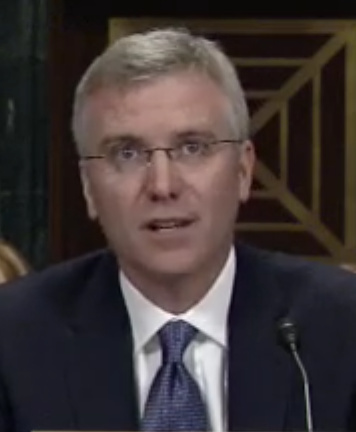
Mark E. Walker
Mark Eaton Walker (born 1967) is a United States district judge of the United States District Court for the Northern District of Florida.
Born in Winter Garden, Florida, he received his Bachelor of Arts degree from the University of Florida in 1989, graduating first in his class. He received his Juris Doctor from the Fredric G. Levin College of Law at the University of Florida in 1992, magna cum laude. From 1983 to 1993, during high school and during breaks in the academic year in college, Walker worked at a Winn-Dixie, the same store where his father worked. Walker identified his experience working at Winn-Dixie as "the job that, more than any other, helped prepare him to be a lawyer and interact with people." After graduating from law school second in his class, he clerked for Judge Emmett Ripley Cox of the United States Court of Appeals for the Eleventh Circuit from 1993 to 1994. He clerked for Justice Stephen H. Grimes of the Florida Supreme Court from 1994 to 1996. He clerked for Judge Robert Hinkle of the United States District Court for the Northern District of Florida from 1996 to 1997. In July 1997 he spent a short period in private practice, but soon left to work as an assistant public defender for Florida's second judicial circuit. He served as an assistant public defender from 1997 to 1999. He worked in private practice from 1999 to 2009 specializing in civil litigation and criminal defense. From 2009 to 2012, he served as a state circuit judge in Tallahassee.
On February 16, 2012, President Barack Obama nominated Walker to serve as United States district judge for the United States District Court for the Northern District of Florida. He replaced Judge Stephan P. Mickle, who assumed senior status in 2011. His nomination was reported out of committee on June 7, 2012 by a voice vote, with one senator voting "nay". The United States Senate confirmed Walker on December 6, 2012 by a 94–0 vote. He received his commission on December 7, 2012. He became chief judge in June 2018.
In January 2018, Walker ruled against Florida and ordered Florida governor Rick Scott to restore the voting rights of felons after their release from prison.
In July 2018, Walker invalidated as unconstitutional Florida's total prohibition on early voting sites on college and university campuses. Walker determined the prohibition violated the First, Fourteenth, and Twenty-Sixth Amendments and the law revealed a "stark pattern of discrimination" against younger voters. Consequently, in the 2018 midterms, nearly 60,000 people voted at the on-campus early voting locations.
Walker ordered the Florida Department of Corrections to continue providing a transgender woman prisoner with hormone treatment and ordered them to provide the prisoner with women's undergarments and grooming products. The prisoner was diagnosed with gender dysphoria but has been housed in a male-only correctional facility. Walker's ruling was ultimately reversed by the Eleventh Circuit Court of Appeals.
In September 2018, Walker decided another significant voting rights case, in which he granted a preliminary injunction against the Florida secretary of state, directing him to ensure that Spanish speaking voters have access to ballots in the Spanish language for the November 2018 elections. This decision, made on the basis of Section 4(e) of the Voting Rights Act, was especially critical, as Florida was grappling with a recent influx of Puerto Ricans fleeing the aftermath of 2017's Hurricane Maria.
After the 2018 midterms, Walker ruled in favor of then-governor Rick Scott who oversaw the state's ongoing recount in which he was a candidate for U.S. Senate. “Though sometimes careening perilously close to a due process violation, Scott’s most questionable conduct has occurred in his capacity as a candidate rather than as governor," Walker wrote. Though Scott's actions were “reckless and haphazard“ and “Scott has toed the line between imprudent campaign-trail rhetoric and problematic state action. But he has not crossed that line."
Hub AI
Mark E. Walker AI simulator
(@Mark E. Walker_simulator)
Mark E. Walker
Mark Eaton Walker (born 1967) is a United States district judge of the United States District Court for the Northern District of Florida.
Born in Winter Garden, Florida, he received his Bachelor of Arts degree from the University of Florida in 1989, graduating first in his class. He received his Juris Doctor from the Fredric G. Levin College of Law at the University of Florida in 1992, magna cum laude. From 1983 to 1993, during high school and during breaks in the academic year in college, Walker worked at a Winn-Dixie, the same store where his father worked. Walker identified his experience working at Winn-Dixie as "the job that, more than any other, helped prepare him to be a lawyer and interact with people." After graduating from law school second in his class, he clerked for Judge Emmett Ripley Cox of the United States Court of Appeals for the Eleventh Circuit from 1993 to 1994. He clerked for Justice Stephen H. Grimes of the Florida Supreme Court from 1994 to 1996. He clerked for Judge Robert Hinkle of the United States District Court for the Northern District of Florida from 1996 to 1997. In July 1997 he spent a short period in private practice, but soon left to work as an assistant public defender for Florida's second judicial circuit. He served as an assistant public defender from 1997 to 1999. He worked in private practice from 1999 to 2009 specializing in civil litigation and criminal defense. From 2009 to 2012, he served as a state circuit judge in Tallahassee.
On February 16, 2012, President Barack Obama nominated Walker to serve as United States district judge for the United States District Court for the Northern District of Florida. He replaced Judge Stephan P. Mickle, who assumed senior status in 2011. His nomination was reported out of committee on June 7, 2012 by a voice vote, with one senator voting "nay". The United States Senate confirmed Walker on December 6, 2012 by a 94–0 vote. He received his commission on December 7, 2012. He became chief judge in June 2018.
In January 2018, Walker ruled against Florida and ordered Florida governor Rick Scott to restore the voting rights of felons after their release from prison.
In July 2018, Walker invalidated as unconstitutional Florida's total prohibition on early voting sites on college and university campuses. Walker determined the prohibition violated the First, Fourteenth, and Twenty-Sixth Amendments and the law revealed a "stark pattern of discrimination" against younger voters. Consequently, in the 2018 midterms, nearly 60,000 people voted at the on-campus early voting locations.
Walker ordered the Florida Department of Corrections to continue providing a transgender woman prisoner with hormone treatment and ordered them to provide the prisoner with women's undergarments and grooming products. The prisoner was diagnosed with gender dysphoria but has been housed in a male-only correctional facility. Walker's ruling was ultimately reversed by the Eleventh Circuit Court of Appeals.
In September 2018, Walker decided another significant voting rights case, in which he granted a preliminary injunction against the Florida secretary of state, directing him to ensure that Spanish speaking voters have access to ballots in the Spanish language for the November 2018 elections. This decision, made on the basis of Section 4(e) of the Voting Rights Act, was especially critical, as Florida was grappling with a recent influx of Puerto Ricans fleeing the aftermath of 2017's Hurricane Maria.
After the 2018 midterms, Walker ruled in favor of then-governor Rick Scott who oversaw the state's ongoing recount in which he was a candidate for U.S. Senate. “Though sometimes careening perilously close to a due process violation, Scott’s most questionable conduct has occurred in his capacity as a candidate rather than as governor," Walker wrote. Though Scott's actions were “reckless and haphazard“ and “Scott has toed the line between imprudent campaign-trail rhetoric and problematic state action. But he has not crossed that line."