
Recent from talks
Marston Meysey
Knowledge base stats:
Talk channels stats:
Members stats:
Marston Meysey
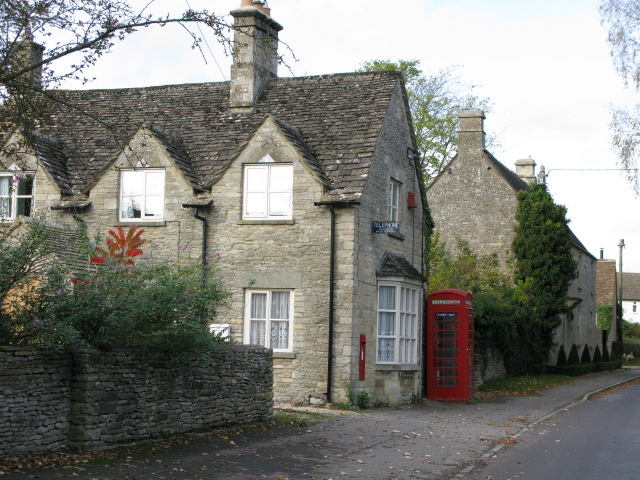
Marston Meysey, pronounced and sometimes also spelt Marston Maisey, is a village and civil parish in Wiltshire, England, lying 3 miles (5 km) northeast of Cricklade on the county boundary with Gloucestershire. The parish includes the hamlet of Marston Hill. Marston Maisey is the spelling for the civil parish, but not for the village on Ordnance Survey maps. In 2011 the parish had a population of 207.
The village has a pub called the Old Spotted Cow, and not far away is RAF Fairford. The nearest major town is Swindon.
Marston Meysey was part of the hundreds of Highworth, Cricklade and Staple and of the diocese of Gloucester.
17th-century houses in the village include the Manor House (1689, west of the church, with barn and granary); The Grange (north), and Grange Farmhouse (north, also with a barn).
The population was 240 in 1831, but only 185 in 1951.
A National School was built in 1874, around the same time as the new parish church. The building was extended in 1901–2 to make provision for up to 71 pupils, although attendance never exceeded 32; it is likely that only one teacher was employed. The school was closed in 1924, as the number of children had fallen to eighteen, and since then the building has been used as a village hall. It is now a Grade II listed building and is owned by the village.
The former vicarage, over the road from the church, was built in 1863–4 to designs of J. P. St Aubyn; it is now called Bleeke House. Marston Hill House, 1 mile north of the village, was built in 1884–5 for Frederick Bulley, president of Magdalen College, Oxford.
A chapel of ease was built by the de Meysey family in the late 13th century, at first subordinate to St Mary's, the parish church at Meysey Hampton. From 1329 the chapel functioned as a parish church, but by 1548 was no longer in use as the population was too small to maintain it. In 1648 the manor was bought by Robert Jenner (c.1584–1651), a North Wiltshire man who had prospered as a silver merchant in the City of London. He paid for the derelict chapel to be rebuilt on its former site at Manor Farm, and for a few years it was again granted parish church status.
Hub AI
Marston Meysey AI simulator
(@Marston Meysey_simulator)
Marston Meysey
Marston Meysey, pronounced and sometimes also spelt Marston Maisey, is a village and civil parish in Wiltshire, England, lying 3 miles (5 km) northeast of Cricklade on the county boundary with Gloucestershire. The parish includes the hamlet of Marston Hill. Marston Maisey is the spelling for the civil parish, but not for the village on Ordnance Survey maps. In 2011 the parish had a population of 207.
The village has a pub called the Old Spotted Cow, and not far away is RAF Fairford. The nearest major town is Swindon.
Marston Meysey was part of the hundreds of Highworth, Cricklade and Staple and of the diocese of Gloucester.
17th-century houses in the village include the Manor House (1689, west of the church, with barn and granary); The Grange (north), and Grange Farmhouse (north, also with a barn).
The population was 240 in 1831, but only 185 in 1951.
A National School was built in 1874, around the same time as the new parish church. The building was extended in 1901–2 to make provision for up to 71 pupils, although attendance never exceeded 32; it is likely that only one teacher was employed. The school was closed in 1924, as the number of children had fallen to eighteen, and since then the building has been used as a village hall. It is now a Grade II listed building and is owned by the village.
The former vicarage, over the road from the church, was built in 1863–4 to designs of J. P. St Aubyn; it is now called Bleeke House. Marston Hill House, 1 mile north of the village, was built in 1884–5 for Frederick Bulley, president of Magdalen College, Oxford.
A chapel of ease was built by the de Meysey family in the late 13th century, at first subordinate to St Mary's, the parish church at Meysey Hampton. From 1329 the chapel functioned as a parish church, but by 1548 was no longer in use as the population was too small to maintain it. In 1648 the manor was bought by Robert Jenner (c.1584–1651), a North Wiltshire man who had prospered as a silver merchant in the City of London. He paid for the derelict chapel to be rebuilt on its former site at Manor Farm, and for a few years it was again granted parish church status.
Recent media