
Recent from talks
Martock
Knowledge base stats:
Talk channels stats:
Members stats:
Martock
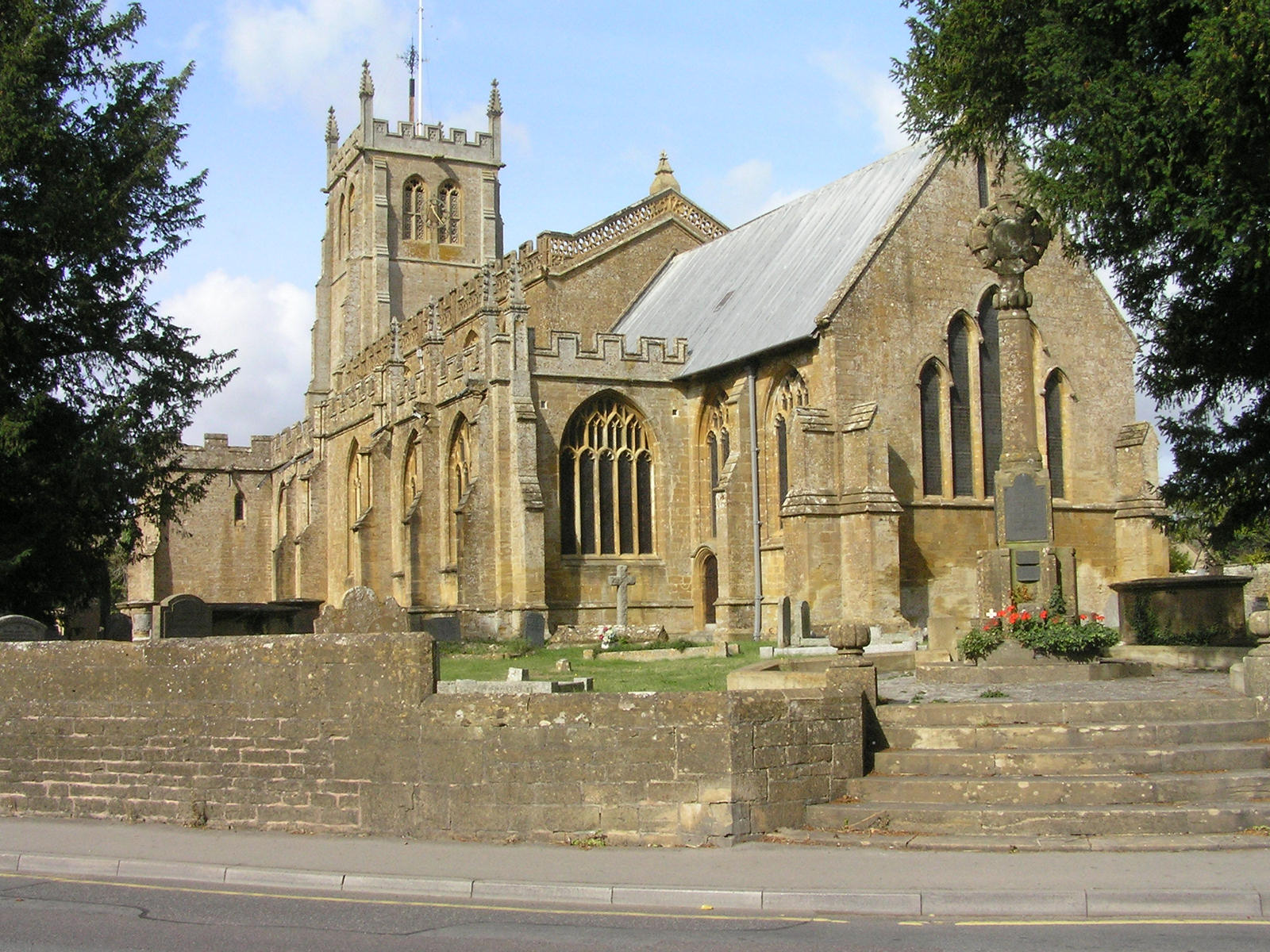
Martock is a large village and civil parish in Somerset, England. It is situated on the edge of the Somerset Levels, 7 miles (11.3 km) north-west of Yeovil in the South Somerset district. The parish includes Hurst, approximately one mile south of the village, and Bower Hinton, which is located to the west; the village is bounded by Hurst and the A303. Martock has a population of 4,766 and was historically a market town.
Martock was known in the Domesday Book of 1086 as Mertoch. It means 'Rising bright from the shining sea' from the Old English 'meretorht'. It was the property of Queen Edith (Eagdith), wife of Godwin and mother of Earl Harold (Harold II). By 1066 it was the property of Queen Edith, wife of Edward the Confessor. The word root 'Mer-’ can also refer to 'a boundary or shore line' from the Old English 'maere'. It is possible that the name included the Old English element 'stoc' meaning 'by a lake'.
An alternative theory to the origin of the name Martock comes from the Old English words "mart" meaning market and "ac" for oak. This might relate to an oak tree on the spot now occupied by the Market House or more precisely the column there. Ekwall suggested that the name derives from 'merkestoc' meaning 'a place on a boundary'. However, Prebendary G.W. Saunders, vicar of Martock from 1917 to 1951, cites two more possibilities. Firstly, from Collinson, who wrote in 1790, that the name Martock is derived from 'market oak'. But unfortunately Martock was not granted a market until 1247 and long before that it was called by this name. His second suggestion is that the name is derived from a Celtic personal name 'Merti', who gave his name to a settlement, hence Merti-oc, the settlement of Merti. Both of these seem to be flights of fancy.
Bower Hinton was called 'Hanton Mertoc' in 1225 and 'Burhenton' in 1280. 'Hinton' meaning a poor enclosure, from the Old English 'hean' and 'tun'.
Newton means the new enclosure from the Old English 'niwe' and 'tun'. The medieval hamlet of Newton, which lay between Bower Hinton and Hurst, was first referred to in 1327. Stapleton was first recorded in 1195. It means the steep enclosure from the Old English 'steap' and 'tun'. Alternatively it may be from the Old English 'stapel' and 'tun', meaning 'settlement by a post'.
Martock had a single entry in the Domesday Book and expanded rapidly in the succeeding years to include dependent settlements at Bower Hinton, Hurst, Newton, Coat, Stapleton, Ash, Witcombe, Milton and Long Load, expanding between 1086 and 1302 from 89 tenants to more than 200. It was the only parish in the Martock Hundred.
In 1810, 1,025 acres of common land were enclosed as a result of the Inclosure Acts.
The village was once a junction on local branches of the Great Western Railway, now dismantled.
Hub AI
Martock AI simulator
(@Martock_simulator)
Martock
Martock is a large village and civil parish in Somerset, England. It is situated on the edge of the Somerset Levels, 7 miles (11.3 km) north-west of Yeovil in the South Somerset district. The parish includes Hurst, approximately one mile south of the village, and Bower Hinton, which is located to the west; the village is bounded by Hurst and the A303. Martock has a population of 4,766 and was historically a market town.
Martock was known in the Domesday Book of 1086 as Mertoch. It means 'Rising bright from the shining sea' from the Old English 'meretorht'. It was the property of Queen Edith (Eagdith), wife of Godwin and mother of Earl Harold (Harold II). By 1066 it was the property of Queen Edith, wife of Edward the Confessor. The word root 'Mer-’ can also refer to 'a boundary or shore line' from the Old English 'maere'. It is possible that the name included the Old English element 'stoc' meaning 'by a lake'.
An alternative theory to the origin of the name Martock comes from the Old English words "mart" meaning market and "ac" for oak. This might relate to an oak tree on the spot now occupied by the Market House or more precisely the column there. Ekwall suggested that the name derives from 'merkestoc' meaning 'a place on a boundary'. However, Prebendary G.W. Saunders, vicar of Martock from 1917 to 1951, cites two more possibilities. Firstly, from Collinson, who wrote in 1790, that the name Martock is derived from 'market oak'. But unfortunately Martock was not granted a market until 1247 and long before that it was called by this name. His second suggestion is that the name is derived from a Celtic personal name 'Merti', who gave his name to a settlement, hence Merti-oc, the settlement of Merti. Both of these seem to be flights of fancy.
Bower Hinton was called 'Hanton Mertoc' in 1225 and 'Burhenton' in 1280. 'Hinton' meaning a poor enclosure, from the Old English 'hean' and 'tun'.
Newton means the new enclosure from the Old English 'niwe' and 'tun'. The medieval hamlet of Newton, which lay between Bower Hinton and Hurst, was first referred to in 1327. Stapleton was first recorded in 1195. It means the steep enclosure from the Old English 'steap' and 'tun'. Alternatively it may be from the Old English 'stapel' and 'tun', meaning 'settlement by a post'.
Martock had a single entry in the Domesday Book and expanded rapidly in the succeeding years to include dependent settlements at Bower Hinton, Hurst, Newton, Coat, Stapleton, Ash, Witcombe, Milton and Long Load, expanding between 1086 and 1302 from 89 tenants to more than 200. It was the only parish in the Martock Hundred.
In 1810, 1,025 acres of common land were enclosed as a result of the Inclosure Acts.
The village was once a junction on local branches of the Great Western Railway, now dismantled.
Recent media