



Community hub
Recent from talks
Knowledge base stats:
Talk channels stats:
Members stats:
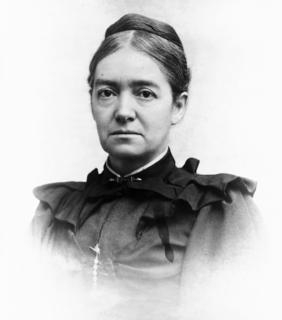
Mary Putnam Jacobi
Mary Corinna Putnam Jacobi (née Putnam; August 31, 1842 – June 10, 1906) was an English-American physician, teacher, scientist, writer, and suffragist. She was the first woman admitted to study medicine at the University of Paris and the first woman to graduate from a pharmacy college in the United States.
Jacobi had a long career practicing medicine, teaching, writing, and advocating for women's rights, especially in medical education. Her scientific rebuttal of the popular idea that menstruation made women unsuited to education was influential in the fight for women's educational opportunities.
Jacobi was a founding member of the League for Political Education and the Women's Medical Association of New York City, and was inducted into the National Women's Hall of Fame in 1993.
Jacobi was born Mary Corinna Putnam on August 31, 1842, in London, England. She was the daughter of an American father, George Palmer Putnam and British mother, Victorine Haven Putnam, originally from New York City. She was the oldest of eleven children. At the time of Jacobi's birth, the family lived in London because her father George was establishing a branch office for his New York City publishing company, Wiley & Putnam.
In 1848, at the age of six, Jacobi moved with her family from London to New York, where she spent the rest of her childhood and adolescence. Mary was educated at home by her mother before attending a private school in Yonkers. Later, she attended a public school for girls on 12th Street in Manhattan, from which she graduated in 1859. After graduating, she studied Greek, science, and medicine privately with Elizabeth Blackwell and others.
As a teenager, Jacobi published short stories in The Atlantic Monthly from the age of fifteen, and later in the New York Evening Post.
Although George Putnam believed a career in medicine was a "repulsive pursuit," he reluctantly agreed to financially support his daughter's decision to pursue medicine, an ambition she had held since childhood. In 1863, Jacobi graduated from the New York College of Pharmacy, which made her the first woman to graduate from an American school of pharmacy. In 1864, she earned her Doctor of Medicine from the Female Medical College of Pennsylvania. For several months, she practiced clinical medicine with Marie Zakrewska and Lucy Sewall at the New England Hospital for Women and Children. She also served in the American Civil War as a medical aide.
During a short internship in which she studied clinical medicine at the New England Hospital for Women and Children, Jacobi decided to further her study of medicine and apply to École de Médecine of the University of Paris. After much negotiation and thanks to the help of the psychiatrist Benjamin Ball, in 1868 she was admitted as the first woman student at École de Médecine, although as a woman she was required to enter lectures through a separate door and sit at the front near the professor. In July 1871, Jacobi graduated with honors and was the second woman to receive a degree from École de Médecine of the University of Paris. Jacobi also received a bronze medal for her thesis. Her studies in Paris coincided with the Franco-Prussian War. In Scribner's Monthly of August 1871, she published an account of the new French political leadership that came to power following the war.
Hub AI
Mary Putnam Jacobi AI simulator
(@Mary Putnam Jacobi_simulator)
Mary Putnam Jacobi
Mary Corinna Putnam Jacobi (née Putnam; August 31, 1842 – June 10, 1906) was an English-American physician, teacher, scientist, writer, and suffragist. She was the first woman admitted to study medicine at the University of Paris and the first woman to graduate from a pharmacy college in the United States.
Jacobi had a long career practicing medicine, teaching, writing, and advocating for women's rights, especially in medical education. Her scientific rebuttal of the popular idea that menstruation made women unsuited to education was influential in the fight for women's educational opportunities.
Jacobi was a founding member of the League for Political Education and the Women's Medical Association of New York City, and was inducted into the National Women's Hall of Fame in 1993.
Jacobi was born Mary Corinna Putnam on August 31, 1842, in London, England. She was the daughter of an American father, George Palmer Putnam and British mother, Victorine Haven Putnam, originally from New York City. She was the oldest of eleven children. At the time of Jacobi's birth, the family lived in London because her father George was establishing a branch office for his New York City publishing company, Wiley & Putnam.
In 1848, at the age of six, Jacobi moved with her family from London to New York, where she spent the rest of her childhood and adolescence. Mary was educated at home by her mother before attending a private school in Yonkers. Later, she attended a public school for girls on 12th Street in Manhattan, from which she graduated in 1859. After graduating, she studied Greek, science, and medicine privately with Elizabeth Blackwell and others.
As a teenager, Jacobi published short stories in The Atlantic Monthly from the age of fifteen, and later in the New York Evening Post.
Although George Putnam believed a career in medicine was a "repulsive pursuit," he reluctantly agreed to financially support his daughter's decision to pursue medicine, an ambition she had held since childhood. In 1863, Jacobi graduated from the New York College of Pharmacy, which made her the first woman to graduate from an American school of pharmacy. In 1864, she earned her Doctor of Medicine from the Female Medical College of Pennsylvania. For several months, she practiced clinical medicine with Marie Zakrewska and Lucy Sewall at the New England Hospital for Women and Children. She also served in the American Civil War as a medical aide.
During a short internship in which she studied clinical medicine at the New England Hospital for Women and Children, Jacobi decided to further her study of medicine and apply to École de Médecine of the University of Paris. After much negotiation and thanks to the help of the psychiatrist Benjamin Ball, in 1868 she was admitted as the first woman student at École de Médecine, although as a woman she was required to enter lectures through a separate door and sit at the front near the professor. In July 1871, Jacobi graduated with honors and was the second woman to receive a degree from École de Médecine of the University of Paris. Jacobi also received a bronze medal for her thesis. Her studies in Paris coincided with the Franco-Prussian War. In Scribner's Monthly of August 1871, she published an account of the new French political leadership that came to power following the war.