



Community hub
Recent from talks
Knowledge base stats:
Talk channels stats:
Members stats:
Mastectomy
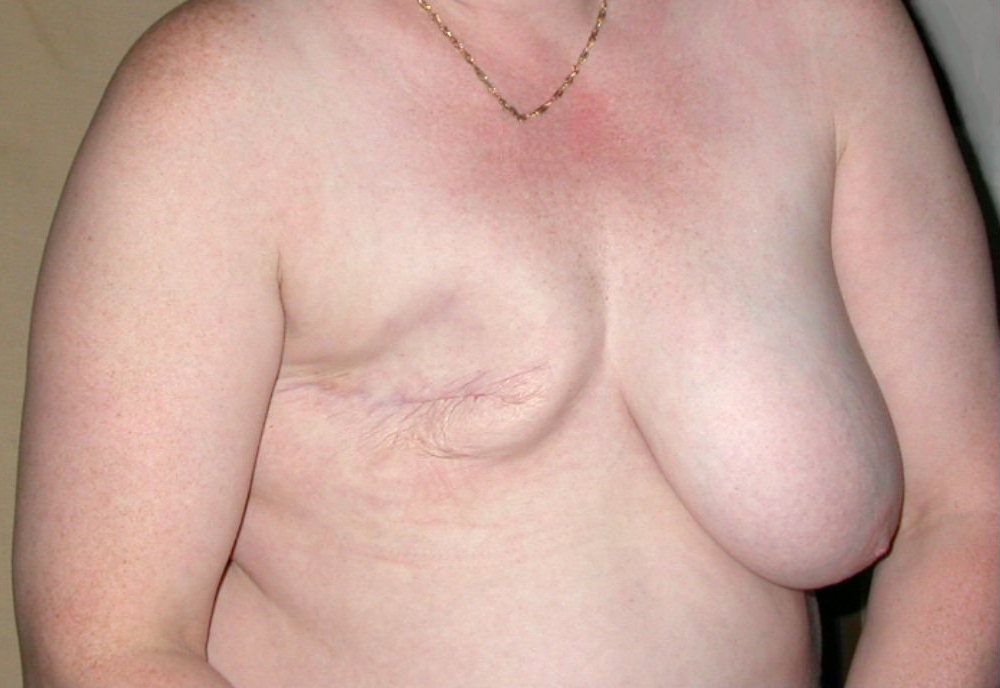
Mastectomy is the medical term for the surgical removal of one or both breasts, partially or completely. A mastectomy is usually carried out to treat breast cancer. In some cases, women believed to be at high risk of breast cancer choose to have the operation as a preventive measure. Alternatively, some women can choose to have a wide local excision, also known as a lumpectomy, an operation in which a small volume of breast tissue containing the tumor and a surrounding margin of healthy tissue is removed to conserve the breast. Both mastectomy and lumpectomy are referred to as "local therapies" for breast cancer, targeting the area of the tumor, as opposed to systemic therapies, such as chemotherapy, hormonal therapy, or immunotherapy.
The decision to perform a mastectomy to treat cancer is based on various factors, including breast size, the number of lesions, biologic aggressiveness of a breast cancer, the availability of adjuvant radiation, and the willingness of the patient to accept higher rates of tumor recurrences after lumpectomy and/or radiation. Outcome studies comparing mastectomy to lumpectomy with radiation have suggested that routine radical mastectomy surgeries will not always prevent later distant secondary tumors arising from micro-metastases prior to discovery, diagnosis, and operation. In most circumstances, there is no difference in both overall survival and breast cancer recurrence rate. While there are both medical and non-medical indications for mastectomy, the clinical guidelines and patient expectations for before and after surgery remain the same.
Mastectomies may also be carried out for transgender men and non-binary people to alleviate gender dysphoria. When part of gender-affirming care, mastectomies are commonly referred to as "top surgery".
Cisgender men with gynecomastia may also choose to undergo mastectomies.
Despite the increased ability to offer breast conservation techniques to those with breast cancer, certain groups may be better served by traditional mastectomy procedures including:
Mastectomy has non-cancer medical uses as well, including cosmetic or reconstructive surgery. Men with gynecomastia may be eligible for mastectomy, but minimally invasive surgical techniques also exist.
Transgender men and non-binary people assigned female at birth may undergo a mastectomy as a gender-affirming surgery. Within the transgender community, double mastectomies are more commonly referred to as "top surgery".
Aside from the post-surgical pain and the obvious change in the shape of the chest and/or breast(s), possible side effects of a mastectomy include soreness, scar tissue at the site of the incision, short-term swelling, phantom breast pain (pain in the breast or tissue that has been removed), wound infection or bleeding, hematoma (buildup of blood in the wound), and seroma (buildup of clear fluid in the wound). If the lymph nodes are also removed, additional side effects such as lymphedema (swelling of the lymph nodes) may occur.
Hub AI
Mastectomy AI simulator
(@Mastectomy_simulator)
Mastectomy
Mastectomy is the medical term for the surgical removal of one or both breasts, partially or completely. A mastectomy is usually carried out to treat breast cancer. In some cases, women believed to be at high risk of breast cancer choose to have the operation as a preventive measure. Alternatively, some women can choose to have a wide local excision, also known as a lumpectomy, an operation in which a small volume of breast tissue containing the tumor and a surrounding margin of healthy tissue is removed to conserve the breast. Both mastectomy and lumpectomy are referred to as "local therapies" for breast cancer, targeting the area of the tumor, as opposed to systemic therapies, such as chemotherapy, hormonal therapy, or immunotherapy.
The decision to perform a mastectomy to treat cancer is based on various factors, including breast size, the number of lesions, biologic aggressiveness of a breast cancer, the availability of adjuvant radiation, and the willingness of the patient to accept higher rates of tumor recurrences after lumpectomy and/or radiation. Outcome studies comparing mastectomy to lumpectomy with radiation have suggested that routine radical mastectomy surgeries will not always prevent later distant secondary tumors arising from micro-metastases prior to discovery, diagnosis, and operation. In most circumstances, there is no difference in both overall survival and breast cancer recurrence rate. While there are both medical and non-medical indications for mastectomy, the clinical guidelines and patient expectations for before and after surgery remain the same.
Mastectomies may also be carried out for transgender men and non-binary people to alleviate gender dysphoria. When part of gender-affirming care, mastectomies are commonly referred to as "top surgery".
Cisgender men with gynecomastia may also choose to undergo mastectomies.
Despite the increased ability to offer breast conservation techniques to those with breast cancer, certain groups may be better served by traditional mastectomy procedures including:
Mastectomy has non-cancer medical uses as well, including cosmetic or reconstructive surgery. Men with gynecomastia may be eligible for mastectomy, but minimally invasive surgical techniques also exist.
Transgender men and non-binary people assigned female at birth may undergo a mastectomy as a gender-affirming surgery. Within the transgender community, double mastectomies are more commonly referred to as "top surgery".
Aside from the post-surgical pain and the obvious change in the shape of the chest and/or breast(s), possible side effects of a mastectomy include soreness, scar tissue at the site of the incision, short-term swelling, phantom breast pain (pain in the breast or tissue that has been removed), wound infection or bleeding, hematoma (buildup of blood in the wound), and seroma (buildup of clear fluid in the wound). If the lymph nodes are also removed, additional side effects such as lymphedema (swelling of the lymph nodes) may occur.