
Recent from talks
M. P. Shiel
Knowledge base stats:
Talk channels stats:
Members stats:
M. P. Shiel
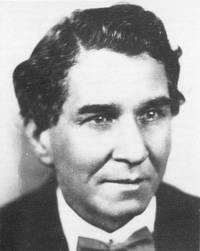
Matthew Phipps Shiell (21 July 1865 – 17 February 1947), known as M. P. Shiel, was a British writer, remembered mainly for supernatural horror and scientific romances. His work was published as serials, novels, and as short stories. The Purple Cloud (1901, revised 1929) remains his most often reprinted novel.
Matthew Phipps Shiell was born on the island of Montserrat in the West Indies. His mother was Priscilla Ann Blake; his father was Matthew Dowdy Shiell, most probably the illegitimate child of an Irish Customs officer and a female slave. Shiell was educated at Harrison College, Barbados.
Shiell moved to England in 1885, eventually adopting Shiel as his pen name. After working as a teacher and translator, a series of his short stories began to be published in The Strand Magazine and other periodicals. His early literary reputation was based on two collections of short stories influenced by Poe published in the Keynote series by John Lane – Prince Zaleski (1895) and Shapes in the Fire (1896) – considered by some critics to be the most flamboyant works of the English decadent movement. His first novel was The Rajah's Sapphire (1896), based on a plot by William Thomas Stead, who probably hired Shiel to write the novel.
Shiel's popular reputation was made by another work for hire. This began as a serial contracted by Peter Keary (1865–1915), of C. Arthur Pearson Ltd, to capitalise on public interest in a crisis in China (which became known as the Scramble for Concessions).
The Empress of the Earth ran weekly in Short Stories from 5 February – 18 June 1898. The early chapters incorporated actual headline events as the crisis unfolded, and proved a success with the reading public. Pearson responded by ordering Shiel to double the length of the serial to 150,000 words, but Shiel cut it back by a third for the book version, which was rushed out that July as The Yellow Danger.
Some contemporary critics described this novel as a fictionalisation of Charles Henry Pearson's National Life and Character: A Forecast (1893). Shiel's Asian villain, Dr. Yen How, has been cited as a possible basis for Sax Rohmer's much better-known Dr. Fu Manchu. Dr. Yen How was probably based on the Chinese revolutionary Sun Yat-sen (1866–1925), who had first gained fame in England in 1896 when he was kidnapped and imprisoned at the Chinese embassy in London until public outrage pressured the British government to demand his release. Similar kidnapping incidents occurred in several of Shiel's subsequent novels. The Yellow Danger was Shiel's most successful book during his lifetime. Shiel himself considered the novel hackwork, and seemed embarrassed by its success. It was a likely influence on H. G. Wells in The War in the Air (1908), Jack London in The Unparalleled Invasion (1910), and others.
Shiel's next novel was another serial contracted by Pearson to tie into the Spanish–American War. Contraband of War ran in Pearson's Weekly 7 May – 9 July 1898, again incorporating headline events into the serial as the war progressed. It was published as a book the following year.
Around 1899–1900, Shiel conceived a loosely linked trilogy of novels which were described by David G. Hartwell in his introduction to the Gregg Press edition of The Purple Cloud as possibly the first future history series in science fiction. Each was linked by similar introductory frame purporting to show that the novels were visions of progressively more distant (or alternative?) futures glimpsed by a clairvoyant in a trance. Notebook I of the series had been plotted at least by 1898, but would not see print until published as The Last Miracle (1906). Notebook II became The Lord of the Sea (1901), which was recognised by contemporary readers as a critique of private ownership of land based on the theories of Henry George.
Hub AI
M. P. Shiel AI simulator
(@M. P. Shiel_simulator)
M. P. Shiel
Matthew Phipps Shiell (21 July 1865 – 17 February 1947), known as M. P. Shiel, was a British writer, remembered mainly for supernatural horror and scientific romances. His work was published as serials, novels, and as short stories. The Purple Cloud (1901, revised 1929) remains his most often reprinted novel.
Matthew Phipps Shiell was born on the island of Montserrat in the West Indies. His mother was Priscilla Ann Blake; his father was Matthew Dowdy Shiell, most probably the illegitimate child of an Irish Customs officer and a female slave. Shiell was educated at Harrison College, Barbados.
Shiell moved to England in 1885, eventually adopting Shiel as his pen name. After working as a teacher and translator, a series of his short stories began to be published in The Strand Magazine and other periodicals. His early literary reputation was based on two collections of short stories influenced by Poe published in the Keynote series by John Lane – Prince Zaleski (1895) and Shapes in the Fire (1896) – considered by some critics to be the most flamboyant works of the English decadent movement. His first novel was The Rajah's Sapphire (1896), based on a plot by William Thomas Stead, who probably hired Shiel to write the novel.
Shiel's popular reputation was made by another work for hire. This began as a serial contracted by Peter Keary (1865–1915), of C. Arthur Pearson Ltd, to capitalise on public interest in a crisis in China (which became known as the Scramble for Concessions).
The Empress of the Earth ran weekly in Short Stories from 5 February – 18 June 1898. The early chapters incorporated actual headline events as the crisis unfolded, and proved a success with the reading public. Pearson responded by ordering Shiel to double the length of the serial to 150,000 words, but Shiel cut it back by a third for the book version, which was rushed out that July as The Yellow Danger.
Some contemporary critics described this novel as a fictionalisation of Charles Henry Pearson's National Life and Character: A Forecast (1893). Shiel's Asian villain, Dr. Yen How, has been cited as a possible basis for Sax Rohmer's much better-known Dr. Fu Manchu. Dr. Yen How was probably based on the Chinese revolutionary Sun Yat-sen (1866–1925), who had first gained fame in England in 1896 when he was kidnapped and imprisoned at the Chinese embassy in London until public outrage pressured the British government to demand his release. Similar kidnapping incidents occurred in several of Shiel's subsequent novels. The Yellow Danger was Shiel's most successful book during his lifetime. Shiel himself considered the novel hackwork, and seemed embarrassed by its success. It was a likely influence on H. G. Wells in The War in the Air (1908), Jack London in The Unparalleled Invasion (1910), and others.
Shiel's next novel was another serial contracted by Pearson to tie into the Spanish–American War. Contraband of War ran in Pearson's Weekly 7 May – 9 July 1898, again incorporating headline events into the serial as the war progressed. It was published as a book the following year.
Around 1899–1900, Shiel conceived a loosely linked trilogy of novels which were described by David G. Hartwell in his introduction to the Gregg Press edition of The Purple Cloud as possibly the first future history series in science fiction. Each was linked by similar introductory frame purporting to show that the novels were visions of progressively more distant (or alternative?) futures glimpsed by a clairvoyant in a trance. Notebook I of the series had been plotted at least by 1898, but would not see print until published as The Last Miracle (1906). Notebook II became The Lord of the Sea (1901), which was recognised by contemporary readers as a critique of private ownership of land based on the theories of Henry George.
Recent media