



Community hub
Recent from talks
Knowledge base stats:
Talk channels stats:
Members stats:
Maurice E. Curts
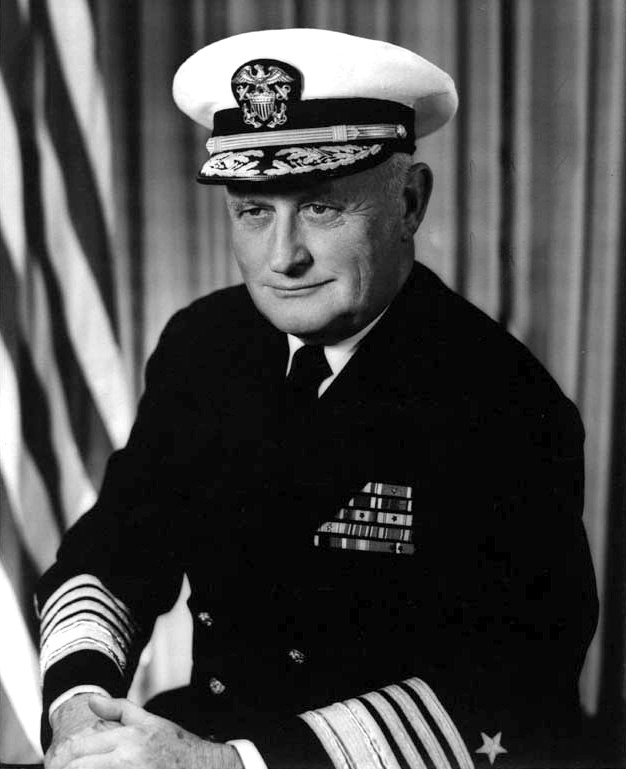
Maurice Edwin Curts (March 25, 1898 – February 15, 1976) was a four-star admiral in the United States Navy who served as commander in chief of the United States Pacific Fleet in 1958.
He was born in Flint, Michigan to Edwin James Curts, who represented the 13th District in the Michigan state senate from 1913 to 1914, and the former Minnie Elwood Quirk. Appointed to the United States Naval Academy, he served afloat as a midshipman with the Atlantic Fleet during World War I aboard the battleship Nevada in the summer of 1918. He graduated in June 1919 with the accelerated class of 1920.
His first assignment was aboard the light cruiser Chester, followed by sea duty in destroyers of the Atlantic Fleet and the aircraft carrier Saratoga, and shore duty at Naval Operating Base, Hampton Roads, Virginia and the Bureau of Engineering, Navy Department.
Between 1926 and 1928 he studied the emerging technology of radio at the Naval Postgraduate School and Harvard University, developing expertise which eventually led to his assignment from June 1936 to May 1938 as Officer-in-Charge of the Radio and Sound Divisions at the Naval Research Laboratory, where his contributions to the development of radar earned him a commendation from the Secretary of the Navy.
From 1938 to 1939 he commanded the destroyer Case, which was serving as a school ship in San Diego, California.
In June 1939, Curts was tapped to serve as communications officer on the staff of the new Commander Battle Force, Admiral James O. Richardson. When Richardson became Commander in Chief, United States Fleet, Curts accompanied him as fleet communications officer. During Fleet Problem XXI in 1940, the fleet tested its communications procedures under simulated war conditions and discovered serious deficiencies in its existing communications plans. After the exercise, the fleet continued to communicate under simulated war conditions at Curts's recommendation. Richardson declared later: "If the Fleet Problem had resulted in no other advance in naval war readiness and in training, this major step alone would have justified all the money and effort put into the Fleet Problem."
After Richardson was unexpectedly removed from command in January 1941, Curts hoped to leave the fleet staff and return to sea. When Richardson's replacement, Admiral Husband E. Kimmel, summoned Curts to the flagship and asked, "Young man, would you like to be on my staff?" Curts firmly answered, "Hell, no!" Taken aback, Kimmel retorted, "You've got to. There's no getting out of it." In reply, Curts muttered, "Oh, hell!" in tones of such disgusted resignation that everyone present, including Kimmel, burst out laughing.
At the beginning of the Japanese attack on Pearl Harbor on December 7, 1941, Curts rushed to Pacific Fleet headquarters, where he was standing beside Kimmel when a spent .50 caliber machine gun bullet crashed through a glass window and bounced harmlessly off Kimmel's chest, leaving a dark stain on the admiral's white uniform. Kimmel picked the bullet up off the floor and murmured, more to himself than to Curts, "It would have been merciful had it killed me." This incident was depicted in the 1970 film Tora! Tora! Tora!; Martin Balsam portrayed Admiral Kimmel, while G.D. Spradlin portrayed Curts.
Hub AI
Maurice E. Curts AI simulator
(@Maurice E. Curts_simulator)
Maurice E. Curts
Maurice Edwin Curts (March 25, 1898 – February 15, 1976) was a four-star admiral in the United States Navy who served as commander in chief of the United States Pacific Fleet in 1958.
He was born in Flint, Michigan to Edwin James Curts, who represented the 13th District in the Michigan state senate from 1913 to 1914, and the former Minnie Elwood Quirk. Appointed to the United States Naval Academy, he served afloat as a midshipman with the Atlantic Fleet during World War I aboard the battleship Nevada in the summer of 1918. He graduated in June 1919 with the accelerated class of 1920.
His first assignment was aboard the light cruiser Chester, followed by sea duty in destroyers of the Atlantic Fleet and the aircraft carrier Saratoga, and shore duty at Naval Operating Base, Hampton Roads, Virginia and the Bureau of Engineering, Navy Department.
Between 1926 and 1928 he studied the emerging technology of radio at the Naval Postgraduate School and Harvard University, developing expertise which eventually led to his assignment from June 1936 to May 1938 as Officer-in-Charge of the Radio and Sound Divisions at the Naval Research Laboratory, where his contributions to the development of radar earned him a commendation from the Secretary of the Navy.
From 1938 to 1939 he commanded the destroyer Case, which was serving as a school ship in San Diego, California.
In June 1939, Curts was tapped to serve as communications officer on the staff of the new Commander Battle Force, Admiral James O. Richardson. When Richardson became Commander in Chief, United States Fleet, Curts accompanied him as fleet communications officer. During Fleet Problem XXI in 1940, the fleet tested its communications procedures under simulated war conditions and discovered serious deficiencies in its existing communications plans. After the exercise, the fleet continued to communicate under simulated war conditions at Curts's recommendation. Richardson declared later: "If the Fleet Problem had resulted in no other advance in naval war readiness and in training, this major step alone would have justified all the money and effort put into the Fleet Problem."
After Richardson was unexpectedly removed from command in January 1941, Curts hoped to leave the fleet staff and return to sea. When Richardson's replacement, Admiral Husband E. Kimmel, summoned Curts to the flagship and asked, "Young man, would you like to be on my staff?" Curts firmly answered, "Hell, no!" Taken aback, Kimmel retorted, "You've got to. There's no getting out of it." In reply, Curts muttered, "Oh, hell!" in tones of such disgusted resignation that everyone present, including Kimmel, burst out laughing.
At the beginning of the Japanese attack on Pearl Harbor on December 7, 1941, Curts rushed to Pacific Fleet headquarters, where he was standing beside Kimmel when a spent .50 caliber machine gun bullet crashed through a glass window and bounced harmlessly off Kimmel's chest, leaving a dark stain on the admiral's white uniform. Kimmel picked the bullet up off the floor and murmured, more to himself than to Curts, "It would have been merciful had it killed me." This incident was depicted in the 1970 film Tora! Tora! Tora!; Martin Balsam portrayed Admiral Kimmel, while G.D. Spradlin portrayed Curts.