Hubbry Logo
Martin BalsamMartin BalsamMain
Open search
Martin Balsam
Community hub
Martin Balsam
logo
8 pages, 0 posts
0 subscribers
Be the first to start a discussion here.
Martin Balsam
Martin Balsam
from Wikipedia

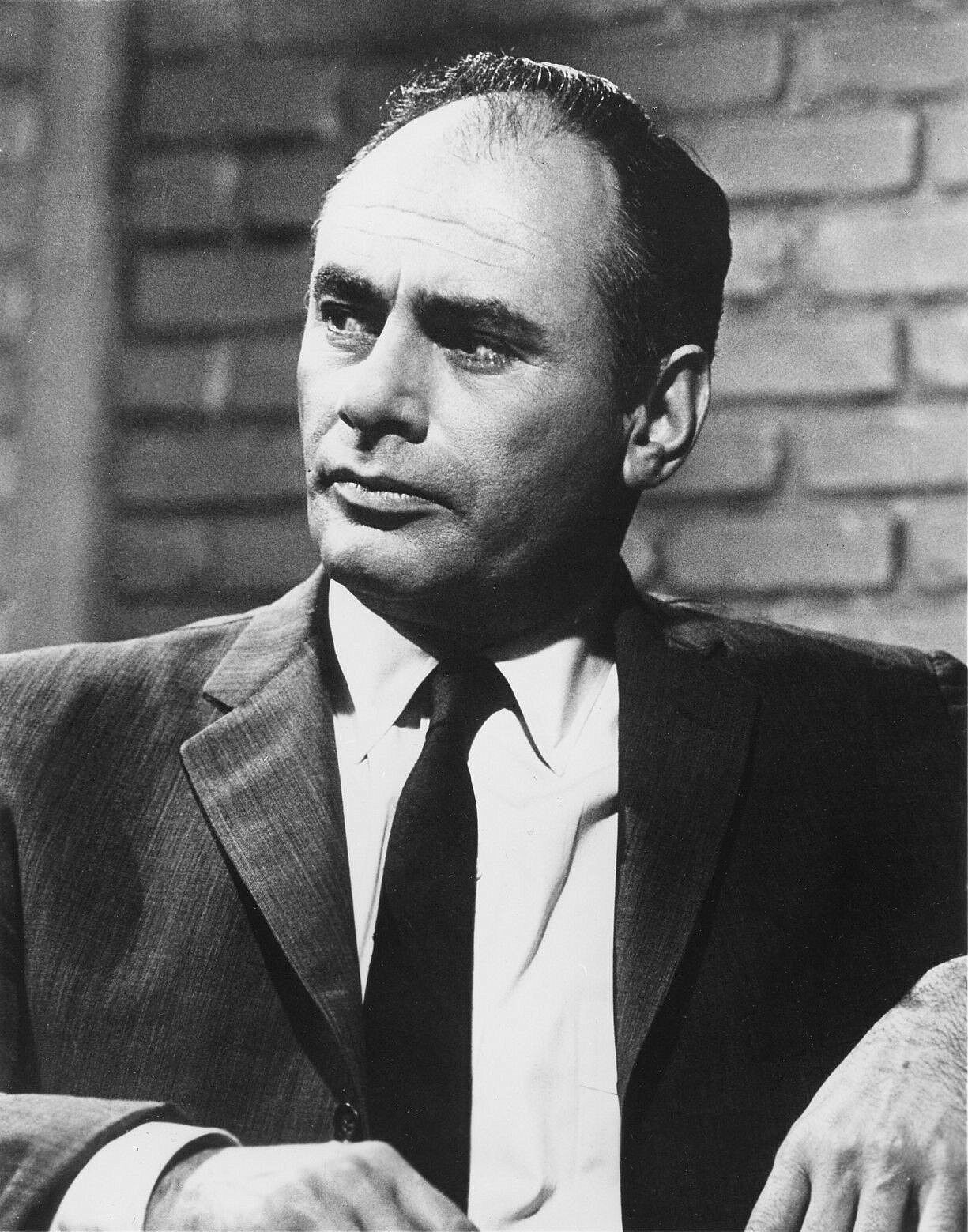
Martin Henry Balsam (November 4, 1919 – February 13, 1996)[1] was an American actor. He had a prolific career in character roles in film, in theatre, and on television.[2][3] An early member of the Actors Studio, he began his career on the New York stage, winning a Tony Award for Best Actor in a Play for Robert Anderson's You Know I Can't Hear You When the Water's Running (1968). He won the Academy Award for Best Supporting Actor for his performance in A Thousand Clowns (1965).

Key Information

His other notable film roles include Juror #1 in 12 Angry Men (1957), private detective Milton Arbogast in Psycho (1960), Hollywood agent O.J. Berman in Breakfast at Tiffany's (1961), Bernard B. Norman in The Carpetbaggers (1964), Lieutenant Commander Chester Potter, the ship doctor, in The Bedford Incident (1965), Colonel Cathcart in Catch-22 (1970), Admiral Husband E. Kimmel in Tora! Tora! Tora! (1970), Mr. Green in The Taking of Pelham One Two Three (1974), Signor Bianchi in Murder on the Orient Express (1974), and Howard Simons in All the President's Men (1976). He had a recurring role as Dr. Milton Orloff on the television drama Dr. Kildare (1963–66), and Murray Klein on the sitcom Archie Bunker's Place (1979–83).

In addition to his Oscar and Tony Awards, Balsam was also a BAFTA Award, Golden Globe Award, and Emmy Award nominee. With Joyce Van Patten, he was the father of actress Talia Balsam.

Early life and education

[edit]

Martin Henry Balsam was born November 4, 1919, in the Bronx borough of New York City, to Russian Jewish parents, Lillian (née Weinstein) and Alberto Balsam, who was a manufacturer of shampoo.[4][5] He attended DeWitt Clinton High School, where he participated in the drama club.[4] He studied at the Dramatic Workshop of The New School in New York with the German director Erwin Piscator and then served in the United States Army Air Forces from 1941 to 1945 during World War II, achieving the rank of Sergeant.[6] He served as a sergeant radio operator in a B-24 in the China-Burma-India Theater of Operations.[4]

Career

[edit]
Martin Balsam (r) on the set of Unknown Soldier, 1995

Theatre

[edit]

Balsam made his professional debut in August 1941 in a production of The Play's the Thing in Locust Valley.[7] After World War II, he resumed his acting career in New York.

In 1947–1949, Balsam was a resident member of the summer stock company Town Hall Players[8][9] in West Newbury, Massachusetts, a community-sponsored summer theatre.[10] In early 1948, he was selected by Elia Kazan to be a member in the recently formed Actors Studio.[11] He appeared consistently in Broadway and off-Broadway plays, something he would continue to do well into his screen acting career. Columnist Earl Wilson dubbed him "The Bronx Barrymore".[12]

In 1968, he won a Tony Award for Best Actor in a Play for his performance in the 1967 Broadway production of You Know I Can't Hear You When the Water's Running.[citation needed]

Television

[edit]

Balsam performed in several episodes of the studio's dramatic television anthology series, broadcast between September 1948 and 1950. He appeared in many other television drama series, including Decoy with Beverly Garland; the Route 66 episode, "Somehow It Gets To Be Tomorrow"; The Twilight Zone as a psychologist in the 1958 pilot episode "The Time Element", and appearing in the episodes "The Sixteen Millimeter Shrine" and "The New Exhibit"; Five Fingers; Target: The Corruptors!; The Eleventh Hour; Breaking Point; Alfred Hitchcock Presents; The Fugitive; and Mr. Broadway; as a retired U.N.C.L.E. agent in The Man from U.N.C.L.E. episode, "The Odd Man Affair"; and in the two-part Murder, She Wrote episode, "Death Stalks the Big Top".

He played Dr. Rudy Wells when the Martin Caidin novel Cyborg was adapted as a TV movie pilot for The Six Million Dollar Man (1973), though he did not reprise the role for the subsequent series. In 1975, he appeared as James Arthur Cummins in the Joe Don Baker police drama Mitchell, a film that was eventually featured in an episode of the film parody series Mystery Science Theater 3000 in 1993. He appeared as a spokesman/hostage in the TV movie Raid on Entebbe (1976) and as a detective in the TV movie Contract on Cherry Street (1977), starring Frank Sinatra. He also appeared on an episode of Quincy, M.E.. Balsam starred as Murray Klein on the All in the Family spin-off Archie Bunker's Place for two seasons (1979–81) and returned for a guest appearance in the show's fourth and final season.

Film

[edit]

Balsam made his film debut with an uncredited role in On the Waterfront (1954), directed by his Actors Studio colleague Elia Kazan. Balsam played an official of the Port Authority of New York and New Jersey investigating mob involvement in the city's waterfront unions. His breakthrough role came a few years later, when he played Juror #1 in 12 Angry Men (1957). He would collaborate with the film's director, Sidney Lumet, twice more with The Anderson Tapes (1971) and Murder on the Orient Express (1974).

In 1960, he appeared in one of his best-remembered roles as private investigator Arbogast in Alfred Hitchcock's Psycho, culminating in a scene in which Mrs. Bates chases him down a flight of stairs to stab him to death. Along with Gregory Peck and Robert Mitchum, Balsam appeared in both the original Cape Fear (1962), and the 1991 Martin Scorsese remake. He won an Academy Award for Best Supporting Actor for his role as Arnold Burns in A Thousand Clowns (1965). Balsam also performed the original voice of the HAL 9000 computer in 2001: A Space Odyssey. He told a journalist in August 1966, "I'm not actually seen in the picture at any time, but I sure create a lot of excitement projecting my voice through that machine. And I'm getting an Academy Award winner price for doing it, too."[13] After his lines were recorded, director Stanley Kubrick decided "Marty just sounded a little bit too colloquially American," and hired Douglas Rain to perform the role for the released film.[14]

Balsam also appeared in such notable films as Time Limit with Richard Widmark, Breakfast at Tiffany's with Audrey Hepburn and George Peppard, The Carpetbaggers with George Peppard and Alan Ladd, Seven Days in May with Burt Lancaster and Kirk Douglas, The Bedford Incident with Richard Widmark and Sidney Poitier, The Man with James Earl Jones, Hombre with Paul Newman and Fredric March, Catch-22 with Alan Arkin and Jon Voight, Tora! Tora! Tora! (as Admiral Husband E. Kimmel), Little Big Man with Dustin Hoffman, The Taking of Pelham One Two Three with Walter Matthau and Robert Shaw, All the President's Men with Dustin Hoffman and Robert Redford, The Delta Force with Lee Marvin, and The Goodbye People. One of his final acting appearances was in the 1994 horror parody The Silence of the Hams, which paid homage to his iconic role in Psycho.

Beyond Hollywood, Balsam was also a popular character actor in Italian films, beginning in 1960 when he starred in the Luigi Comencini film Everybody Go Home. He would star in several poliziottesco films throughout the 1970s, directed by the likes of Fernando Di Leo and Enzo G. Castellari. Balsam's roles in these films would be re-dubbed into Italian, but he would loop his own lines in the English-language export versions. Balsam maintained close ties to Italy even after the end of the poliziottesco trend, traveling there for both professional and personal reasons, and starring in the Italian-produced television series Ocean and La piovra.

Personal life

[edit]

In 1951, Balsam married his first wife, actress Pearl Somner. They divorced three years later. His second wife was actress Joyce Van Patten. This marriage lasted for four years (from 1958 until 1962) with one daughter, Talia Balsam. He married his third wife, Irene Miller, in 1963. They had two children, Adam and Zoe Balsam, and divorced in 1987.[4]

Death

[edit]

On February 13, 1996, Balsam died of a stroke in his hotel room while vacationing in Rome, Italy. He was 76 years old. He is interred at Cedar Park Cemetery, in Emerson, New Jersey.[15]

Filmography

[edit]
Year Title Role Notes
1949 Suspense Abramson
1949–1950 Actors Studio Soldier 4 episodes
1950 Danger 2 episodes
1951 The Living Christ Series Innkeeper Miniseries
The Big Story Bill Pinney
Frontiers of Faith
1952 The Living Bible Nobleman
1953 Man Against Crime Tony / Jean Pinay
Valiant Lady Joey Gordon
1954 On the Waterfront Gillette, Secondary Investigator for Crime Commission Uncredited
The Greatest Gift Harold Matthews #2
Inner Sanctum Mystery Wesley / Hanson / Larkin 3 episodes
1954–1955 The Philco Television Playhouse Charlie Malick / Mike Galloway 3 episodes
1954–1956 Goodyear Television Playhouse Perkins / Walter Gregg 3 episodes
1955 The United States Steel Hour Petty Officer
1957 12 Angry Men Juror #1
Time Limit Sergeant Baker
1957–1958 Studio One Francis Toohey / Ed Coyne 3 episodes
1958 Kraft Television Theatre Dino
Marjorie Morningstar Dr. David Harris
Father Knows Best Teacher
Pursuit Holden
Decoy Nick Santos
Alfred Hitchcock Presents Eldon Marsh Season 3 Episode 19: "The Equalizer"
1958–1959 Playhouse 90 Sam Gordon / Captain Mantell 3 episodes
Westinghouse Desilu Playhouse Gambetta / Dr. Gillespie 2 episodes
1958–1960 Have Gun – Will Travel Marshall Jim Brock / Charles Dawes 2 episodes
1959 Rawhide Father Fabian
Al Capone Mac Keeley
The Further Adventures of Ellery Queen 2 episodes
Middle of the Night Jack
Brenner Arnold Joplin
The DuPont Show of the Month Charlie Davis
Dick Powell's Zane Grey Theatre Sam Butler
Winterset Garth
The Twilight Zone Danny Weiss Episode: "The Sixteen Millimeter Shrine"
1959–1962 Naked City Captain Russell Barris / Joseph Creeley / Caldwell Wyatt / Arnold Fleischman 4 episodes
1960 Five Fingers Monteverdi
Goodyear Theater Joe Lane
The Robert Herridge Theater
Sacco-Vanzetti Story Nicola Sacco NBC Sunday Showcase (1960), nominated for Primetime Emmy Awards as "program of the year"
Psycho Detective Milton Arbogast
Tutti a casa Sergeant Quintino Fornaciari
1961 Way Out Bill Clayton
Alfred Hitchcock Presents Leonard Thompson Season 6 Episode 36: "Final Arrangements"
Ada Steve Jackson
Breakfast at Tiffany's O.J. Berman
The New Breed Frank Eberhardt
The Untouchables Barry Leimer
Route 66 Corelli
1961–1964 The Defenders District Attorney / Bernard Maxwell / Floyd Harker 4 episodes
1962 Cain's Hundred Jack Garsell
The Untouchables Arnold Justin
Cape Fear Police Chief Mark Dutton
Target: The Corruptors Jeffrey Marvin
La città prigioniera Joseph Feinberg
1962–1966 Dr. Kildare Dr. Milton Orliff / Benny Orloff / Ned Lacey 7 episodes
1963 Route 66 Mike
The Eleventh Hour Frank Dunlear
The Twilight Zone Martin Lombard Senescu Episode: "The New Exhibit"
Breaking Point Rabbi Eli Oringer
Who's Been Sleeping in My Bed? Sanford Kaufman
1964 Arrest and Trial Leo Valera
Espionage Richard Carey
Bob Hope Presents the Chrysler Theatre Dave Breslaw
Seven Days in May Presidential aide Paul Girard
Wagon Train Marcey Jones
Suspense Detective Jack Gross
The Carpetbaggers Bernard B. Norman
Youngblood Hawke Cameo Appearance Uncredited
Mr. Broadway Nate Bannerman
1965 ITV Play of the Week Doc Delaney
The Man from U.N.C.L.E Albert Sully Episode: "The Odd Man Affair"
Harlow Everett Redman
The Bedford Incident Lieutenant Commander Chester Potter, USNR, MD
A Thousand Clowns Arnold Academy Award for Best Supporting Actor
12 O'Clock High Army Doctor Uncredited
1966 Caccia alla volpe Harry Granoff
"Anyone Around My Base Is It" Narrator Short Documentary
1967 The Fugitive Andrew Newmark
Hombre Mendez
Among the Paths to Eden Ivor Belli
1968 The Name of the Game Angie
Around the World of Mike Todd Michael Todd TV movie / Documentary; Voice
1969 Me, Natalie Harold Miller
The Good Guys and the Bad Guys Mayor Wilker
Trilogy Ivor Belli (segment: "Among the Paths to Eden")
1970 CBS Playhouse Jesse
Hunters Are for Killing Wade Hamilton TV movie
Catch-22 Colonel Cathcart Group Commander, 256th Bomb Group
Tora! Tora! Tora! Admiral Husband E. Kimmel
The Old Man Who Cried Wolf Stanley Pulska
The Name of the Game Herb Witmer
Little Big Man Mr. Merriweather
1971 Confessions of a Police Captain Inspector Bonavia
The Anderson Tapes Tommy Haskins
1972 Chronicle of a Homicide Judge Aldo Sola
The Hassled Hooker District Attorney Turrisi
The Man Jim Talley
Night of Terror Captain Caleb Sark TV movie
The Infamous Column
1973 A Brand New Life Jim Douglas TV movie
The Six Million Dollar Man Dr. Rudy Wells TV movie: "The Moon and the Desert"
The Stone Killer Al Vescari
Counselor at Crime Don Antonio Macaluso
Summer Wishes, Winter Dreams Harry Walden
Money to Burn TV movie
Police Story Detective Al Koster
1974 The Taking of Pelham One Two Three Harold "Green" Longman
Trapped Beneath the Sea T.C. Hollister TV movie
Kojak Ray Kaufman
Murder on the Orient Express Bianchi
1975 Miles to Go Before I Sleep Ben Montgomery TV movie
Smiling Maniacs Carlo Goja
Death Among Friends Ham Russell Buckner TV movie
Cry, Onion! Petrus Lamb
Mitchell James Arthur Cummings
Season for Assassins Commissioner Katroni
1976 The Lindbergh Kidnapping Case Edward J. Reilly TV movie
All the President's Men Howard Simons
Maude Chester
Meet Him and Die Giulianelli
Death Rage Commissario
Two-Minute Warning Sam McKeever
Raid on Entebbe Daniel Cooper TV movie
1977 The Sentinel Professor Ruzinsky
Silver Bears Joe Fiore
Contract on Cherry Street Captain Ernie Weinberg
The Storyteller Ira Davidoff TV movie
Blood and Diamonds Rizzo
1978 Eyes Behind the Stars Inspector Jim Grant
Siege Henry Fancher TV movie
Rainbow Louis B. Mayer TV movie
The Millionaire Arthur Haines TV movie
The Joe Franklin Show Himself Television interview
A Salute to American Imagination Himself TV movie / Documentary
1979 The Seeding of Sarah Burns Dr. Samuel Melman TV movie
Gardenia Salluzzo
The House on Garibaldi Street Isser Harel TV movie
Aunt Mary Harry Strasburg TV movie
Cuba General Bello
1979–1983 Archie Bunker's Place Murray Klein series regular / guest star; 46 episodes
1980 The Love Tapes David Franklin
There Goes the Bride Elmer Babcock
The Warning Questore Martorana
1981 The Salamander Captain Steffanelli
The People vs. Jean Harris Joel Aurnou TV movie
1982 Quincy, M.E. Hyam Sigerski
Little Gloria... Happy at Last Nathan Burkan TV movie
Night of 100 Stars Himself TV special
1983 I Want to Live! Jack Brady TV movie
Cold Storage Parmigian TV movie
1984 The Goodbye People Max Silverman
Innocent Prey Sheriff Virgil Baker
1985 Space Senator Glancey Miniseries
St. Elmo's Fire Mr. Beamish
Murder in Space Alexander Rostov TV movie
Death Wish 3 Bennett
Great Performances Jack
Glitter Bo
1986 La piovra, season 2 [it] Frank Carrisi Miniseries; 5 episodes
The Delta Force Ben Kaplan
Whatever It Takes Hap Perchicksky
Second Serve Dr. Beck TV movie
Murder, She Wrote Edgar Carmody Episodes: "Death Stalks The Big Top" Parts 1 & 2
The Twilight Zone Rockne O'Bannon Segment: "Personal Demons"
1987 Hotel Dr. Gilbert Holt
Queenie Marty TV miniseries
P.I. Private Investigations Cliff Dowling
The Twilight Zone Professor Donald Knowles Segment: "Voices in the Earth"
Brothers in Blood Major Briggs
Kids Like These Grandpa TV movie
Once Again TV movie
1988 The Child Saver Sidney Rosenberg TV movie
The Brother from Space Father Howard
1989 Ocean Don Matias Quintero TV miniseries
1990 Two Evil Eyes Mr. Pym (segment "The Black Cat")
Midnight Caller Gil Solarski
La piovra, season 5 [it] Don Calogero Barretta
1991 Ľultima meta Lawyer
Cape Fear Judge
1992 The Sands of Time TV movie
1993 "The Black Cat" Movie Short
1994 The Silence of the Hams Detective Martin Balsam
1995 Soldato ignoto English meaning: Unknown Soldier
1996 O. Henry's Christmas Wash TV movie segment: The Gift of the Magi
1997 Legend of the Spirit Dog Gramps Released posthumously on August 19, 1997, 9 months after his death (final film role)

Awards and nominations

[edit]
Award
Wins
Nominations
Academy Awards
1 1
Tony Awards
1 1
BAFTA Film Awards
0 2
Golden Globe Awards
0 1
Primetime Emmy Awards
0 1
Year Category Work Result
1966 Best Supporting Actor A Thousand Clowns Won
Year Category Work Result
1968 Best Actor in a Play You Know I Can't Hear You When the Water's Running Won
Year Category Work Result
1976 Best Actor in a Supporting Role The Taking of Pelham One Two Three Nominated
1977 All the President's Men Nominated
Year Category Work Result
1974 Best Supporting Actor – Motion Picture Summer Wishes, Winter Dreams Nominated
Year Category Work Result
1977 Outstanding Supporting Actor in a Miniseries or Movie Raid on Entebbe Nominated
Year Category Work Result
1964 Best Supporting Actor The Carpetbaggers Won
Year Category Work Result
1977 Outstanding Actor in a Play Cold Storage Nominated
Year Category Work Result
1977 Distinguished Performance by an Actor Cold Storage Won
Year Category Work Result
1967 Outstanding Actor in a Play Cold Storage Won
1978 The Shock of Recognition Won

References

[edit]
[edit]
Revisions and contributorsEdit on WikipediaRead on Wikipedia
from Grokipedia
Martin Henry Balsam (November 4, 1919 – February 13, 1996) was an American renowned for his versatile and prolific career spanning over five decades in , theater, and . Best known for portraying detectives, businessmen, and authority figures, he earned critical acclaim for roles such as the ill-fated investigator Milton Arbogast in Psycho (1960) and Juror #1 in 12 Angry Men (1957). His defining achievement came with the Academy Award for Best Supporting Actor for his performance as Arnold Burns in (1965), a role that showcased his ability to blend humor and pathos in character-driven narratives. Born in the Bronx, New York City, to Lillian Weinstein and Albert Balsam, a women's sportswear manufacturer, Balsam grew up in a Jewish family and attended . After graduating, he served in the U.S. Army Air Corps during , an experience that interrupted his early aspirations in . Postwar, he honed his craft at the Dramatic Workshop of in New York and was selected by director to join the prestigious , where he developed his naturalistic style. Balsam's stage career began on Broadway in the early 1940s with minor roles, evolving into prominent parts in productions like The Rose Tattoo (1951), (1961, ), and (1975); he won a Tony Award for Best Actor in a Play for You Know I Can't Hear You When the Water's Running (1967). In film, Balsam debuted in (1954) as a dockworker and went on to appear in more than 100 movies, often as memorable supporting players, including the talent agent in Breakfast at Tiffany's (1961), the police chief in Cape Fear (1962, with a cameo as a judge in the 1991 remake), and the news editor in (1976). His television work was equally extensive, featuring early live drama appearances on shows like Captain Video (1949–1950) and later recurring roles such as Murray Klein on (1979–1983). In his later years, Balsam frequently worked in Italian cinema and television, including the miniseries (1984–1995). Married four times—to Pearl Somner (1951–1954), actress (1957–1962), Irene Miller (1963–1987), and Ellen Jane Moody (1987–1996)—he had three children, including actress (from his marriage to Van Patten). Balsam died of a while vacationing in , , survived by his companion Renée Landau and his children.

Early years

Early life

Martin Balsam was born on November 4, 1919, in the borough of , to Russian Jewish parents Albert Balsam and Lillian (née Weinstein) Balsam. His father worked as a manufacturer of ladies' , while his mother, born in New York to Russian Jewish immigrants, managed the household. Balsam grew up in a close-knit Jewish household amid the immigrant communities of the . Balsam's formative interests in performance emerged during his high school years at , where he participated in the drama club and discovered his passion for . He graduated from the school in 1938. The socioeconomic fabric of , including its vibrant yet struggling immigrant enclaves, provided a backdrop for these early experiences, fostering Balsam's connection to and character portrayal.

Education and military service

Balsam attended in , where he graduated in 1938 after participating actively in the drama club, gaining his initial exposure to theater and music performances on the school stage. After high school, in the late 1930s, he enrolled at the Dramatic Workshop of for Social Research in , studying acting under the influential German director . This formal training built on his high school experiences and prepared him for professional opportunities just as global events intervened. In 1941, shortly after making his professional stage debut, Balsam enlisted in the U.S. Army Air Forces, serving as a radio operator aboard a B-24 Liberator bomber in the China-Burma-India theater of operations during . His military duties involved critical communications support in this challenging Asian theater until his discharge in 1945, interrupting his nascent acting ambitions amid the demands of the war effort. Following the war, Balsam returned to New York City, where he recommitted to acting full-time, leveraging postwar educational and vocational opportunities to further his training at institutions like the Actors Studio, which he joined in 1947. This period marked a pivotal shift, allowing him to transition from intermittent prewar performances to a sustained professional path in theater.

Career

Theatre

Martin Balsam began his professional stage career in 1941 and maintained an active presence in theatre for over four decades, accumulating around 20 major productions across Broadway and off-Broadway venues. His work spanned ensemble roles in classic revivals to leading parts in contemporary plays, earning him critical acclaim for his versatile character portrayals. Balsam's theatre credits often featured him alongside prominent actors, contributing to long-running successes that showcased his skill in dramatic and comedic timing. Balsam's Broadway debut came in the short-lived comedy Ghost for Sale (1941), where he played Mr. Blow in a production that ran for just 6 performances at Daly's 63rd Street Theatre. After serving in World War II, he returned to the stage with The Wanhope Building (1947), portraying Eddie in an 8-performance run at the Princess Theatre. In 1948, he appeared in two Shakespeare-related productions: as a Murderer and One of the Three in a revival of Macbeth (25 performances, National Theatre) and as Merle in the drama Sundown Beach (5 performances, Belasco Theatre). His early 1950s roles included supporting parts such as Servingman in The Liar (1950, 10 performances, ) and Man in Tennessee Williams's (1951, 306 performances, Martin Beck Theatre, co-starring ). Balsam took on multiple ensemble roles in Tennessee Williams's Camino Real (1953, 60 performances, National Theatre). A breakthrough came in Paddy Chayefsky's Middle of the Night (1956–1957), where he played The Son-in-Law opposite and in a hit that ran for 477 performances at the ANTA Playhouse. In the 1960s, Balsam starred in Robert Anderson's revue You Know I Can't Hear You When the Water's Running (1967–1969, 800 performances, Ambassador Theatre), performing in three one-acts: Richard Pawling in The Shock of Recognition, George in The Footsteps of Doves (co-starring and ), and Chuck in . For this versatile performance, he won the Tony Award for in a Play in 1968. Earlier that decade, he had appeared as Moe Smith in the musical Nowhere to Go But Up (1962, 8 performances, , co-starring and ). Off-Broadway, Balsam received an for his leading role as Joseph Parmigian in Ronald Ribman's Cold Storage (1977, American Place Theatre), a two-hander opposite that later transferred to Broadway for 164 performances at the Lyceum Theatre, earning him an Outer Critics Circle Award. In the 1980s, Balsam continued with revivals, including Hickey in Eugene O'Neill's (Los Angeles, 1985) and Martin Dysart in Peter Shaffer's Equus (London's , 1986).

Television

Martin Balsam maintained a robust presence on television from 1949 until 1995, accumulating over 50 credits across anthologies, series, and specials that showcased his adeptness at portraying relatable, often authoritative figures in dramatic and comedic contexts. His early career was rooted in the live television era, where he frequently appeared in prestigious anthology programs that defined 1950s broadcast drama. As the medium evolved, Balsam secured recurring roles in landmark series, contributing to medical dramas and sitcoms while also delivering memorable guest performances in genre staples like science fiction and crime procedurals.

1950s Anthologies and Guest Spots

Balsam's television debut came in the variety-sketch series (1949), where he performed in ensemble sketches alongside and . He quickly became a fixture in dramatic anthologies, with recurring roles that allowed him to hone his craft in short-form narratives. These included multiple appearances on (1948–1955, recurring as various characters), Studio One (1948–1958, recurring), Goodyear Playhouse (1951–1957, recurring), and (1953–1955, recurring). His guest work extended to suspense and western series, such as ("The Equalizer," 1958, as Perry; "Back for Christmas," 1955; "Final Arrangements," 1961, as Leonard), ("The Manhunter," 1958, as Marty), and ("Which Is Joseph Creeley?," 1961, as Joseph Creeley). A pivotal early role was Dr. Arnold Gillespie in the Rod Serling-scripted Twilight Zone pilot "The Time Element" (Westinghouse Desilu Playhouse, 1958), a time-travel fantasy that presaged the iconic series. Balsam returned to for "The Sixteen Millimeter Shrine" (1959, as Danny Weiss, an agent) and "The New Exhibit" (1963, as Martin Lombard Senescu, a wax museum curator), episodes that highlighted his nuanced portrayals of ordinary men confronting the extraordinary.

1960s Medical Dramas and Series Recurrings

The 1960s marked Balsam's shift toward serialized television, particularly medical dramas where his empathetic demeanor suited roles as physicians and patients. His most notable recurring role was as Dr. Milton Orloff in (1962–1966, 8 episodes, including "A Patient Lost," 1966; "What's God to Julius?," 1963; and "The Encroachment," 1966), portraying a dedicated doctor navigating ethical dilemmas alongside stars and . He also played Dr. Carl Noyes in two episodes of the series. Other medical-themed appearances included (various episodes, 1962–1965). Beyond hospitals, Balsam guested on adventure and crime shows like Route 66 (1962), The Defenders (1963–1964), The Fugitive (1964), (1964), and The Man from U.N.C.L.E. (1965). These roles, often as detectives or mentors, underscored his reliability in ensemble-driven narratives.

1970s–1980s Sitcoms, Guests, and TV Movies

Entering the 1970s, Balsam balanced guest spots with high-profile TV movies, often playing or figures. He originated Dr. Rudy Wells in the pilot for (1973 TV movie, as the creator of the bionic enhancements for Steve Austin). Additional 1970s guests included (1970), (1971), (1973–1974), (1974), and ("Étude in Black," 1972, as Sidney Sherman). TV movies from the era featured him as Col. Mordechai Gur in (1976), a about the Israeli , and Capt. Ernie Mason in Contract on Cherry Street (1977), a crime thriller based on a novel. Balsam's sitcom breakthrough came with (1979–1983, 46 episodes as Murray Klein), where he reprised his character as Archie's sardonic Jewish friend, lawyer, and bar co-owner, appearing regularly in Seasons 1–2 and guesting in later seasons to provide and moral grounding. This role, which earned him audience familiarity in lighter fare, contrasted his dramatic work. He continued guesting in the 1980s on Quincy, M.E. (1979), Trapper John, M.D. (1980–1982), (1983), (1984), and ("Death Stalks the Big Top," 1985, Parts 1–2, as Martin Sterling, a carnival owner). Other TV movies included The Five of Me (1981, as Arthur Hoskins) and (1982, as Maj. Ostrow).

1990s Later Appearances

Balsam's television output tapered in the 1990s but remained active in character roles for series and specials. Credits included (1991), (1991, as Rudy Van Dusen), (1997, posthumous airing), and his final series role in (1995, as Grandpa). TV movies like The Sands of Time (1992 miniseries, as Father Sorendo) and The Napkin Ring (1995) rounded out his broadcast legacy, often emphasizing paternal or advisory figures. Throughout his career, these over 50 appearances—spanning more than 100 individual episodes when counting recurrings—cemented Balsam's status as a go-to supporting player in American television.

Film

Martin Balsam appeared in over 60 feature films from 1954 to 1996, often in memorable supporting roles that showcased his versatility as a . The following is a comprehensive chronological list of his film credits, categorized by decade. Uncredited and voice roles are noted.

1950s

  • On the Waterfront (1954) as Gillette, Secondary Investigator (uncredited)
  • 12 Angry Men (1957) as Juror #1
  • Time Limit (1957) as Sergeant Baker
  • Marjorie Morningstar (1958) as Dr. David Harris
  • Al Capone (1959) as Mac Keeley
  • Middle of the Night (1959) as Jack Brenner

1960s

  • Psycho (1960) as Detective Milton Arbogast
  • Everybody Go Home (1960) as Sergeant Quintino Fornaciari
  • Ada (1961) as Steve Jackson
  • Breakfast at Tiffany's (1961) as O.J. Berman
  • Cape Fear (1962) as Police Chief Mark Dutton
  • The Captive City (1962) as Joseph Feinberg
  • Seven Days in May (1964) as Paul Girard
  • The Carpetbaggers (1964) as Bernard B. Norman
  • Youngblood Hawke (1964) as The Epicure (uncredited)
  • Harlow (1965) as Everett Redman
  • The Bedford Incident (1965) as Lieutenant Commander Chester Potter
  • A Thousand Clowns (1965) as Arnold
  • After the Fox (1966) as Harry Granoff
  • Hombre (1967) as Mendez
  • Me, Natalie (1969) as Harold Miller
  • The Good Guys and the Bad Guys (1969) as Mayor Wilker

1970s

1980s

  • There Goes the Bride (1980) as Elmer Babcock
  • The Warning (1980) as Questore Martorana
  • The Salamander (1981) as Captain Steffanelli
  • The Goodbye People (1984) as Max Silverman
  • Innocent Prey (1984) as Sheriff Virgil Baker
  • St. Elmo's Fire (1985) as Mr. Beamish
  • Death Wish 3 (1985) as Bennett
  • The Delta Force (1986) as Ben Kaplan
  • P.I. Private Investigations (1987) as Jake Shorr
  • Quei due della legione (1987) as Col. Thomas Bradley
  • Beyond the Stars (1989) as Phil Chandler
  • The Fabulous Baker Boys (1989) as Sam Rawlins

1990s

  • (1990) as Mr. Pym (segment "The Black Cat")
  • Cape Fear (1991) as Judge (uncredited)
  • Maniac Cop 3: Badge of Silence (1993) as Capt. Casey
  • (1994) as Chief of Police
  • (1994) as Alberto Alberini
  • Soldato ignoto (1995) as role unspecified
  • The Shadow Conspiracy (1997) as The Professor (posthumous)
  • Legend of the Spirit Dog (1997) as Gramps (voice, posthumous)
This list encompasses the majority of Balsam's appearances, emphasizing his extensive work in supporting capacities across genres from to thriller.

Personal life and death

Personal life

Balsam was married three times, all ending in divorce. His first marriage was to actress Pearl Somner in 1951, with no children from the union. His second marriage, to actress Joyce Van Patten, lasted from 1957 to 1962 and produced one child, daughter Talia Balsam, born in 1959, who pursued a career in acting. Balsam's third marriage was to Irene Miller, beginning in 1963 and concluding in 1987; the couple had two children, Adam Balsam and Zoe Balsam. He resided primarily in , on the of . Outside his professional pursuits, Balsam developed a strong affinity for , frequently traveling there for personal enjoyment as well as work-related opportunities.

Death

Martin Balsam died on February 13, 1996, in , , at the age of 76, while vacationing there. He suffered a sudden , medically known as a cerebrovascular accident, and was found dead in his at the Ripetta Residence that morning. His body was returned to the United States, where funeral arrangements were handled privately by his family. Balsam was buried at Cedar Park Cemetery in Emerson, New Jersey. Balsam was survived by his companion, Renée Landau, and his three children. Balsam's son, Adam Balsam, confirmed the cause of death to the press and expressed the family's grief in statements following the announcement. Media coverage was widespread, with obituaries such as that in The New York Times emphasizing his prolific career as a versatile character actor, noting his Academy Award win for A Thousand Clowns and memorable roles in films like Psycho and Twelve Angry Men.

Legacy

Cultural impact

Martin Balsam earned a reputation as a quintessential "" , embodying relatable, working-class figures that bridged the stage, television, and film during the Golden Age of Hollywood and early broadcast TV. His versatile portrayals of ordinary men navigating extraordinary circumstances highlighted the authenticity of influences, making him a staple in mid-20th-century American media. Balsam's impact on ensemble casting is evident in his roles that balanced and elevated , such as Juror #1 in 12 Angry Men (1957) and detective Milton Arbogast in Psycho (1960), where he provided grounded authority without dominating the narrative. These performances refined the art of supporting roles in American cinema from 1957 to 1976, influencing the understated character work that became central to ensemble-driven stories. His approach emphasized tart humor and reliability, drawing from earlier actors like while paving the way for nuanced contributions in collaborative casts. Scholarly analyses in highlight Balsam's role in the transition to , particularly through socially conscious dramas like A Thousand Clowns (1965), where his Oscar-winning portrayal of social worker Arnold Burns critiqued conformity and urban alienation. This performance exemplified his refinement of male character acting, blending humor with to address 1960s societal shifts toward gritty realism and ensemble authenticity.

Posthumous recognition

Following Balsam's death, his performances received continued acclaim through retrospectives and archival releases of his notable films. His portrayal of Detective Milton Arbogast in Alfred Hitchcock's Psycho (1960) contributed to the film's selection as the number one entry on the American Film Institute's "100 Years...100 Thrills" list in 2001, recognizing it as America's most thrilling movie. The releases of 12 Angry Men (1957), where Balsam played the jury foreman, have featured archival interviews with the cast and crew, along with essays that highlight the ensemble cast's dynamics and the integral roles of supporting actors like Balsam in building the film's tension. Balsam's family legacy endures through his daughter, actress , who has built a prominent career in television series such as (2007–2015) and films like South Mountain (2019), and has discussed growing up in an acting household with her father in media appearances during the . While no major awards were given posthumously after 1996, Balsam has been highlighted in 2020s film analyses as an underrated , with his versatile roles cited in discussions of classic Hollywood supporting performances.

Filmography

Film

Martin Balsam appeared in approximately 70 feature films from 1954 to 1997, often in memorable supporting roles that showcased his versatility as a . The following is a selected chronological list of his film credits, categorized by decade, including role, director, and notable co-stars where applicable. Uncredited and voice roles are noted.

1950s

1960s

  • Psycho (1960) as Det. Milton Arbogast; dir. Alfred Hitchcock; co-stars Anthony Perkins, Janet Leigh, Vera Miles.
  • Ada (1961) as Lou Partridge; dir. Daniel Mann; co-stars Susan Hayward, Dean Martin, Wilfrid Hyde-White.
  • Breakfast at Tiffany's (1961) as O.J. Berman; dir. Blake Edwards; co-stars Audrey Hepburn, George Peppard, Patricia Neal.
  • Cape Fear (1962) as Chief Mark Dutton; dir. J. Lee Thompson; co-stars Gregory Peck, Robert Mitchum, Polly Bergen.
  • Who's Been Sleeping in My Bed? (1963) as J. Russell Ambler; dir. Daniel Mann; co-stars Dean Martin, Elizabeth Montgomery, Martin Milner.
  • The Carpetbaggers (1964) as Bernard B. Norman; dir. Edward Dmytryk; co-stars George Peppard, Carroll Baker, Alan Ladd.
  • Seven Days in May (1964) as Paul Girard; dir. John Frankenheimer; co-stars Burt Lancaster, Kirk Douglas, Fredric March.
  • Youngblood Hawke (1964) as The Epicure; dir. Delmer Daves; co-stars James Franciscus, Suzanna Pleshette, Genevieve Page.
  • La calda vita (1964) as Luigi; dir. Giuseppe Zucchi.
  • A Thousand Clowns (1965) as Arnold Burns; dir. Fred Coe; co-stars Jason Robards, Barry Gordon, Barbara Harris.
  • After the Fox (1966) as Harry; dir. Vittorio De Sica; co-stars Peter Sellers, Victor Mature, Britt Ekland.
  • Around the World Under the Sea (1966) as Dr. W.B. Crawford; dir. Andrew Marton; co-stars Lloyd Bridges, Shirley Eaton, Brian Kelly.
  • Trunk to Cairo (1966) as Professor; dir. Menahem Golan; co-stars Audie Murphy, George Sanders.
  • Hombre (1967) as Dodge; dir. Martin Ritt; co-stars Paul Newman, Fredric March, Richard Boone.
  • The Comedians (1967) as Major H. Jones; dir. Peter Glenville; co-stars Richard Burton, Elizabeth Taylor, Alec Guinness.
  • A Lovely Way to Die (1968) as Capt. Daniels; dir. David Lowell Rich; co-stars Kirk Douglas, Sylva Koscina, Eli Wallach.
  • The Good, the Bad and the Ugly (1968) as Bill Carson (voice, uncredited); dir. Sergio Leone; co-stars Clint Eastwood, Eli Wallach, Lee Van Cleef.
  • Trilogy (1969) as John; dir. Frank Perry; co-stars Lynn Carlin, Richard McMurray.
  • The Anderson Tapes (1971, filmed 1969) as Tommy Haskins; dir. Sidney Lumet; co-stars Sean Connery, Dyan Cannon.

1970s

1980s

  • The Salamander (1981) as Capt. Stefanelli; dir. Peter Zinner; co-stars Franco Nero, Anthony Quinn.
  • The Cannonball Run (1981) as Dr. Nikolas Van Helsing; dir. Hal Needham; co-stars Burt Reynolds, Roger Moore, Farrah Fawcett.
  • The Initiation (1984) as Dwight Fairchild; dir. Larry Stewart; co-stars Shelley Hack, David Naughton.
  • The Goodbye People (1984) as Max Silverman; dir. Herb Gardner; co-stars Jason Robards, Shirley Knight.
  • St. Elmo's Fire (1985) as Mr. Newcomb; dir. Joel Schumacher; co-stars Emilio Estevez, Rob Lowe, Demi Moore.
  • Death Wish 3 (1985) as Bennett; dir. Michael Winner; co-stars Charles Bronson, Deborah Raffin.
  • The Delta Force (1986) as McCabe; dir. Menahem Golan; co-stars Chuck Norris, Lee Marvin, Joey Bishop.
  • P.I. Private Investigations (1987) as Jake Shorr; dir. Nigel Dick; co-stars Clayton Rohner, Ray Sharkey.
  • Quei due della legione (1987) as Col. Thomas Bradley; dir. Michele Lupo.
  • Beyond the Stars (1989) as Phil Chandler; dir. David Saperstein; co-stars Christian Slater, Martin Sheen.
  • The Fabulous Baker Boys (1989) as Sam Rawlins; dir. Steve Kloves; co-stars Jeff Bridges, Michelle Pfeiffer.

1990s

This list encompasses the majority of Balsam's feature film appearances, emphasizing his extensive work in supporting capacities across genres from drama to thriller.

Television

Martin Balsam maintained a robust presence on television from 1949 until 1995, accumulating over 50 credits across anthologies, series, and specials that showcased his adeptness at portraying relatable, often authoritative figures in dramatic and comedic contexts. His early career was rooted in the live television era, where he frequently appeared in prestigious anthology programs that defined 1950s broadcast drama. As the medium evolved, Balsam secured recurring roles in landmark series, contributing to medical dramas and sitcoms while also delivering memorable guest performances in genre staples like science fiction and crime procedurals.

1950s Anthologies and Guest Spots

Balsam's television debut came in the variety-sketch series (1949), where he performed in ensemble sketches alongside and . He quickly became a fixture in dramatic anthologies, with recurring roles that allowed him to hone his craft in short-form narratives. These included multiple appearances on (1948–1955, recurring as various characters), Studio One (1948–1958, recurring), Goodyear Playhouse (1951–1957, recurring), and (1953–1955, recurring). His guest work extended to suspense and western series, such as ("The Equalizer," 1958, as Perry; "Back for Christmas," 1955; "Final Arrangements," 1961, as Leonard), ("The Manhunter," 1958, as Marty), and Naked City ("Which Is Joseph Creeley?," 1961, as Joseph Creeley). A pivotal early role was Dr. Arnold Gillespie in the Rod Serling-scripted Twilight Zone pilot "The Time Element" (Westinghouse Desilu Playhouse, 1958), a time-travel fantasy that presaged the iconic series. Balsam returned to for "The Sixteen Millimeter Shrine" (1959, as Danny Weiss, an agent) and "The New Exhibit" (1963, as Martin Lombard Senescu, a wax museum curator), episodes that highlighted his nuanced portrayals of ordinary men confronting the extraordinary.

1960s Medical Dramas and Series Recurrings

The 1960s marked Balsam's shift toward serialized television, particularly medical dramas where his empathetic demeanor suited roles as physicians and patients. His most notable recurring role was as Dr. Milton Orloff in Dr. Kildare (1962–1966, 8 episodes, including "A Patient Lost," 1966; "What's God to Julius?," 1963; and "The Encroachment," 1966), portraying a dedicated doctor navigating ethical dilemmas alongside stars Richard Chamberlain and Raymond Massey. He also played Dr. Carl Noyes in two episodes of the series. Other medical-themed appearances included Ben Casey (various episodes, 1962–1965). Beyond hospitals, Balsam guested on adventure and crime shows like Route 66 (1962), The Defenders (1963–1964), The Fugitive (1964), Kraft Suspense Theatre (1964), and The Man from U.N.C.L.E. (1965). These roles, often as detectives or mentors, underscored his reliability in ensemble-driven narratives.

1970s–1980s Sitcoms, Guests, and TV Movies

Entering the 1970s, Balsam balanced guest spots with high-profile TV movies, often playing or military figures. He originated Dr. Rudy Wells in the pilot for (1973 TV movie, as the creator of the bionic enhancements for Steve Austin). Additional 1970s guests included (1970), (1971), (1973–1974), (1974), and ("Étude in Black," 1972, as Sidney Sherman). TV movies from the era featured him as Col. Mordechai Gur in (1976), a about the Israeli , and Capt. Ernie Mason in Contract on Cherry Street (1977), a crime thriller based on a novel. Balsam's sitcom breakthrough came with (1979–1983, 46 episodes as Murray Klein), where he reprised his character as Archie's sardonic Jewish friend, lawyer, and bar co-owner, appearing regularly in Seasons 1–2 and guesting in later seasons to provide and moral grounding. This role, which earned him audience familiarity in lighter fare, contrasted his dramatic work. He continued guesting in the 1980s on Quincy, M.E. (1979), Trapper John, M.D. (1980–1982), (1983), (1984), and ("Death Stalks the Big Top," 1985, Parts 1–2, as Martin Sterling, a carnival owner). Other TV movies included The Five of Me (1981, as Arthur Hoskins) and (1982, as Maj. Ostrow).

1990s Later Appearances

Balsam's television output tapered in the 1990s but remained active in character roles for series and specials. Credits included (1991), (1991, as Rudy Van Dusen), (1997, posthumous airing), and his final series role in (1995, as Grandpa). TV movies like The Sands of Time (1992 miniseries, as Father Sorendo) and The Napkin Ring (1995) rounded out his broadcast legacy, often emphasizing paternal or advisory figures. Throughout his career, these over 50 appearances—spanning more than 100 individual episodes when counting recurrings—cemented Balsam's status as a go-to supporting player in American television.

Theatre

Martin Balsam began his professional stage career in 1941 and maintained an active presence in for over four decades, accumulating around 20 major productions across Broadway and venues. His work spanned ensemble roles in classic revivals to leading parts in contemporary plays, earning him critical acclaim for his versatile character portrayals. Balsam's theatre credits often featured him alongside prominent , contributing to long-running successes that showcased his skill in dramatic and comedic timing. Balsam's Broadway debut came in the short-lived comedy Ghost for Sale (1941), where he played Mr. Blow in a production that ran for just 6 performances at Daly's 63rd Street Theatre. After serving in , he returned to with The Wanhope Building (1947), portraying Eddie in an 8-performance run at the Princess Theatre. In 1948, he appeared in two Shakespeare-related productions: as a Murderer and One of the Three in a revival of (25 performances, National Theatre) and as Merle in the drama Sundown Beach (5 performances, ). His early 1950s roles included supporting parts such as Servingman in The Liar (1950, 10 performances, ) and Man in Tennessee Williams's (1951, 306 performances, , co-starring ). Balsam took on multiple ensemble roles in Tennessee Williams's Camino Real (1953, 60 performances, National Theatre). A breakthrough came in Paddy Chayefsky's Middle of the Night (1956–1957), where he played The Son-in-Law opposite and in a hit that ran for 477 performances at the ANTA Playhouse. In the 1960s, Balsam starred in Robert Anderson's revue You Know I Can't Hear You When the Water's Running (1967–1969, 800 performances, Ambassador Theatre), performing in three one-acts: Richard Pawling in The Shock of Recognition, George in The Footsteps of Doves (co-starring and ), and Chuck in . For this versatile performance, he won the Tony Award for in a Play in 1968. Earlier that decade, he had appeared as Moe Smith in the musical Nowhere to Go But Up (1962, 8 performances, , co-starring and ). Off-Broadway, Balsam received an for his leading role as Joseph Parmigian in Ronald Ribman's Cold Storage (1977, American Place Theatre), a opposite that later transferred to Broadway for 164 performances at the Lyceum Theatre, earning him an Outer Critics Circle Award. In the , Balsam continued with revivals, including Hickey in Eugene O'Neill's (Los Angeles, 1985) and Martin Dysart in Peter Shaffer's Equus (London's , 1986).

Awards and nominations

Academy Awards

Martin Balsam received his sole Academy Award nomination and win at the 38th Academy Awards, held on April 18, 1966, at the Santa Monica Civic Auditorium in Santa Monica, California, and hosted by Bob Hope. He was awarded Best Supporting Actor for his portrayal of Arnold Burns, a pragmatic social worker, in the comedy-drama A Thousand Clowns (1965), directed by Fred Coe. Balsam defeated a strong field of nominees, including Ian Bannen for The Flight of the Phoenix, Tom Courtenay for Doctor Zhivago, Michael Dunn for Ship of Fools, and Frank Finlay for Othello. In his brief acceptance speech, presented by the previous year's winner , Balsam expressed astonishment after viewing clips of the competing performances, stating, "I've just seen all those movies; I don't know what to say now. I'm elated. I'm delighted. I'm stunned." He concluded by thanking the film's distributor, . This moment underscored his status as a dedicated , whose nuanced work often brought depth to supporting roles without seeking the spotlight. The Oscar victory marked a pivotal point in Balsam's mid-1960s career trajectory, elevating his profile in Hollywood and opening doors to more prominent film opportunities. Following the win, he secured roles in high-profile productions such as (1970), The Taking of Pelham One Two Three (1974), and (1976), solidifying his reputation as a versatile and reliable performer in an industry that valued his everyman authenticity.

Tony Awards

Martin Balsam received his sole Tony Award nomination and win at the 22nd Annual Tony Awards for his performance in Robert Anderson's comedy You Know I Can't Hear You When the Water's Running. He was honored in the category of Best Actor in a Play for portraying multiple characters across the production's four interconnected one-act sketches, showcasing his versatility in roles ranging from a hearing-impaired husband to a bickering couple's partner. The play, directed by Alan Schneider and running at the Ambassador Theatre from March 1967 to January 1969, innovated Broadway's comedic format by blending domestic into a revue-style structure, with each vignette exploring communication breakdowns in relationships. Balsam's multifaceted performance, opposite co-stars like and , was praised for its sharp timing and emotional depth, contributing to the show's 756 performances. The ceremony took place on April 21, 1968, at the Shubert Theatre in , broadcast live on and hosted by and . Balsam competed against nominees including for Joe Egg and for , ultimately securing the win that highlighted his command of stage comedy and cemented his reputation as a leading Broadway talent during a transitional period for American theater. This accolade, his only Tony recognition, underscored his early career roots in New York stage work and bridged his theatrical success to later film achievements.

Other major awards

Balsam earned a nomination for the Golden Globe Award for Best Supporting Actor – Motion Picture in 1974 for his performance in Summer Wishes, Winter Dreams. He also received a Golden Laurel Award for Top Male Supporting Performance in 1966 for A Thousand Clowns. In addition to these film honors, Balsam was nominated for the BAFTA Award for Best Supporting Actor in 1976 for his role as Howard Simons in All the President's Men. On television, he garnered a Primetime Emmy nomination for Outstanding Supporting Actor in a Special Program – Drama in 1977 for portraying Daniel Cooper in Raid on Entebbe. These nominations underscored his range in dramatic and historical contexts. Balsam also received the Award for Best Supporting Actor in 1964 for . Although he did not secure wins in these categories beyond his Academy and Tony Awards, the collective acclaim from BAFTA, Golden Globe, Emmy, and other bodies affirmed his enduring impact and adaptability in both film and television throughout the 1960s and . In theater, Balsam was nominated for a Drama Desk Award for Outstanding Actor in a Play in 1977 for Cold Storage, and won an for Distinguished Performance by an Actor in the same production. These honors reflected his continued contributions to , building on his earlier Broadway successes and emphasizing his multifaceted career.

References

Add your contribution
Related Hubs
User Avatar
No comments yet.