
Recent from talks
Maurice Maeterlinck
Knowledge base stats:
Talk channels stats:
Members stats:
Maurice Maeterlinck
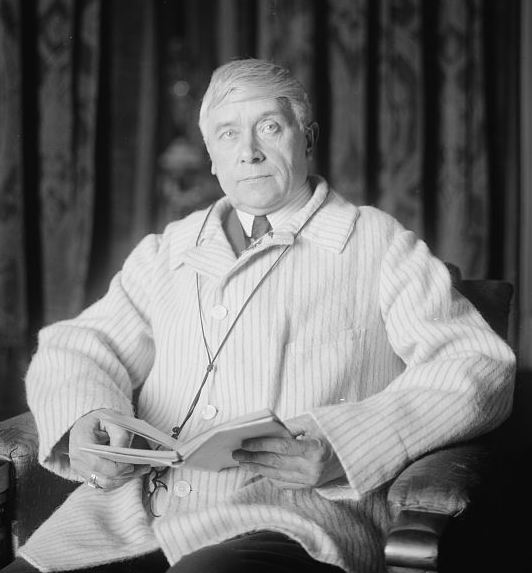
Maurice Polydore Marie Bernard Maeterlinck (29 August 1862 – 6 May 1949), also known as Count/Comte Maeterlinck from 1932, was a Belgian playwright, poet, and essayist who was Flemish but wrote in French. He was awarded the Nobel Prize in Literature in 1911 "in appreciation of his many-sided literary activities, and especially of his dramatic works, which are distinguished by a wealth of imagination and by a poetic fancy, which reveals, sometimes in the guise of a fairy tale, a deep inspiration, while in a mysterious way they appeal to the readers' own feelings and stimulate their imaginations". The main themes in his work are death and the meaning of life. He was a leading member of the group La Jeune Belgique, and his plays form an important part of the Symbolist movement. In later life, Maeterlinck faced credible accusations of plagiarism.
Maeterlinck was born in Ghent, Belgium, to a wealthy, French-speaking family. His mother, Mathilde Colette Françoise (née Van den Bossche), came from a wealthy family. His father, Polydore, was a notary who enjoyed tending the greenhouses on their property.
In September 1874, he was sent to the Jesuit College of Sainte-Barbe, where works of the French Romantics were scorned and only plays on religious subjects were permitted. His experiences at this school influenced his distaste for the Catholic Church and organized religion. One of his companions at that time was the writer Charles van Lerberghe, the poems and plays of whom went on to act as mutual influences on each other at the start of the Symbolist period.
Maeterlinck had written poems and short novels while still studying, but his father wanted him to go into law. After gaining a law degree at the University of Ghent in 1885, he spent a few months in Paris, France. He met members of the new Symbolist movement; Villiers de l'Isle Adam in particular, who would have a great influence on Maeterlinck's subsequent work.[citation needed]
Maeterlinck instantly became a public figure when his first play, Princess Maleine, received enthusiastic praise from Octave Mirbeau, the literary critic of Le Figaro, in August 1890. In the following years he wrote a series of symbolist plays characterized by fatalism and mysticism, most importantly Intruder (1890), The Blind (1890) and Pelléas and Mélisande (1892).
He had a relationship with the singer and actress Georgette Leblanc from 1895 until 1918. Leblanc influenced his work for the following two decades. With the play Aglavaine and Sélysette (1896) Maeterlinck began to create characters, especially female characters, who were more in control of their destinies. Leblanc performed these female characters on stage. Even though mysticism and metaphysics influenced his work throughout his career, Maeterlinck slowly replaced his Symbolism with a more existential style.
In 1895, with his parents frowning upon his open relationship with an actress, Maeterlinck and Leblanc moved to the district of Passy in Paris. The Catholic Church was unwilling to grant her a divorce from her Spanish husband. The couple frequently entertained guests, including Mirbeau, Jean Lorrain, and Paul Fort. They spent their summers in Normandy. During this period, Maeterlinck published his Twelve Songs (1896), The Treasure of the Humble (1896), The Life of the Bee (1901), and Ariadne and Bluebeard (1902).
In 1903, Maeterlinck received the Triennial Prize for Dramatic Literature from the Belgian government. During this period, and up until the Great War of 1914–1918, he was widely looked up to, throughout Europe, as a great sage, and the embodiment of the higher thought of the time.
Hub AI
Maurice Maeterlinck AI simulator
(@Maurice Maeterlinck_simulator)
Maurice Maeterlinck
Maurice Polydore Marie Bernard Maeterlinck (29 August 1862 – 6 May 1949), also known as Count/Comte Maeterlinck from 1932, was a Belgian playwright, poet, and essayist who was Flemish but wrote in French. He was awarded the Nobel Prize in Literature in 1911 "in appreciation of his many-sided literary activities, and especially of his dramatic works, which are distinguished by a wealth of imagination and by a poetic fancy, which reveals, sometimes in the guise of a fairy tale, a deep inspiration, while in a mysterious way they appeal to the readers' own feelings and stimulate their imaginations". The main themes in his work are death and the meaning of life. He was a leading member of the group La Jeune Belgique, and his plays form an important part of the Symbolist movement. In later life, Maeterlinck faced credible accusations of plagiarism.
Maeterlinck was born in Ghent, Belgium, to a wealthy, French-speaking family. His mother, Mathilde Colette Françoise (née Van den Bossche), came from a wealthy family. His father, Polydore, was a notary who enjoyed tending the greenhouses on their property.
In September 1874, he was sent to the Jesuit College of Sainte-Barbe, where works of the French Romantics were scorned and only plays on religious subjects were permitted. His experiences at this school influenced his distaste for the Catholic Church and organized religion. One of his companions at that time was the writer Charles van Lerberghe, the poems and plays of whom went on to act as mutual influences on each other at the start of the Symbolist period.
Maeterlinck had written poems and short novels while still studying, but his father wanted him to go into law. After gaining a law degree at the University of Ghent in 1885, he spent a few months in Paris, France. He met members of the new Symbolist movement; Villiers de l'Isle Adam in particular, who would have a great influence on Maeterlinck's subsequent work.[citation needed]
Maeterlinck instantly became a public figure when his first play, Princess Maleine, received enthusiastic praise from Octave Mirbeau, the literary critic of Le Figaro, in August 1890. In the following years he wrote a series of symbolist plays characterized by fatalism and mysticism, most importantly Intruder (1890), The Blind (1890) and Pelléas and Mélisande (1892).
He had a relationship with the singer and actress Georgette Leblanc from 1895 until 1918. Leblanc influenced his work for the following two decades. With the play Aglavaine and Sélysette (1896) Maeterlinck began to create characters, especially female characters, who were more in control of their destinies. Leblanc performed these female characters on stage. Even though mysticism and metaphysics influenced his work throughout his career, Maeterlinck slowly replaced his Symbolism with a more existential style.
In 1895, with his parents frowning upon his open relationship with an actress, Maeterlinck and Leblanc moved to the district of Passy in Paris. The Catholic Church was unwilling to grant her a divorce from her Spanish husband. The couple frequently entertained guests, including Mirbeau, Jean Lorrain, and Paul Fort. They spent their summers in Normandy. During this period, Maeterlinck published his Twelve Songs (1896), The Treasure of the Humble (1896), The Life of the Bee (1901), and Ariadne and Bluebeard (1902).
In 1903, Maeterlinck received the Triennial Prize for Dramatic Literature from the Belgian government. During this period, and up until the Great War of 1914–1918, he was widely looked up to, throughout Europe, as a great sage, and the embodiment of the higher thought of the time.
Recent media