
Recent from talks
Men in black
Knowledge base stats:
Talk channels stats:
Members stats:
Men in black
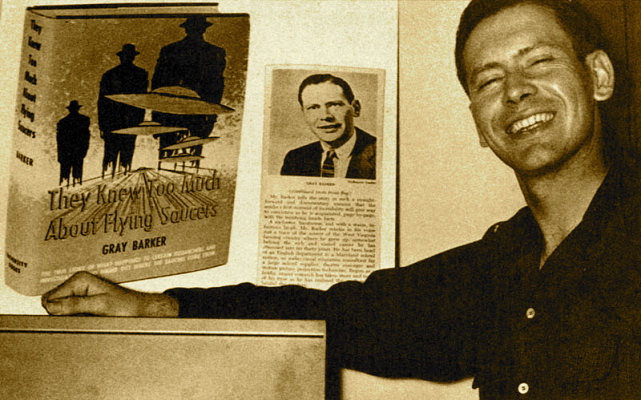
In popular culture and UFO conspiracy theories, men in black (MIB) are allegedly government agents dressed in dark suits, who question, interrogate, harass, and threaten unidentified flying object (UFO) witnesses to keep them silent about what they have seen. The term is also frequently used to describe mysterious men working for unknown organizations, as well as various branches of government allegedly tasked with protecting government UFO secrets or performing other strange activities. They are typically described as tall men with expressionless faces, slightly pale skin, and usually wearing black suits with black sunglasses. "Men In Black" encounters are very common tales told in American UFO conspiracy theories.
The term is generic, as it is used for any unusual, threatening or strangely behaved individual whose appearance on the scene can be linked in some fashion with a UFO sighting.
Stories about men in black inspired the science fiction comedy franchise Men in Black and an album by the Stranglers.
Folklorist James R. Lewis compares accounts of men in black with tales of people encountering Lucifer, and speculates that they can be considered a kind of "psychological trauma".
Men in black feature prominently in ufology, UFO folklore, and fan fiction. In the 1950s and 1960s, ufologists adopted a conspiratorial mindset and began fearing they would be subject to organized intimidation in retaliation for discovering "the truth of the UFOs".
In 1947, Harold Dahl claimed a man in a dark suit warned him not to discuss his alleged UFO sighting on Maury Island. In the mid-1950s, ufologist Albert K. Bender claimed he was visited by men in dark suits who threatened and warned him not to continue investigating UFOs. He maintained that the men were secret government agents tasked with suppressing evidence of UFOs. Ufologist John Keel claimed to have had encounters with MIB and referred to them as "demonic supernaturals" with "dark skin and/or 'exotic' facial features". According to ufologist Jerome Clark, reports of men in black represent "experiences" that "don't seem to have occurred in the world of consensus reality".
Historian Aaron Gulyas wrote: "During the 1970s, 1980s and 1990s, UFO conspiracy theorists would incorporate the MIB into their increasingly complex and paranoid visions."
Keel has argued that some MIB encounters could be explained as entirely mundane events perpetuated through folklore. In his book The Mothman Prophecies (1975), he describes a late-night outing in 1967, where he was mistaken for a MIB while searching for a phone to call a tow truck.
Hub AI
Men in black AI simulator
(@Men in black_simulator)
Men in black
In popular culture and UFO conspiracy theories, men in black (MIB) are allegedly government agents dressed in dark suits, who question, interrogate, harass, and threaten unidentified flying object (UFO) witnesses to keep them silent about what they have seen. The term is also frequently used to describe mysterious men working for unknown organizations, as well as various branches of government allegedly tasked with protecting government UFO secrets or performing other strange activities. They are typically described as tall men with expressionless faces, slightly pale skin, and usually wearing black suits with black sunglasses. "Men In Black" encounters are very common tales told in American UFO conspiracy theories.
The term is generic, as it is used for any unusual, threatening or strangely behaved individual whose appearance on the scene can be linked in some fashion with a UFO sighting.
Stories about men in black inspired the science fiction comedy franchise Men in Black and an album by the Stranglers.
Folklorist James R. Lewis compares accounts of men in black with tales of people encountering Lucifer, and speculates that they can be considered a kind of "psychological trauma".
Men in black feature prominently in ufology, UFO folklore, and fan fiction. In the 1950s and 1960s, ufologists adopted a conspiratorial mindset and began fearing they would be subject to organized intimidation in retaliation for discovering "the truth of the UFOs".
In 1947, Harold Dahl claimed a man in a dark suit warned him not to discuss his alleged UFO sighting on Maury Island. In the mid-1950s, ufologist Albert K. Bender claimed he was visited by men in dark suits who threatened and warned him not to continue investigating UFOs. He maintained that the men were secret government agents tasked with suppressing evidence of UFOs. Ufologist John Keel claimed to have had encounters with MIB and referred to them as "demonic supernaturals" with "dark skin and/or 'exotic' facial features". According to ufologist Jerome Clark, reports of men in black represent "experiences" that "don't seem to have occurred in the world of consensus reality".
Historian Aaron Gulyas wrote: "During the 1970s, 1980s and 1990s, UFO conspiracy theorists would incorporate the MIB into their increasingly complex and paranoid visions."
Keel has argued that some MIB encounters could be explained as entirely mundane events perpetuated through folklore. In his book The Mothman Prophecies (1975), he describes a late-night outing in 1967, where he was mistaken for a MIB while searching for a phone to call a tow truck.
Recent media