



Community hub
Recent from talks
Knowledge base stats:
Talk channels stats:
Members stats:
Menkaure
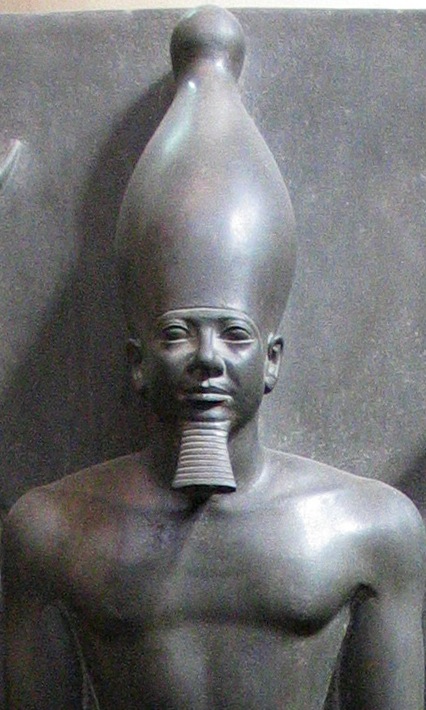
Menkaure or Menkaura (Egyptian transliteration: mn-kꜣw-rꜥ; c. 2550 BC - c. 2503 BC) was a king of the Fourth Dynasty of Egypt during the Old Kingdom. He is well known under his Hellenized names Mykerinos (Ancient Greek: Μυκερῖνος, romanized: Mukerînos by Herodotus), in turn Latinized as Mycerinus, and Menkheres (Μεγχέρης, Menkhérēs by Manetho). According to Manetho, he was the throne successor of king Bikheris, but according to archaeological evidence, he was almost certainly the successor of Khafre. Africanus (from Syncellus) reports as rulers of the fourth dynasty Sôris, Suphis I, Suphis II, Mencherês (=Menkaure), Ratoisês, Bicheris, Sebercherês, and Thamphthis in this order. Menkaure became famous for his tomb, the Pyramid of Menkaure, at Giza and his statue triads, which showed him alongside the goddess Hathor and various regional deities.
Menkaure was the son of Khafre and the grandson of Khufu. A flint knife found in the mortuary temple of Menkaure mentioned a king's mother Khamerernebty I, suggesting that Khafre and this queen were the parents of Menkaure. Menkaure is thought to have had at least two wives.
Queen Khamerernebty II is the daughter of Khamerernebty I and the mother of a king's son Khuenre. The location of Khuenre's tomb suggests that he was a son of Menkaure, making his mother the wife of this king.
Queen Rekhetre is known to have been a daughter of Khafre and as such the most likely identity of her husband is Menkaure.
Its possible that Menkaure had other children, but no mothers have been identified.
The royal court included several of Menkaure's half brothers. His brothers Nebemakhet, Duaenre, Nikaure, and Iunmin served as viziers during the reign of their brother. His brother Sekhemkare may have been younger than he was and became vizier after the death of Menkaure.
The length of Menkaure's reign is uncertain. The ancient historian Manetho credits him with a reign of 63 years, but this is surely an exaggeration. The Turin King List is damaged at the spot where it should present the full sum of years, but the remains allow a reconstruction of "..?.. + 8 years of rulership". Egyptologists think that 18-year reign was meant to be written, which is generally accepted. A contemporary workmen's graffito reports about the "year after the 11th cattle count". If the cattle count was held every second year (as was tradition at least up to king Sneferu), Menkaure might have ruled for 22 years.
In 2013, a fragment of the sphinx of Menkaure was discovered at Tel Hazor at the entrance to the city palace.
Hub AI
Menkaure AI simulator
(@Menkaure_simulator)
Menkaure
Menkaure or Menkaura (Egyptian transliteration: mn-kꜣw-rꜥ; c. 2550 BC - c. 2503 BC) was a king of the Fourth Dynasty of Egypt during the Old Kingdom. He is well known under his Hellenized names Mykerinos (Ancient Greek: Μυκερῖνος, romanized: Mukerînos by Herodotus), in turn Latinized as Mycerinus, and Menkheres (Μεγχέρης, Menkhérēs by Manetho). According to Manetho, he was the throne successor of king Bikheris, but according to archaeological evidence, he was almost certainly the successor of Khafre. Africanus (from Syncellus) reports as rulers of the fourth dynasty Sôris, Suphis I, Suphis II, Mencherês (=Menkaure), Ratoisês, Bicheris, Sebercherês, and Thamphthis in this order. Menkaure became famous for his tomb, the Pyramid of Menkaure, at Giza and his statue triads, which showed him alongside the goddess Hathor and various regional deities.
Menkaure was the son of Khafre and the grandson of Khufu. A flint knife found in the mortuary temple of Menkaure mentioned a king's mother Khamerernebty I, suggesting that Khafre and this queen were the parents of Menkaure. Menkaure is thought to have had at least two wives.
Queen Khamerernebty II is the daughter of Khamerernebty I and the mother of a king's son Khuenre. The location of Khuenre's tomb suggests that he was a son of Menkaure, making his mother the wife of this king.
Queen Rekhetre is known to have been a daughter of Khafre and as such the most likely identity of her husband is Menkaure.
Its possible that Menkaure had other children, but no mothers have been identified.
The royal court included several of Menkaure's half brothers. His brothers Nebemakhet, Duaenre, Nikaure, and Iunmin served as viziers during the reign of their brother. His brother Sekhemkare may have been younger than he was and became vizier after the death of Menkaure.
The length of Menkaure's reign is uncertain. The ancient historian Manetho credits him with a reign of 63 years, but this is surely an exaggeration. The Turin King List is damaged at the spot where it should present the full sum of years, but the remains allow a reconstruction of "..?.. + 8 years of rulership". Egyptologists think that 18-year reign was meant to be written, which is generally accepted. A contemporary workmen's graffito reports about the "year after the 11th cattle count". If the cattle count was held every second year (as was tradition at least up to king Sneferu), Menkaure might have ruled for 22 years.
In 2013, a fragment of the sphinx of Menkaure was discovered at Tel Hazor at the entrance to the city palace.