
Recent from talks
Mental prayer
Knowledge base stats:
Talk channels stats:
Members stats:
Mental prayer
Mental prayer is a form of meditational prayer, "performed without aid of any particular formula." It is distinguished from vocal prayers, "prayers performed by means of a given formula." The aim of mental prayer is 'to inflame souls with the love of God' and 'live without sin'. In mystical practice, it is to be followed-up by contemplative prayer.
Mental prayer is a form of prayer "performed without aid of any particular formula." It is distinguished from vocal prayers, "prayers performed by means of a given formula," Prayer is mental when the thoughts and affections of the soul are not expressed in a previously determined formula.
According to John Hardon, mental prayer is a "form of prayer in which the sentiments expressed are one's own and not those of another person. Mental prayer is accomplished by internal acts of the mind and affections and is either simple meditation or contemplation." According to Adolphe Tanquerey, vocal prayer is expressed by words or gestures, while mental prayer "takes place wholly within the soul."[citation needed] According to Mother Teresa, "In vocal prayer we speak to God, in mental prayer he speaks to us. It is then that God pours himself into us."
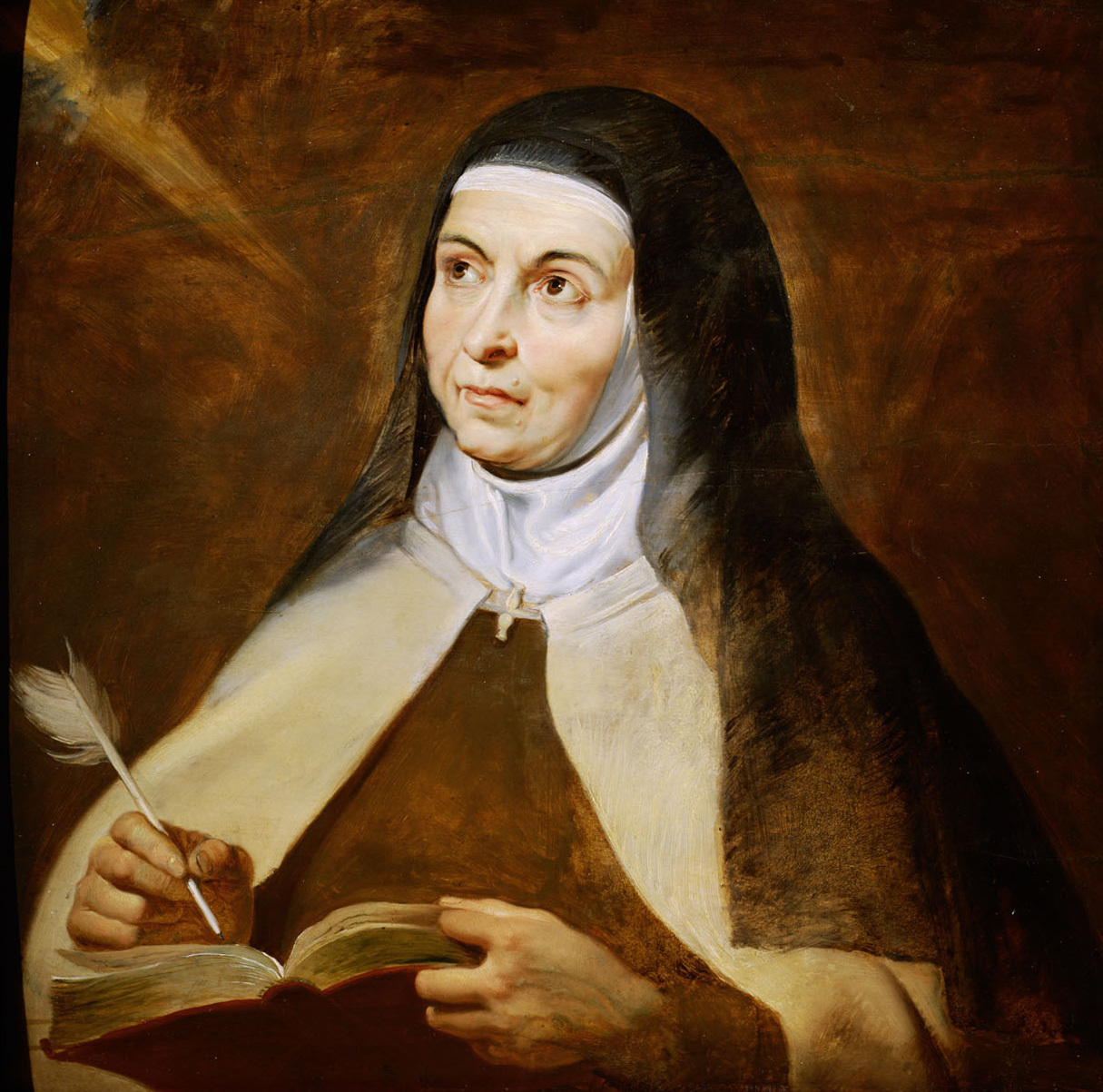
According to Teresa of Ávila, mental prayer is meditational prayer, in which the person is like a gardener, who, with much labour, draws the water up from the depths of the well to water the plants and flowers. According to Teresa of Avila, mental prayer can proceed by using vocal prayers in order to improve dialogue with God. According to Lehodey, mental prayer can be divided into meditation, more active in reflections, and contemplation, more quiet and gazeful.
Some modern authors recommend that this prayer be called "interior prayer". Jacques Philippe:
It would be better to say interior prayer instead of mental prayer, because in our modern culture, the word "mental" is associated with thoughts – as something cerebral – whereas this form of prayer is more an affair of the heart, instead of reflection. St. Teresa of Avila said that it is not an act of thinking much, but of loving much.
Among the Carmelites, there was no regulation for mental prayer until Teresa of Avila (1515–1582) introduced it, practicing it for two hours daily. According to Jordan Aumann, Teresa of Ávila distinguishes nine grades of prayer: (1) vocal prayer, (2) mental prayer or prayer of meditation, (3) affective prayer, (4) prayer of simplicity, or acquired contemplation or recollection, (5) infused contemplation or recollection, (6) prayer of quiet, (7) prayer of union, (8) prayer of conforming union, and (9) prayer of transforming union. "The first four grades belong to the predominantly ascetical stage of spiritual life; the remaining five grades are infused prayer and belong to the mystical phase of spiritual life."
From before the middle of the twelfth century, the Carthusians had times set apart for mental prayer. Early in the sixteenth century, the Dominican chapter of Milan prescribed mental prayer for half an hour during the morning and the evening. Among the Franciscans, there is mention of methodical mental prayer about the middle of that century. In the mid-sixteenth century Ignatius of Loyola in his Spiritual Exercises, which he used with laypersons, taught methods of both meditating on one's life and of contemplating the Gospel accounts of Jesus' life, as a means of becoming more like Christ. His method and that of Sulpice have helped spread the habit of meditating beyond the cloister.
Hub AI
Mental prayer AI simulator
(@Mental prayer_simulator)
Mental prayer
Mental prayer is a form of meditational prayer, "performed without aid of any particular formula." It is distinguished from vocal prayers, "prayers performed by means of a given formula." The aim of mental prayer is 'to inflame souls with the love of God' and 'live without sin'. In mystical practice, it is to be followed-up by contemplative prayer.
Mental prayer is a form of prayer "performed without aid of any particular formula." It is distinguished from vocal prayers, "prayers performed by means of a given formula," Prayer is mental when the thoughts and affections of the soul are not expressed in a previously determined formula.
According to John Hardon, mental prayer is a "form of prayer in which the sentiments expressed are one's own and not those of another person. Mental prayer is accomplished by internal acts of the mind and affections and is either simple meditation or contemplation." According to Adolphe Tanquerey, vocal prayer is expressed by words or gestures, while mental prayer "takes place wholly within the soul."[citation needed] According to Mother Teresa, "In vocal prayer we speak to God, in mental prayer he speaks to us. It is then that God pours himself into us."
According to Teresa of Ávila, mental prayer is meditational prayer, in which the person is like a gardener, who, with much labour, draws the water up from the depths of the well to water the plants and flowers. According to Teresa of Avila, mental prayer can proceed by using vocal prayers in order to improve dialogue with God. According to Lehodey, mental prayer can be divided into meditation, more active in reflections, and contemplation, more quiet and gazeful.
Some modern authors recommend that this prayer be called "interior prayer". Jacques Philippe:
It would be better to say interior prayer instead of mental prayer, because in our modern culture, the word "mental" is associated with thoughts – as something cerebral – whereas this form of prayer is more an affair of the heart, instead of reflection. St. Teresa of Avila said that it is not an act of thinking much, but of loving much.
Among the Carmelites, there was no regulation for mental prayer until Teresa of Avila (1515–1582) introduced it, practicing it for two hours daily. According to Jordan Aumann, Teresa of Ávila distinguishes nine grades of prayer: (1) vocal prayer, (2) mental prayer or prayer of meditation, (3) affective prayer, (4) prayer of simplicity, or acquired contemplation or recollection, (5) infused contemplation or recollection, (6) prayer of quiet, (7) prayer of union, (8) prayer of conforming union, and (9) prayer of transforming union. "The first four grades belong to the predominantly ascetical stage of spiritual life; the remaining five grades are infused prayer and belong to the mystical phase of spiritual life."
From before the middle of the twelfth century, the Carthusians had times set apart for mental prayer. Early in the sixteenth century, the Dominican chapter of Milan prescribed mental prayer for half an hour during the morning and the evening. Among the Franciscans, there is mention of methodical mental prayer about the middle of that century. In the mid-sixteenth century Ignatius of Loyola in his Spiritual Exercises, which he used with laypersons, taught methods of both meditating on one's life and of contemplating the Gospel accounts of Jesus' life, as a means of becoming more like Christ. His method and that of Sulpice have helped spread the habit of meditating beyond the cloister.
Recent media