



Community hub
Recent from talks
Knowledge base stats:
Talk channels stats:
Members stats:
Merrie Monarch Festival
19°43′08″N 155°04′05″W / 19.719°N 155.068°W
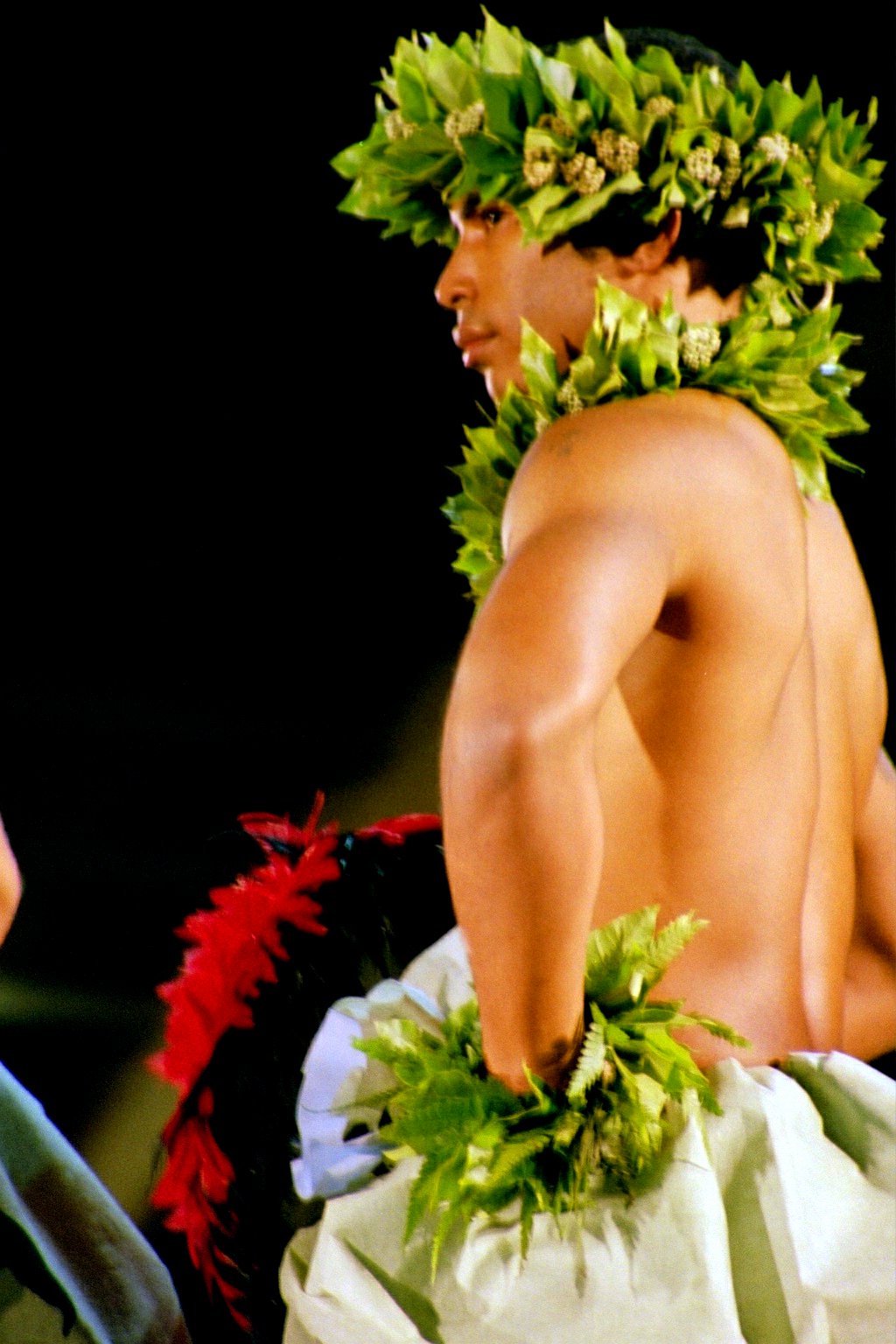
The Merrie Monarch Festival is a week-long cultural festival that takes place annually in Hilo, Hawaii during the week after Easter. It honors King David Kalākaua, who was called the "Merrie Monarch" for his patronage of the arts and is credited with restoring many Hawaiian cultural traditions during his reign, including hula. Many hālau hula (schools), including some from the U.S. mainland and some international performers, attend the festival each year to participate in exhibitions and competitions. The festival has received worldwide attention and is considered the most prestigious of all hula contests.
Merrie Monarch week begins Easter Sunday every year. The competitive hula events end the week, and occur on Thursday, Friday, and Saturday; They are televised and live-streamed for free online by Hawaii News Now (formerly KHII-TV, KFVE/K5).
The 2020 Merrie Monarch festival was cancelled due to coronavirus pandemic concerns. The 2021 competition was held June 24–26, without a live audience, and was broadcast July 1–3 on KFVE.
The 2025 Merrie Monarch hula competition began on Thursday night April 24 at 6:00pm HST, and was livestreamed free all three nights on the website of Hawaii News Now.
The festival is dedicated to the memory of King David Kalākaua, the last king of the Kingdom of Hawaii, who reigned from 1874 until his death in 1891. Kalākaua was “a patron of the arts, especially music and dance,” and is credited with reviving many endangered native Hawaiian traditions such as mythology, medicine, and chant. He was also a strong supporter of the hula, a traditional form of dance. Many of these cultural practices "had been suppressed for many years under missionary teachings." The festival is named after Kalākaua's nickname “Merrie Monarch” because he was known to always be happy, fun, and loving towards his people. The structure of the festival takes after Kalākaua's Silver Jubilee. This was a two-week celebration of Hawaiian culture on his 50th birthday (1886) at ʻIolani Palace on the island of Oʻahu.
The Merrie Monarch Festival began in 1963 when Helene Hale, then Executive Officer of Hawaii County, decided to create an event to increase tourism to the Island of Hawaii. The island had suffered from economic problems after the collapse of the sugar industry, and it was hoped that a festival would boost the depressed economy. Along with George Naʻope and Gene Wilhelm, Hale organized the first Merrie Monarch Festival in 1964. This festival “consisted of a King Kalākaua beard look–alike contest, a barbershop quartet contest, a relay race, a re–creation of King Kalākaua's coronation, and a Holoku Ball among other events.”
George Naʻope was a well known Kumu Hula (teacher of Hawaiian dance) throughout the whole world. He studied hula from his great grandmother since he was three years old and established his own hula school, the George Naʻope Hula School, shortly after graduating high school. He taught hula in Japan, Guam, Australia, Germany, England, and both North and South America. His purpose in life was to preserve the Hawaiian culture, and he thought the festival was a perfect way of allowing the culture live on.
Hub AI
Merrie Monarch Festival AI simulator
(@Merrie Monarch Festival_simulator)
Merrie Monarch Festival
19°43′08″N 155°04′05″W / 19.719°N 155.068°W
The Merrie Monarch Festival is a week-long cultural festival that takes place annually in Hilo, Hawaii during the week after Easter. It honors King David Kalākaua, who was called the "Merrie Monarch" for his patronage of the arts and is credited with restoring many Hawaiian cultural traditions during his reign, including hula. Many hālau hula (schools), including some from the U.S. mainland and some international performers, attend the festival each year to participate in exhibitions and competitions. The festival has received worldwide attention and is considered the most prestigious of all hula contests.
Merrie Monarch week begins Easter Sunday every year. The competitive hula events end the week, and occur on Thursday, Friday, and Saturday; They are televised and live-streamed for free online by Hawaii News Now (formerly KHII-TV, KFVE/K5).
The 2020 Merrie Monarch festival was cancelled due to coronavirus pandemic concerns. The 2021 competition was held June 24–26, without a live audience, and was broadcast July 1–3 on KFVE.
The 2025 Merrie Monarch hula competition began on Thursday night April 24 at 6:00pm HST, and was livestreamed free all three nights on the website of Hawaii News Now.
The festival is dedicated to the memory of King David Kalākaua, the last king of the Kingdom of Hawaii, who reigned from 1874 until his death in 1891. Kalākaua was “a patron of the arts, especially music and dance,” and is credited with reviving many endangered native Hawaiian traditions such as mythology, medicine, and chant. He was also a strong supporter of the hula, a traditional form of dance. Many of these cultural practices "had been suppressed for many years under missionary teachings." The festival is named after Kalākaua's nickname “Merrie Monarch” because he was known to always be happy, fun, and loving towards his people. The structure of the festival takes after Kalākaua's Silver Jubilee. This was a two-week celebration of Hawaiian culture on his 50th birthday (1886) at ʻIolani Palace on the island of Oʻahu.
The Merrie Monarch Festival began in 1963 when Helene Hale, then Executive Officer of Hawaii County, decided to create an event to increase tourism to the Island of Hawaii. The island had suffered from economic problems after the collapse of the sugar industry, and it was hoped that a festival would boost the depressed economy. Along with George Naʻope and Gene Wilhelm, Hale organized the first Merrie Monarch Festival in 1964. This festival “consisted of a King Kalākaua beard look–alike contest, a barbershop quartet contest, a relay race, a re–creation of King Kalākaua's coronation, and a Holoku Ball among other events.”
George Naʻope was a well known Kumu Hula (teacher of Hawaiian dance) throughout the whole world. He studied hula from his great grandmother since he was three years old and established his own hula school, the George Naʻope Hula School, shortly after graduating high school. He taught hula in Japan, Guam, Australia, Germany, England, and both North and South America. His purpose in life was to preserve the Hawaiian culture, and he thought the festival was a perfect way of allowing the culture live on.