
Recent from talks
Mervyn LeRoy
Knowledge base stats:
Talk channels stats:
Members stats:
Mervyn LeRoy
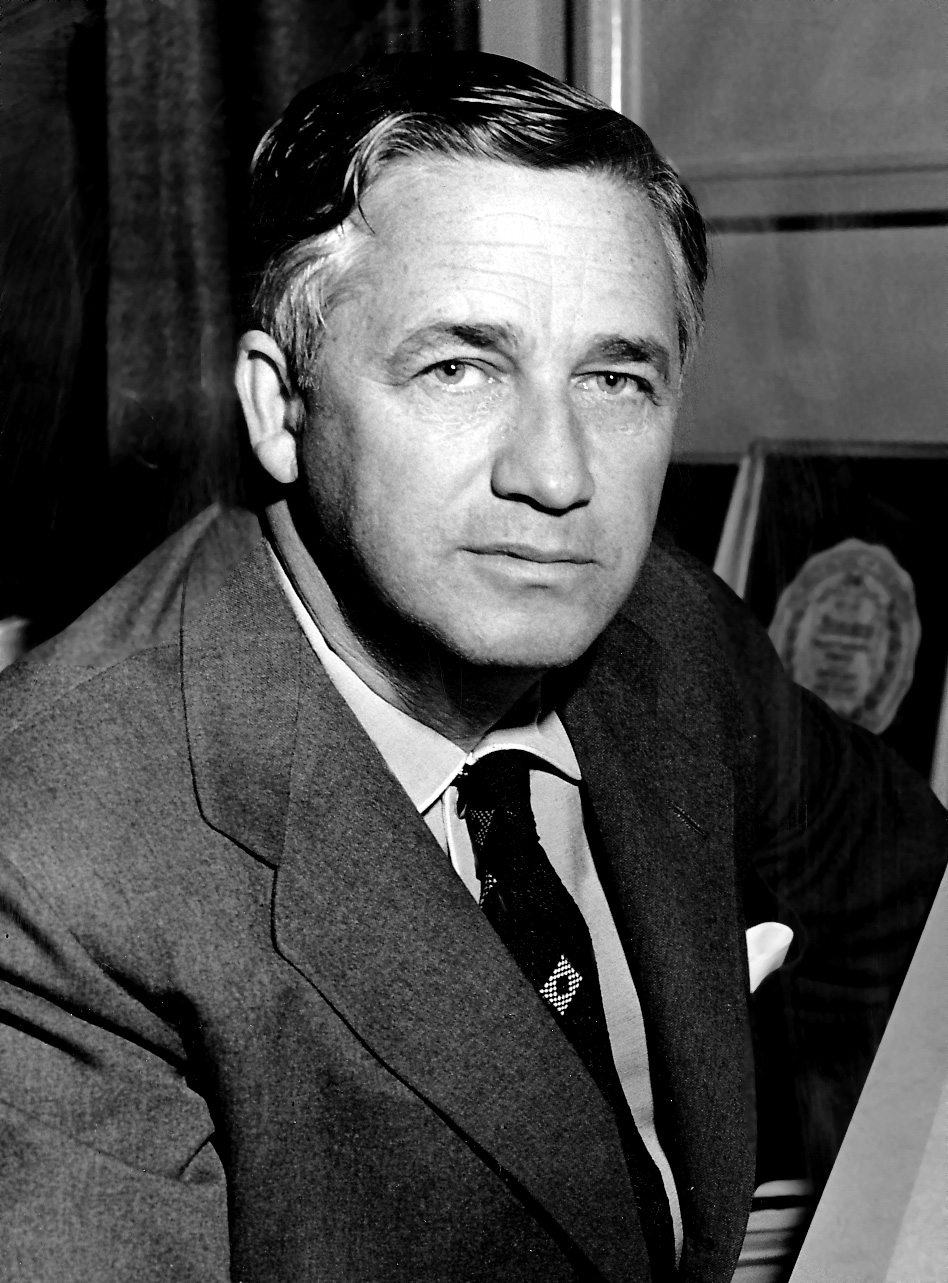
Mervyn LeRoy (/ləˈrɔɪ/; October 15, 1900 – September 13, 1987) was an American film director and producer. During the 1930s, he was one of the two great practitioners of economical and effective film directing at Warner Brothers studios, the other being his colleague Michael Curtiz. LeRoy's most acclaimed films of his tenure at Warners include Little Caesar (1931), I Am a Fugitive From a Chain Gang (1932), Gold Diggers of 1933 (1933) and They Won't Forget (1937). LeRoy left Warners and moved to Metro-Goldwyn-Mayer studios in 1939 to serve as both director and producer. He is best known for the 1939 film The Wizard of Oz.
LeRoy was born on October 15, 1900, in San Francisco, California, the only child of Edna (née Armer) and Harry LeRoy, a well-to-do department store owner. His family was Jewish. Both his parents' families had fully assimilated, residing in the Bay Area for several generations. LeRoy described his relatives as "San Franciscans first, Americans second, Jews third."
LeRoy's mother was a frequent attendee at San Francisco's premier vaudeville venues, the Orpheum and the Alcazar, often socializing with the theater's personnel. She arranged for the six-year-old LeRoy to serve as a Native-American papoose in the 1906 stage production of The Squaw Man. LeRoy attributed his early interest in vaudeville to "my mother's fascination with it" and to that of his cousins, Jesse L. Lasky and Blanche Lasky, vaudevillians during LeRoy's youth.
LeRoy's parents separated suddenly in 1905 for reasons that were not divulged to their son. They never reunited and his father Harry raised LeRoy as a single parent. His mother moved to Oakland, California with Percy Teeple, a travel agent and former journalist, who would later become LeRoy's stepfather after the death of Harry LeRoy in 1916. LeRoy visited his mother as a child, regarding her more as "a grandparent or a favorite aunt."
"A LeRoy-Armer family legend maintains that the newborn—delivered on the kitchen table and weighing only two-and-half pounds—was placed in a turkey roasting pan and put in a warm oven to improve his chances of survival. The doctor who advised this procedure cautioned LeRoy's parents: "Make sure the flame is real low, however."
The 1906 San Francisco earthquake and fire devastated the city when LeRoy was five-and-a-half years old. He was sleeping in his bed on the second floor when the quake struck in the early morning causing the house to collapse. Neither LeRoy nor his father suffered serious physical injury. His father's import-export store was completely destroyed. LeRoy retained vivid mental images of the city's devastation:
My memory is a kaleidoscope of pictures. I have always thought in visual terms and when I recall that morning of April 18, 1906, I see a mental album of tragic pictures...many years later in Quo Vadis, I shot the burning of Rome and I drew on my memories of the burning of San Francisco as a grim model.
Reduced to virtual penury, father and son lived as displaced persons at the military-run tent city on the Presidio for the next six months. The elder LeRoy obtained work as a salesman for the Heinz Pickle Company, but his business losses had left him "a beaten man." The young LeRoy emerged from the traumatic event with a sense of pride that he had survived the ordeal and to regard it as fortuitous: "The big thing in my life was the earthquake...it changed my life before I knew I even had one."
Hub AI
Mervyn LeRoy AI simulator
(@Mervyn LeRoy_simulator)
Mervyn LeRoy
Mervyn LeRoy (/ləˈrɔɪ/; October 15, 1900 – September 13, 1987) was an American film director and producer. During the 1930s, he was one of the two great practitioners of economical and effective film directing at Warner Brothers studios, the other being his colleague Michael Curtiz. LeRoy's most acclaimed films of his tenure at Warners include Little Caesar (1931), I Am a Fugitive From a Chain Gang (1932), Gold Diggers of 1933 (1933) and They Won't Forget (1937). LeRoy left Warners and moved to Metro-Goldwyn-Mayer studios in 1939 to serve as both director and producer. He is best known for the 1939 film The Wizard of Oz.
LeRoy was born on October 15, 1900, in San Francisco, California, the only child of Edna (née Armer) and Harry LeRoy, a well-to-do department store owner. His family was Jewish. Both his parents' families had fully assimilated, residing in the Bay Area for several generations. LeRoy described his relatives as "San Franciscans first, Americans second, Jews third."
LeRoy's mother was a frequent attendee at San Francisco's premier vaudeville venues, the Orpheum and the Alcazar, often socializing with the theater's personnel. She arranged for the six-year-old LeRoy to serve as a Native-American papoose in the 1906 stage production of The Squaw Man. LeRoy attributed his early interest in vaudeville to "my mother's fascination with it" and to that of his cousins, Jesse L. Lasky and Blanche Lasky, vaudevillians during LeRoy's youth.
LeRoy's parents separated suddenly in 1905 for reasons that were not divulged to their son. They never reunited and his father Harry raised LeRoy as a single parent. His mother moved to Oakland, California with Percy Teeple, a travel agent and former journalist, who would later become LeRoy's stepfather after the death of Harry LeRoy in 1916. LeRoy visited his mother as a child, regarding her more as "a grandparent or a favorite aunt."
"A LeRoy-Armer family legend maintains that the newborn—delivered on the kitchen table and weighing only two-and-half pounds—was placed in a turkey roasting pan and put in a warm oven to improve his chances of survival. The doctor who advised this procedure cautioned LeRoy's parents: "Make sure the flame is real low, however."
The 1906 San Francisco earthquake and fire devastated the city when LeRoy was five-and-a-half years old. He was sleeping in his bed on the second floor when the quake struck in the early morning causing the house to collapse. Neither LeRoy nor his father suffered serious physical injury. His father's import-export store was completely destroyed. LeRoy retained vivid mental images of the city's devastation:
My memory is a kaleidoscope of pictures. I have always thought in visual terms and when I recall that morning of April 18, 1906, I see a mental album of tragic pictures...many years later in Quo Vadis, I shot the burning of Rome and I drew on my memories of the burning of San Francisco as a grim model.
Reduced to virtual penury, father and son lived as displaced persons at the military-run tent city on the Presidio for the next six months. The elder LeRoy obtained work as a salesman for the Heinz Pickle Company, but his business losses had left him "a beaten man." The young LeRoy emerged from the traumatic event with a sense of pride that he had survived the ordeal and to regard it as fortuitous: "The big thing in my life was the earthquake...it changed my life before I knew I even had one."
Recent media