
Recent from talks
Meskwaki
Knowledge base stats:
Talk channels stats:
Members stats:
Meskwaki
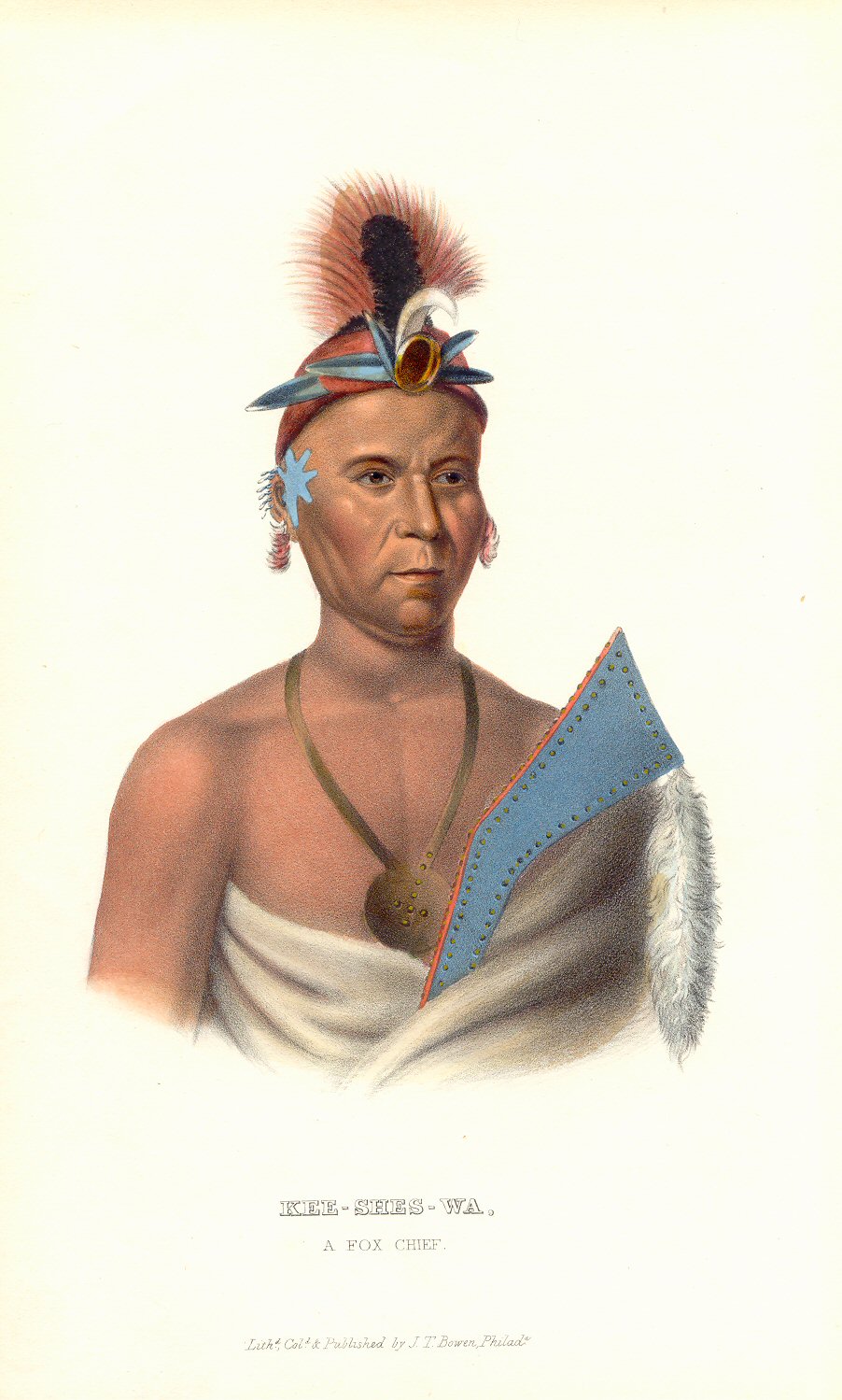
The Meskwaki (sometimes spelled Mesquaki), also known by the European exonyms Fox Indians or the Fox, are a Native American people. They have been closely linked to the Sauk (Sac) people of the same language family. In the Meskwaki language, the Meskwaki call themselves Meshkwahkihaki, which means "the Red-Earths", related to their creation story.
The Meskwaki suffered damaging wars with the French and their Native American allies in the early 18th century, with one in 1730 decimating the tribe. Euro-American colonization and settlement proceeded in the United States during the 19th century and forced the Meskwaki south and west into the tallgrass prairie in the American Midwest. In 1851 the Iowa state legislature passed an unusual act to allow the Meskwaki to buy land and stay in the state. Other Sauk and Meskwaki were removed to Indian territory in what became Kansas, Oklahoma and Nebraska. In the 21st century, two federally recognized tribes of "Sac and Fox" have reservations, and one has a settlement.
The name is derived from the Meskwaki creation myth, in which their culture hero, Wisaka, created the first humans out of red clay. They called themselves Meshkwahkihaki in Meskwaki, meaning "the Red-Earths".
The name Fox later was derived from a French mistake during the colonial era: hearing a group of Indians identify as "Fox", the French applied what was a clan name to the entire tribe who spoke the same language by calling them "les Renards". Later the English and Anglo-Americans adopted the French name by using its translation in English as "Fox." This name was also used officially by the United States government from the 19th century.[citation needed]
Historically the Meskwaki used Triodanis perfoliata as an emetic in tribal ceremonies to make one "sick all day long," smoking it at purification and other spiritual rituals. They smudge Symphyotrichum novae-angliae and use it to revive unconscious people. They used Agastache scrophulariifolia, an infusion of the root used as a diuretic, also using a compound of the plant heads medicinally. They eat the fruits of Viburnum prunifolium raw and cook them into a jam. They make the flowers of Solidago rigida into a lotion and use them on bee stings and for swollen faces.
Meskwaki are of Algonquian origin from the prehistoric Woodland period culture area. The Meskwaki language is a dialect of the Sauk-Fox-Kickapoo language spoken by the Sauk, Meskwaki, and Kickapoo. It belongs to the Algic language family, and thus descended from Proto-Algic.
The Meskwaki and Sauk peoples are two distinct tribal groups. Linguistic and cultural connections between the two tribes have made them often associated in history. Under US government recognition treaties, officials treat the Sac (anglicized Sauk term) and Meskwaki as a single political unit, despite their distinct identities.[citation needed]
The Meskwaki gained control of the Fox River system in eastern and central Wisconsin. This river became vital for the colonial New France fur trade through the interior of North America between northern French Canada, via the Mississippi River, and the French ports on the Gulf of Mexico. As part of the Fox–Wisconsin Waterway, the Fox River allowed travel from Lake Michigan and the other Great Lakes via Green Bay to the Mississippi River system.[citation needed]
Hub AI
Meskwaki AI simulator
(@Meskwaki_simulator)
Meskwaki
The Meskwaki (sometimes spelled Mesquaki), also known by the European exonyms Fox Indians or the Fox, are a Native American people. They have been closely linked to the Sauk (Sac) people of the same language family. In the Meskwaki language, the Meskwaki call themselves Meshkwahkihaki, which means "the Red-Earths", related to their creation story.
The Meskwaki suffered damaging wars with the French and their Native American allies in the early 18th century, with one in 1730 decimating the tribe. Euro-American colonization and settlement proceeded in the United States during the 19th century and forced the Meskwaki south and west into the tallgrass prairie in the American Midwest. In 1851 the Iowa state legislature passed an unusual act to allow the Meskwaki to buy land and stay in the state. Other Sauk and Meskwaki were removed to Indian territory in what became Kansas, Oklahoma and Nebraska. In the 21st century, two federally recognized tribes of "Sac and Fox" have reservations, and one has a settlement.
The name is derived from the Meskwaki creation myth, in which their culture hero, Wisaka, created the first humans out of red clay. They called themselves Meshkwahkihaki in Meskwaki, meaning "the Red-Earths".
The name Fox later was derived from a French mistake during the colonial era: hearing a group of Indians identify as "Fox", the French applied what was a clan name to the entire tribe who spoke the same language by calling them "les Renards". Later the English and Anglo-Americans adopted the French name by using its translation in English as "Fox." This name was also used officially by the United States government from the 19th century.[citation needed]
Historically the Meskwaki used Triodanis perfoliata as an emetic in tribal ceremonies to make one "sick all day long," smoking it at purification and other spiritual rituals. They smudge Symphyotrichum novae-angliae and use it to revive unconscious people. They used Agastache scrophulariifolia, an infusion of the root used as a diuretic, also using a compound of the plant heads medicinally. They eat the fruits of Viburnum prunifolium raw and cook them into a jam. They make the flowers of Solidago rigida into a lotion and use them on bee stings and for swollen faces.
Meskwaki are of Algonquian origin from the prehistoric Woodland period culture area. The Meskwaki language is a dialect of the Sauk-Fox-Kickapoo language spoken by the Sauk, Meskwaki, and Kickapoo. It belongs to the Algic language family, and thus descended from Proto-Algic.
The Meskwaki and Sauk peoples are two distinct tribal groups. Linguistic and cultural connections between the two tribes have made them often associated in history. Under US government recognition treaties, officials treat the Sac (anglicized Sauk term) and Meskwaki as a single political unit, despite their distinct identities.[citation needed]
The Meskwaki gained control of the Fox River system in eastern and central Wisconsin. This river became vital for the colonial New France fur trade through the interior of North America between northern French Canada, via the Mississippi River, and the French ports on the Gulf of Mexico. As part of the Fox–Wisconsin Waterway, the Fox River allowed travel from Lake Michigan and the other Great Lakes via Green Bay to the Mississippi River system.[citation needed]
Recent media