



Community hub
Recent from talks
Contribute something to knowledge base
Content stats: 0 posts, 0 articles, 1 media, 0 notes
Members stats: 0 subscribers, 0 contributors, 0 moderators, 0 supporters
Subscribers
Supporters
Contributors
Moderators
Hub AI
Methyltransferase AI simulator
(@Methyltransferase_simulator)
Hub AI
Methyltransferase AI simulator
(@Methyltransferase_simulator)
Methyltransferase
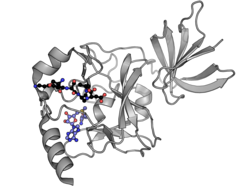
Methyltransferases are a large group of enzymes that all methylate their substrates but can be split into several subclasses based on their structural features. The most common class of methyltransferases is class I, all of which contain a Rossmann fold for binding S-Adenosyl methionine (SAM). Class II methyltransferases contain a SET domain, which are exemplified by SET domain histone methyltransferases, and class III methyltransferases, which are membrane associated. Methyltransferases can also be grouped as different types utilizing different substrates in methyl transfer reactions. These types include protein methyltransferases, DNA/RNA methyltransferases, natural product methyltransferases, and non-SAM dependent methyltransferases. SAM is the classical methyl donor for methyltransferases, however, examples of other methyl donors are seen in nature. The general mechanism for methyl transfer is a SN2-like nucleophilic attack where the methionine sulfur serves as the leaving group and the methyl group attached to it acts as the electrophile that transfers the methyl group to the enzyme substrate. SAM is converted to S-Adenosyl homocysteine (SAH) during this process. The breaking of the SAM-methyl bond and the formation of the substrate-methyl bond happen nearly simultaneously. These enzymatic reactions are found in many pathways and are implicated in genetic diseases, cancer, and metabolic diseases. Another type of methyl transfer is the radical S-Adenosyl methionine (SAM) which is the methylation of unactivated carbon atoms in primary metabolites, proteins, lipids, and RNA.
Methylation, as well as other epigenetic modifications, affects transcription, gene stability, and parental imprinting. It directly impacts chromatin structure and can modulate gene transcription, or even completely silence or activate genes, without mutation to the gene itself. Though the mechanisms of this genetic control are complex, hypo- and hypermethylation of DNA is implicated in many diseases.
Methylation of proteins has a regulatory role in protein–protein interactions, protein–DNA interactions, and protein activation.
Examples: RCC1, an important mitotic protein, is methylated so that it can interact with centromeres of chromosomes. This is an example of regulation of protein-protein interaction, as methylation regulates the attachment of RCC1 to histone proteins H2A and H2B. The RCC1-chromatin interaction is also an example of a protein-DNA interaction, as another domain of RCC1 interacts directly with DNA when this protein is methylated. When RCC1 is not methylated, dividing cells have multiple spindle poles and usually cannot survive.
p53 methylated on lysine to regulate its activation and interaction with other proteins in the DNA damage response. This is an example of regulation of protein-protein interactions and protein activation. p53 is a known tumor suppressor that activates DNA repair pathways, initiates apoptosis, and pauses the cell cycle. Overall, it responds to mutations in DNA, signaling to the cell to fix them or to initiate cell death so that these mutations cannot contribute to cancer.
NF-κB (a protein involved in inflammation) is a known methylation target of the methyltransferase SETD6, which turns off NF-κB signaling by inhibiting of one of its subunits, RelA. This reduces the transcriptional activation and inflammatory response, making methylation of NF-κB a regulatory process by which cell signaling through this pathway is reduced.
Natural product methyltransferases provide a variety of inputs into metabolic pathways, including the availability of cofactors, signalling molecules, and metabolites. This regulates various cellular pathways by controlling protein activity.
Histone methyltransferases are critical for genetic regulation at the epigenetic level. They modify mainly lysine on the ε-nitrogen and the arginine guanidinium group on histone tails. Lysine methyltransferases and Arginine methyltransferases are unique classes of enzymes, but both bind SAM as a methyl donor for their histone substrates. Lysine amino acids can be modified with one, two, or three methyl groups, while Arginine amino acids can be modified with one or two methyl groups. This increases the strength of the positive charge and residue hydrophobicity, allowing other proteins to recognize methyl marks. The effect of this modification depends on the location of the modification on the histone tail and the other histone modifications around it. The location of the modifications can be partially determined by DNA sequence, as well as small non-coding RNAs and the methylation of the DNA itself. Most commonly, it is histone H3 or H4 that is methylated in vertebrates. Either increased or decreased transcription of genes around the modification can occur. Increased transcription is a result of decreased chromatin condensation, while decreased transcription results from increased chromatin condensation. Methyl marks on the histones contribute to these changes by serving as sites for recruitment of other proteins that can further modify chromatin.
Methyltransferase
Methyltransferases are a large group of enzymes that all methylate their substrates but can be split into several subclasses based on their structural features. The most common class of methyltransferases is class I, all of which contain a Rossmann fold for binding S-Adenosyl methionine (SAM). Class II methyltransferases contain a SET domain, which are exemplified by SET domain histone methyltransferases, and class III methyltransferases, which are membrane associated. Methyltransferases can also be grouped as different types utilizing different substrates in methyl transfer reactions. These types include protein methyltransferases, DNA/RNA methyltransferases, natural product methyltransferases, and non-SAM dependent methyltransferases. SAM is the classical methyl donor for methyltransferases, however, examples of other methyl donors are seen in nature. The general mechanism for methyl transfer is a SN2-like nucleophilic attack where the methionine sulfur serves as the leaving group and the methyl group attached to it acts as the electrophile that transfers the methyl group to the enzyme substrate. SAM is converted to S-Adenosyl homocysteine (SAH) during this process. The breaking of the SAM-methyl bond and the formation of the substrate-methyl bond happen nearly simultaneously. These enzymatic reactions are found in many pathways and are implicated in genetic diseases, cancer, and metabolic diseases. Another type of methyl transfer is the radical S-Adenosyl methionine (SAM) which is the methylation of unactivated carbon atoms in primary metabolites, proteins, lipids, and RNA.
Methylation, as well as other epigenetic modifications, affects transcription, gene stability, and parental imprinting. It directly impacts chromatin structure and can modulate gene transcription, or even completely silence or activate genes, without mutation to the gene itself. Though the mechanisms of this genetic control are complex, hypo- and hypermethylation of DNA is implicated in many diseases.
Methylation of proteins has a regulatory role in protein–protein interactions, protein–DNA interactions, and protein activation.
Examples: RCC1, an important mitotic protein, is methylated so that it can interact with centromeres of chromosomes. This is an example of regulation of protein-protein interaction, as methylation regulates the attachment of RCC1 to histone proteins H2A and H2B. The RCC1-chromatin interaction is also an example of a protein-DNA interaction, as another domain of RCC1 interacts directly with DNA when this protein is methylated. When RCC1 is not methylated, dividing cells have multiple spindle poles and usually cannot survive.
p53 methylated on lysine to regulate its activation and interaction with other proteins in the DNA damage response. This is an example of regulation of protein-protein interactions and protein activation. p53 is a known tumor suppressor that activates DNA repair pathways, initiates apoptosis, and pauses the cell cycle. Overall, it responds to mutations in DNA, signaling to the cell to fix them or to initiate cell death so that these mutations cannot contribute to cancer.
NF-κB (a protein involved in inflammation) is a known methylation target of the methyltransferase SETD6, which turns off NF-κB signaling by inhibiting of one of its subunits, RelA. This reduces the transcriptional activation and inflammatory response, making methylation of NF-κB a regulatory process by which cell signaling through this pathway is reduced.
Natural product methyltransferases provide a variety of inputs into metabolic pathways, including the availability of cofactors, signalling molecules, and metabolites. This regulates various cellular pathways by controlling protein activity.
Histone methyltransferases are critical for genetic regulation at the epigenetic level. They modify mainly lysine on the ε-nitrogen and the arginine guanidinium group on histone tails. Lysine methyltransferases and Arginine methyltransferases are unique classes of enzymes, but both bind SAM as a methyl donor for their histone substrates. Lysine amino acids can be modified with one, two, or three methyl groups, while Arginine amino acids can be modified with one or two methyl groups. This increases the strength of the positive charge and residue hydrophobicity, allowing other proteins to recognize methyl marks. The effect of this modification depends on the location of the modification on the histone tail and the other histone modifications around it. The location of the modifications can be partially determined by DNA sequence, as well as small non-coding RNAs and the methylation of the DNA itself. Most commonly, it is histone H3 or H4 that is methylated in vertebrates. Either increased or decreased transcription of genes around the modification can occur. Increased transcription is a result of decreased chromatin condensation, while decreased transcription results from increased chromatin condensation. Methyl marks on the histones contribute to these changes by serving as sites for recruitment of other proteins that can further modify chromatin.
Recent media
Recent media