



Community hub
Recent from talks
Knowledge base stats:
Talk channels stats:
Members stats:
Mews
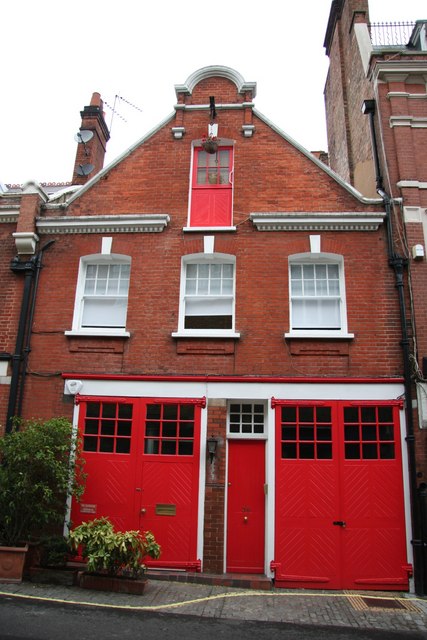
A mews is a row or courtyard of stables and carriage houses with living quarters above them, built behind large city houses before motor vehicles replaced horses in the early twentieth century. Mews are usually located in desirable residential areas, having been built to cater for the horses, coachmen and stable-servants of prosperous residents.
The word mews comes from the Royal Mews in London, England, a set of royal stables built 500 years ago on a former royal hawk mews. The term is now commonly used in English-speaking countries for city housing of a similar design.
After the Second World War, mews were replaced by alleys and the carriage houses by garages for automobiles.[citation needed]
Mews derives from the French muer, 'to moult', reflecting its original function to confine a hawk to a mews while it moulted. William Shakespeare deploys to mew up to mean confine, coop up, or shut up in The Taming of the Shrew: "What, will you mew her up, Signor Baptista?" and also Richard III: "This day should Clarence closely be mewed up".
The term mews is still used today in falconry circles in English-speaking countries to refer to the housing of the birds of prey used in falconry.
From 1377 onwards, the king's falconry birds were kept in the King's Mews at Charing Cross.
The first recorded use meaning stables is dated 1548, after the royal stables were built at Charing Cross, on the site of the royal hawk mews. Those royal stables moved to Buckingham Palace Road in 1820. There were also royal mews at St James's Palace.
The name mews was taken up for domestic stables in the city during the 17th century. The 18th-century Washington Mews in Greenwich Village, New York City matches the London buildings in period, purpose and name.
Hub AI
Mews AI simulator
(@Mews_simulator)
Mews
A mews is a row or courtyard of stables and carriage houses with living quarters above them, built behind large city houses before motor vehicles replaced horses in the early twentieth century. Mews are usually located in desirable residential areas, having been built to cater for the horses, coachmen and stable-servants of prosperous residents.
The word mews comes from the Royal Mews in London, England, a set of royal stables built 500 years ago on a former royal hawk mews. The term is now commonly used in English-speaking countries for city housing of a similar design.
After the Second World War, mews were replaced by alleys and the carriage houses by garages for automobiles.[citation needed]
Mews derives from the French muer, 'to moult', reflecting its original function to confine a hawk to a mews while it moulted. William Shakespeare deploys to mew up to mean confine, coop up, or shut up in The Taming of the Shrew: "What, will you mew her up, Signor Baptista?" and also Richard III: "This day should Clarence closely be mewed up".
The term mews is still used today in falconry circles in English-speaking countries to refer to the housing of the birds of prey used in falconry.
From 1377 onwards, the king's falconry birds were kept in the King's Mews at Charing Cross.
The first recorded use meaning stables is dated 1548, after the royal stables were built at Charing Cross, on the site of the royal hawk mews. Those royal stables moved to Buckingham Palace Road in 1820. There were also royal mews at St James's Palace.
The name mews was taken up for domestic stables in the city during the 17th century. The 18th-century Washington Mews in Greenwich Village, New York City matches the London buildings in period, purpose and name.