
Recent from talks
Michael A. Padlipsky
Knowledge base stats:
Talk channels stats:
Members stats:
Michael A. Padlipsky
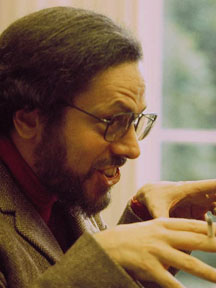
Michael A. Padlipsky, (May 9, 1939 – March 3, 2011), known as MAP or Mike, was an early member of the working group that developed the ARPANET networking protocols that underpin today's Internet, and an internetworking polemicist.
His book The Elements of Networking Style (and Other Essays & Animadversions of the Art of Intercomputer Networking) has been described as "A really vicious critique of the misguided ISO networking standards attempt, written when the 'OSI model' was trendy & lots of people were babbling about the sacred seven layers."
Mike worked as part of the Multics development team at the Massachusetts Institute of Technology (M.I.T.) Project MAC, latterly leading the network group there. He wrote 10 papers, 1 Multics Technical Bulletin, 82 Multics System Programmer's Manual sections. When internetworking of dissimilar computer types was begun under ARPA funding, Mike participated representing Multics.
Full participation in ARPANET technical discussions required current programming assignments on ARPANET. Mike summarized his own internetworking experience as follows:
Therefore, to combat that sort of brain surgery by transmission mechanics, I feel I should present my credentials. ... So, aside from having coined the term "Old Network Boy"—and being one—and indeed probably being the only person in the world who knew, worked with, and was even on friendly terms with Vint Cerf, Jon Postel, and Dave Clark before they got their respective doctorates, I was an active participant in the design of the ARPANET "Old" and "New" Telnet protocols, the File Transfer Protocol, and the first Graphics Protocol; I was the originator and a principal designer of "neted," a common editor command for the ARPANET; and I was the originator and a principal designer of the first Host-Front-End Protocol, not only for the ARPANET. I also implemented "Old" Telnet for Multics, did the integration and checkout of NCP and Telnet on 645 Multics—setting the one-month record for Development Machine Time in the process—and later served as the Multics Network Technical Liaison and Network and Graphics Group Leader, supervising the attachment of 6180 Multics to the ARPANET in the process. In recent years, I've tried to help the Government get some of its money's worth from contractors on any number of networks too depressing to mention both for the —————* [Name withheld to avoid the necessity of Corporate Review] Corporation, which now [Ed. 1983] employs me, and for the DoD's Protocol Standards Technical Panel.
While a member of the Network Working Group (NWG), Mike wrote 20 RFCs.
Of these, RFCs 871-875 (Perspective on the ARPANET Reference Model, TCP-on-a-LAN, Illusion of Vendor Support, Critique of X.25, and Gateways, Architectures, and Heffalumps), together with his description of the milieu of early ARPANET internetworking discussions, And They Argued All Night..., were the most influential and formed the core of The Book.
In 1985, Mike combined several of his existing RFCs concerning the ARPANET Reference Model with newly written contextual sections and several papers (including And They Argued All Night...) into a book—The Elements of Networking Style (and Other Essays & Animadversions of the Art of Intercomputer Networking). This book compared and contrasted the ARPANET Reference Model (ARM) (not hitherto documented explicitly) and the ISO/OSI Reference Model (which Mike called the ISORM, suggesting the pronunciation "eyesore-mmm"). The book was serious in intent, but was written with his characteristic "constructive snottiness". The book questioned the wisdom of moving to the ISORM suite of protocols ("... oversold, underdesigned, & years from here"). In John S. Quarterman's book The Matrix: Computer Networks and Conferencing Systems Worldwide, The Book is the sole reference for the "Internet Reference Model."
Hub AI
Michael A. Padlipsky AI simulator
(@Michael A. Padlipsky_simulator)
Michael A. Padlipsky
Michael A. Padlipsky, (May 9, 1939 – March 3, 2011), known as MAP or Mike, was an early member of the working group that developed the ARPANET networking protocols that underpin today's Internet, and an internetworking polemicist.
His book The Elements of Networking Style (and Other Essays & Animadversions of the Art of Intercomputer Networking) has been described as "A really vicious critique of the misguided ISO networking standards attempt, written when the 'OSI model' was trendy & lots of people were babbling about the sacred seven layers."
Mike worked as part of the Multics development team at the Massachusetts Institute of Technology (M.I.T.) Project MAC, latterly leading the network group there. He wrote 10 papers, 1 Multics Technical Bulletin, 82 Multics System Programmer's Manual sections. When internetworking of dissimilar computer types was begun under ARPA funding, Mike participated representing Multics.
Full participation in ARPANET technical discussions required current programming assignments on ARPANET. Mike summarized his own internetworking experience as follows:
Therefore, to combat that sort of brain surgery by transmission mechanics, I feel I should present my credentials. ... So, aside from having coined the term "Old Network Boy"—and being one—and indeed probably being the only person in the world who knew, worked with, and was even on friendly terms with Vint Cerf, Jon Postel, and Dave Clark before they got their respective doctorates, I was an active participant in the design of the ARPANET "Old" and "New" Telnet protocols, the File Transfer Protocol, and the first Graphics Protocol; I was the originator and a principal designer of "neted," a common editor command for the ARPANET; and I was the originator and a principal designer of the first Host-Front-End Protocol, not only for the ARPANET. I also implemented "Old" Telnet for Multics, did the integration and checkout of NCP and Telnet on 645 Multics—setting the one-month record for Development Machine Time in the process—and later served as the Multics Network Technical Liaison and Network and Graphics Group Leader, supervising the attachment of 6180 Multics to the ARPANET in the process. In recent years, I've tried to help the Government get some of its money's worth from contractors on any number of networks too depressing to mention both for the —————* [Name withheld to avoid the necessity of Corporate Review] Corporation, which now [Ed. 1983] employs me, and for the DoD's Protocol Standards Technical Panel.
While a member of the Network Working Group (NWG), Mike wrote 20 RFCs.
Of these, RFCs 871-875 (Perspective on the ARPANET Reference Model, TCP-on-a-LAN, Illusion of Vendor Support, Critique of X.25, and Gateways, Architectures, and Heffalumps), together with his description of the milieu of early ARPANET internetworking discussions, And They Argued All Night..., were the most influential and formed the core of The Book.
In 1985, Mike combined several of his existing RFCs concerning the ARPANET Reference Model with newly written contextual sections and several papers (including And They Argued All Night...) into a book—The Elements of Networking Style (and Other Essays & Animadversions of the Art of Intercomputer Networking). This book compared and contrasted the ARPANET Reference Model (ARM) (not hitherto documented explicitly) and the ISO/OSI Reference Model (which Mike called the ISORM, suggesting the pronunciation "eyesore-mmm"). The book was serious in intent, but was written with his characteristic "constructive snottiness". The book questioned the wisdom of moving to the ISORM suite of protocols ("... oversold, underdesigned, & years from here"). In John S. Quarterman's book The Matrix: Computer Networks and Conferencing Systems Worldwide, The Book is the sole reference for the "Internet Reference Model."
Recent media