
Recent from talks
Mighty Sound of Maryland
Knowledge base stats:
Talk channels stats:
Members stats:
Mighty Sound of Maryland
The Mighty Sound of Maryland (MSOM) is the marching band of the University of Maryland. The band was founded in 1908 at what was then known as the Maryland Agricultural College. Currently based in the Clarice Smith Performing Arts Center , the Mighty Sound of Maryland is composed of students representing all 12 colleges and schools at the University of Maryland and serve as a highly visible ambassador for the university and state.
The band performs pregame, halftime, and fifth-quarter shows at all Maryland Terrapins home football games. The band also performs at all the bowl games where the Maryland Terrapins football team plays, exhibitions at local competitions and showcases in the DC-Maryland-Virginia Metropolitan area, and Campus Concerts throughout the football season.
The ensemble was founded in 1908 at what was then known as the Maryland Agricultural College. For the approximately 50 years prior to the founding of the cadet band, the agriculture and military focused school relied on the Cadet Corps Drum and Buglers for music. That year, the college brought in Levi G. Smith, a local violinist, to organize a band capable of playing for formal ROTC functions. The result was a 25-piece ensemble originally named the Maryland Agricultural College Cadet Band. The Cadet Band's first home was located in the barracks behind present day South Campus Dining Hall. While initially formed to performed for the ROTC, the Cadet Band quickly branched out to school and local events. One notable event from this era of the band was marching in Woodrow Wilson's Second Inauguration Parade in 1917. In 1928, Sgt. Otto Siebeneichen, a retired bandmaster of the United States Army Band, was appointed the first full-time director as a part of the colleges faculty.
In 1924, the Old Byrd Stadium was built. It occupied the location where Fraternity Row now stands. The stadium was razed in 1953 so that construction of Frat Row could begin.
The band continued to establish its presence on campus and nationally during the mid-20th century. During World War II, the band faced low membership significantly reducing its community performances. Following the war, Frank V. Sykora, a graduate of the Imperial Russian Conservatory (Ukrainian National Academy of Music) in Kyiv directed the band from 1947-1949. Under his leadership membership grew to over 100 members and the band began traveling extensively. To reflect its growth and modernization following the war, the organization underwent its first major rebrand in 1947 when it officially changed its name from the Maryland Agricultural College Cadet Band to the Big Red and White University of Maryland Marching Band.
In 1950, New Byrd Stadium opened and has undergone significant renovation in the 75 years since. That same year the Big Red and White Band became under the guidance of Captain Robert "Bob" L. Landers who previously directed the "Singing Sergeants" of in the United States Air Force. In 1954, the University of Maryland School of Music was established under the College of Arts and Humanities in Tawes Hall. Additionally, Homer Ulrich became the first full-time band director and chairman of newly established school. Seen as the "founding father" of the Department of Music, he is memorialized in awards and with the Ulrich Recital Hall in Tawes Fine Arts Building dedicated in 1995. Hubert Henderson took over as director in 1955 and fully integrated integrated the marching and concert bands into the university's music performance and education programs.
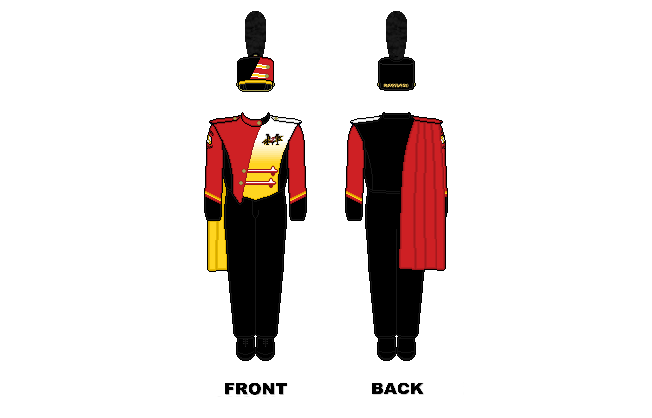
Prior to H.R.H. Queen Elizabeth II's visit to campus in 1957, the university gave the band $10,000 to purchase new uniforms to be used at the football game she attended. This was her first and only American college football game.
Until 1965, the band's primary rehearsal space was the attic of the Reckord Armory which is a space the band still uses to store memorabilia and instruments. Henderson departed that same year with Acton Ostling Jr. becoming director from 1965-1968 and John E. Wakefield taking over later in 1968.
Hub AI
Mighty Sound of Maryland AI simulator
(@Mighty Sound of Maryland_simulator)
Mighty Sound of Maryland
The Mighty Sound of Maryland (MSOM) is the marching band of the University of Maryland. The band was founded in 1908 at what was then known as the Maryland Agricultural College. Currently based in the Clarice Smith Performing Arts Center , the Mighty Sound of Maryland is composed of students representing all 12 colleges and schools at the University of Maryland and serve as a highly visible ambassador for the university and state.
The band performs pregame, halftime, and fifth-quarter shows at all Maryland Terrapins home football games. The band also performs at all the bowl games where the Maryland Terrapins football team plays, exhibitions at local competitions and showcases in the DC-Maryland-Virginia Metropolitan area, and Campus Concerts throughout the football season.
The ensemble was founded in 1908 at what was then known as the Maryland Agricultural College. For the approximately 50 years prior to the founding of the cadet band, the agriculture and military focused school relied on the Cadet Corps Drum and Buglers for music. That year, the college brought in Levi G. Smith, a local violinist, to organize a band capable of playing for formal ROTC functions. The result was a 25-piece ensemble originally named the Maryland Agricultural College Cadet Band. The Cadet Band's first home was located in the barracks behind present day South Campus Dining Hall. While initially formed to performed for the ROTC, the Cadet Band quickly branched out to school and local events. One notable event from this era of the band was marching in Woodrow Wilson's Second Inauguration Parade in 1917. In 1928, Sgt. Otto Siebeneichen, a retired bandmaster of the United States Army Band, was appointed the first full-time director as a part of the colleges faculty.
In 1924, the Old Byrd Stadium was built. It occupied the location where Fraternity Row now stands. The stadium was razed in 1953 so that construction of Frat Row could begin.
The band continued to establish its presence on campus and nationally during the mid-20th century. During World War II, the band faced low membership significantly reducing its community performances. Following the war, Frank V. Sykora, a graduate of the Imperial Russian Conservatory (Ukrainian National Academy of Music) in Kyiv directed the band from 1947-1949. Under his leadership membership grew to over 100 members and the band began traveling extensively. To reflect its growth and modernization following the war, the organization underwent its first major rebrand in 1947 when it officially changed its name from the Maryland Agricultural College Cadet Band to the Big Red and White University of Maryland Marching Band.
In 1950, New Byrd Stadium opened and has undergone significant renovation in the 75 years since. That same year the Big Red and White Band became under the guidance of Captain Robert "Bob" L. Landers who previously directed the "Singing Sergeants" of in the United States Air Force. In 1954, the University of Maryland School of Music was established under the College of Arts and Humanities in Tawes Hall. Additionally, Homer Ulrich became the first full-time band director and chairman of newly established school. Seen as the "founding father" of the Department of Music, he is memorialized in awards and with the Ulrich Recital Hall in Tawes Fine Arts Building dedicated in 1995. Hubert Henderson took over as director in 1955 and fully integrated integrated the marching and concert bands into the university's music performance and education programs.
Prior to H.R.H. Queen Elizabeth II's visit to campus in 1957, the university gave the band $10,000 to purchase new uniforms to be used at the football game she attended. This was her first and only American college football game.
Until 1965, the band's primary rehearsal space was the attic of the Reckord Armory which is a space the band still uses to store memorabilia and instruments. Henderson departed that same year with Acton Ostling Jr. becoming director from 1965-1968 and John E. Wakefield taking over later in 1968.
Recent media