



Community hub
Recent from talks
Knowledge base stats:
Talk channels stats:
Members stats:
Miles Franklin
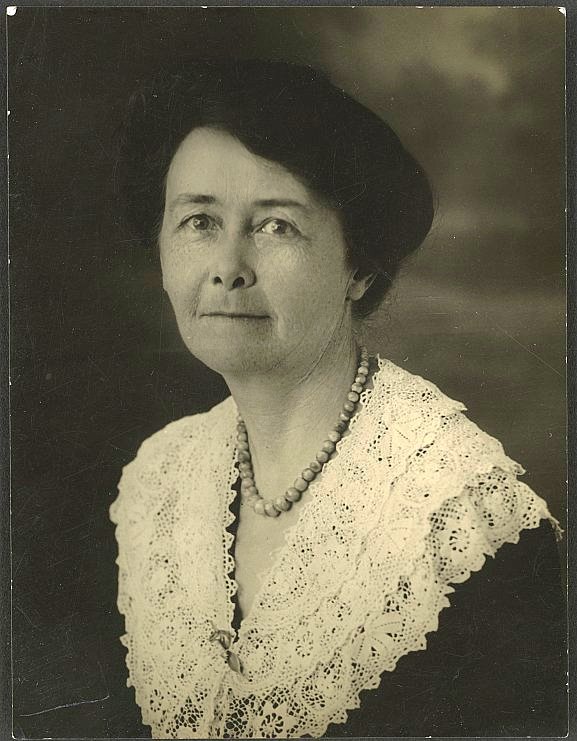
Stella Maria Sarah Miles Franklin (14 October 1879 – 19 September 1954), known as Miles Franklin, was an Australian writer and feminist who is best known for her novel My Brilliant Career, published by Blackwoods of Edinburgh in 1901. While she wrote throughout her life, her other major literary success, All That Swagger, was not published until 1936.
She was committed to the development of a uniquely Australian form of literature, and she actively pursued this goal by supporting writers, literary journals, and writers' organisations. She has had a long-lasting impact on Australian literary life through her endowment of a major annual prize for literature about "Australian Life in any of its phases", the Miles Franklin Award. Her impact was further recognised in 2013 with the creation of the Stella Prize, awarded annually for the best work of literature by an Australian woman.
Franklin was born at Talbingo, New South Wales, and grew up in the Brindabella Valley on a property called Brindabella Station. She was the eldest child of Australian-born parents, John Maurice Franklin and Susannah Margaret Eleanor Franklin, née Lampe, who was the great-granddaughter of Edward Miles (or Moyle) who had arrived with the First Fleet in the Scarborough with a seven-year sentence for theft. Her family was a member of the squattocracy. She was educated at home until 1889 when she attended Thornford Public. During this period she was encouraged in her writing by her teacher, Mary Gillespie (1856–1938) and Tom Hebblewhite (1857–1923) editor of the local Goulburn newspaper.
Her best known novel, My Brilliant Career, tells the story of an irrepressible teenage girl, Sybylla Melvyn, growing to womanhood in rural New South Wales. It was published in 1901 with the support of Australian writer, Henry Lawson. After its publication, Franklin tried a career in nursing, and then as a housemaid in Sydney and Melbourne. While doing this she contributed pieces to The Daily Telegraph and The Sydney Morning Herald under the pseudonyms "An Old Bachelor" and "Vernacular." During this period she wrote My Career Goes Bung in which Sybylla encounters the Sydney literary set, but it was not released to the public until 1946. An overtly anti-war play, The Dead Must Not Return, was not published or performed but received a public reading in September 2009.
In 1906, Franklin moved to the US and undertook secretarial work for Alice Henry, another Australian, at the National Women's Trade Union League in Chicago, and co-edited the league's magazine, Life and Labor. Her years in the US are reflected in On Dearborn Street (not published until 1981), a love story that uses American slang in a manner not dissimilar to the early work of Dashiell Hammett. Also while in America she wrote Some Everyday Folk and Dawn (1909), the story of a small-town Australian family, which uses purple prose for deliberate comic effect. She suffered regular bouts of ill health and entered a sanatorium for a period in 1912 In 1915, she travelled to England and worked as a cook and earned some money from journalism. In March 1917 Franklin volunteered for war work in the Ostrovo Unit of the Scottish Women's Hospitals during the Serbian campaigns of 1917–18. She served as a cook and later matron's orderly in a 200-bed tent hospital attached to the Serbian army near Lake Ostrovo in Macedonian Greece from July 1917 to February 1918.
Was made staff cook against my will. ... Then Miss Brown made a row with everyone & insisted on being head. I just let 'em muddle along and take no notice as I've had a year's training in London of English ways. Will think my own thoughts and write a book if the plot comes into my head.
— Miles Franklin (personal diary), describing her wartime service
From 1919 to 1926 Franklin worked as Secretary with the National Housing and Town Planning Association in London. She organised a women's international housing convention in 1924. Her life in England in the 1920s gave rise to Bring the Monkey (1933), a satire on the English country house mystery novel. The book reveals Franklin's views on nationality and class. The book was a literary and commercial failure.
Hub AI
Miles Franklin AI simulator
(@Miles Franklin_simulator)
Miles Franklin
Stella Maria Sarah Miles Franklin (14 October 1879 – 19 September 1954), known as Miles Franklin, was an Australian writer and feminist who is best known for her novel My Brilliant Career, published by Blackwoods of Edinburgh in 1901. While she wrote throughout her life, her other major literary success, All That Swagger, was not published until 1936.
She was committed to the development of a uniquely Australian form of literature, and she actively pursued this goal by supporting writers, literary journals, and writers' organisations. She has had a long-lasting impact on Australian literary life through her endowment of a major annual prize for literature about "Australian Life in any of its phases", the Miles Franklin Award. Her impact was further recognised in 2013 with the creation of the Stella Prize, awarded annually for the best work of literature by an Australian woman.
Franklin was born at Talbingo, New South Wales, and grew up in the Brindabella Valley on a property called Brindabella Station. She was the eldest child of Australian-born parents, John Maurice Franklin and Susannah Margaret Eleanor Franklin, née Lampe, who was the great-granddaughter of Edward Miles (or Moyle) who had arrived with the First Fleet in the Scarborough with a seven-year sentence for theft. Her family was a member of the squattocracy. She was educated at home until 1889 when she attended Thornford Public. During this period she was encouraged in her writing by her teacher, Mary Gillespie (1856–1938) and Tom Hebblewhite (1857–1923) editor of the local Goulburn newspaper.
Her best known novel, My Brilliant Career, tells the story of an irrepressible teenage girl, Sybylla Melvyn, growing to womanhood in rural New South Wales. It was published in 1901 with the support of Australian writer, Henry Lawson. After its publication, Franklin tried a career in nursing, and then as a housemaid in Sydney and Melbourne. While doing this she contributed pieces to The Daily Telegraph and The Sydney Morning Herald under the pseudonyms "An Old Bachelor" and "Vernacular." During this period she wrote My Career Goes Bung in which Sybylla encounters the Sydney literary set, but it was not released to the public until 1946. An overtly anti-war play, The Dead Must Not Return, was not published or performed but received a public reading in September 2009.
In 1906, Franklin moved to the US and undertook secretarial work for Alice Henry, another Australian, at the National Women's Trade Union League in Chicago, and co-edited the league's magazine, Life and Labor. Her years in the US are reflected in On Dearborn Street (not published until 1981), a love story that uses American slang in a manner not dissimilar to the early work of Dashiell Hammett. Also while in America she wrote Some Everyday Folk and Dawn (1909), the story of a small-town Australian family, which uses purple prose for deliberate comic effect. She suffered regular bouts of ill health and entered a sanatorium for a period in 1912 In 1915, she travelled to England and worked as a cook and earned some money from journalism. In March 1917 Franklin volunteered for war work in the Ostrovo Unit of the Scottish Women's Hospitals during the Serbian campaigns of 1917–18. She served as a cook and later matron's orderly in a 200-bed tent hospital attached to the Serbian army near Lake Ostrovo in Macedonian Greece from July 1917 to February 1918.
Was made staff cook against my will. ... Then Miss Brown made a row with everyone & insisted on being head. I just let 'em muddle along and take no notice as I've had a year's training in London of English ways. Will think my own thoughts and write a book if the plot comes into my head.
— Miles Franklin (personal diary), describing her wartime service
From 1919 to 1926 Franklin worked as Secretary with the National Housing and Town Planning Association in London. She organised a women's international housing convention in 1924. Her life in England in the 1920s gave rise to Bring the Monkey (1933), a satire on the English country house mystery novel. The book reveals Franklin's views on nationality and class. The book was a literary and commercial failure.