


Community hub
Recent from talks
Contribute something to knowledge base
Content stats: 0 posts, 0 articles, 1 media, 0 notes
Members stats: 0 subscribers, 0 contributors, 0 moderators, 0 supporters
Subscribers
Supporters
Contributors
Moderators
Military impostor
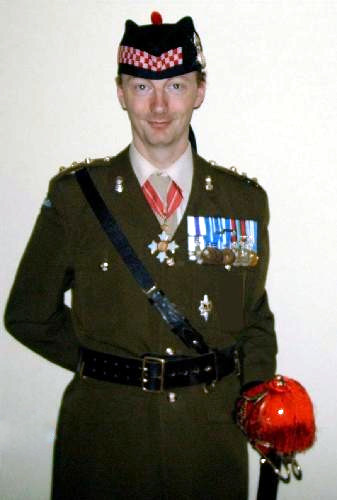
A military impostor is a person who makes false claims about their military service in civilian life. This includes claims by people that have never been in the military as well as lies or embellishments by genuine veterans. Some individuals who do this also wear privately obtained uniforms or medals which were never officially issued to them.
In British military slang, such impostors are called "Walts", based on James Thurber's fictional character, Walter Mitty, who daydreamed of being a war hero. In the United States since the early 2000s, the term stolen valor has become popular slang for this behavior, named for the 1998 book Stolen Valor. Other terms include "fake warriors", "military phonies", "medal cheats", and "military posers".
Lying about military service or wearing a uniform or medals that were not earned is criminalized in some circumstances, especially if done with the goal of obtaining money or any other kind of tangible benefit, though laws vary by country.
Military impostors engage in a broad range of deceptive behaviors, all intended to garner recognition from others. An impostor may make verbal statements, written claims, or create deceptive impressions through actions, such as wearing a uniform, rank insignia, unit symbols, medals, or patches.
Generally impostors fall into two broad categories: civilians who have never been in any branch of the military, and real veterans who make false claims exaggerating their experiences or accomplishments. Impostors in the latter category may claim any of the following:
While many individuals outright fabricate some or all of their military service history, others employ equivocation tactics, ambiguous language, omission of important details, or similarly misleading behavior that avoids making a technically false statement they can be called on, but still gives a deceptive impression. A common example is stating one was in a branch of the military during a specific war. In many contexts, such a statement implies that the speaker was deployed to a combat zone, even if in reality they never saw combat. A similar misleading statement is boasting about being a member of a branch or unit that is well known for its combat prowess and heroic achievements, when the speaker was purely in a logistical role without any combat experience. Similarly, they may emphasize their many years of service, while failing to mention that most or all of it was spent in the reserves with no deployments. They may also casually drop terms or jargon in their writing or speech that is unique to the military or to specific types of service role.
Impostors also frequently claim to be part of "classified" operations as an excuse for why they cannot provide details when confronted, or why there is no record of their actions or service.
Historically, when military record-keeping was less accurate than it is now, some men falsely claimed to be war veterans to obtain military pensions. Such men added a few years to their ages and claimed service in obscure units. Most did not make extravagant claims, because they were seeking money, not public attention that might expose them. There were numerous U.S. media reports in the 1950s of men claiming to be Confederate veterans over 110 years old, and most articles debunked these stories, saying the men had exaggerated their ages and made fraudulent pension claims years earlier and then found themselves in the spotlight after the last genuine Civil War veterans died off. Walter Williams, noted below, is considered one of these impostors, though some people continue to believe his claim.
Military impostor
A military impostor is a person who makes false claims about their military service in civilian life. This includes claims by people that have never been in the military as well as lies or embellishments by genuine veterans. Some individuals who do this also wear privately obtained uniforms or medals which were never officially issued to them.
In British military slang, such impostors are called "Walts", based on James Thurber's fictional character, Walter Mitty, who daydreamed of being a war hero. In the United States since the early 2000s, the term stolen valor has become popular slang for this behavior, named for the 1998 book Stolen Valor. Other terms include "fake warriors", "military phonies", "medal cheats", and "military posers".
Lying about military service or wearing a uniform or medals that were not earned is criminalized in some circumstances, especially if done with the goal of obtaining money or any other kind of tangible benefit, though laws vary by country.
Military impostors engage in a broad range of deceptive behaviors, all intended to garner recognition from others. An impostor may make verbal statements, written claims, or create deceptive impressions through actions, such as wearing a uniform, rank insignia, unit symbols, medals, or patches.
Generally impostors fall into two broad categories: civilians who have never been in any branch of the military, and real veterans who make false claims exaggerating their experiences or accomplishments. Impostors in the latter category may claim any of the following:
While many individuals outright fabricate some or all of their military service history, others employ equivocation tactics, ambiguous language, omission of important details, or similarly misleading behavior that avoids making a technically false statement they can be called on, but still gives a deceptive impression. A common example is stating one was in a branch of the military during a specific war. In many contexts, such a statement implies that the speaker was deployed to a combat zone, even if in reality they never saw combat. A similar misleading statement is boasting about being a member of a branch or unit that is well known for its combat prowess and heroic achievements, when the speaker was purely in a logistical role without any combat experience. Similarly, they may emphasize their many years of service, while failing to mention that most or all of it was spent in the reserves with no deployments. They may also casually drop terms or jargon in their writing or speech that is unique to the military or to specific types of service role.
Impostors also frequently claim to be part of "classified" operations as an excuse for why they cannot provide details when confronted, or why there is no record of their actions or service.
Historically, when military record-keeping was less accurate than it is now, some men falsely claimed to be war veterans to obtain military pensions. Such men added a few years to their ages and claimed service in obscure units. Most did not make extravagant claims, because they were seeking money, not public attention that might expose them. There were numerous U.S. media reports in the 1950s of men claiming to be Confederate veterans over 110 years old, and most articles debunked these stories, saying the men had exaggerated their ages and made fraudulent pension claims years earlier and then found themselves in the spotlight after the last genuine Civil War veterans died off. Walter Williams, noted below, is considered one of these impostors, though some people continue to believe his claim.
Recent media
Recent media