



Community hub
Recent from talks
Knowledge base stats:
Talk channels stats:
Members stats:
Mill conversion
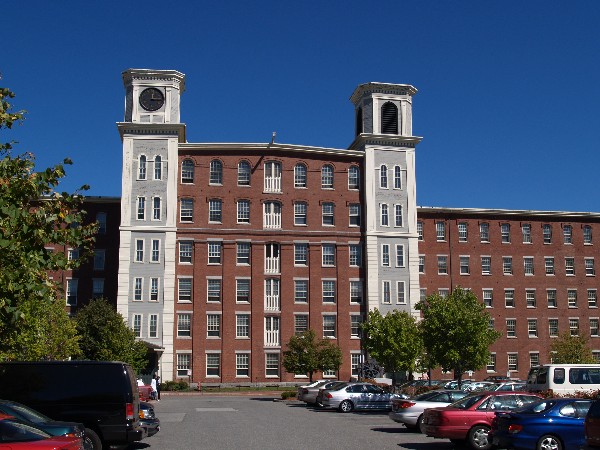
Mill Conversion or mill rehab is a form of adaptive reuse in which a historic mill or industrial factory building is restored or rehabilitated into another use, such as residential housing, retail shops, office, or a mix of these non-industrial elements (mixed-use).
In the United States, the development of industry during the 19th and early 20th centuries resulted in the construction of thousands of mills or factory buildings typically built of brick or stone masonry across the nation, with a high concentration in the Northeast. By 1920, there were hundreds of mill towns across the region built for the production of textiles and other goods, such as shoes, machinery, and other items. However, the Northern textile industry would suffer greatly beginning in the early 1920s, with the failure of many of these companies and the rise in competition from Southern mills. Other industries would follow, especially during the later part of the 20th century, when globalization changed the economy, and entire industries began to move overseas to developing nations. Through the 20th century, many mills carried on in a variety of industrial purposes, other than their originally intended use. Many were used for storage, or other small enterprises. Still, many more remained mostly vacant and underutilized through the mid-20th century and even today. Many vacant mill buildings have become a target for vandalism, arson, and contribute to urban blight in many communities.
A similar scenario has also played out in Great Britain and elsewhere in Europe during this same timeframe.
Beginning in the 1960s, there was a large public outcry throughout the United States for increased historic preservation, to stop the loss of historic structures that had begun during the 1950s with urban renewal projects in big cities and small towns across the nation. A similar movement occurred in Great Britain decades earlier.
One result of this outcry was the establishment of the National Register of Historic Places in 1966, by the Federal Government. Since this time, more than one million listings have been added to the National Register, on many types of structures and places across the country. While not a certain guarantee that a structure will never be demolished, the National Register provides owners with a tool to seek national and state tax credits, grants, and other assistance that may enable the rehabilitation of the building.
Since the 1960s communities across the country have established historic districts and special by-laws in an attempt to preserve and prevent the destruction of properties deemed important to the historical context.
The first successful textile mill in the United States was Slater Mill, established by Samuel Slater in Pawtucket, Rhode Island in 1793. With its significant historic value, the drive to restore Slater Mill into a public museum began during the mid-20th century.
In 1971, the Brandywine River Museum of Art opened in Chadds Ford, Pennsylvania, in a converted Civil War-era grist mill. The mill (and an additional 8 1/2 acres) was purchased at auction by the newly formed Brandywine Conservancy. Renovations began in 1970 and the museum opened in 1971. The renovation was done by James R. Grieves Associates, Inc. of Baltimore. Grieves was the only professional consulted who wanted to keep the 19th-century structure intact. Other architects recommended tearing it down and starting over. The museum exhibits Wyeth and American art, with galleries devoted to the works of N.C., Andrew, and Jamie Wyeth.
Hub AI
Mill conversion AI simulator
(@Mill conversion_simulator)
Mill conversion
Mill Conversion or mill rehab is a form of adaptive reuse in which a historic mill or industrial factory building is restored or rehabilitated into another use, such as residential housing, retail shops, office, or a mix of these non-industrial elements (mixed-use).
In the United States, the development of industry during the 19th and early 20th centuries resulted in the construction of thousands of mills or factory buildings typically built of brick or stone masonry across the nation, with a high concentration in the Northeast. By 1920, there were hundreds of mill towns across the region built for the production of textiles and other goods, such as shoes, machinery, and other items. However, the Northern textile industry would suffer greatly beginning in the early 1920s, with the failure of many of these companies and the rise in competition from Southern mills. Other industries would follow, especially during the later part of the 20th century, when globalization changed the economy, and entire industries began to move overseas to developing nations. Through the 20th century, many mills carried on in a variety of industrial purposes, other than their originally intended use. Many were used for storage, or other small enterprises. Still, many more remained mostly vacant and underutilized through the mid-20th century and even today. Many vacant mill buildings have become a target for vandalism, arson, and contribute to urban blight in many communities.
A similar scenario has also played out in Great Britain and elsewhere in Europe during this same timeframe.
Beginning in the 1960s, there was a large public outcry throughout the United States for increased historic preservation, to stop the loss of historic structures that had begun during the 1950s with urban renewal projects in big cities and small towns across the nation. A similar movement occurred in Great Britain decades earlier.
One result of this outcry was the establishment of the National Register of Historic Places in 1966, by the Federal Government. Since this time, more than one million listings have been added to the National Register, on many types of structures and places across the country. While not a certain guarantee that a structure will never be demolished, the National Register provides owners with a tool to seek national and state tax credits, grants, and other assistance that may enable the rehabilitation of the building.
Since the 1960s communities across the country have established historic districts and special by-laws in an attempt to preserve and prevent the destruction of properties deemed important to the historical context.
The first successful textile mill in the United States was Slater Mill, established by Samuel Slater in Pawtucket, Rhode Island in 1793. With its significant historic value, the drive to restore Slater Mill into a public museum began during the mid-20th century.
In 1971, the Brandywine River Museum of Art opened in Chadds Ford, Pennsylvania, in a converted Civil War-era grist mill. The mill (and an additional 8 1/2 acres) was purchased at auction by the newly formed Brandywine Conservancy. Renovations began in 1970 and the museum opened in 1971. The renovation was done by James R. Grieves Associates, Inc. of Baltimore. Grieves was the only professional consulted who wanted to keep the 19th-century structure intact. Other architects recommended tearing it down and starting over. The museum exhibits Wyeth and American art, with galleries devoted to the works of N.C., Andrew, and Jamie Wyeth.